Story & history.
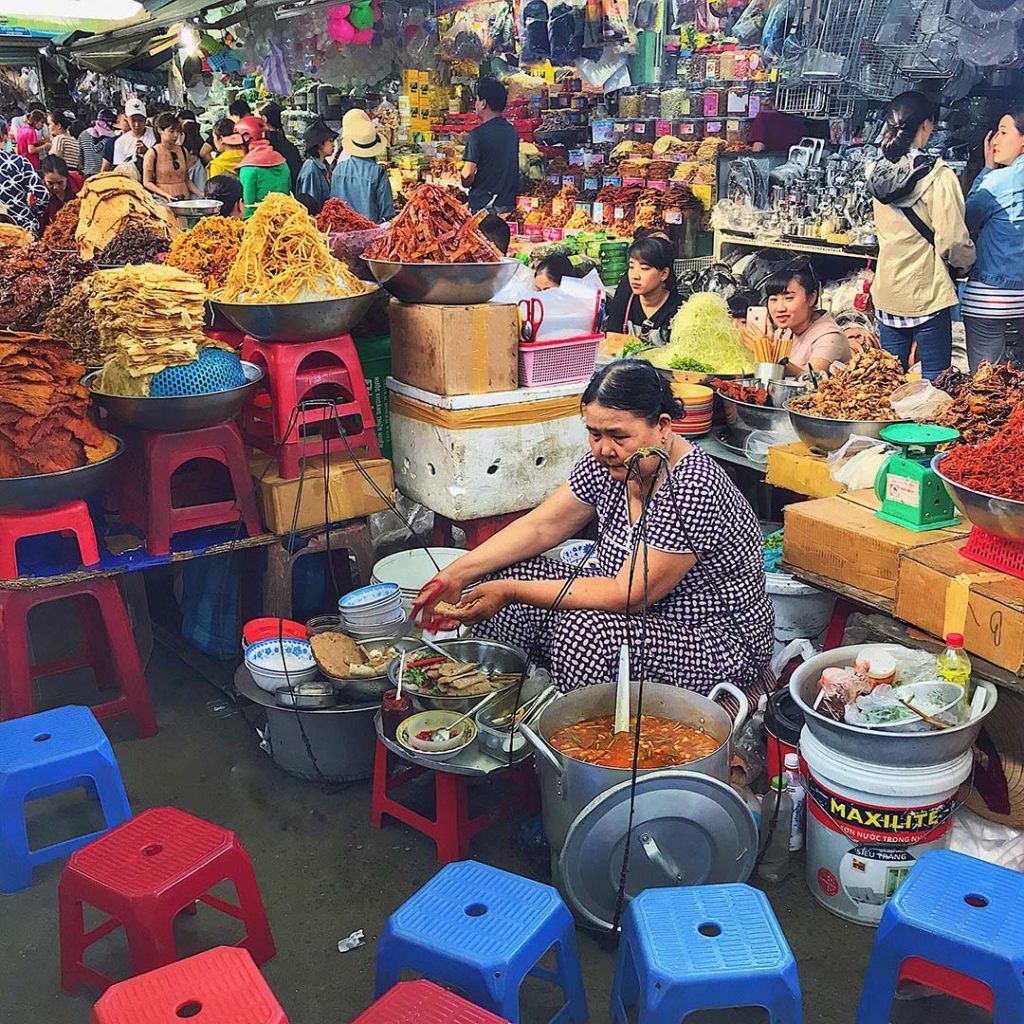
Banh canh ca ba trau is one of Da Nang's oldest traditional eateries — the name comes not from the dish itself but from the founder: Ba Trau, the Quang-origin woman who began selling banh canh in the 1960s on Tran Quy Cap Street. What elevated Ba Trau's shop to legend is not a secret recipe or rare ingredients — it is consistency across over 60 years: the same broth recipe simmered from fish bones and shrimp since early morning, the same type of freshly made rice flour noodles, the same simple style of service. Central Vietnamese banh canh noodles are thicker and more elastic than vermicelli, soft in the mouth but with a density and weight that exceeds Southern-style banh canh — a texture that absorbs broth extremely well, carrying the full fish flavour all the way to the back of the throat. Cá bả trầu is the centrepiece ingredient — a delicate coastal fish prized for its naturally sweet, clean-tasting flesh that holds its shape without going mushy in the broth.
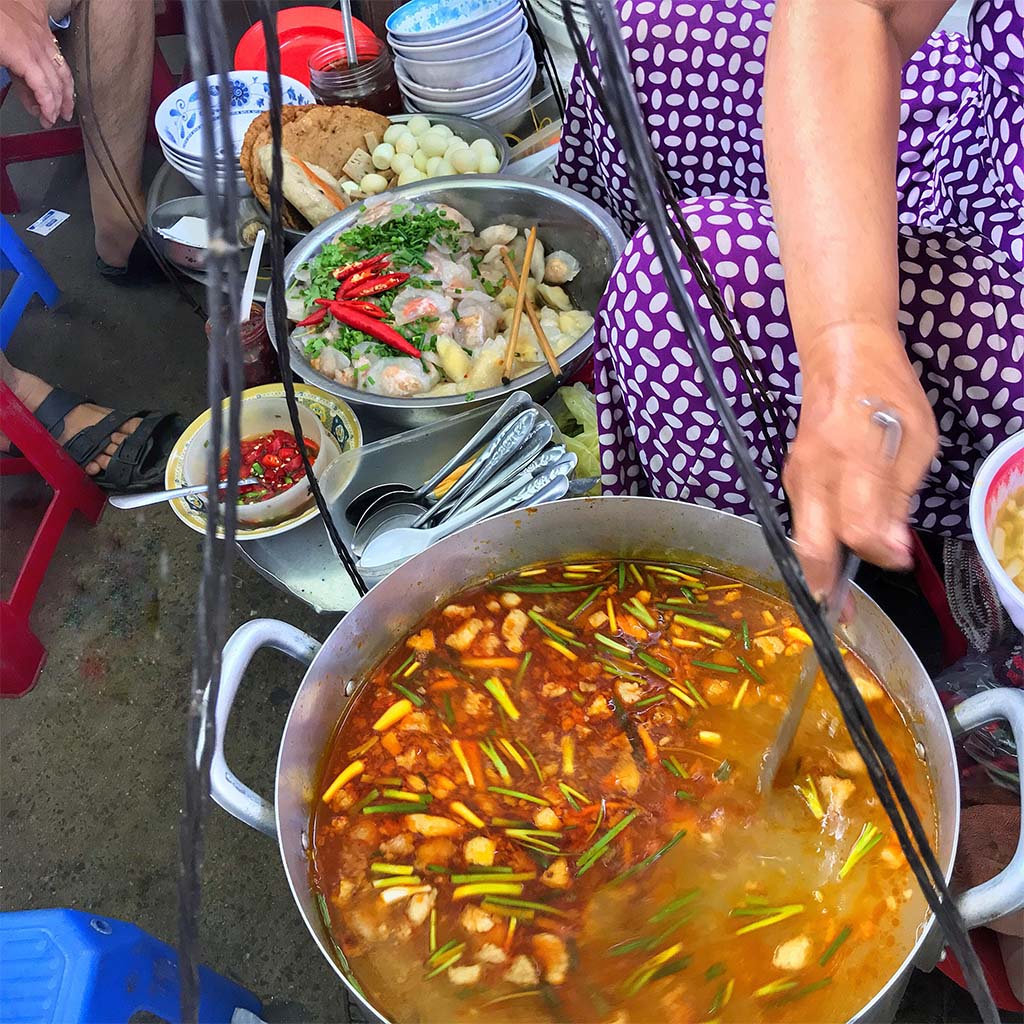
What distinguishes Ba Trau's banh canh broth is a double-simmering technique: cá bả trầu heads and bones are simmered separately for many hours to extract the pure sweet essence, then this liquid is added to a simmering shrimp broth, allowing the two sweetnesses to merge and create a complexity impossible to achieve from a single source alone. The fish meat is left in large pieces, not shredded — diners break it apart themselves in the bowl, allowing the fish's sweetness to blend into the broth with each bite. Eating a bowl of Ba Trau's banh canh early in the morning at the original shop — now managed by the family's third generation — is an experience with no glass display cases, no printed menus, no English menu: only a steaming bowl, an old plastic table and the gentle Da Nang dialect of the vendor.
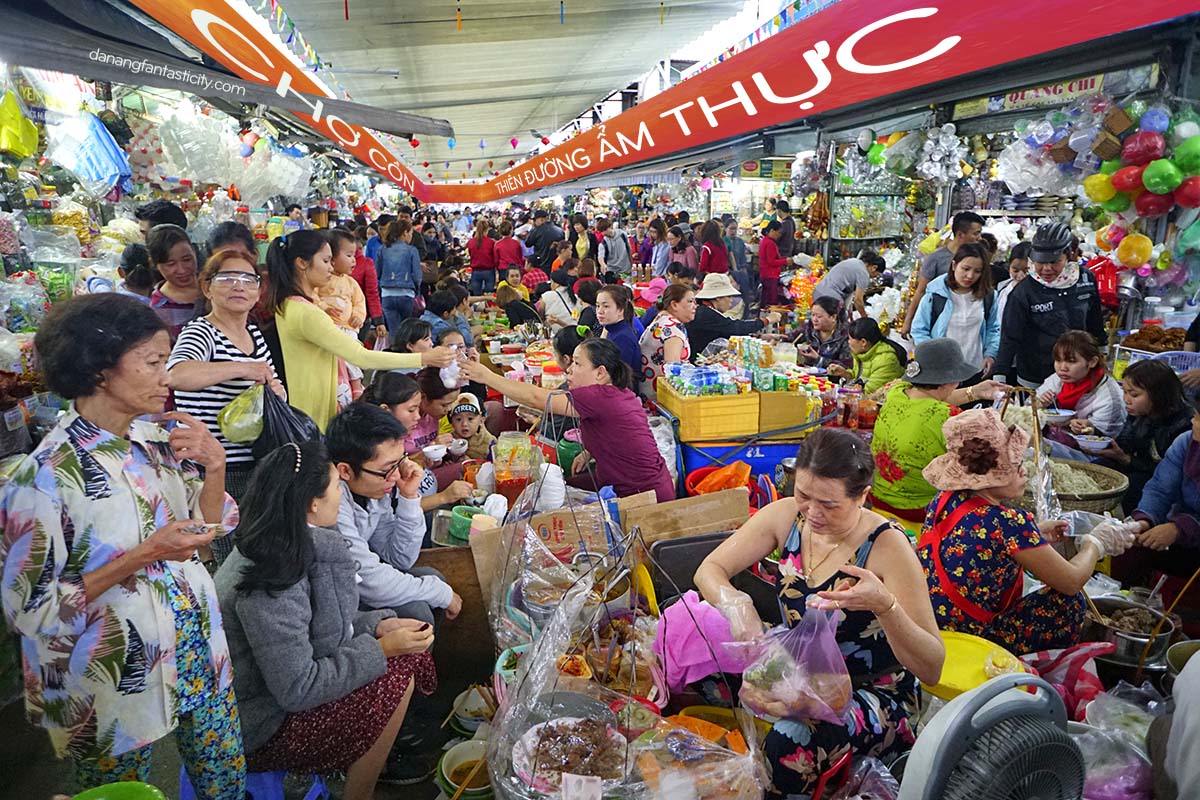
Ba Trau's banh canh is a textbook case of Da Nang cuisine: dishes inextricably linked to specific people and stories, not brands or restaurant chains. Da Nang people do not say "let's go eat banh canh" — they say "let's go eat Ba Trau's banh canh." This reputation was built entirely through quality and consistency over 60 years without change, and that is something that cannot be bought or replicated. The shop currently serves from around 5:30 AM until the broth runs out — usually before 10 AM — on Tran Quy Cap Street, Hai Chau District.
Bánh canh cá bả trầu — best eaten to the sound of morning waves.
— VnExpress Du lịch
Ingredients — what makes the flavour.
Fresh cá bả trầu arrives at the landing from 4–5 am — shops open at 6 am and typically run out of fresh fish before 9 am. Later arrivals will still be served, but the fish will not be as fresh as the early morning batch.
How to enjoy it properly.
Eat in the right order
When the bowl arrives, add an extra ladle of hot broth if needed. Squeeze a little lime, add ground chili to taste. Eat quickly before the crispy pork skin absorbs the broth and loses its crunch — this is the single most important instruction.
Order the mixed version
Always order "hỗn hợp" (mixed) — the mixed bowl includes both cá bả trầu and crispy pork skin, plus a few pieces of fish cake if the shop carries them. Do not stir the pork skin in — keep it on top and pick up each piece as you eat so it stays crispy longer.
Editor-recommended eateries.
ⓘ Addresses and prices may change. Please verify before visiting.