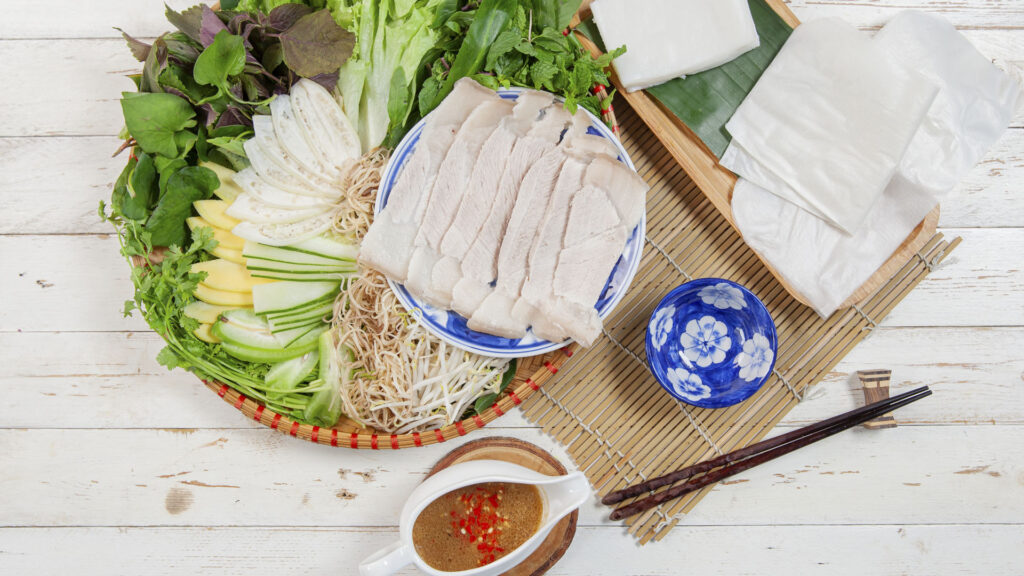
Story & history.
Banh trang cuon thit heo is a cultural crossroads dish of Champa and Dai Viet origins from the Da Nang – Hoi An region, present since at least the 18th century when rice paper craft flourished in Tuy Loan village (Hoa Vang District, Da Nang). The rice paper — thin as tracing paper and translucent when held to light — is made from soaked and finely ground rice steamed into even layers; Tuy Loan artisans can produce several hundred sheets per day with astonishing uniformity of thickness. Pork boiled with turmeric — the fatty three-layer cut glistening with richness — together with freshly boiled pink shrimp and the distinctive Central Vietnamese herb plate creates a perfect balance of richness, freshness and fragrance. But the true soul of the dish is mắm nêm — a special Central Vietnamese condiment made only from anchovies, salt and fermented pineapple juice, with a pungent character that, once acquired, no other dipping sauce can replace.
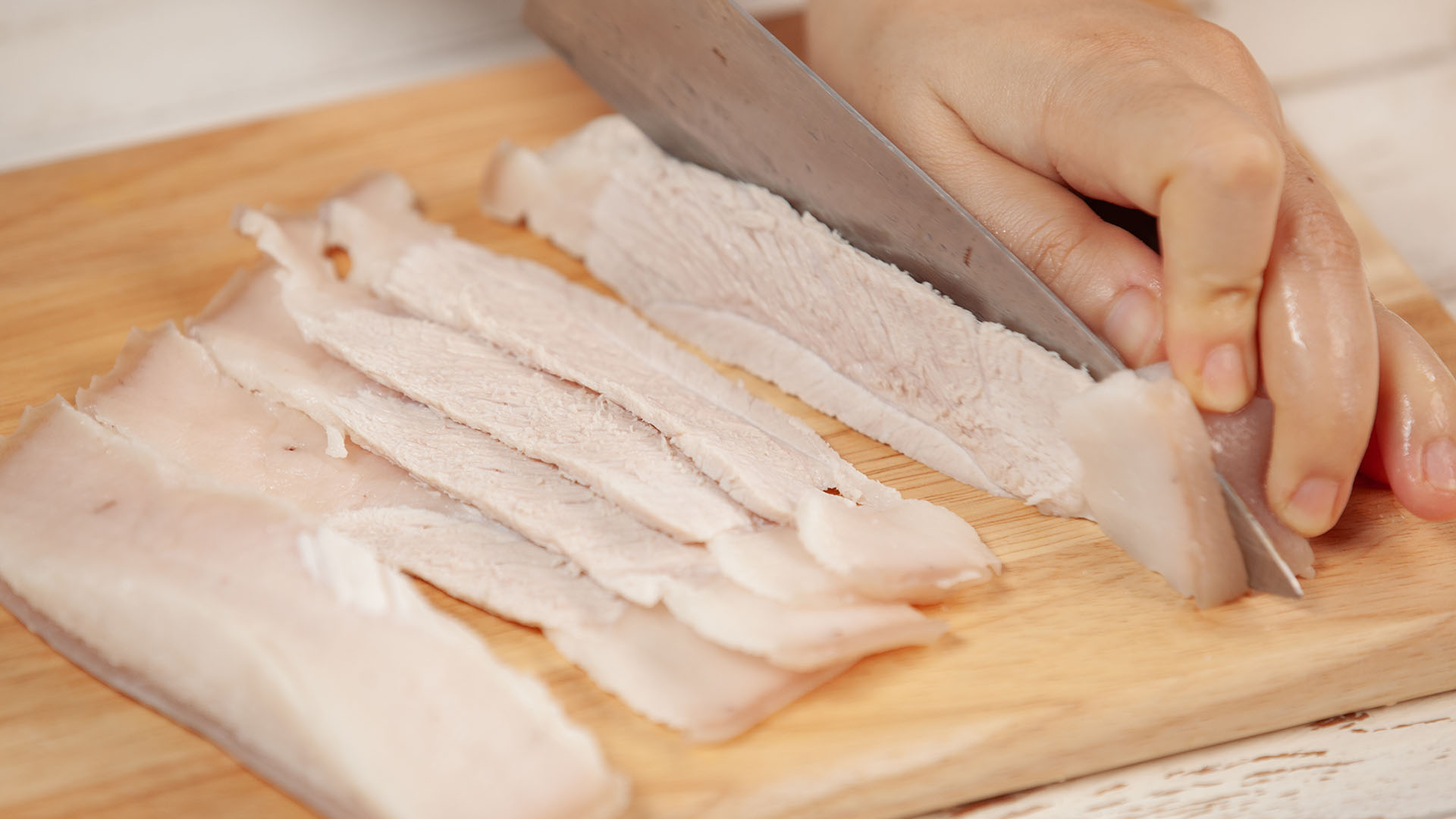
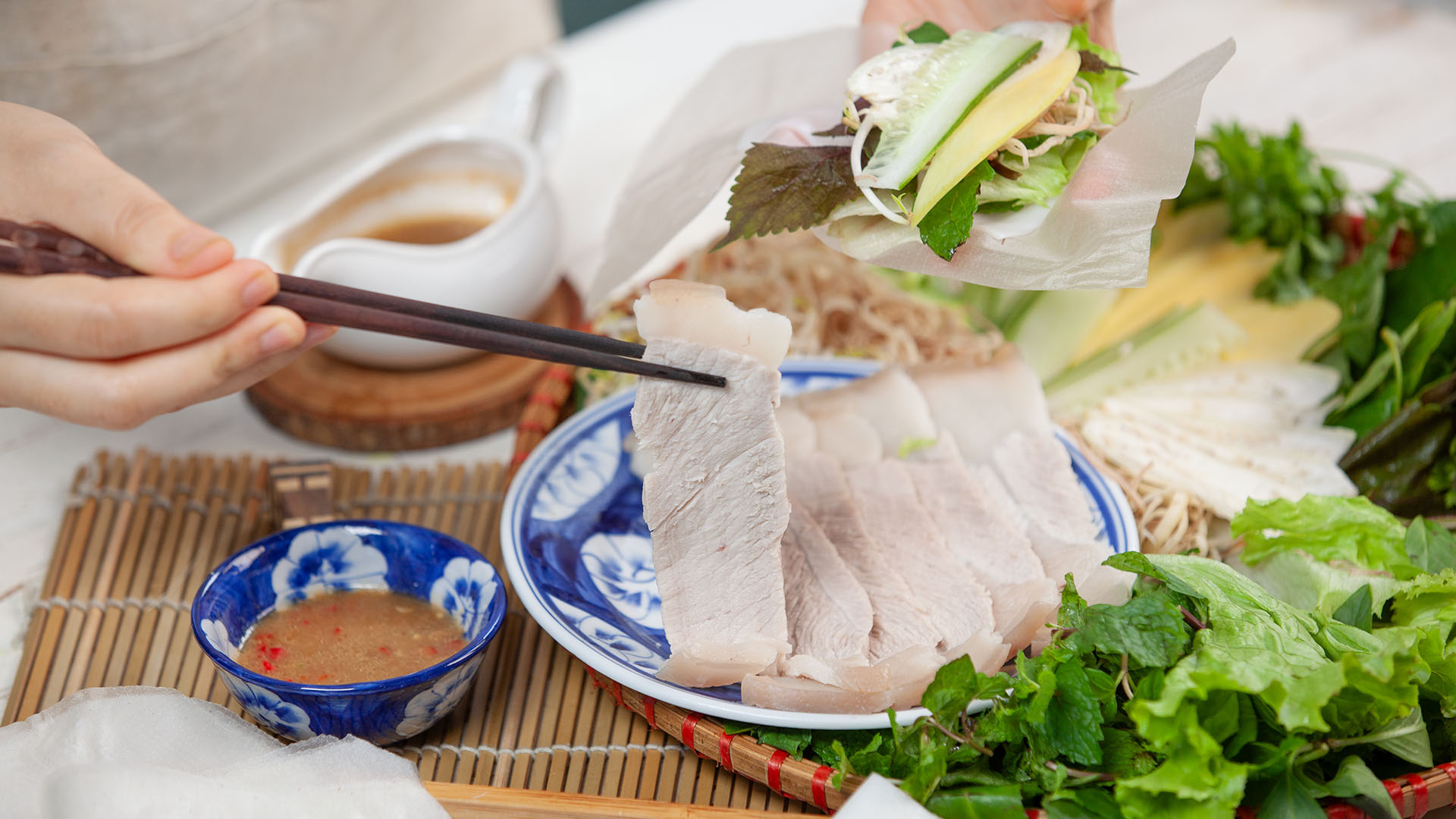
The rolling technique is the most engaging part of the eating experience: place a piece of pork, a few shrimp, fresh herb leaves, a slice of fig and some sour carambola onto the wet rice paper sheet, then roll tightly from one end — the entire operation must be completed before the rice paper absorbs moisture and loses its pliability. Great mắm nêm should have the orange-yellow colour of pineapple, the characteristic pungent fermented anchovy aroma without being overpowering, a balanced salty-sweet flavour, and shreds of fish meat still visible in the sauce as a sign of freshness. Some quality restaurants add rice paper toasted over charcoal to the cuon platter — biting through the crisp toasted outer layer before reaching the soft meat within is the subtlest moment in Central Vietnamese cuisine.
Banh trang cuon thit heo is one of the few Central Vietnamese dishes recognised by UNESCO and international culinary organisations as part of the distinctive intangible cultural heritage of the Quang Nam region. In Da Nang, this dish is not only eaten in restaurants — it is a family dish, made for large gatherings where the whole family sits around the herb plate and rolls together. The active participation of the diner in the preparation process — self-rolling, self-selecting herbs, self-mixing the sauce to taste — is the most profound expression of the communal culinary philosophy of Central Vietnamese people.
A great roll needs plenty of greens—so the sauce stays bold but balanced.
VnExpress Du lịch, Đà Nẵng ẩm thực, 2024
Ingredients — what makes the flavour.
If you don't do heat, ask for less chili—most places can adjust.
How to enjoy it properly.
Wrapping
Start with greens for a cool base, then add pork and noodles. Wrap firmly so it holds.
Dipping
Dip lightly. If it's your first time, ask for a milder mắm nêm mix.
Editor-recommended eateries.
ⓘ Addresses and prices may change. Please verify before visiting.