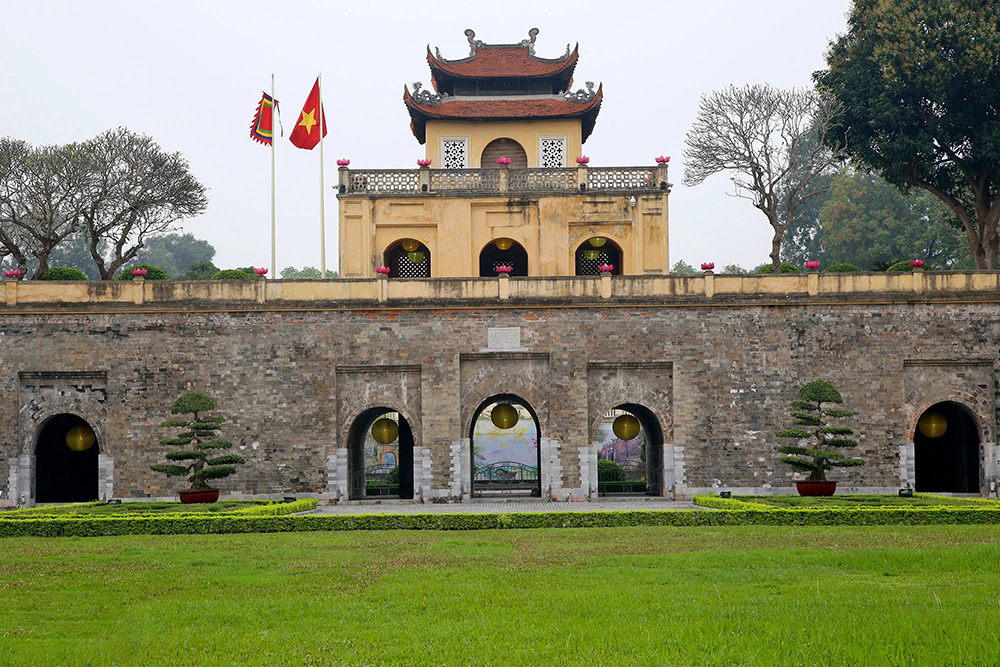
History & story.
The Thang Long Imperial Citadel is not merely a monument — it is the longest continuously functioning capital in Vietnamese history, from 1010 when Emperor Ly Thai To proclaimed his Edict of Capital Relocation and ordered construction on the foundations of the Tang-era Dai La citadel, until 1802 when the Nguyen dynasty moved to Hue. Throughout those 800 years, it was from this citadel that the Ly, Tran, and Le dynasties three times repelled Mongol armies (1258, 1285, 1288) — those legendary victories decided here before troops departed. In 2003, when construction crews began excavating foundations for the new National Assembly building at 18 Hoang Dieu and struck something unexpected: an enormous archaeological site with accumulated strata from the 7th through the 20th centuries. The excavation from 2004 across 19,000 square metres unearthed millions of artefacts — Chinese-inscribed bricks from the Ly era, green-glazed ceramic dragon heads from the Tran, palace foundations interlocked from multiple dynasties — becoming Southeast Asia's largest archaeological excavation. In 2010, UNESCO inscribed the Central Sector of Thang Long Imperial Citadel as a World Cultural Heritage Site for the outstanding significance of over 13 centuries of continuous civilization with archaeological strata from the Dai La, Ly, Tran, Le, Mac, and Nguyen periods.
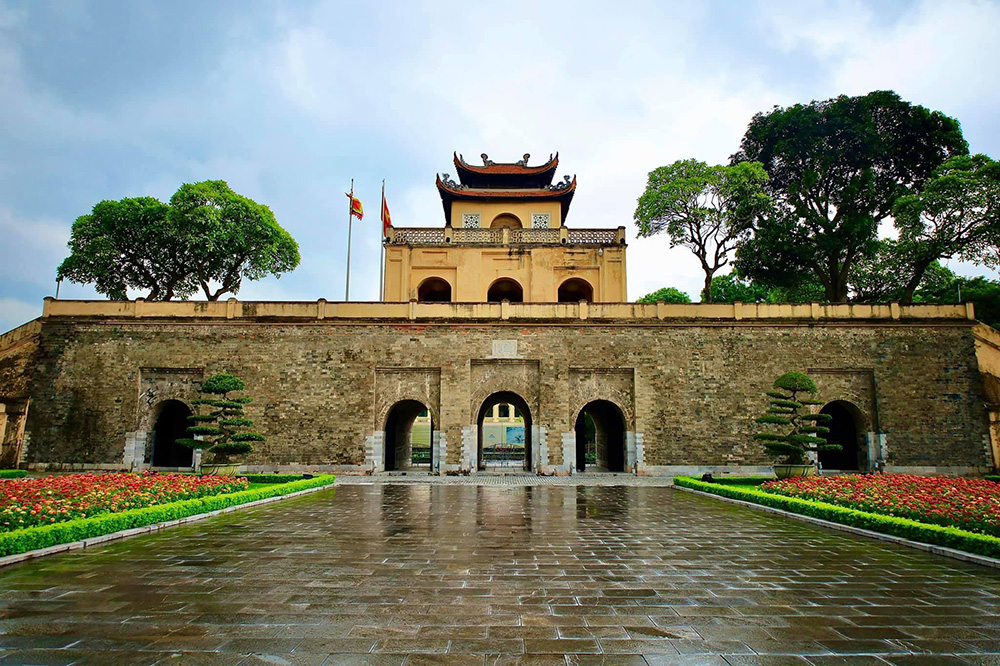
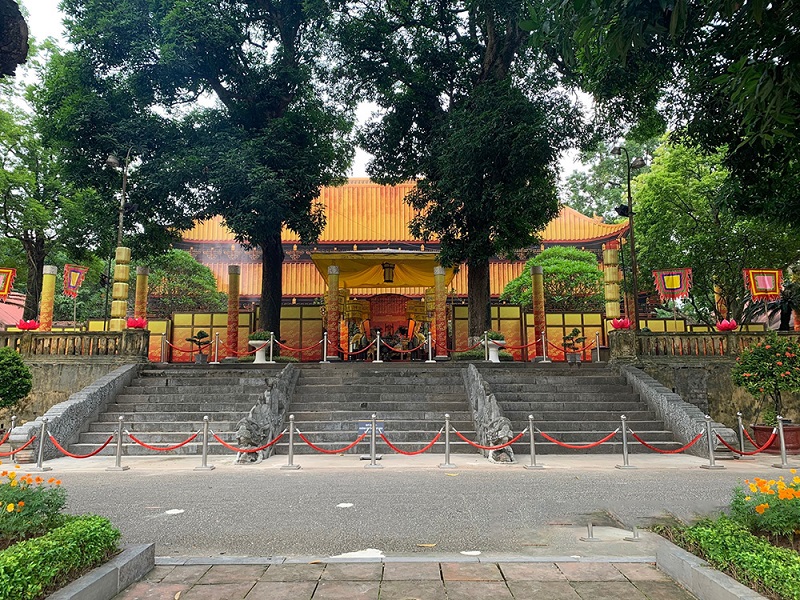
Doan Mon — the southern main gate of the Citadel — is one of the few architectural structures surviving intact from the early Le dynasty (15th century). The gate features five immense stone arched passageways; the widest central arch was reserved exclusively for the emperor and imperial family — officials and troops used the four lateral arches according to their rank. Looking northward through Doan Mon, you can trace the ancient capital's ceremonial spine: from Doan Mon to Kinh Thien Palace and the Rear Gate pavilion — a perfect straight line nearly 1 km long that 15th-century royal architects laid out according to geomantic and ceremonial principles. Kinh Thien Palace was the ceremonial heart of the capital — though the main hall is gone, two wings of original 15th-century dragon-carved stone staircases survive intact, each dragon meticulously carved from Ninh Binh bluestone in a masterwork of early Le sculptural art impossible to replicate. The Kinh Thien Palace restoration project is advancing toward a 2030 completion target.
The 18 Hoang Dieu Archaeological Site is designed as an open-air museum — visitors walk on elevated metal walkways above preserved strata, looking directly down at thousand-year-old Ly dynasty brick floors, Tran palace stone pillars, and sophisticated Le drainage systems. The atmosphere is particularly striking in early morning when golden light slants through protective glass panels, illuminating the ancient brick and ceramic glaze. The D67 Site — a concrete bunker built in 1967 to resist B-52 bombing — is where General Vo Nguyen Giap commanded the Ho Chi Minh Campaign of 1975; the bunker retains its original tactical tables, maps, and communications equipment. This strange juxtaposition — 11th-century Ly citadel and a 1975 command bunker just steps apart — is something impossible to find at any other heritage site in the world.
Thang Long Imperial Citadel today is Hanoi's most vibrant heritage space — hosting major cultural events, flag-raising ceremonies on national holidays, and visits from foreign heads of state. Thang Long was not only Vietnam's capital for over 1,000 years but the place where historic decisions were made — from resistance against the 13th-century Mongol invasions to the Declaration of Independence at Ba Dinh Square in 1945, just a few hundred metres from the Citadel walls. Visiting here is to step into Vietnam's longest and deepest current of history.
Thang Long — the very centre of Heaven and Earth, with the coiled dragon and crouching tiger formation, commanding the cardinal directions, blessed with river and mountain on all sides.
Chiếu dời đô của vua Lý Thái Tổ, năm 1010 / Edict of Capital Relocation by Emperor Ly Thai To, 1010
Highlights not to miss.
Excavated from 2004 across 19,000 square metres, this site contains archaeological layers from the 7th through 20th centuries — richest from the Ly, Tran, and Le periods. Visitors walk elevated walkways directly above palace foundations, ancient wells, and millions of ceramic artefact fragments preserved in place beneath protective glass. This is Southeast Asia's largest and most significant open archaeological site, considered living proof of Hanoi's unbroken 13-century urban history.
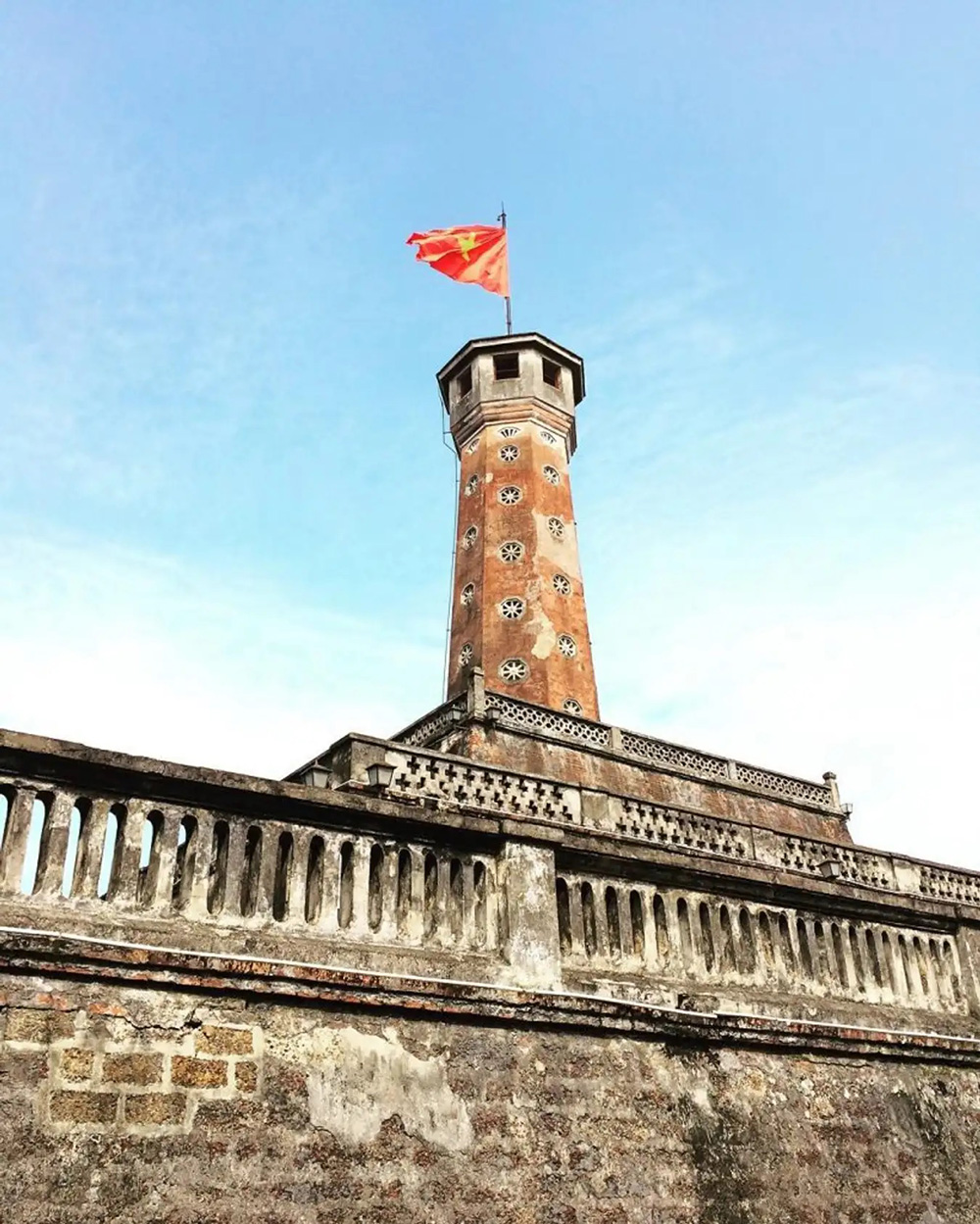
Built in 1812 under Emperor Gia Long, the Hanoi Flag Tower stands 41 metres tall with three tapering square terraces supporting a cylindrical flagpole column — one of the most beautiful and intact surviving examples of traditional Nguyen military architecture. It survived both French colonial rule and wartime intact, and on 10 October 1954 the red-starred national flag was raised here for the first time when Hanoi was liberated — a moment Hanoians have never forgotten. The tower now stands within the grounds of the Vietnam Military History Museum.
Doan Mon is the Citadel's southern main gate, built in the early Le dynasty (15th century) with five stone arched passageways — the widest central arch reserved exclusively for the emperor, with the four lateral arches used by officials and troops according to rank. Standing here and looking north allows you to trace the ancient capital's ceremonial spine — from Doan Mon to Kinh Thien Palace and the Rear Gate pavilion is a perfect straight line nearly 1 km long. This is the ideal starting point for visualising the grand ritual layout of the ancient capital.
Kinh Thien Palace was the most important ceremonial centre of the Le capital — where Le emperors held grand court sessions, received foreign envoys, and issued edicts. Though the main hall no longer stands, two wings of original 15th-century dragon-carved stone balustrade staircases survive intact — each dragon carved with meticulous detail from Ninh Binh bluestone, its scales and fins still sharp after 600 years. Art historians rate these as the finest surviving masterworks of early Le sculptural art — the restoration of the main hall is underway with a target completion of 2030.
Visit early morning (8:00–9:30) to avoid school groups and enjoy a quieter atmosphere — morning light also gives far better results for architectural photography.
How to visit & get there.
Getting There & Tickets
From the Hoan Kiem Lake area, take bus route 09 or 14 to the Flag Tower stop (about 15 minutes), or a taxi or ride-hail taking 10–15 minutes. Book tickets in advance online via the Heritage Conservation Centre website to avoid weekend and holiday queues. Tickets cover both the main heritage zone and the 18 Hoang Dieu archaeological site.
Planning Your Visit
Allow at least 2 hours for a thorough visit — the main heritage zone takes about 45 minutes, with another 45–60 minutes for 18 Hoang Dieu. Combine into a single morning: Citadel → Ho Chi Minh Mausoleum → One Pillar Pagoda (5–10 minutes' walk between each). Wear comfortable shoes as the archaeological zone has stairs and uneven ground. Visit at 8:00–9:30 AM to beat school groups and enjoy the best architectural photography light.
Sources
- 1.Hoàng thành Thăng Long — Lịch sử và Di sản
Trung tâm Bảo tồn Di sản Thăng Long — Hà Nội · 2025-03-10
- 2.Central Sector of the Imperial Citadel of Thang Long — Hanoi
UNESCO World Heritage Centre · 2025-03-10
- 3.Hoàng thành Thăng Long qua các triều đại
VnExpress · 2025-03-15