History & story.
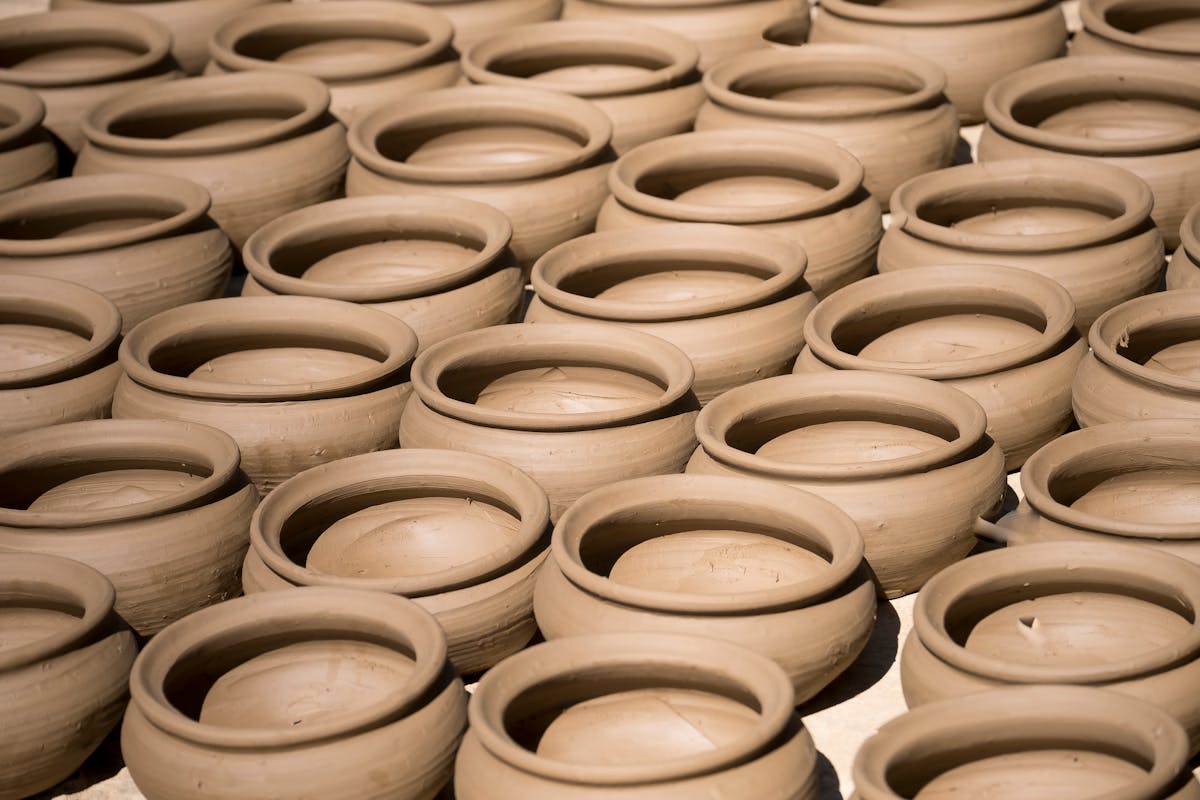
Bat Trang pottery village — about 13 km from central Hanoi along the Red River bank — is Vietnam's oldest and most celebrated ceramic craft village. At the end of the Ly and beginning of the Tran dynasties (13th–14th centuries), five pottery clans from Bo Bat village (now in Ninh Binh) migrated here on royal orders, bringing their craft secrets with them. High-quality fine white clay along the Red River bank and convenient waterway distribution were why Bat Trang was chosen. An inscription on an ancient village well dated 1736 records 19 pottery clan names — the oldest surviving material evidence of the craft community.
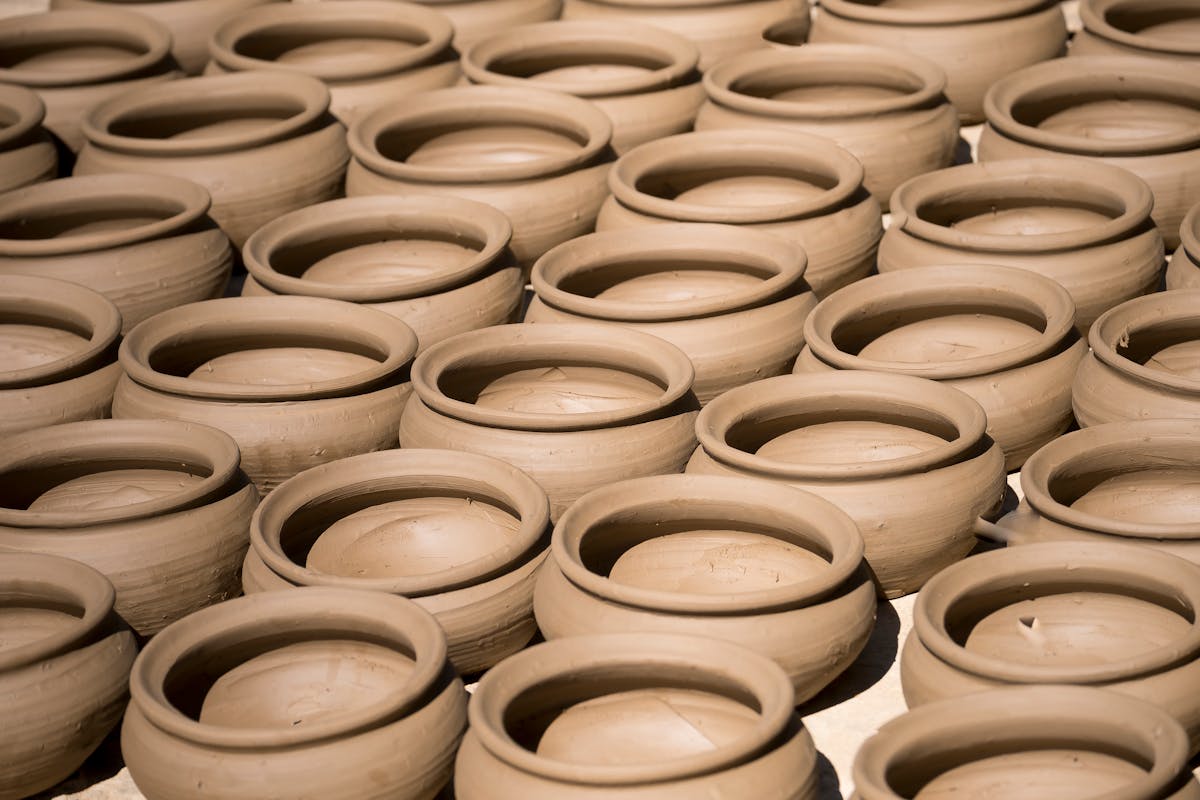
Bat Trang ceramics are distinguished by three characteristic glazing styles: jade glaze (smooth blue-white like jade), earth-brown glaze (the deep warm brown of ceremonial wares), and especially crazing glaze — a style creating an intentional hairline crack network through a firing and cooling technique that controls the differential shrinkage rate of glaze and clay. Crazing glaze is not a defect but a technique requiring hereditary secrets — premium Bat Trang crazing ceramics are exported to Japan and Europe as high-end art pieces. Traditional decorative patterns — dragons and phoenixes, lotus, chrysanthemum and bamboo — are hand-painted with fine brushes before glazing, each stroke requiring years of practice. From the 15th century, Bat Trang ceramics travelled the world aboard Chinese, Japanese, and Dutch merchant ships.
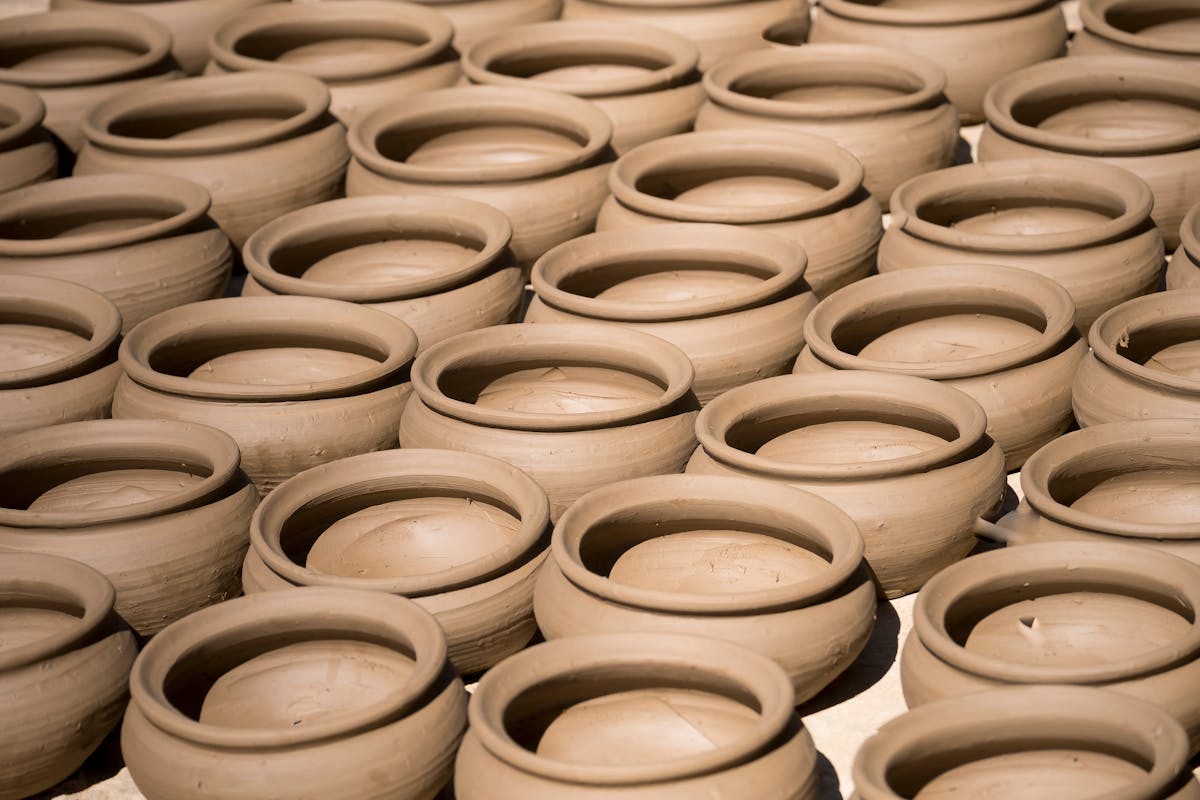
Pottery-making experiences at Bat Trang have become the village's greatest tourism draw over the past two decades — visitors can sit at a spinning wheel and hand-shape clay under an artisan's guidance. Bat Trang Pottery Market at the village centre concentrates hundreds of stalls from different kilns, selling everything from sacred ceremonial wares to modern functional ceramics and contemporary art — prices are typically 30–50% lower than ceramic shops in central Hanoi. A contemporary ceramics movement is growing strongly at Bat Trang: young artisans combine traditional crazing glaze techniques with modern design forms, producing pieces acquired by art galleries domestically and internationally. Approximately 1,000 households still produce ceramics, maintaining hereditary craft secrets across generations against the backdrop of rapid urban expansion around Hanoi.
Reaching Bat Trang by boat from Chuong Duong pier along the Red River — approximately 30–45 minutes — follows the route of ancient ceramic merchants. Seen from the river, the Bat Trang bank with its kilns, boat landings, and Red River rural scenery forms a rare peri-urban panorama remaining beside one of Southeast Asia's fastest-developing capitals. Bat Trang pottery village exemplifies a traditional Vietnamese craft community that has successfully adapted to the market economy and tourism without losing its identity. This is not merely a shopping destination but an opportunity to encounter a craft village community still living and breathing in the modern day — something increasingly rare around Vietnam's major cities.
Bat Trang ceramics are not merely clay and fire — they are the memory of every hand that has touched this earth from seven hundred years ago to today.
Nghệ nhân Ưu tú Trần Độ, làng gốm Bát Tràng / Meritorious Artisan Tran Do, Bat Trang Pottery Village
Highlights not to miss.
Bat Trang crazing glaze creates an intentional network of fine hairline cracks on the ceramic surface — not a defect but a technique requiring precise control of the kiln cooling rate to manage the differential shrinkage between glaze and clay body. The crazing glaze formula is kept as a hereditary secret by each artisan family and is not transmitted outside the clan — this is why Bat Trang crazing glaze ceramics cannot be replicated at any other pottery village. Premium crazing glaze products — flower vases, tea sets, art plates — are exported to Japan, South Korea, and Europe as distinctive art ceramics. When purchasing crazing glaze ceramics, look for the evenness of the crack network and glaze colour — authentic Bat Trang crazing glaze has a cream or pale gold tone with fine, uniform cracks.
Pottery workshops throughout the village are open daily for visitors to practice hands-on at the spinning wheel — from kneading clay to shaping, decorating, and understanding the firing process. Costs typically range from VND 50,000 to 150,000 depending on the workshop and type of piece created. Items can be fired immediately and collected after 2–3 days, or shipped by post to international visitors. This experience is particularly suitable for family groups and children — students especially enjoy hand-shaping their own piece and later receiving the fired result. Pre-booking by phone or through major workshop websites is advisable on weekends and public holidays.
Bat Trang Pottery Market is a large outdoor market at the village centre, concentrating hundreds of stalls selling products from all village kilns — from sacred ceremonial wares (incense burners, altar vessels, devotional figures) to modern functional ceramics and contemporary art pieces by young artisans. Prices are typically 30–50% lower than ceramic shops in central Hanoi because you are buying directly from producers. Aim to arrive in the morning (8:00–11:00) when the market is busiest and stock is freshest — many stalls begin closing in the evening. Hard bargaining is not particularly necessary as prices are posted at many stalls, but asking about discounts for bulk purchases is entirely appropriate.
Reaching Bat Trang by boat from Chuong Duong or Pha Den pier along the Red River — approximately 30–45 minutes — follows the route of ancient ceramic merchants and creates a completely different experience from arriving by bus or taxi. Seen from the river surface, the Bat Trang bank with its kilns, boat landings, and rural Red River scenery forms a rare peri-urban rural panorama remaining beside one of Southeast Asia's fastest-developing capitals. Tourist boats operate on weekends — check schedules and pre-book. Public bus 47 from Long Bien is also convenient and economical, taking approximately 30–35 minutes.
Book in advance with a pottery workshop for a private session with an artisan, avoiding the crowds of tour groups. Self-made pieces can be collected after 2–3 days once fired.
How to visit & get there.
Getting to Bat Trang
Bat Trang is about 13–15 km southeast of central Hanoi. Bus 47 from Long Bien terminal is the most economical option (around VND 7,000, 30–35 minutes). Grab or taxi takes 25–35 minutes from Hoan Kiem, costing approximately VND 80,000–120,000 one way. The most interesting approach is taking a boat from Chuong Duong Pier along the Red River (30–45 minutes) — this runs on weekends and requires pre-booking.
Planning your time and shopping tips
Allow at least half a day to combine a pottery-making session, browsing the market, and visiting artisan workshops. Arrive in the morning (8:00–10:00) when the market is busiest and most lively. For the pottery experience, book ahead by phone or find a workshop on arrival — most workshops accept walk-ins but are busy on weekends. Pack ceramics carefully when taking them home — for larger purchases, ask the vendor to bubble-wrap and assist with shipping at very reasonable additional cost.
Sources
- 1.Làng nghề gốm sứ Bát Tràng
Cổng thông tin điện tử Hà Nội · 2025-03-01
- 2.Bát Tràng — 600 năm nghề gốm
VnExpress · 2025-03-01
- 3.Bat Trang Pottery Village
Lonely Planet · 2025-03-01