History & story.
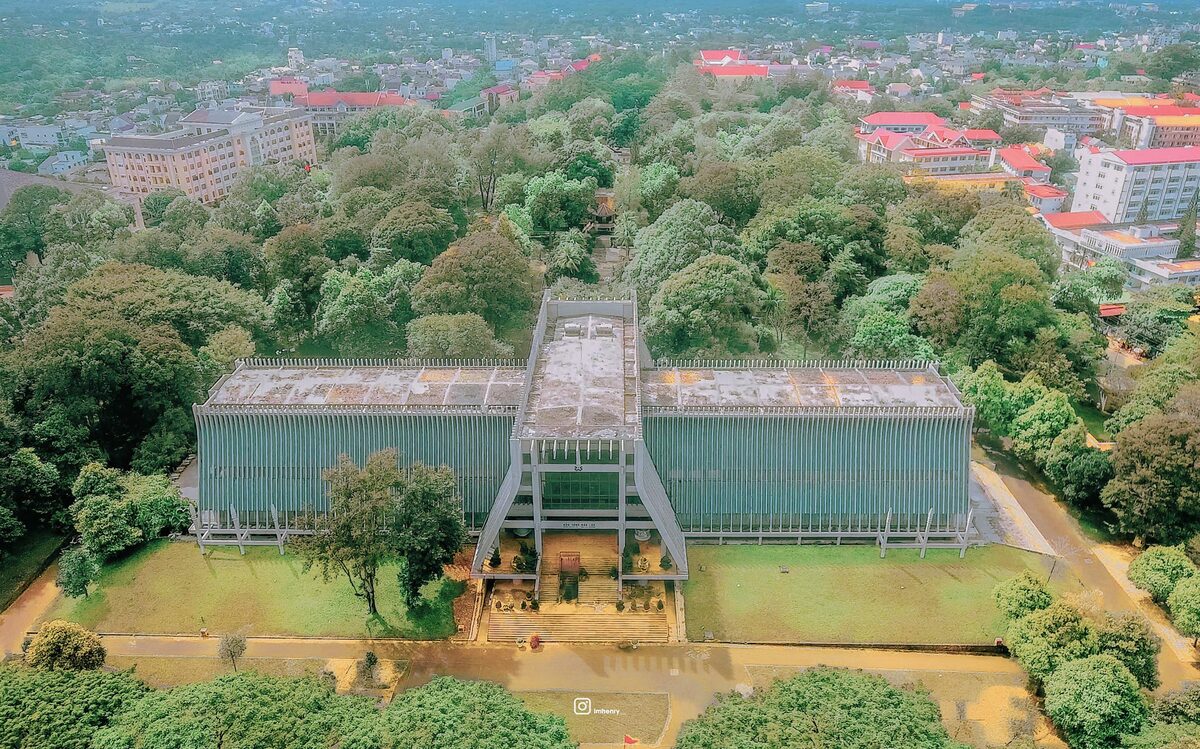
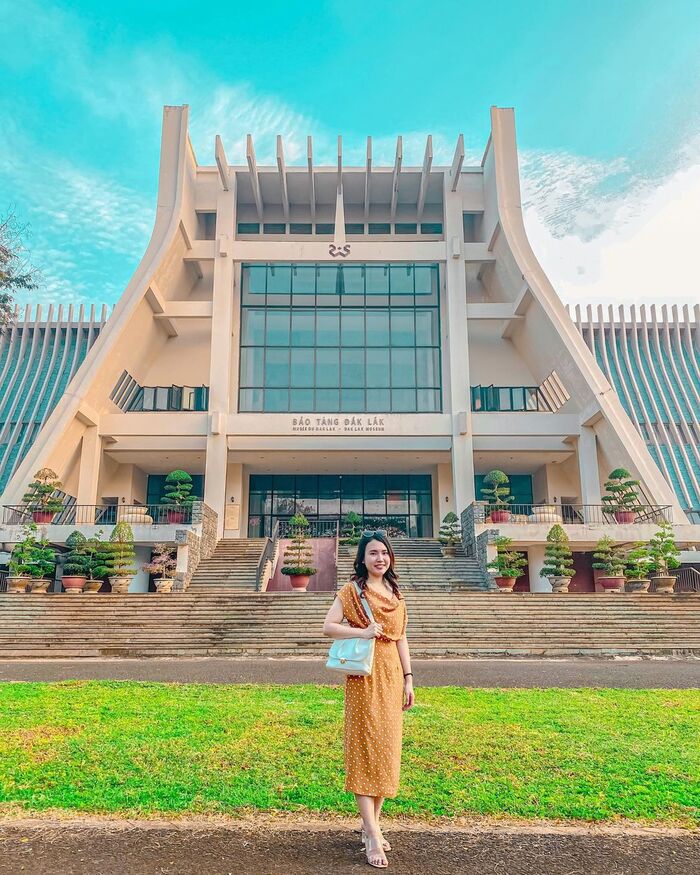
Dak Lak Museum occupies a shaded six-hectare campus of ancient trees in the heart of Buon Ma Thuot, built in 1940 as the French commissioner's residence. During the colonial period it served as the administrative power centre of the Central Highlands, later becoming Emperor Bao Dai's mountain retreat during highland inspection tours. The architecture is a uniquely hybrid creation: steeply pitched roofs and long verandahs echo the Ede longhouse, while arched windows and lotus-column capitals signal French Indochinese style. After 1975 it was converted into a provincial museum, and in 2011 a new exhibition hall fully designed as an Ede longhouse was added alongside, bringing total floor space to 3,800 square metres. It remains the only museum in Vietnam to label all exhibits in four languages — Vietnamese, French, English, and Ede.
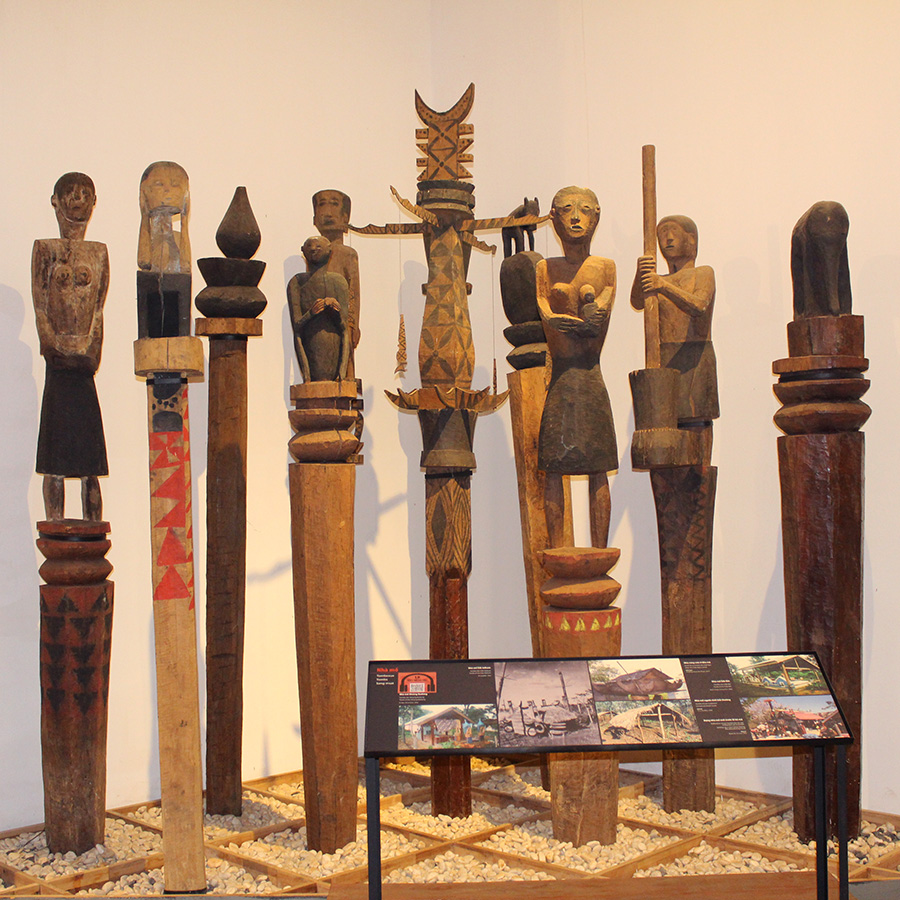
The permanent collection of over 30,000 artifacts is organized into three wings: Dak Lak's natural environment and geography, indigenous ethnic culture, and resistance history. Centerpiece of the cultural hall is a complete gong collection spanning types — from the Ede's three-gong bronze set to the M'Nong's six-piece ching kram — attesting to the Central Highlands Gong Space UNESCO recognized in 2005. Also displayed are Dong Son bronze drums from the 1st–3rd centuries CE, expressively carved funerary statues, a complete M'Nong elephant-trapping toolkit including pit traps, lasso rigs, and taming frames, plus woven brocade garments from all 48 ethnic groups resident in Dak Lak.
Beyond the permanent galleries, the museum's garden courtyard serves as an open-air stage for weekly Central Highlands gong performances and folk arts shows held each Saturday and Sunday. Each March during the Buon Ma Thuot Coffee Festival, the grounds transform into a living village where artisans demonstrate weaving, basketry, and traditional instrument-making live. The museum also maintains a photographic library and research archive on the 49 highland minority groups, accessible by appointment.
The Bao Dai Wing — the original 1940 residence — is preserved as a historic monument within the campus. The emperor's bedroom and study retain their original layout with 1940s French furnishings and documentary photographs from his Central Highlands inspections. This is one of the few reasonably intact Bao Dai royal spaces remaining in Vietnam outside of Dalat.
Gongs are not merely instruments — they are the language of ancestors, the voice of the forest, and a prayer sent up to the spirits.
Nghệ nhân Ê Đê Y Wang Hwing, trình diễn tại bảo tàng / Ede master Y Wang Hwing, performing at the museum
Highlights not to miss.
The gong hall assembles the complete range of bronze percussion instruments used by five Central Highlands peoples: Ede, M'Nong, Jarai, Bahnar, and Xo Dang. Each set carries different timbres, piece counts, and playing techniques — guides typically strike a few gongs so visitors can hear the distinctions. This is the richest gong collection held in any Vietnamese museum.
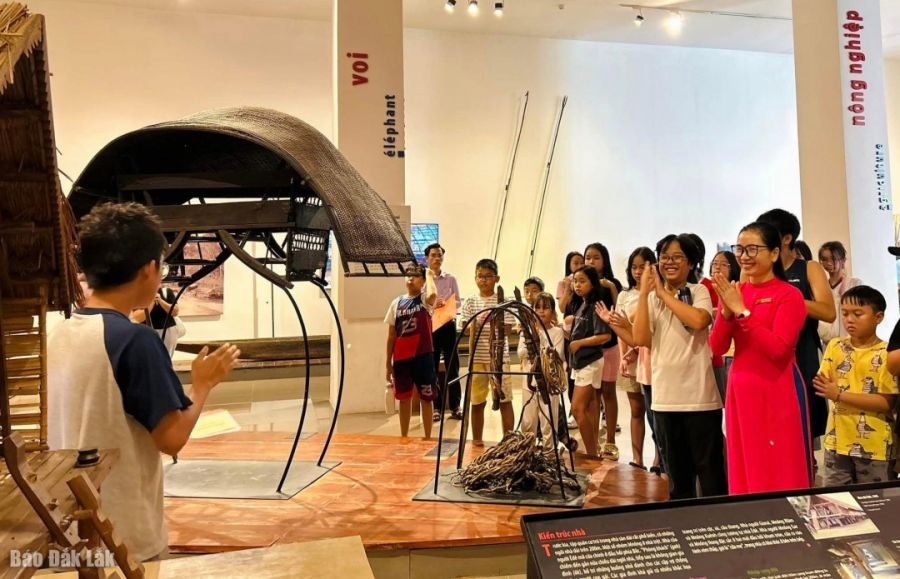
The only complete elephant-capture and taming toolkit remaining in Vietnam: a 1:10-scale pit trap model, a 30-metre rattan lasso, oversized bamboo tethering ropes, and a teak riding saddle for commanding an elephant from its back. The same space displays photographs and documents about Elephant King Y Thu Knul — who tamed over 400 elephants across his 110-year life.
The original 1940 building preserves Bao Dai's bedroom and study with period 1940s French furnishings intact — a high single bed, rosewood cabinet, desk still set with stationery. Documentary photographs of the emperor's highland tours line the walls. This is the least-altered Bao Dai royal space remaining in Vietnam outside Dalat.
Ask staff whether a gong performance is scheduled that day — they typically run at 9:00 AM and 3:00 PM on weekends. Hearing gongs ring across the shaded courtyard of century-old trees is an experience impossible to replicate elsewhere.
How to visit & get there.
Getting There The museum sits in central Buon Ma Thuot, 7 km from Buon Ma Thuot Airport. **Motorbike or Grab** is most convenient (15–20 minutes from the bus station); free parking in the museum grounds.
Visiting Tips **Book a guide** in advance by calling the museum — English and French guides are available but need at least one day's notice. **Arrive in the morning** to avoid the afternoon heat and to catch the short gong performances sometimes held in the courtyard. Bring a **light jacket** as the exhibition halls are air-conditioned.
Sources
- 1.Background of Dak Lak Museum
Bảo tàng Đắk Lắk · 2026-06-25
- 2.Dak Lak Museum of Ethnology
Vietnam Tourism · 2026-06-25