History & meaning.
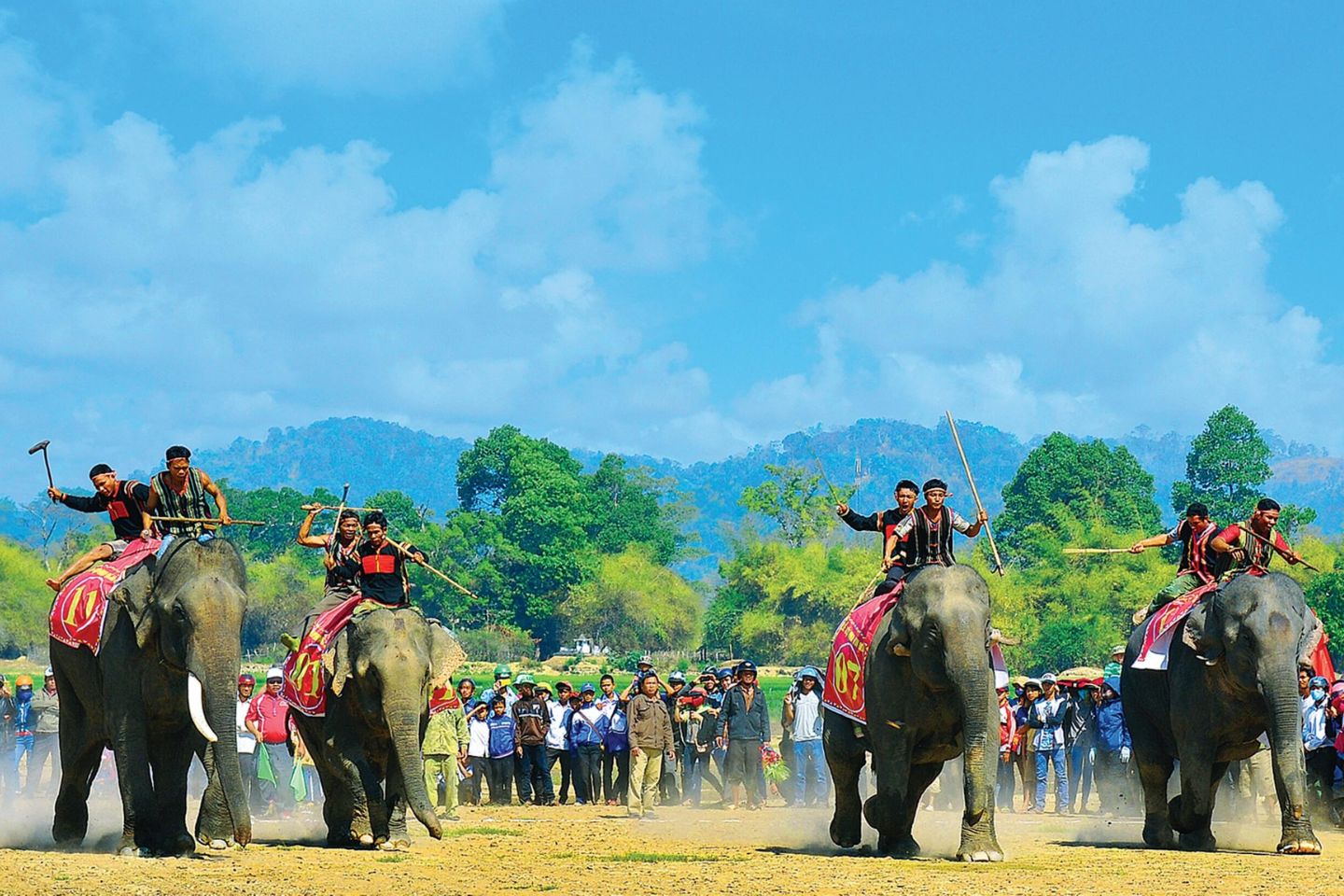
The Buon Don Elephant Festival is rooted in the wild elephant catching and taming tradition of the M'Nông Rlâm people — one of the ethnic groups with the deepest ancestral ties to the Central Highlands forests. The gru (mahout) profession was passed down from generation to generation, with skills including pit-trapping wild elephants, taming them using trained domestic elephants, and communicating through a distinct system of vocal signals. The greatest figure in this history was Y Thu K'Nul (1827–1938), an M'Nông man dubbed "Elephant King" for taming nearly 500 wild elephants over his more than a century of life. The modern festival began in the early 2000s as a cultural-ecological event to preserve the human-elephant heritage, replacing the elephant-catching trade that had been banned. By 2025, it stands as the largest remaining elephant festival in Vietnam.
The elephant health blessing ceremony (also called the yang voi ritual) is the festival's most sacred rite, held early on the first morning. M'Nông village elders dressed in traditional attire lead the ceremony alongside a continuously playing gong ensemble. Each elephant receives shamanic incantations in archaic M'Nông language, sacred water sprinkled from gourd vessels, and red thread tied around the neck — the symbol of a protective amulet. Offerings including chicken, rượu cần rice wine, and fruits are placed directly in front of each elephant for the spirits to receive. After the ritual, mahouts lead elephants to a stream for bathing — regarded as a "cleansing renewal" in preparation for a year of good health.

For the M'Nông people of Buon Don, elephants have never been mere property but family members — with individual names, entries in genealogy records, and mourning rites upon death. This belief stems from the "yang voi" (elephant spirit) tradition — the conviction that each domesticated elephant carries a divine spirit (yang) protecting the mahout's entire lineage. When a tamed elephant is released back into the forest, it is not a loss but an act of returning a soul to nature — an ecological philosophy that predates modern conservation concepts by centuries. The Buon Don Elephant Festival today not only maintains the ritual but also carries a conservation message: the domestic elephant population in Dak Lak has dwindled to approximately 40 animals, down from over 500 at the start of the 20th century.
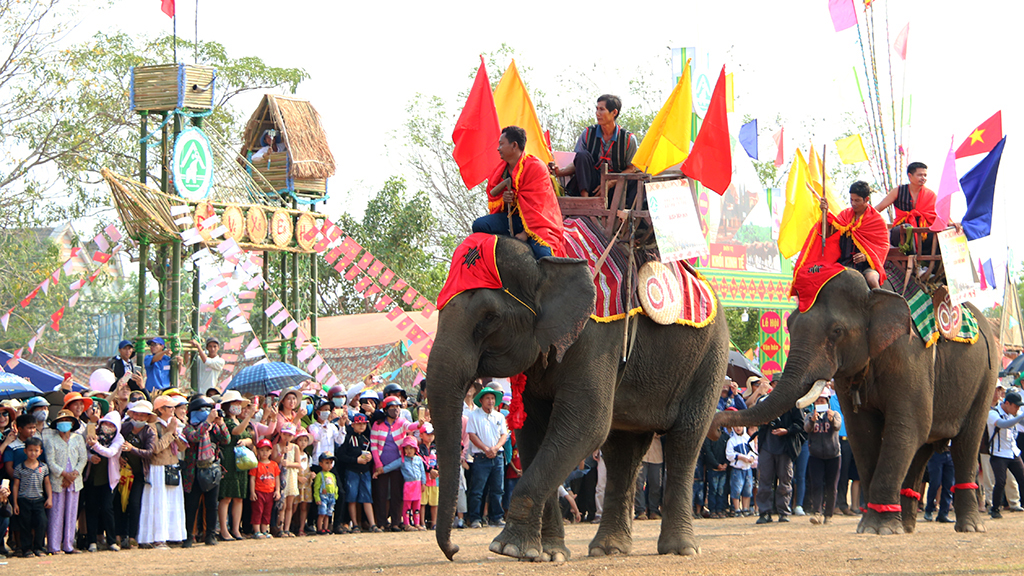
The Buon Don Elephant Festival has fully transitioned to a sustainable tourism model since elephant riding was permanently discontinued in 2023. The elephant fruit buffet — where visitors directly offer bananas, sugarcane, pineapple, and mangoes to elephants under mahout supervision — has become the most beloved activity. An elephant education program featuring documentary screenings and live commentary helps visitors understand each elephant's behavior, communication, and individual history. In partnership with domestic and international elephant conservation organizations, the festival also donates a portion of proceeds to elephant medical and welfare funds. It stands as one of the few elephant festivals in Southeast Asia recognized by international animal welfare organizations as a model worth emulating.
"To lose an elephant is to lose everything."
Tục ngữ M'Nông, huyện Buôn Đôn, Đắk Lắk / M'Nông proverb, Buon Don district, Dak Lak
Highlights not to miss.
The elephant health blessing is the festival's most sacred ritual, presided over by M'Nông village elders accompanied by a gong ensemble. Each elephant receives a shaman's incantations, is sprinkled with sacred water from gourd vessels, and has red thread tied around its neck as a protective amulet. The ritual stems from the M'Nông belief that elephants carry "yang" (divine spirits) within them and must be blessed for robust health throughout the year.
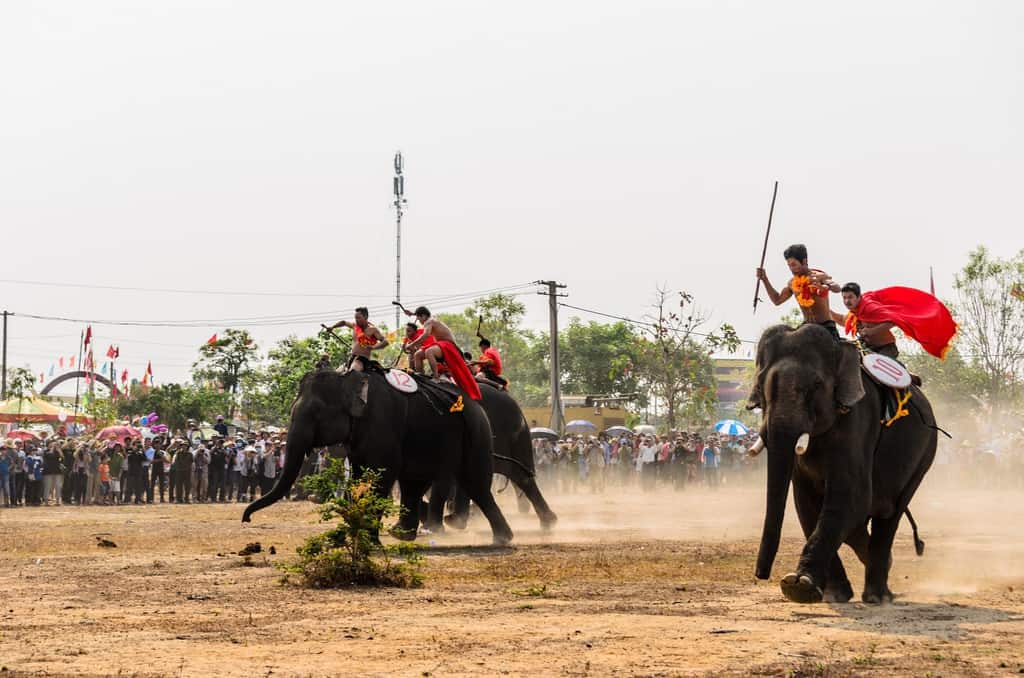
Elephants adorned with colorful brocade textiles and bronze bells parade through Krong Na's red laterite roads, with mahouts seated on the elephants' necks and dressed in traditional M'Nông attire. This is the festival's most iconic image — the fusion of indigenous culture, nature, and the history of elephant taming. Visitors can take close-up photos and interact with elephants in a safe environment without riding.
One of Buon Don's most celebrated sustainable tourism innovations, the fruit buffet allows visitors to personally offer fresh fruits to elephants under mahout supervision. The elephants enjoy bananas, sugarcane, pineapple, and mangoes in a festive atmosphere while visitors learn about each elephant's behavior, dietary needs, and individual history. This activity fully replaces elephant riding, which was permanently discontinued in 2023.
About 500m from the main festival area lies the tomb of Y Thu K'Nul (1827–1938) — the M'Nông man revered as the "Elephant King" for taming nearly 500 wild elephants in his lifetime. This is an important spiritual pilgrimage site that few visitors know about, particularly meaningful during the festival period.
How to attend & get there.
Getting There from Buon Ma Thuot **Rent a motorbike or tuk-tuk** from central Buon Ma Thuot to Krong Na commune (approximately 40km, 1 hour). During the festival, the province usually organizes **free shuttle buses** from March 10th Square to the venue — ask the coffee festival organizers for the schedule. **Depart by 6:30 AM** to avoid missing the health blessing ceremony which begins at 7:00 AM.
Important Notes **No elephant riding** — Buon Don officially and permanently discontinued elephant riding in 2023 as part of its animal welfare commitment. **Bring sufficient water** — the festival area is outdoors and food and drink services may be limited. **Clothing**: Wear comfortable clothes that can get stained by the Central Highlands' red laterite soil — avoid white clothing.
Sources
- 1.Hội Voi Buôn Đôn 2025: Lễ hội Văn Hóa Sinh Thái
Báo Nhân Dân · 2026-06-26
- 2.Đắk Lắk: Hội voi Buôn Đôn để lại ấn tượng sâu sắc với nhiều du khách
VietnamPlus · 2026-06-26