History & story.
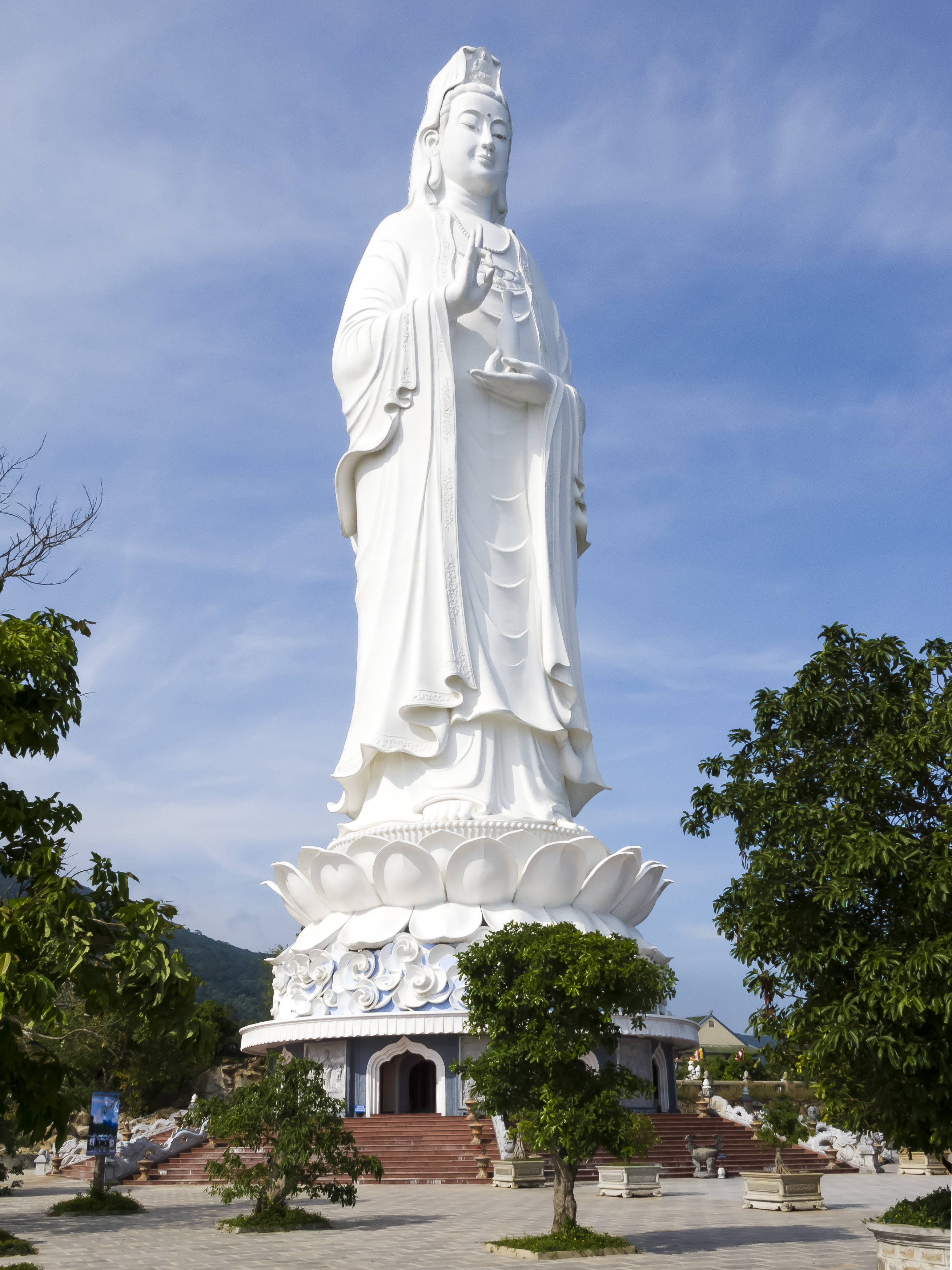
Linh Ung Bai But Pagoda sits on the eastern slope of Son Tra Peninsula, looking directly over the East Sea from a position within majestic old-growth forest. The 67-metre Guanyin statue standing on a 15-metre lotus base was the tallest standing Lady Buddha in Vietnam when consecrated in 2010 — gleaming white, visible from every point on Da Nang's coastline. The entire complex — from the main hall and Arhat garden to the colossal statue — was built over seven years from 2004 to 2010 entirely from voluntary donations by fishermen, small traders, and Buddhist devotees of Da Nang, without a single dong of government budget. This was the largest community spiritual project in the city's history — an 82-billion-dong pagoda built from individual offerings.
Da Nang residents pass down an oral tradition that the Guanyin faces the sea because a great storm in 1964 drowned 74 Da Nang fishermen in a single night. The widows and fishing families made a vow to build a protective statue facing the ocean — a vow kept for forty years until the city had the conditions and enough Buddhist devotees to make it reality in 2004. The statue weighs 35 tonnes, cast from reinforced concrete composite and white granite, designed by Da Nang engineers and Buddhists. Inside is hollow with 17 floors of shrines and 21 gilded Buddha figures — visitors register at the pagoda office to climb inside. Both the 17 floors and 21 figures carry deep Buddhist numerical significance.
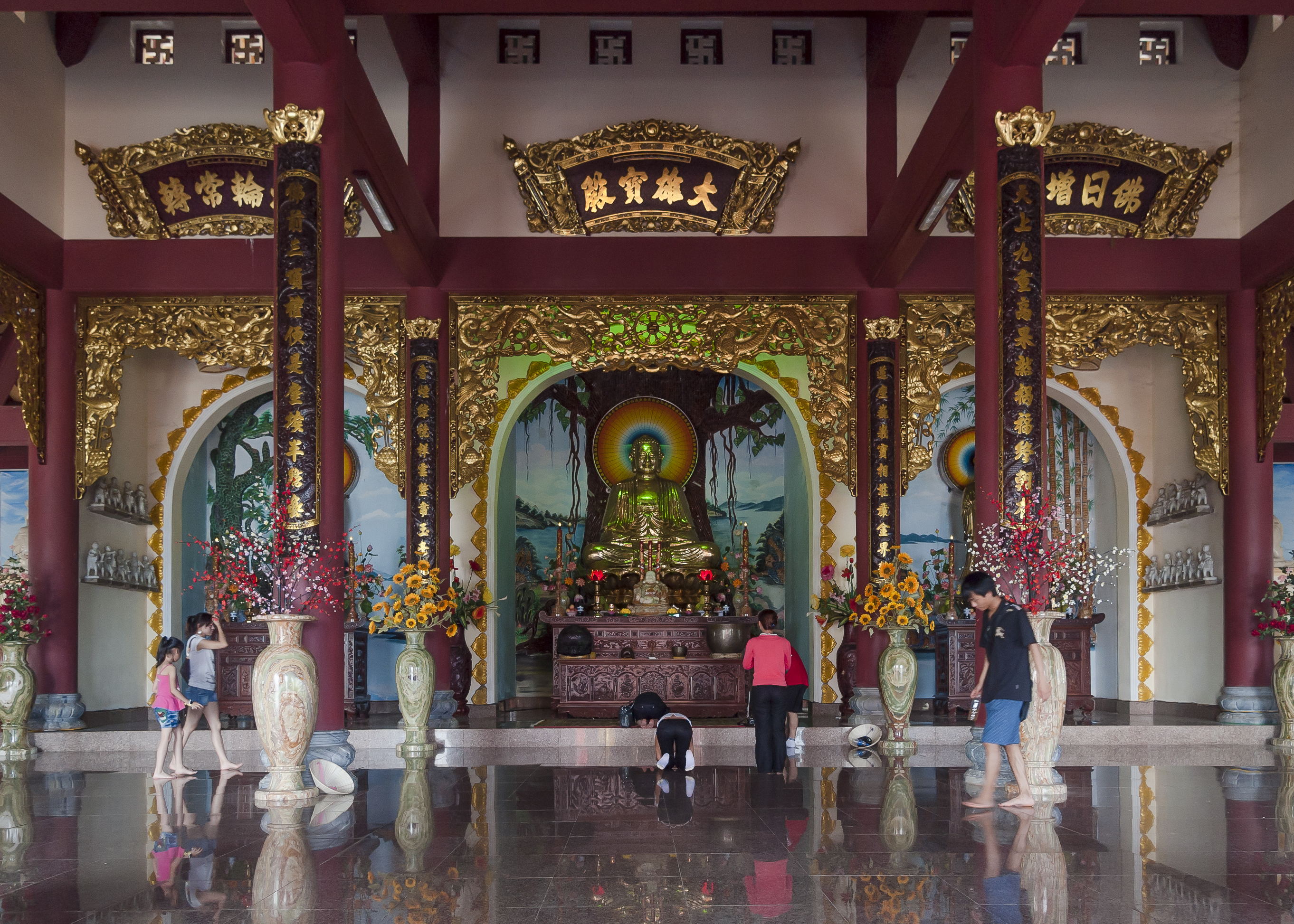
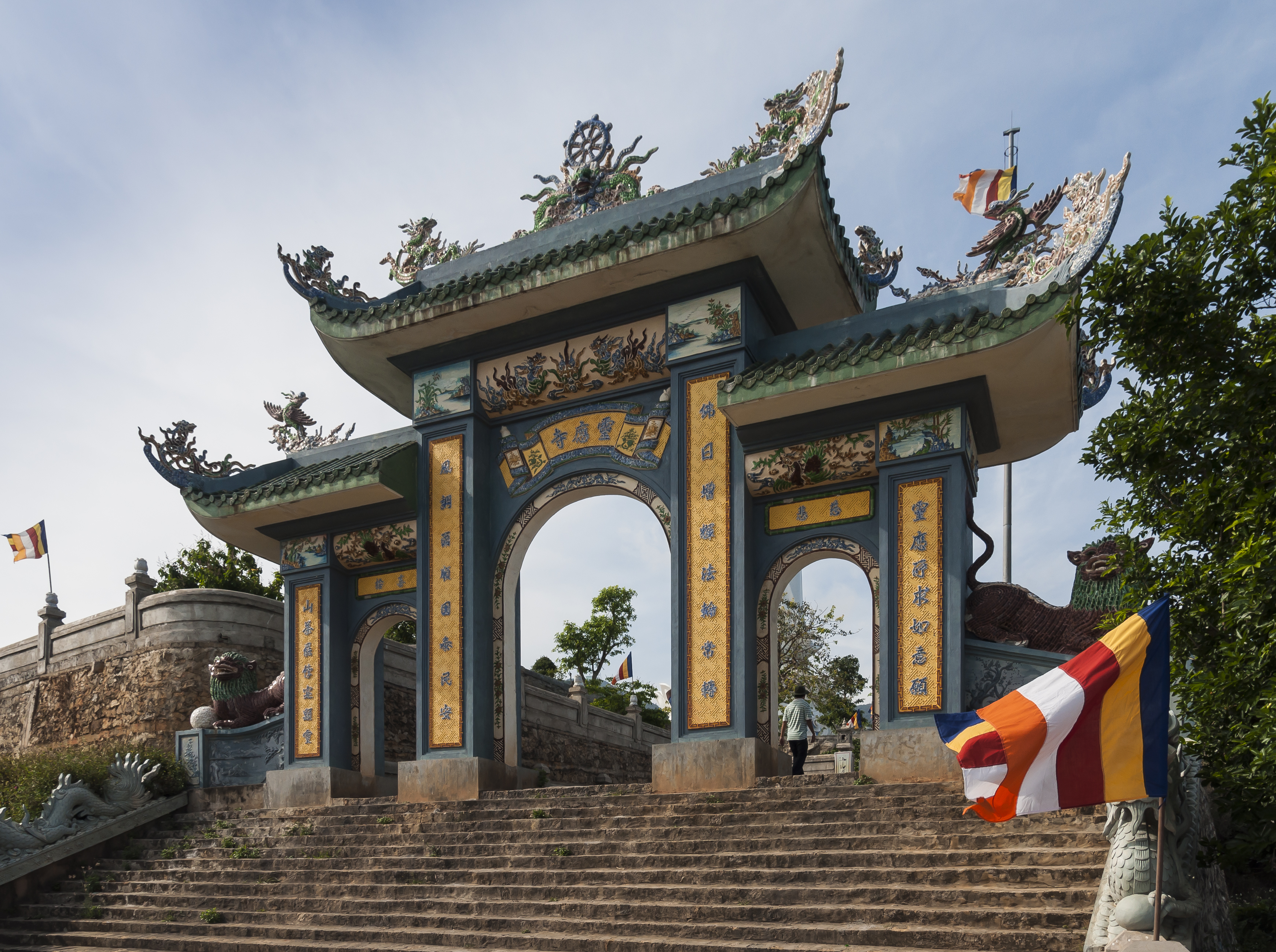
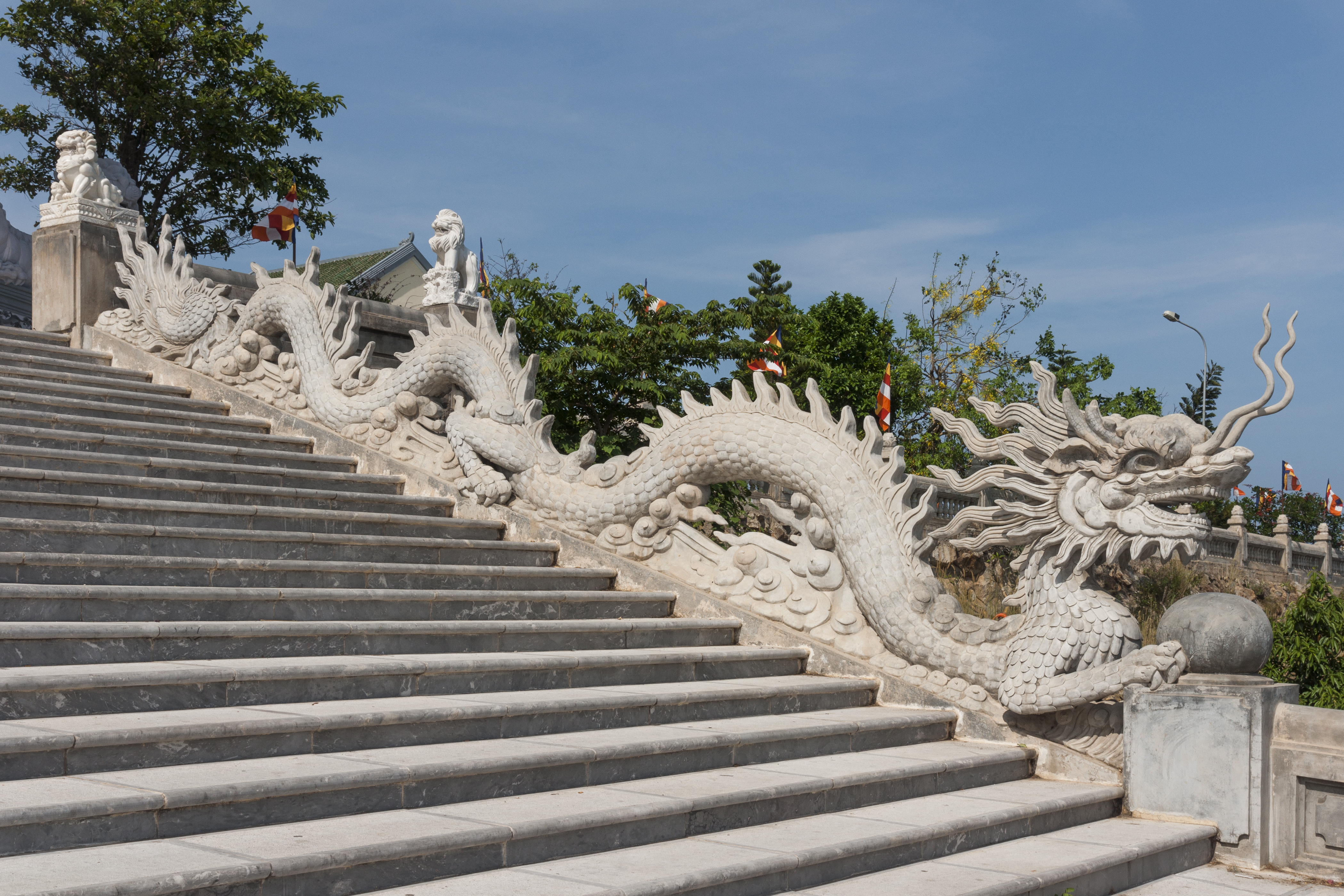
The pagoda complex of over 12 hectares includes the main Shakyamuni hall, an ancestral worship house, a garden of 18 Arhat statues within the forest, and smaller shrines along forest paths. The 108-step staircase leading to the main hall — a sacred Buddhist number representing 108 afflictions — turns the approach itself into a meditative act from the very first step. The view from the pagoda courtyard: the boundless East Sea ahead, the dense Son Tra forest wall behind — a space within nature rare in Vietnamese religious architecture. When sea mist clings to the forest canopy on early mornings, the entire grounds are submerged in a white haze that seems to belong to another world.
Linh Ung Pagoda is not only a pilgrimage destination but a symbol of Central Vietnamese community strength — where people can collectively build something magnificent beyond any individual's capacity. Each year on Buddha's Birthday, Ullambana, and the Guanyin festival, tens of thousands of Buddhists from across Central Vietnam make pilgrimage here. Da Nang's three Linh Ung pagodas — Son Tra, Marble Mountains, and Bai Bac — form a spiritual triangle said to protect the city from three directions according to local folk belief. Standing beside the Guanyin statue with sea wind blowing, boundless forest canopy below and Da Nang's skyline stretching to the horizon — regardless of whether you hold religious belief, that moment makes a person feel small and peaceful in a way that defies explanation.
The Goddess of Mercy stands tall between sky and sea — the compassionate mother of the ocean, watching over Da Nang's brave fishermen as they venture out.
Phật tử hành hương, Đà Nẵng
Highlights not to miss.
The Guanyin statue is hollow inside, containing 17 floors of shrines housing 21 intricately gilded Buddha figures. Visitors register at the pagoda office to climb the internal spiral staircase — each floor has its own altar and small windows looking out over the East Sea from different angles. From the highest level at approximately 50 metres elevation, the panoramic view of Da Nang Bay and the city skyline is unforgettable. Climbing inside is uncommon and requires pre-registration — this is the least-known part of the pagoda for most visitors.
The main approach to the principal hall has 108 stone steps — a sacred number in Buddhism representing the 108 afflictions to be overcome on the path to enlightenment. Each step upward is a step of release. Local tradition holds that the Guanyin faces the sea because after the great storm of 1964 that drowned 74 fishermen, local Buddhists vowed to build a protective statue facing the ocean — a vow fulfilled 40 years later when the pagoda broke ground in 2004.
Along the pathways through the pagoda's 12-hectare grounds stand 18 Arhat statues — each placed in its own niche within Son Tra's old-growth forest canopy, with different expressions and near life-size scale. Early mornings when mist lingers, the white stone figures emerging from the haze create an ethereal scene like an encounter between the human world and the Buddha realm. This is the least photographed but most beautiful corner of the entire pagoda complex.
Da Nang has three pagodas named Linh Ung at three separate locations: Linh Ung Bai But on Son Tra (East Sea), Linh Ung Marble Mountains (southern city), and Linh Ung Bai Bac (northern city). According to local spiritual belief, the three pagodas form a protective triangle guarding the city from three directions — North, South, and East. On major festival days, Buddhists complete a pilgrimage to all three in a single day to seek comprehensive blessings and protection.
Arrive before 7:30 am to avoid crowds and enjoy the pagoda's tranquil atmosphere while sea mist still lingers over Son Tra's forest. This is also the best time to hear the early morning pagoda bells.
How to visit & get there.
Getting to Linh Ung Pagoda
Linh Ung Bai But is 10–12 km from Da Nang city centre. A motorbike is the best option — follow Ngo Quyen Street onto Son Tra Peninsula then follow pagoda signage, about 30 minutes. Grab taxis also operate directly to the entrance. Exercise special caution in rain: the approach road is steep with sharp hairpin bends. The pagoda car park is spacious and free.
Inside the Complex
Dress modestly — covered shoulders and knees; loaner shawls at the entrance gate. To climb inside the Guanyin statue (17 floors of shrines), register at the pagoda office in the morning — independent entry is not available. After visiting the main hall, allow 30 extra minutes to walk the Arhat Garden forest trail — the most beautiful section that most visitors miss. Arrive before 7:30 am to hear the morning bell and enjoy the grounds before tour groups arrive.
Combining with Son Tra
From the pagoda, continue along the Son Tra Peninsula loop road to spot red-shanked douc langurs in the early morning — best to leave the pagoda before 6:30 am to reach the douc forest section by 7:00–8:00 am. Combining both the pagoda and the peninsula in the same morning makes for the ideal Son Tra experience.
Sources
- 1.Chùa Linh Ứng Bãi Bụt — Điểm tâm linh nổi tiếng
Cổng thông tin điện tử TP. Đà Nẵng · 2025-01-15
- 2.Linh Ung Pagoda (Bai But) — Traveller Reviews
TripAdvisor · 2025-01-15
- 3.Chùa Linh Ứng Bãi Bụt — điểm tâm linh không thể bỏ qua ở Đà Nẵng
VnExpress · 2025-01-15