Story & history.
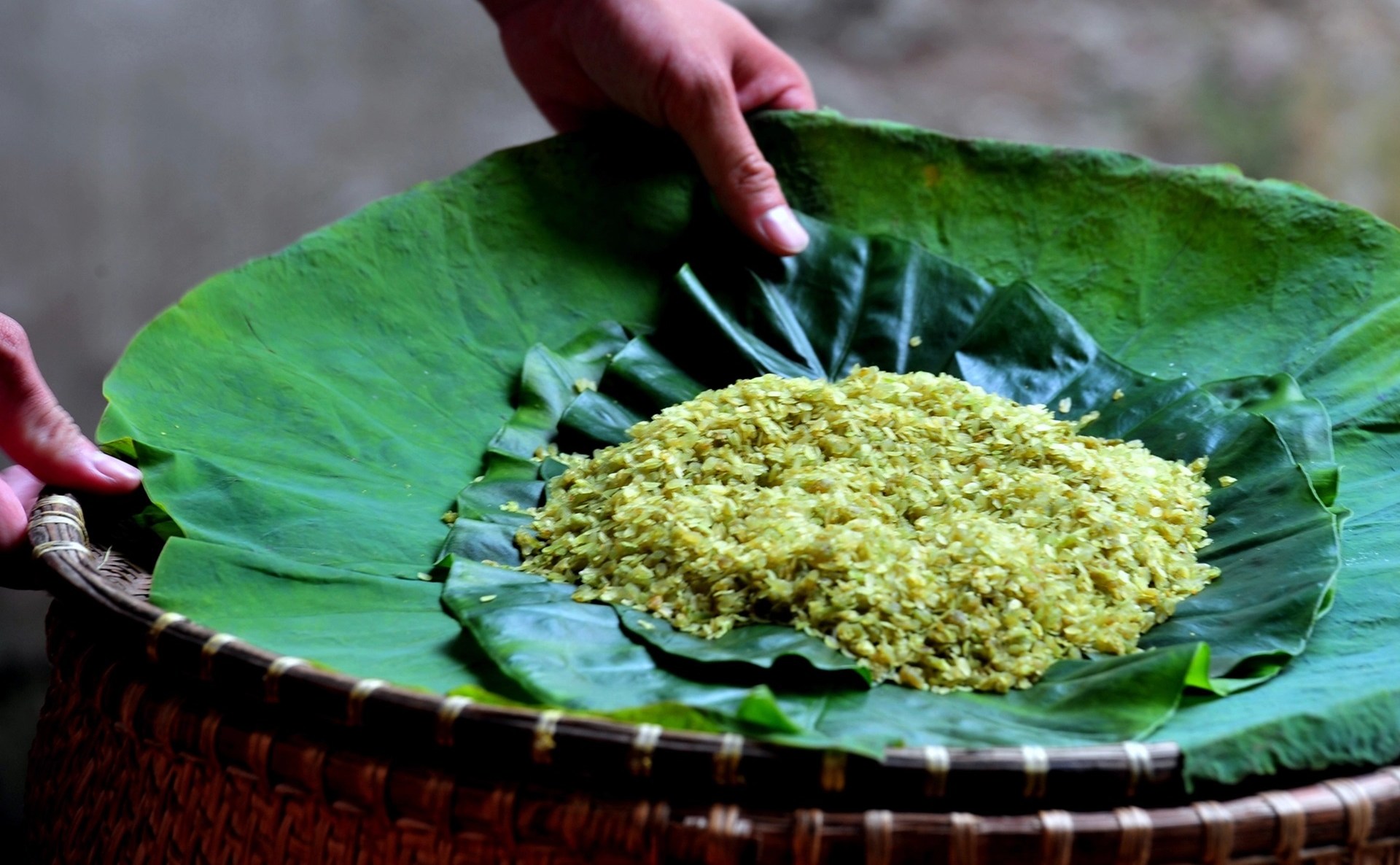
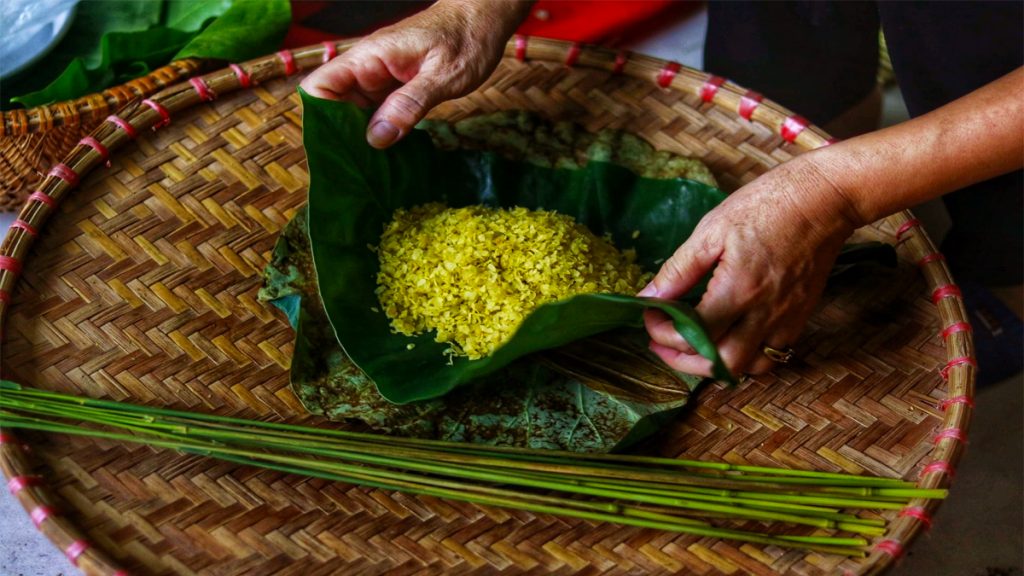
Com lang Vong is Hanoi's most celebrated autumn specialty — young sticky rice grains harvested while still green and hand-pounded in stone mortars until the husks separate while the grains retain their jade-green colour and the special fragrance only found in Hanoi's autumn air from September to November. Lang Vong — full name Dich Vong Tien village — is an outer Hanoi village beside West Lake that has specialized in com-making for many generations, with hand-pounding techniques and secret sticky rice variety selection passed within each family. Com lang Vong has a natural jade-green colour requiring no food coloring, the distinctive fragrance of young sticky rice, and a gentle sweetness impossible to find in industrially produced com — Hanoi connoisseurs can distinguish authentic from fake com by color and aroma alone. Com is wrapped in fresh lotus leaves to retain moisture and add fragrance — the image of bright green lotus-leaf com parcels is the unmistakable symbol of Hanoi's autumn.
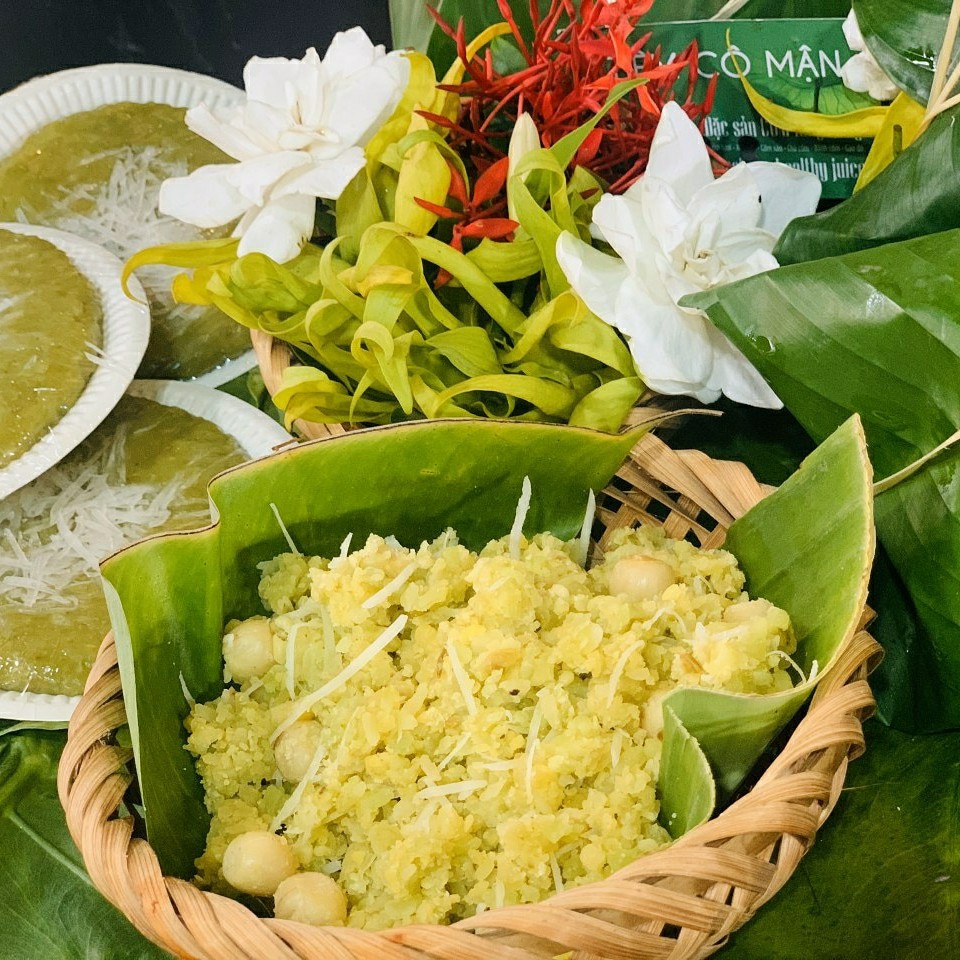
The com lang Vong process begins at dawn when villagers go to the fields to select young sticky rice panicles at the precise stage of ripeness — not too young and starchy, not too mature and losing their sweetness and green color. The harvested rice is slow-roasted in earthen pans over low, even heat for many hours to dry it and develop fragrance, then pounded in wooden mortars multiple times — each pounding is followed by sieving to remove husks and broken grains. A good batch of com requires 5 to 7 rounds of pounding and sieving to produce grains that are perfectly round, beautifully green, and properly fragrant. The finest com lang Vong is eaten immediately after making — tasting a pinch of fresh com with a few sesame salt grains is the purest way Hanoi people enjoy it. Com is also the primary ingredient of banh com — the jade-green square cake with mung bean filling used in Hanoi wedding ceremonies.
Com lang Vong faces serious urbanization pressure today: the village's farmland is rapidly reduced by urban development, and many craft families have shifted to other livelihoods. The number of Lang Vong households still maintaining the traditional com craft decreases each year, and authentic com lang Vong grows ever rarer and more expensive. Hanoi has made preservation efforts by recognizing Lang Vong as a traditional craft village and supporting remaining practitioners. Buying a genuine lotus-leaf com parcel from Lang Vong in Hanoi's autumn is not merely enjoying a specialty — it is a way of preserving a thousand-year tradition and expressing gratitude to the artisans who painstakingly guard the ancient capital's autumn flavor against the pressures of the modern age.
"Cốm is a gift of young rice, carrying in its flavour all the simplicity, purity, and wholesome essence of the paddy fields."
— Thạch Lam, "Hà Nội 36 phố phường" (1943)
Ingredients — what makes the flavour.
Fresh cốm has a naturally bright green colour and a light sweet aroma. Avoid yellowed or odourless cốm — it has been sitting too long.
How to enjoy it properly.
Eating cốm plain
Unwrap the lotus-leaf wrapping and eat small amounts at a time. No seasoning needed — cốm is complete as-is.
With banana
Slice ripe finger bananas and alternate bites with cốm. More cốm than banana is the traditional ratio.
Editor-recommended eateries.
ⓘ Addresses and prices may change. Please verify before visiting.