Story & history.
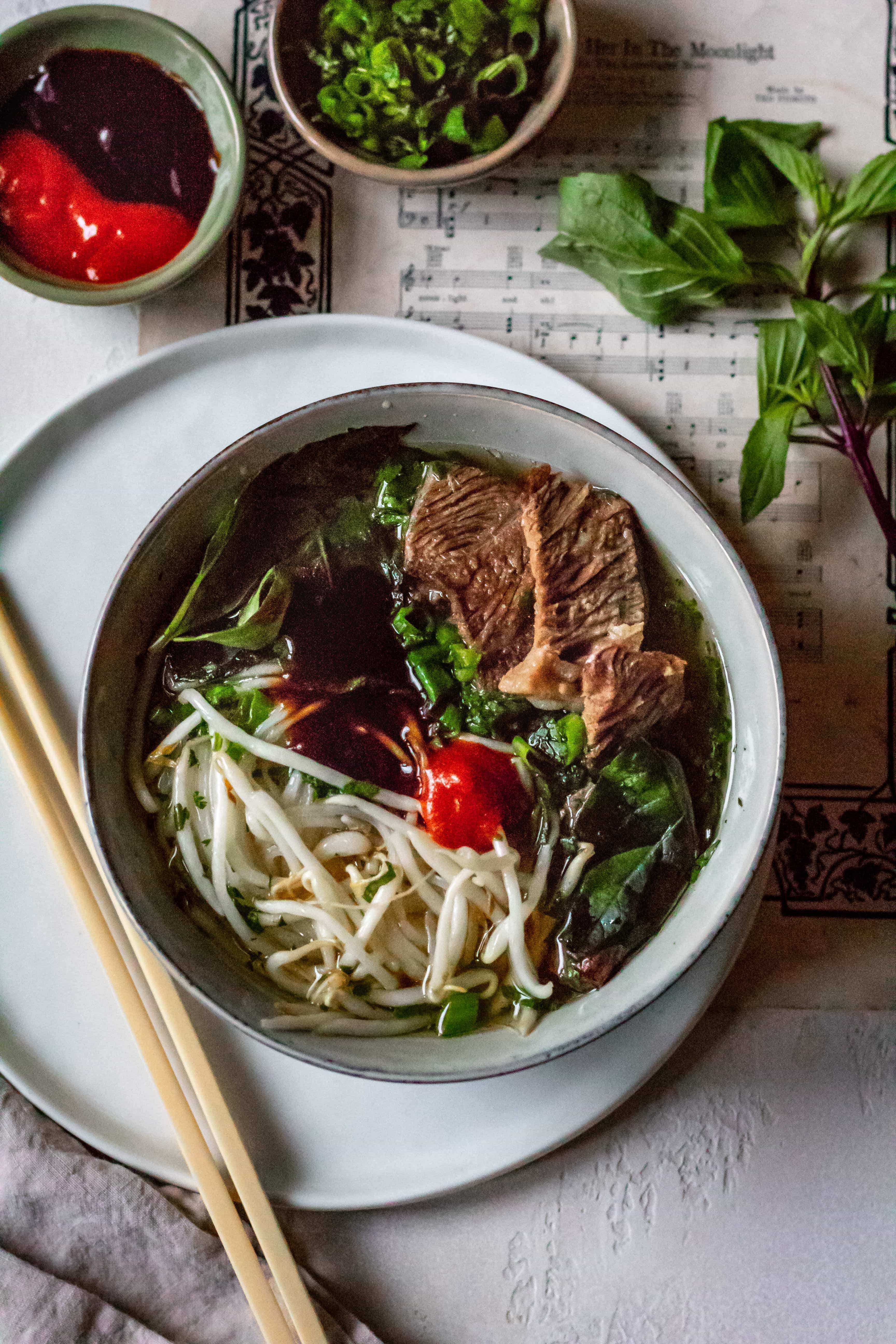
Hanoi beef pho is the soul of Vietnamese cuisine — a clear amber broth slow-simmered from beef bones, charred ginger, and cardamom for 6 to 8 hours, served over freshly sliced pink beef and soft white rice noodles, all united in a complex fragrance that simple words cannot capture. The origins of pho remain debated but most food scholars agree it emerged in northern Vietnam in the early 20th century, possibly from Nam Dinh province before Hanoi adopted and elevated it into an art form. Through the 1940s to 1960s, Hanoi pho formed its classic identity with demanding requirements: perfectly clear broth with no floating fat, fresh never-marinated beef, same-day rice noodles, and accompaniments limited to scallion, ginger, pepper, and lime — no bean sprouts, Thai basil, or hoisin sauce as found in southern versions. Hanoi beef pho has been nominated for UNESCO Intangible Cultural Heritage status and appears on numerous international magazines' lists of the world's 50 greatest dishes.
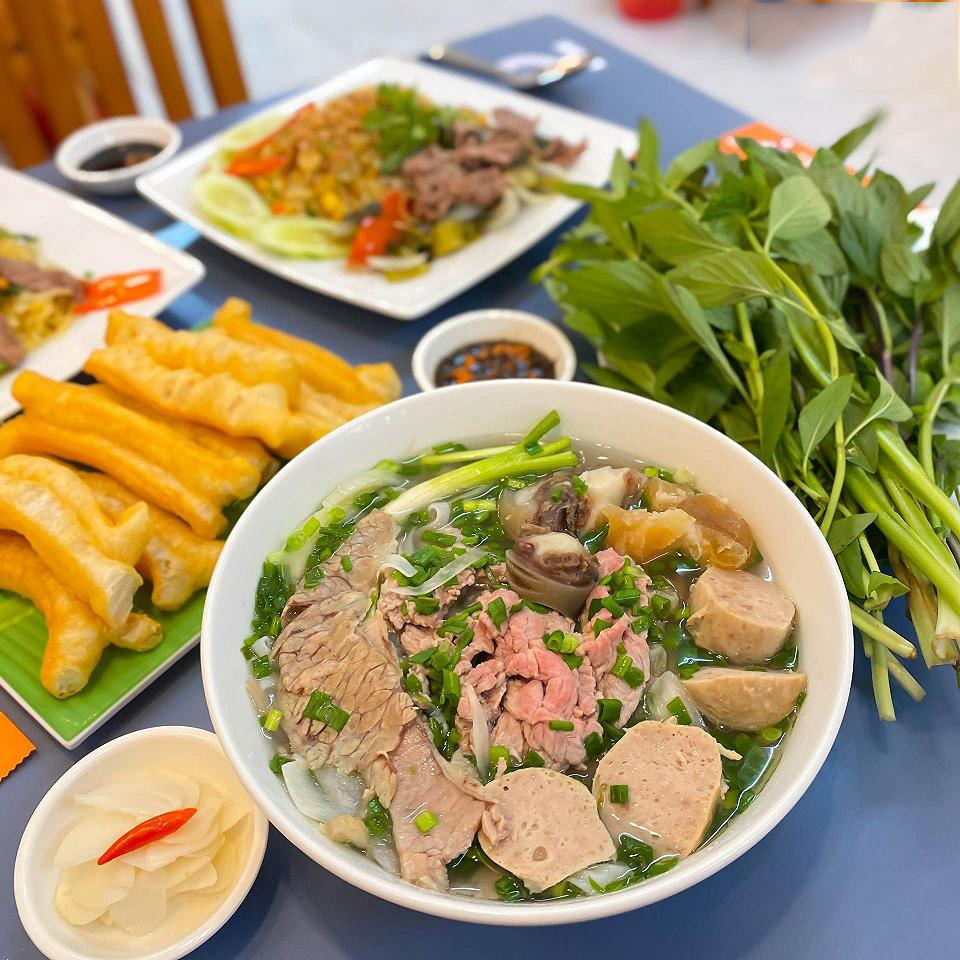
Hanoi pho broth results from patient distillation: beef leg bones and oxtail must be blanched in boiling water to remove blood and impurities before simmering — this step determines the broth's clarity. Ginger and onion are charred directly over flame until blackened on the surface before going into the pot — the smoky caramelization of charred ginger and onion is the soul of pho's fragrance. Cardamom, star anise, cloves, and cinnamon — the four core spices that define pho's aromatic backbone — are dry-roasted and placed in a cloth bag so they perfume the broth without leaving residue. Hanoi pho comes in two main beef preparations: 'pho tai' with raw beef that self-cooks when hot broth is poured over, and 'pho chin' with fully cooked beef — Hanoi connoisseurs typically order 'pho tai nam gau' combining fresh beef slices, brisket, and tendon.
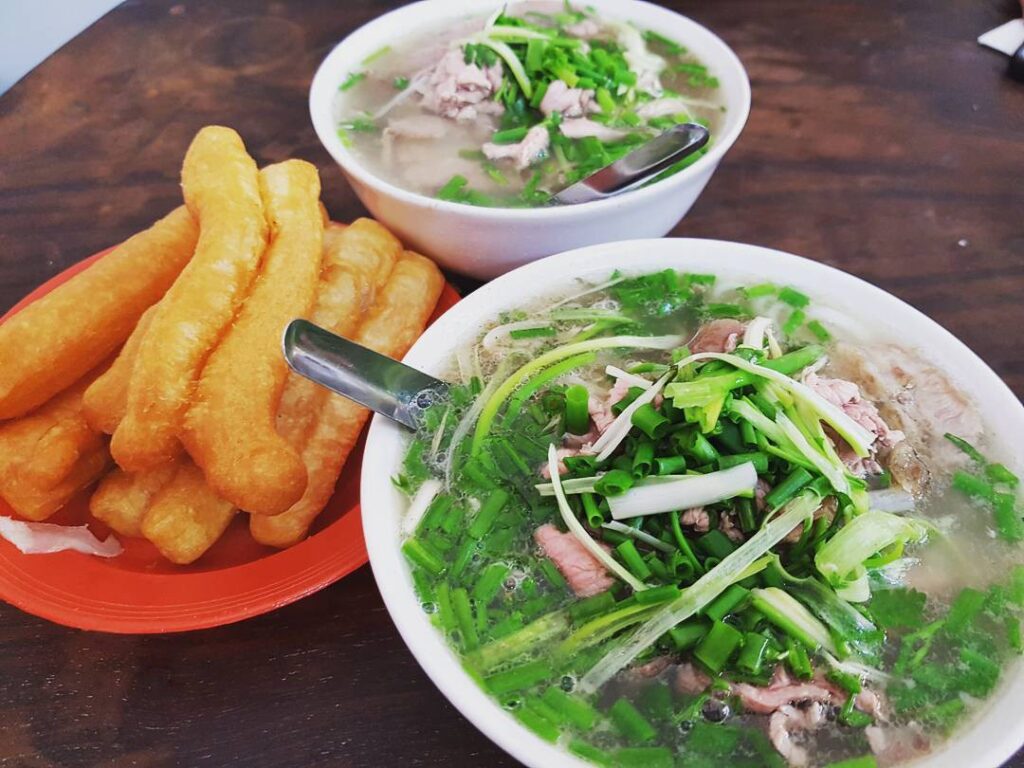
Hanoi pho has a clear culinary geography: Bat Dan street, Ly Quoc Su street, and the Hang Dong-Hang Chieu area of the Old Quarter concentrate the densest cluster of century-old pho establishments. Legendary stalls like Pho Bat Dan have no menu, no reservations, and no table service — customers queue, order, receive their bowl, and find their own seat — a Hanoi culinary ritual impossible to find anywhere else. The ideal time to eat Hanoi pho is 6–8 AM when the broth has just peaked after an overnight simmer and the beef is at its freshest — afternoon and evening bowls are never as good as the morning serving. Hanoi beef pho is the international benchmark for evaluating Vietnamese pho — though pho has spawned hundreds of global variations, people still return to Hanoi to seek out 'original pho' and see if it remains intact.
"A great bowl of pho has broth so clear you can see the bottom—yet the sweetness soaks into every strand."
— Phở Bát Đàn, gia truyền ba đời, Hoàn Kiếm
Ingredients — what makes the flavour.
The best Hanoi pho stalls sell out before 9am. Arrive late and you miss the freshest, most concentrated broth.
How to enjoy it properly.
The Hanoi way
No bean sprouts, no hoisin sauce — that is the southern style. Hanoi pho uses only lime, fresh chili, and Vietnamese coriander from Lang village.
Order of operations
Taste the broth before adding anything. At a good shop it is already balanced — a squeeze of lime and some chili is all you need.
Editor-recommended eateries.
ⓘ Addresses and prices may change. Please verify before visiting.