Story & history.
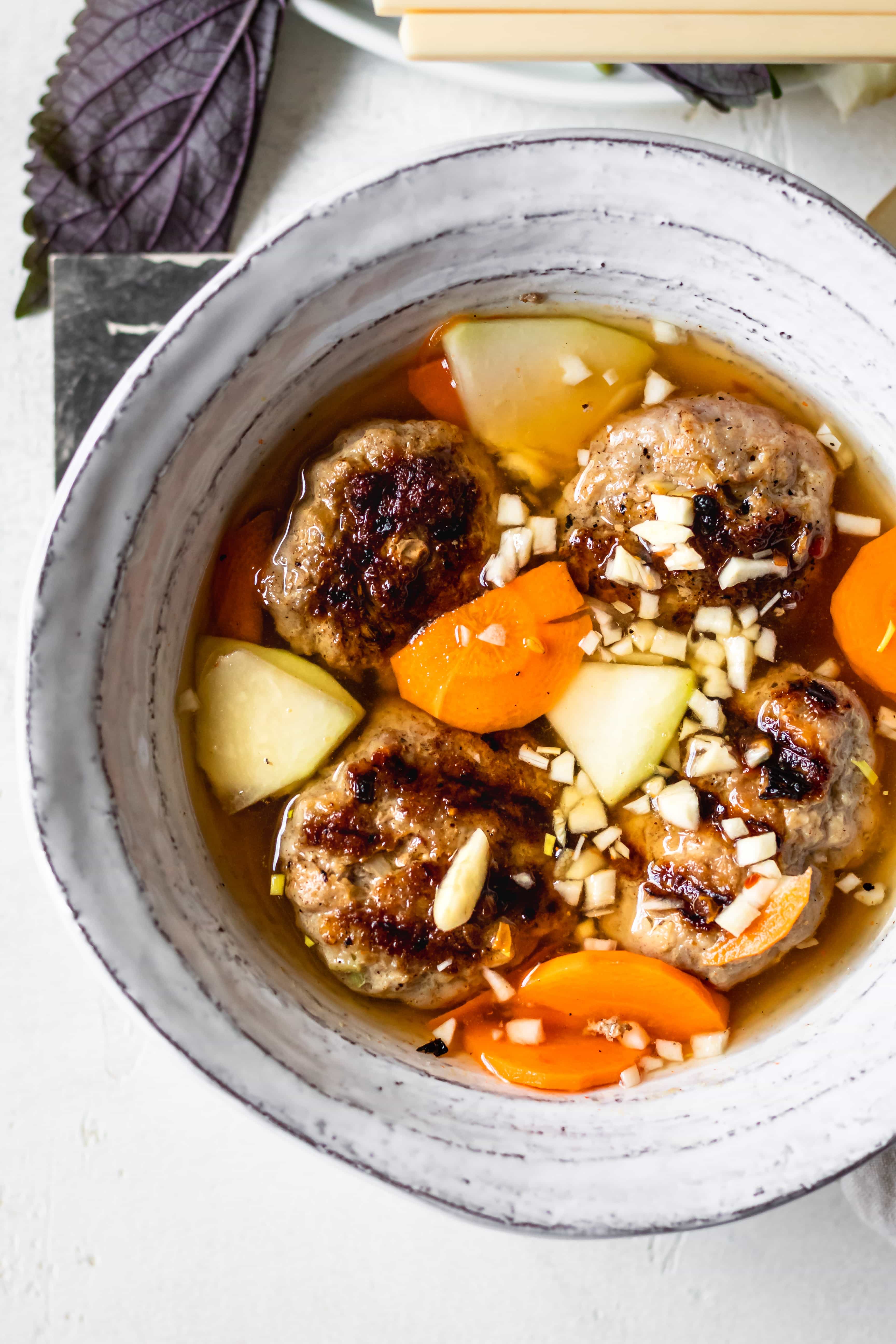
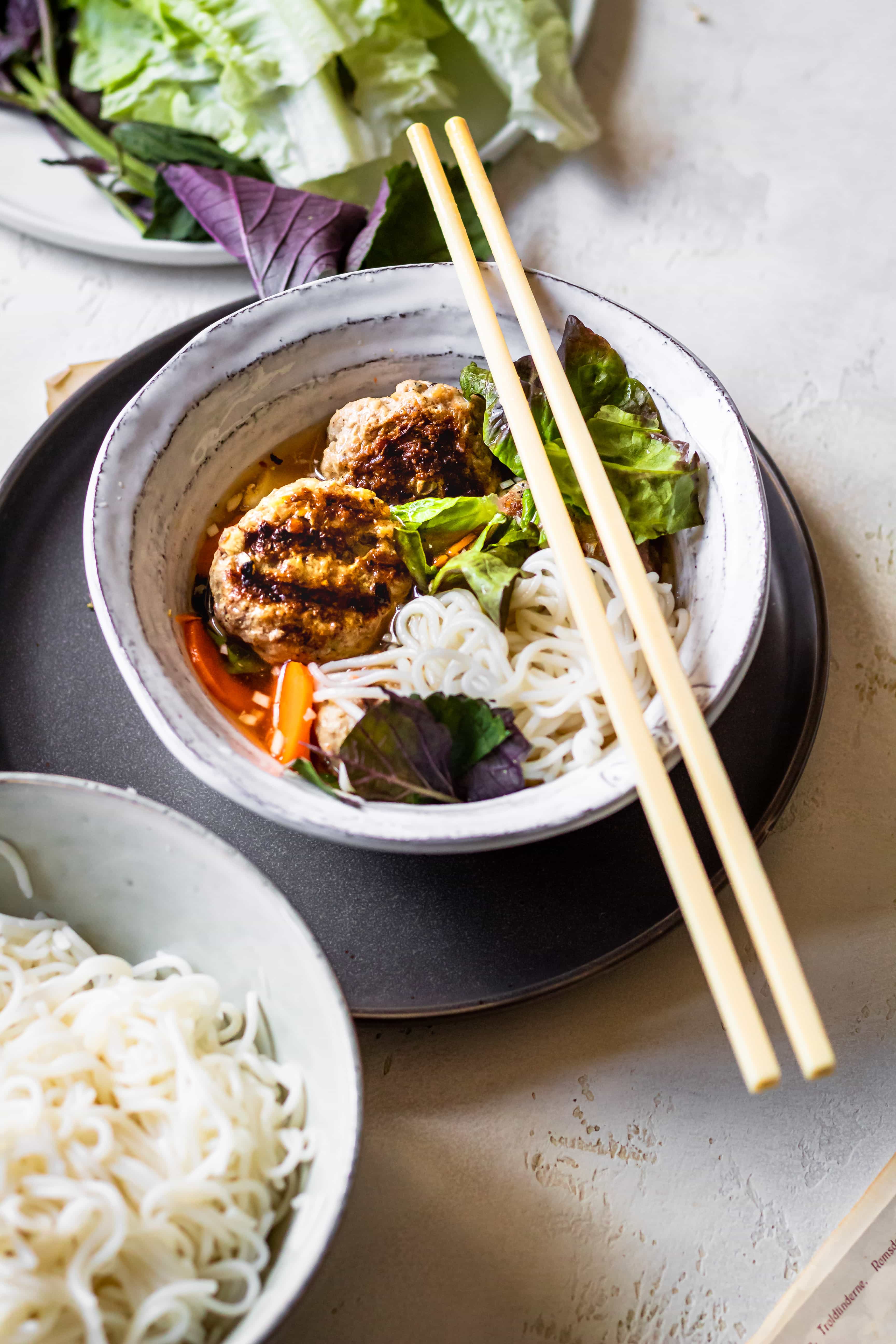
Hanoi bun cha is the capital's iconic lunch — round pork meatballs and sliced belly pork grilled over charcoal to smoky fragrance, dipped into a bowl of sweet-sour-salty sauce made from fish sauce, vinegar, sugar, garlic, and chili, eaten with fresh white vermicelli and a plate of crisp green herbs — the whole presenting a meal that is unpretentious yet deeply considered in every detail. What makes Hanoi bun cha distinctive from other grilled pork noodle dishes is the dipping method — instead of pouring sauce over the food, diners submerge noodles and herbs into the sauce bowl together with the pork, creating a flavor fusion entirely different from other approaches. Former US President Barack Obama and chef Anthony Bourdain sat eating bun cha at a small restaurant on Le Van Huu street in May 2016 — a moment broadcast worldwide that made Hanoi bun cha the most globally noticed Vietnamese dish of that year. Charcoal smoke from sidewalk grills drifting across Hanoi's streets at lunchtime is the unmistakable fragrance — the reliable indicator that a genuine bun cha shop is nearby.
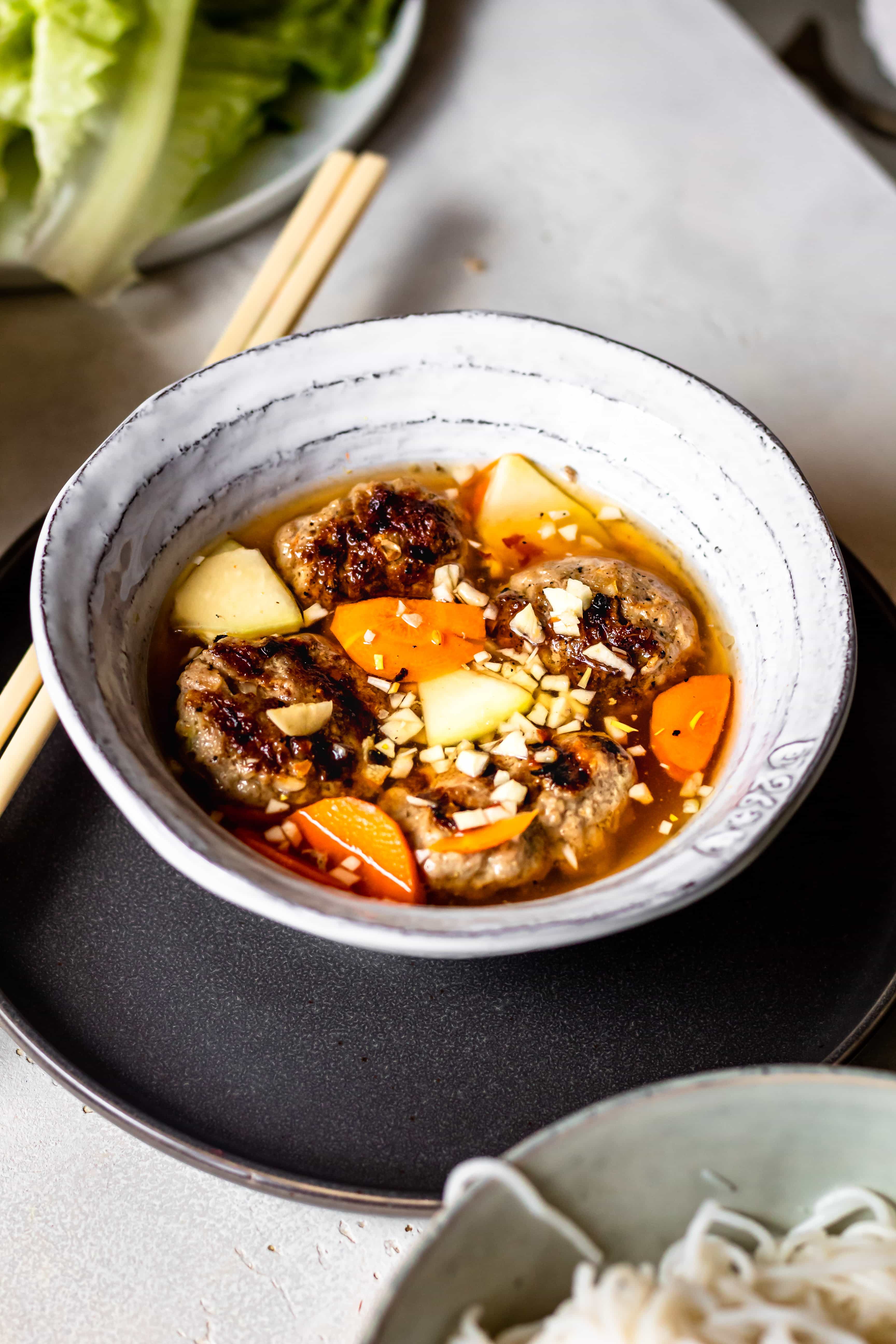
The bun cha meatballs are made from ground lean pork shoulder mixed with shallots, garlic, fish sauce, sugar, pepper, and a touch of fat — the lean-to-fat ratio is each stall's proprietary secret, with too little fat making dry meatballs and too much ruining the texture. The sliced pork pieces are made from thinly cut pork belly marinated with the same seasonings. Both are grilled over charcoal at controlled heat to cook evenly, golden on the surface and fragrant with smoke — not charred or undercooked. Hanoi bun cha dipping sauce differs from standard diluted fish sauce: vinegar replaces lime for a gentler, longer-lasting sourness, the sugar proportion is higher for a richer sweetness, and crucially it includes julienned green papaya and carrot pickled in vinegar — the crunchy pickled vegetables are what distinguish bun cha dipping sauce from all others.
Bun cha is strictly a lunch dish in Hanoi — most stalls open only from 11 AM to 2 PM and close when sold out, a distinctive Hanoi culinary rhythm that uninformed visitors discover too late. Hang Manh street, Le Van Huu, and Nguyen Khuyen are the streets with the most celebrated bun cha establishments. After a bun cha meal, Hanoi people typically order fried shrimp fritters alongside — Tay Ho shrimp cakes with their crispy batter shell and fresh shrimp inside frequently appear on the same menu. Bun cha was adopted by Vietnamese restaurants worldwide after the 2016 Obama-Bourdain moment, but global food enthusiasts still make the journey to Hanoi seeking the original experience — the sizzle of pork on charcoal, smoke rising from the sidewalk, and the clear sweet-sour dipping sauce that cannot be perfectly replicated anywhere else.
"Charcoal-grilled pork smoke drifting from a lane at 11am — that is the smell of Hanoi."
— Bún chả Hương Liên, phỏng vấn VnExpress Ẩm thực 2016
Ingredients — what makes the flavour.
Most bún chả stalls open from 11am and sell out by 1–1:30pm. Arrive after 1pm and the pork is likely gone.
How to enjoy it properly.
The correct order
Dip the bún directly into the broth bowl (don't eat noodles separately then dip). The noodles need to absorb the broth.
The pork
Eat the pork while hot — the caramel fades when it cools. Pick up a piece of pork and a bundle of bún together.
Editor-recommended eateries.
ⓘ Addresses and prices may change. Please verify before visiting.