Story & history.
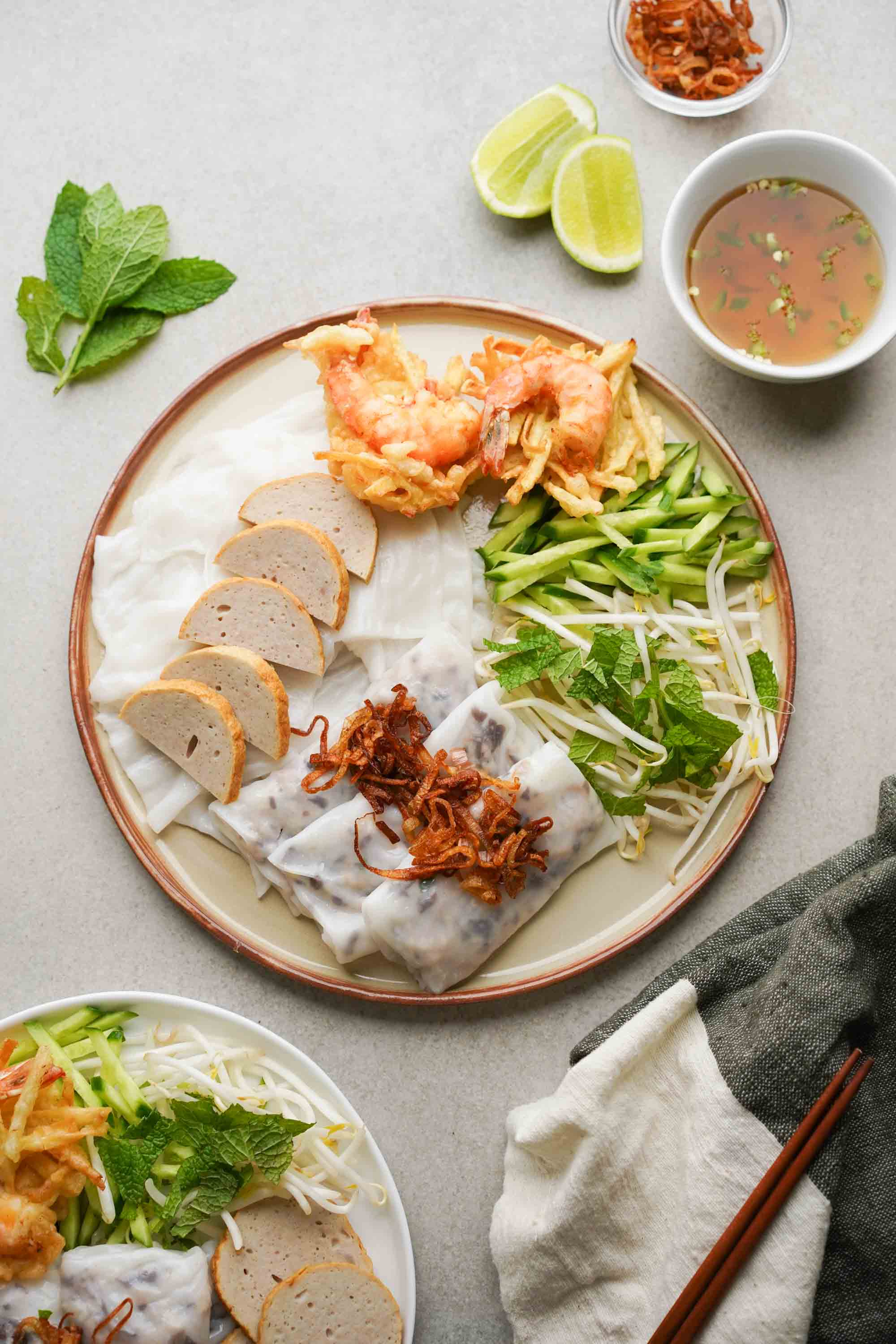
Hanoi banh cuon is a feat of artisanal cooking technique — a paper-thin rice flour sheet is spread over a cloth stretched across a boiling water steam drum, and only 30 to 40 seconds after the batter is ladled onto the cloth, the translucent sheet is cooked and lifted with a flat bamboo stick, then rolled around a filling of sautéed pork and wood ear mushrooms to create rolls of soft white delicacy that nearly dissolve on the tongue. The craft demands high skill and is transmitted within communities — Thanh Tri village beside the Red River, just a few kilometers from central Hanoi, has long been celebrated as the origin and center of the finest banh cuon craft in the North. Banh cuon is served with sliced cha lua (Vietnamese pork sausage), fragrant fried shallots, diluted fish sauce dipping sauce, and a few drops of ca cuong essence — the aroma of ca cuong, a prized northern Vietnamese insect whose essence lends a unique floral fragrance, creates a unique flavor impossible to find in any other dish. Excellent banh cuon batter must be ground from rice soaked overnight — Khang Dan or Bac Thom rice are the traditional choices of Thanh Tri craft families.
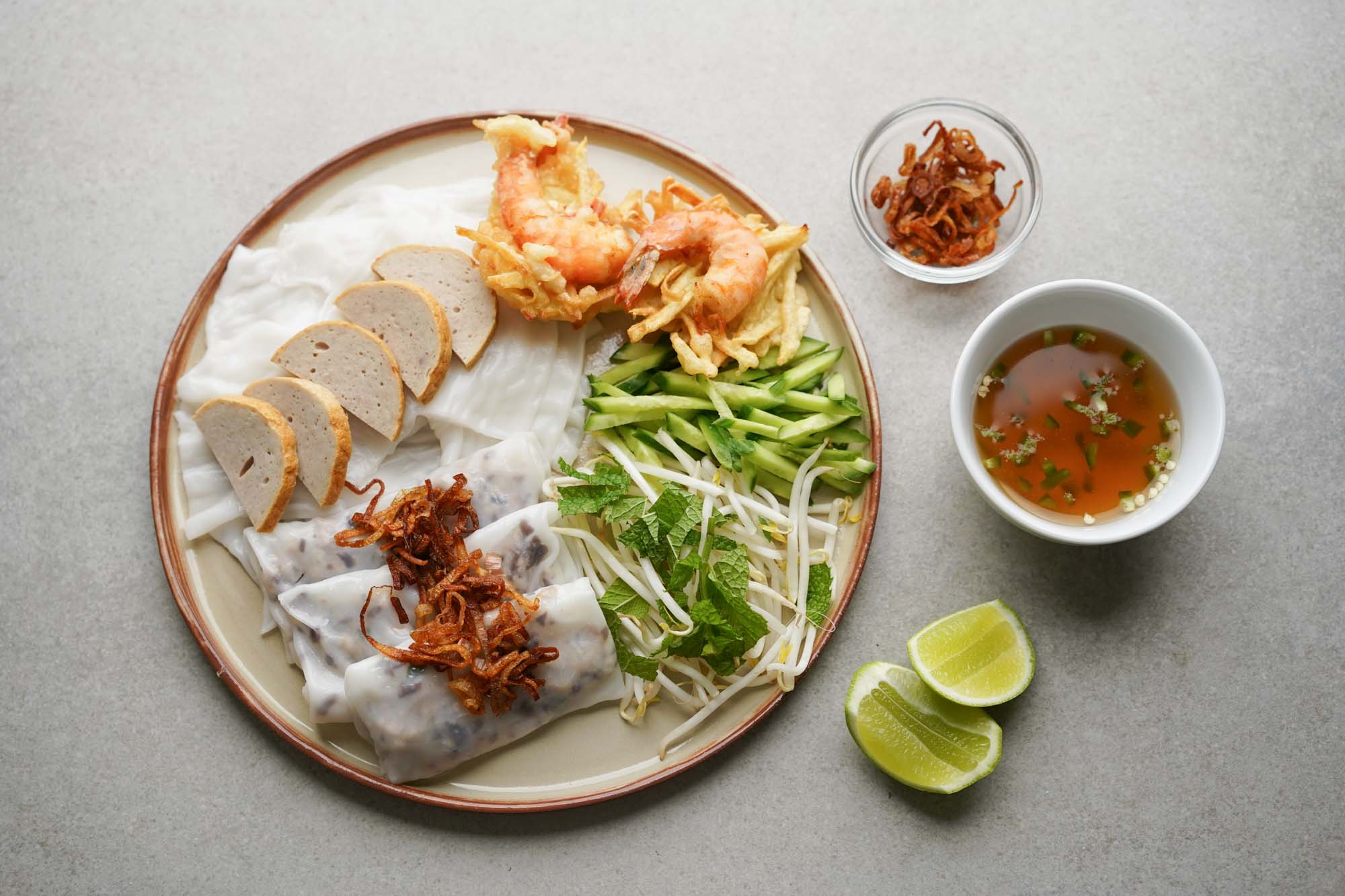
The banh cuon steaming process is a performance of hand choreography — the maker uses a ladle to pour a precise amount of well-stirred batter onto the cloth surface and swiftly spreads it into a thin layer before covering with a dome lid. After 30–40 seconds the translucent sheet is ready and lifted with a long flat bamboo stick onto a board where filling is added and it is rolled while still hot — the entire operation takes under one minute and requires perfect hand-eye coordination. The traditional filling of minced pork, julienned wood ear mushrooms, and fried shallots is simple, yet when rolled inside the smooth thin sheet and dipped in fish sauce it produces a complex flavor far exceeding its apparent simplicity. Hanoi banh cuon also comes in an unfilled version — banh cuon trang — served with cha lua and dipping sauce, stripped to minimalism — yet still one of the most beloved breakfast dishes in the city.
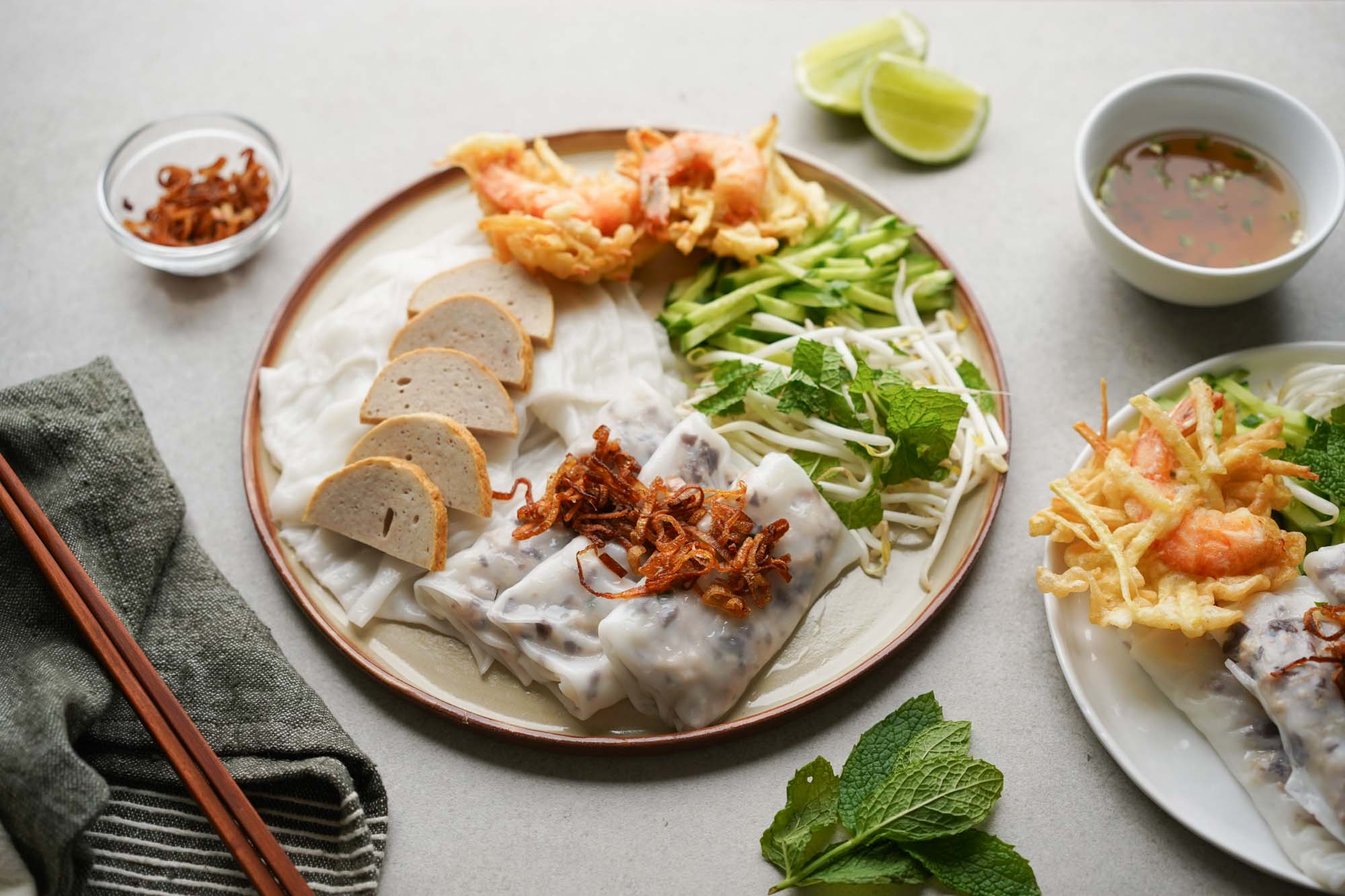
Thanh Tri banh cuon and Hanoi banh cuon in general face the challenge of preserving the traditional craft as fewer young people choose to learn it given low income and physical demands. Some elderly artisans in Thanh Tri village maintain the hand-steaming technique and sell in the early morning — these are the addresses that Hanoi food connoisseurs and culinary tourists specifically seek out. Hang Ga street and the Old Quarter area also have many banh cuon shops open from 6 to 10 AM — closing when sold out. Banh cuon is one of the clearest examples of how Hanoi cuisine transforms the simplest ingredients — rice flour, pork, wood ear mushrooms — into a refined culinary experience through skill and deep understanding of cooking technique.
"Great bánh cuốn is thin enough to see through, yet it holds without tearing when rolled."
— Nghệ nhân làng Thanh Trì, truyền khẩu
Ingredients — what makes the flavour.
Authentic Thanh Tri bánh cuốn has no filling — just scallion oil and fish sauce. Try the plain version first to appreciate the wrapper's thinness and aroma.
How to enjoy it properly.
No additions needed
Thanh Tri bánh cuốn is already balanced with its sweet fish sauce. Add chili only if you want heat.
Eat fresh
Bánh cuốn is best within 1–2 hours of steaming. Avoid buying pre-made to eat later in the day.
Editor-recommended eateries.
ⓘ Addresses and prices may change. Please verify before visiting.