History & story.
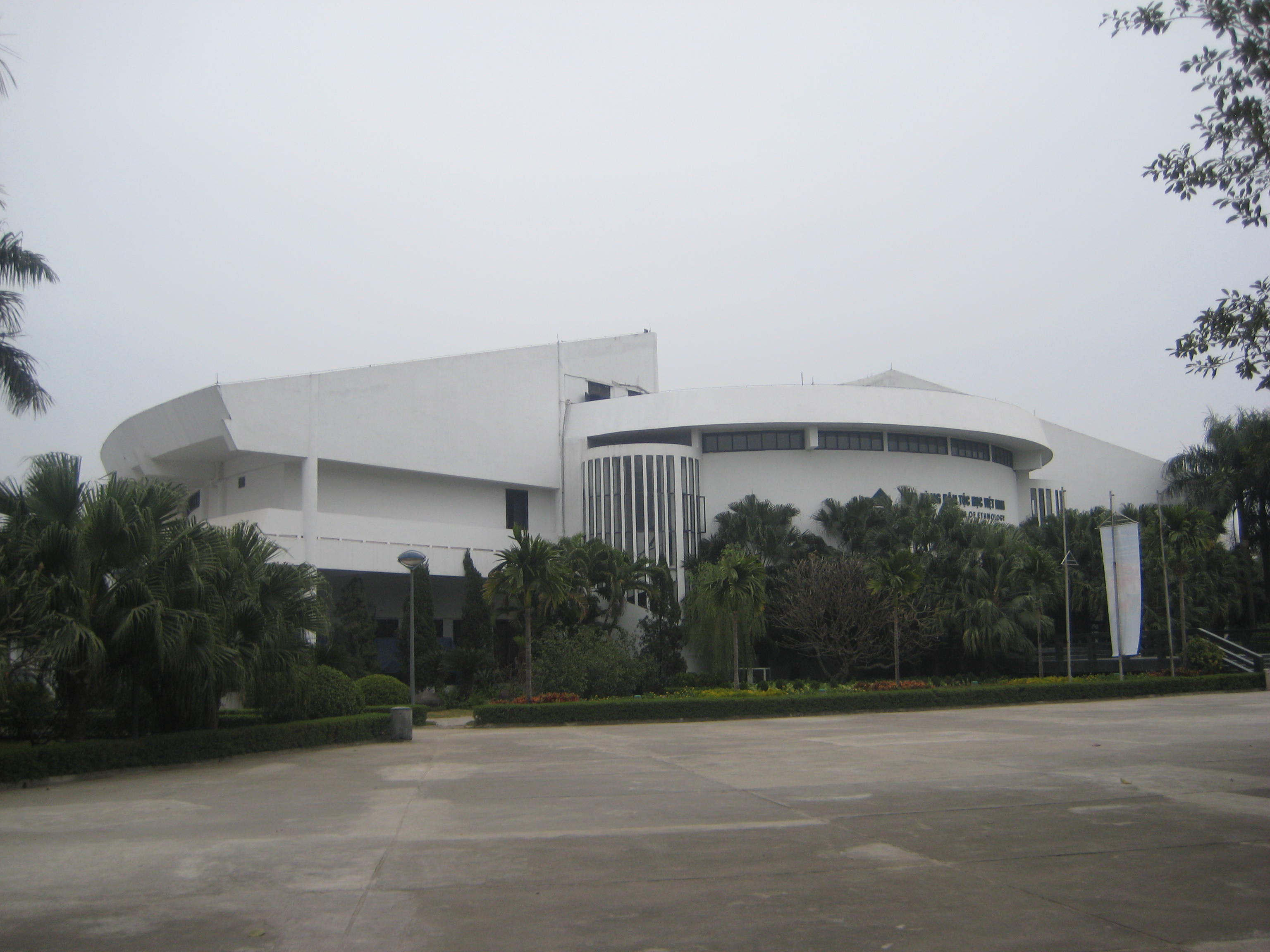
The Vietnam Museum of Ethnology is an international collaboration between the Vietnamese Ministry of Culture and CNRS — France's National Centre for Scientific Research, one of the world's premier scientific organizations. Inaugurated in 1997, the museum brought the most advanced museological thinking to practice in Vietnam with a display methodology that respects cultural context and rigorously avoids treating ethnic minorities as objects of exotic display. The main building was designed by architect Ha Thi Hoa in the shape of the Ngoc Lu drum — the world's most celebrated Dong Son bronze drum from the 1st century BCE. Time Asia magazine in 2001 named this museum one of the five most fascinating museums in Asia — it remains the only Vietnamese museum to receive such recognition.
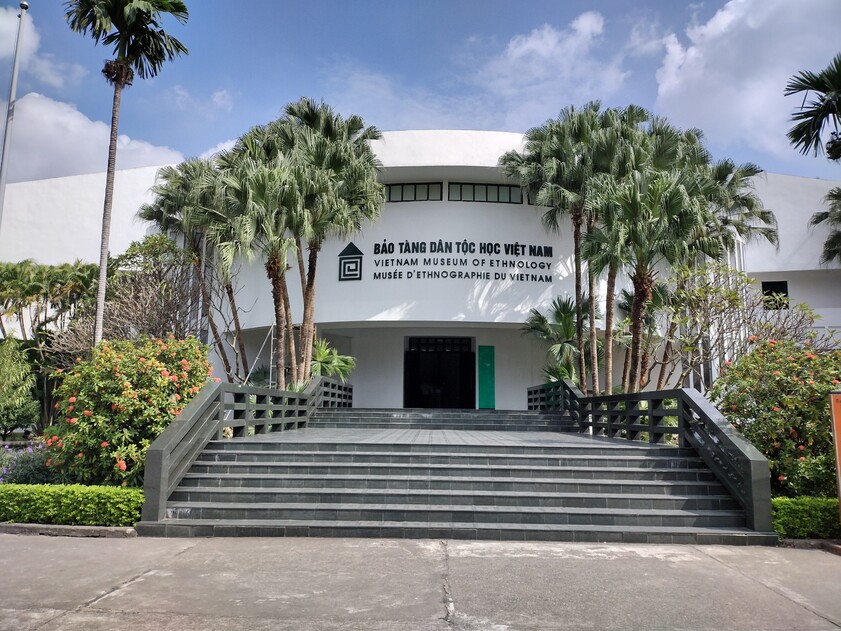
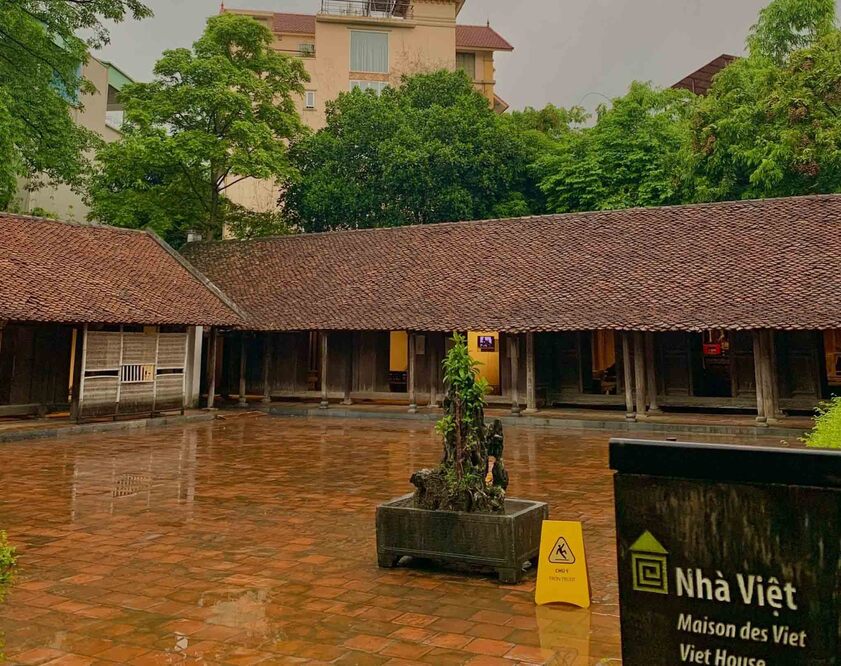
The indoor collection comprises over 15,000 artefacts, 42,000 documentary photographs, 2,700 hours of audio recordings, and 373 hours of film — the largest anthropological dataset on Vietnam's 54 ethnic groups ever assembled, documented under real field conditions across the entire country. Each artifact is placed in its full cultural, social, and historical context: a Central Highland gong is not merely a musical instrument but a ritual object tied to a specific spiritual and customary law system; an embroidered Hmong garment is the language of ethnic identity and social position, each pattern conveying a specific story. The 3.3-hectare outdoor garden with 10 full-scale reconstructed traditional houses — Ba Na communal house, Ede longhouse, Tay stilt house, Hmong house — is an ethnological architectural park impossible to find anywhere else in Southeast Asia.
Every weekend, the museum stages water puppet performances in the outdoor pool — the art form unique to Vietnam that appeared in the 11th century Red River Delta when farmers invented performance on water surfaces. Wooden puppets are controlled by bamboo rods hidden underwater, accompanied by live folk music with drums, dan bau monochord, and bamboo flute. This is one of Hanoi's most affordable and least crowded water puppet venues. The extended Southeast Asia exhibition helps visitors understand the cultures of Vietnam's 54 ethnic groups in their broader regional context — the Tay people of Vietnam with close ethnological ties to the Zhuang of China, the Cham with their own script derived from ancient Indian Sanskrit, the southern Khmer with their Cambodian connections.
The Vietnam Museum of Ethnology is a destination that many foreign visitors rate as the most meaningful experience in their Hanoi visit — because it provides genuine understanding of Vietnam as a multi-ethnic country where 53 ethnic minorities make up over 14% of the population and live in strategically important border regions. The collection digitization project allows online access to thousands of artefacts and research documents — a step that broadens global access to Vietnam's diverse cultural heritage. No address in Hanoi better answers the question: 'Who is Vietnam really?' — the answer is not one people and one culture, but 54 ethnic groups living on one territory with separate, rich stories that deserve to be known.
The Ede say: the longhouse belongs to the women — when a husband divorces, he takes his instrument and mat, while the house remains with the wife and her matrilineal kin.
Trưng bày về chế độ mẫu hệ Ê Đê, Bảo tàng Dân tộc học Việt Nam / Ede matrilineal system display, Vietnam Museum of Ethnology
Highlights not to miss.
Ten full-scale reconstructed traditional houses of 10 ethnic groups spread across the 3.3-hectare garden — from the sloping-roofed Tay stilt house, to the Ede longhouse reflecting the matrilineal system where the wife's family owns the home, to the soaring Ba Na communal house with its steeply angled thatched roof symbolizing a sacred mountain. Visitors can step inside many of the houses and directly experience the living spaces and social structures reflected in the architectural layout. All materials and building techniques are authentic to the original — executed by artisans from the corresponding ethnic communities themselves.
The museum's ethnic costume collection is one of the world's most comprehensive collections of Vietnamese ethnic minority dress — from the Hmong festival clothing using batik wax-resist technique and hand embroidery requiring hundreds of hours of craft work, to garments of bark cloth and forest leaves worn by deep-forest Central Highland peoples. Each costume is a declaration of ethnic identity — colours, patterns, and styles carry specific information about ethnicity, geographic region, age, and marital status of the wearer. Embroidery and weaving techniques are demonstrated live by contemporary artisans on certain weekend days.
Water puppetry — an art form unique to Vietnam, originating in the 11th century in the Red River Delta when farmers invented performance on flooded paddy field water surfaces. At the museum, weekend performances in the outdoor pool use wooden puppets controlled by bamboo rods hidden underwater, accompanied by live folk music with drums, dan bau monochord, and bamboo flute. This is one of Hanoi's most affordable and less crowded water puppet venues — unlike the Thang Long Water Puppet Theatre in the Old Quarter that is typically very busy with tourists.
The extended Southeast Asia exhibition contextualizes the cultures of Vietnam's 54 ethnic groups within the broader regional picture, clarifying cross-border cultural connections — the Tay people of Vietnam have close ethnological ties to the Zhuang of China; the Khmer of southern Vietnam are a branch of the same Khmer people of Cambodia; the Cham have their own script derived from ancient Indian Sanskrit. This exhibition asks profound questions about the concepts of national borders and ethnic identity, helping visitors understand Vietnam not as a homogeneous entity but as a diverse and complex cultural space with many overlapping historical layers.
Start with the outdoor exhibition on arrival to beat the midday heat, then move indoors to the air-conditioned galleries around midday — this sequencing is most comfortable on sunny days.
How to visit & get there.
Getting There and Ideal Timing
The museum is at Nguyen Van Huyen, Cau Giay District — about 7 km west of central Hanoi. Taxi or ride-hail takes 20–25 minutes from the Old Quarter (approximately VND 80,000–120,000). Bus routes 16 or 33 from the city centre also reach the museum (40 minutes). Allow at least 3 hours to properly explore both indoor and outdoor sections — aim for 4 hours if you want to include a water puppet performance.
Practical Visitor Tips
Start with the outdoor area on arrival to avoid midday heat, then move to the air-conditioned indoor galleries around noon. Weekends: Check the water puppet performance schedule (usually 10:00 and 14:30 — confirm at the ticket counter). Audio guides in English, French, and Japanese available for hire at the entrance. The on-site restaurant serves Vietnamese food at reasonable prices for lunch. The museum pairs well with Duong Lam Ancient Village (35 km away, feasible as a day trip).
Sources
- 1.Lịch sử thành lập Bảo tàng Dân tộc học Việt Nam
Bảo tàng Dân tộc học Việt Nam · 2025-02-15
- 2.Vietnam Museum of Ethnology
Lonely Planet · 2025-02-15
- 3.Bảo tàng Dân tộc học — Điểm đến văn hóa hàng đầu Hà Nội
VnExpress · 2025-02-20