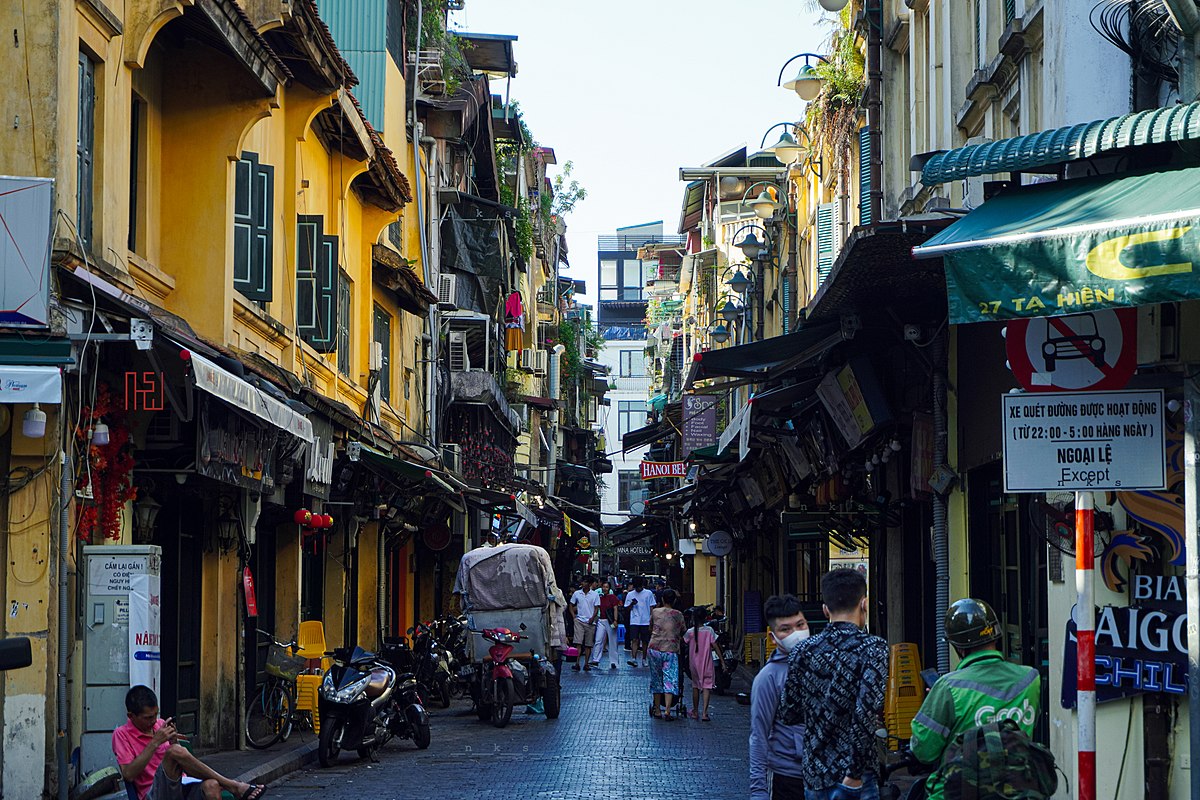
History & story.
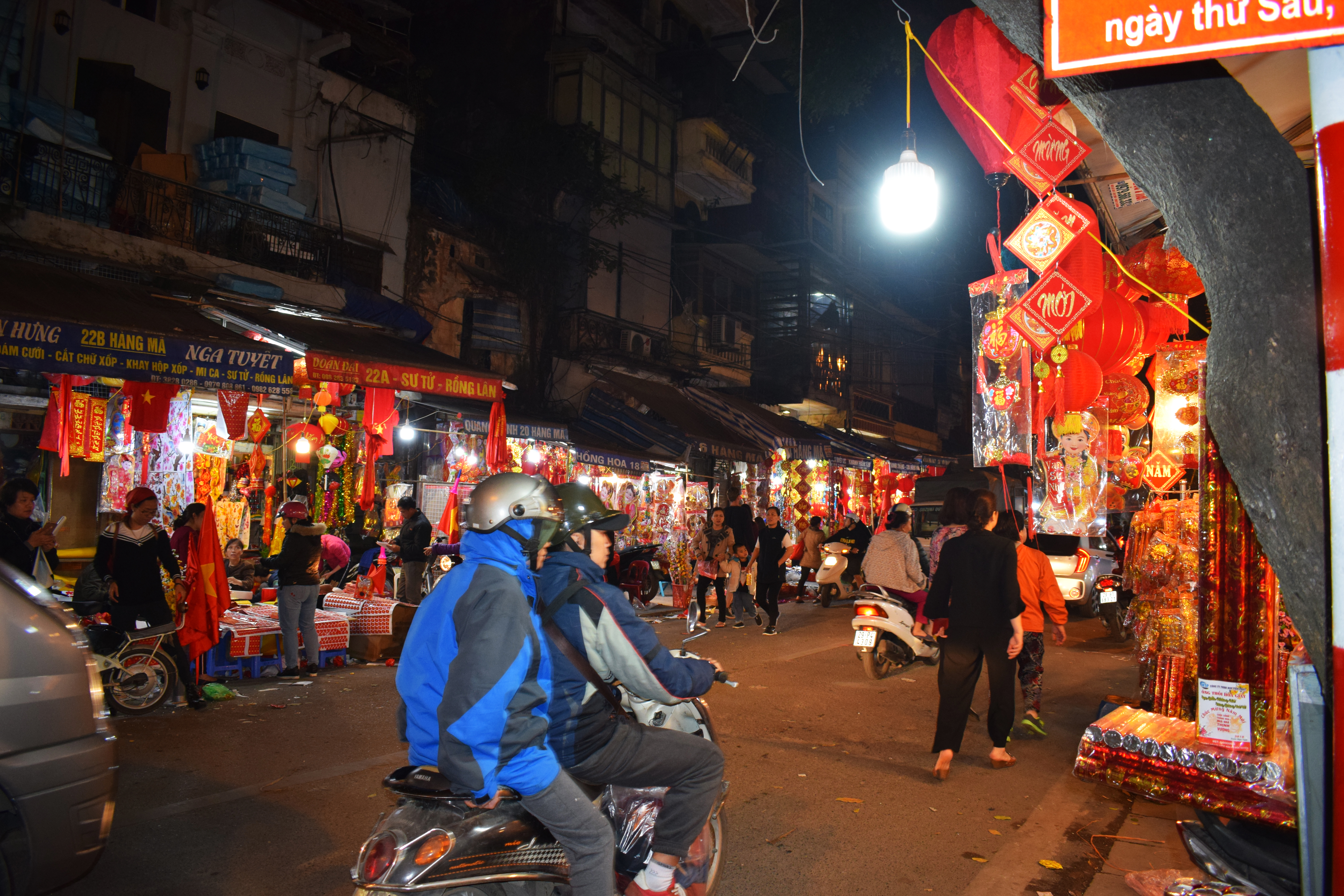
Hanoi's Old Quarter took shape from the 11th century when Emperor Ly Thai To moved the capital to Thang Long — craftsmen from villages across the country converged on the capital, each craft group assigned a stretch of street to live and trade on, creating a 'craft ward' system where each street specialized in a specific commodity. The name 'Hang' in the old street names means 'goods, trade' — Hang Bac (silver), Hang Dong (bronze), Hang Gai (hemp fabric), Hang Ma (votive ritual paper), Hang Thiec (tin), Hang Tre (bamboo) — the vivid commercial map of a pre-modern Asian city that few urban centers in the world have preserved this intact. The characteristic tube house structure — 3–5-metre-wide facades, extending 15–25 metres deep — was the architectural solution to avoid feudal-era taxes assessed on frontage width; inside, the 'sky well' was designed to draw light into rooms with no exterior windows. French colonial authorities in the 1880s–1890s drove wide boulevards Hang Khay and Trang Tien through the district, demolishing many old houses but unable to erase the craft ward structure embedded deeply in urban life.
The house at 48 Hang Ngang — belonging to Chinese merchant Trinh Van Bo, on the street that once specialized in fine silk and premium fabrics — is where Ho Chi Minh stayed and drafted the Declaration of Independence over two days, August 16 and 17, 1945, immediately after the August Revolution's success. That Declaration was first read publicly on September 2, 1945 at Ba Dinh Square before hundreds of thousands of people. The Old Quarter also preserves some of Hanoi's oldest culinary traditions — Cha Ca La Vong at 14 Cha Ca Street, one of the city's most long-standing restaurants with a turmeric-marinated grilled fish recipe passed down since the 19th century. Dong Xuan Market built in 1889 is the city's largest wholesale market and on weekends transforms into Hanoi's most animated night market.
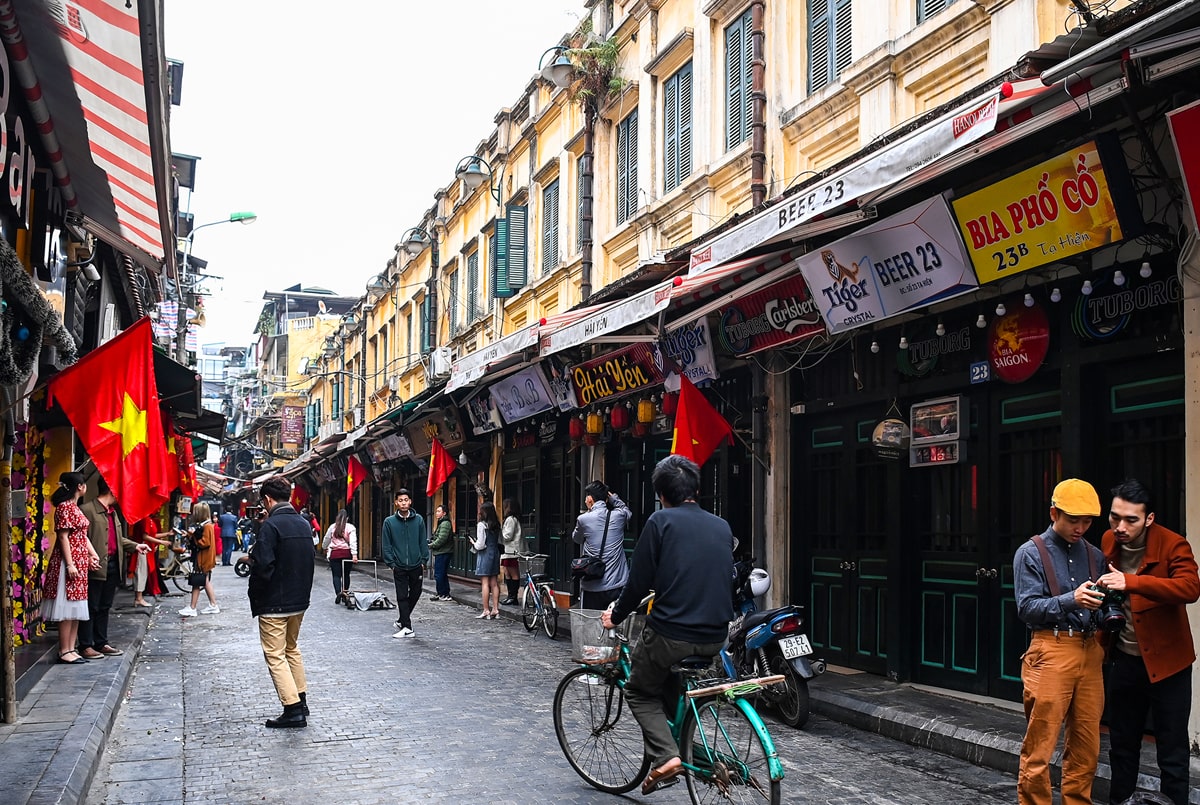
Weekend nights in the Old Quarter are a completely different experience from daytime — the pedestrian zone opens throughout the area around Hoan Kiem Lake and the Old Quarter from Friday evening through Sunday, street food spills onto sidewalks and roadways, and music groups perform at street corners. Ta Hien Street — the narrow bia hoi and tavern lane — is the most internationally popular address in the Old Quarter: people sit on low plastic stools drinking fresh draft beer at just a few thousand dong per glass in the cheerful, chaotic atmosphere characteristic of Hanoi's sidewalk beer culture — a social heritage born during the subsidy era and surviving to this day. Millions of people from across Hanoi and the whole country pour into the Old Quarter on weekends, transforming it into the city's most vibrant and diverse public space.
Hanoi's Old Quarter faces complex conservation challenges: commercial pressure converts residences into shops, many old houses are renovated in incompatible styles, and the original resident population steadily decreases as families move to the suburbs. Hanoi has established conservation regulations and building height limits for the Old Quarter, but balancing economic development needs, residents' rights, and heritage conservation requirements remains a problem without a perfect solution. Despite this, the Old Quarter remains the only place in Hanoi where the depth of urban history can genuinely be felt — stepping into a narrow alley between ancient tube houses, looking up at moss-covered tile roofs beneath a sky as narrow as a light well, and sensing the particular atmosphere of a city that has existed for over a thousand years is an experience no other place in Vietnam can provide.
Step into one of Hanoi Old Quarter's alleyways — and you have entered another world, one the modern city can never quite swallow whole.
Highlights not to miss.
On August 16 and 17, 1945, Ho Chi Minh worked in a second-floor room of Chinese merchant Trinh Van Bo's house at 48 Hang Ngang to draft the historic Declaration of Independence. This was a commercial building in the middle of the silk-trading street — the choice of simple lodgings amid a commercial district reflecting the leader's classless working style. The monument is now preserved and open for free visits — a historical address nearly invisible amid the Old Quarter's bustle but carrying significance no less than more celebrated monuments.
Old Quarter tube houses — 3–5-metre facades, extending 15–25 metres deep, multi-storied — were the architectural solution for Vietnamese merchants to maximize floor space while minimizing frontage tax. Inside each tube house, the 'sky well' (gieng troi — an open-roofed courtyard midway through the house) was the sole breathing space bringing light and air to rooms with no exterior windows. The house at 87 Ma May is one of the most typical preserved tube houses open to visitor tours — inside you can clearly see the sky well architecture, functional rooms, and 19th-century furnishings reproduced in period style.
Dong Xuan Market built in 1889 to French designs is Hanoi's largest wholesale market with five parallel halls beneath a vast tin roof. Every weekend from Friday evening through Sunday, the Dong Xuan night market extends into the surrounding street area — hundreds of stalls selling clothing, souvenirs, food, and handicrafts. This is Hanoi's most affordable and most animated weekend shopping experience — where locals and tourists jostle together in the glow of lights and music.
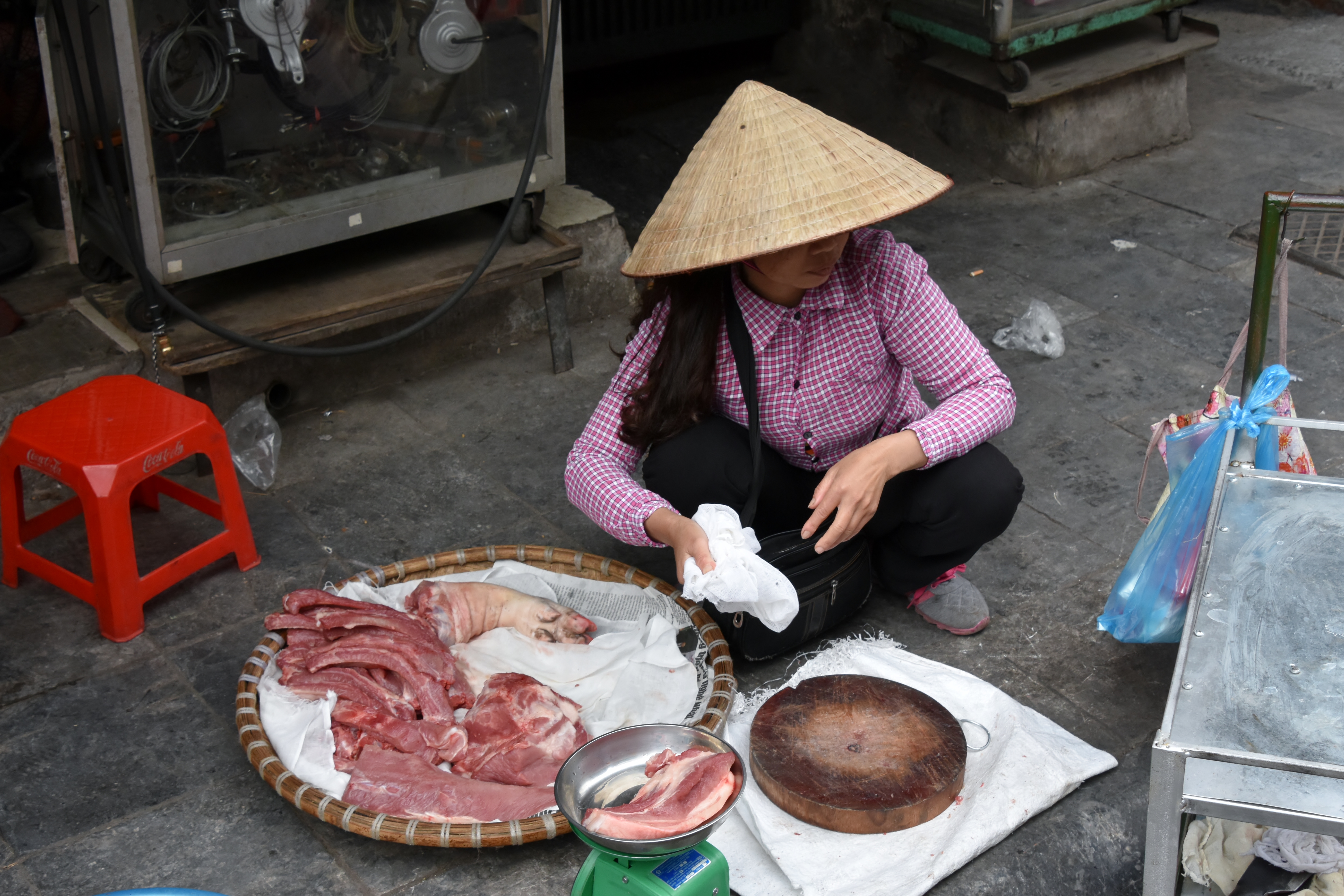
Ta Hien Street is only a few hundred metres long but is Hanoi's most famous bia hoi address — where fresh draft beer poured from kegs costs only a few thousand dong a glass and people sitting on low plastic stools outdoors is perfectly normal. Hanoi's sidewalk bia hoi culture — distinct from bottled or canned beer in restaurants — is a unique social heritage born during the subsidized economy era when state breweries sold cheap daily beer and residents brought their own containers to buy. Old Quarter street food also includes bun cha on Hang Manh, bun oc in Phat Loc Alley, banh mi sandwiches, and Cha Ca La Vong at 14 Cha Ca Street — one of Hanoi's oldest specialties with a family recipe passed down since the 19th century.
Book ahead at Cha Ca La Vong restaurant (14 Cha Ca Street) — Hanoi's legendary turmeric-grilled fish dish is a must-try at least once, but the original restaurant fills up quickly at peak hours.
How to visit & get there.
How to Explore the Old Quarter
The Old Quarter is directly north of Hoan Kiem Lake, a 5-minute walk from the lake shore. Start from Hang Dao Street heading north, turning into alleys as curiosity leads — the Old Quarter is small enough that you can't get truly lost. No map needed: wandering freely and letting the streets guide you is the best approach. Note: motorbikes ride on sidewalks here — always watch both directions.
Must-See Stops
Early morning (6–8 AM): Watch daily life — food vendors with shoulder poles, pho carts, exercising locals. Weekend evenings: The Hoan Kiem Lake pedestrian zone opens from 7 PM Friday to midnight Sunday. Historical monument at 48 Hang Ngang (free, open during business hours). Ancient house at 87 Ma May (VND 5,000) — a typical 19th-century tube house. Watch for pickpockets in crowded areas — especially around Dong Xuan Market.
Sources
- 1.Phố cổ Hà Nội — 36 phường nghề và ký ức đô thị
Hà Nội Mới · 2025-03-10
- 2.Hanoi Old Quarter — Attractions Guide
Lonely Planet · 2025-03-10
- 3.Phố cổ Hà Nội — Di sản sống giữa lòng thành phố
VnExpress · 2025-03-15