History & story.
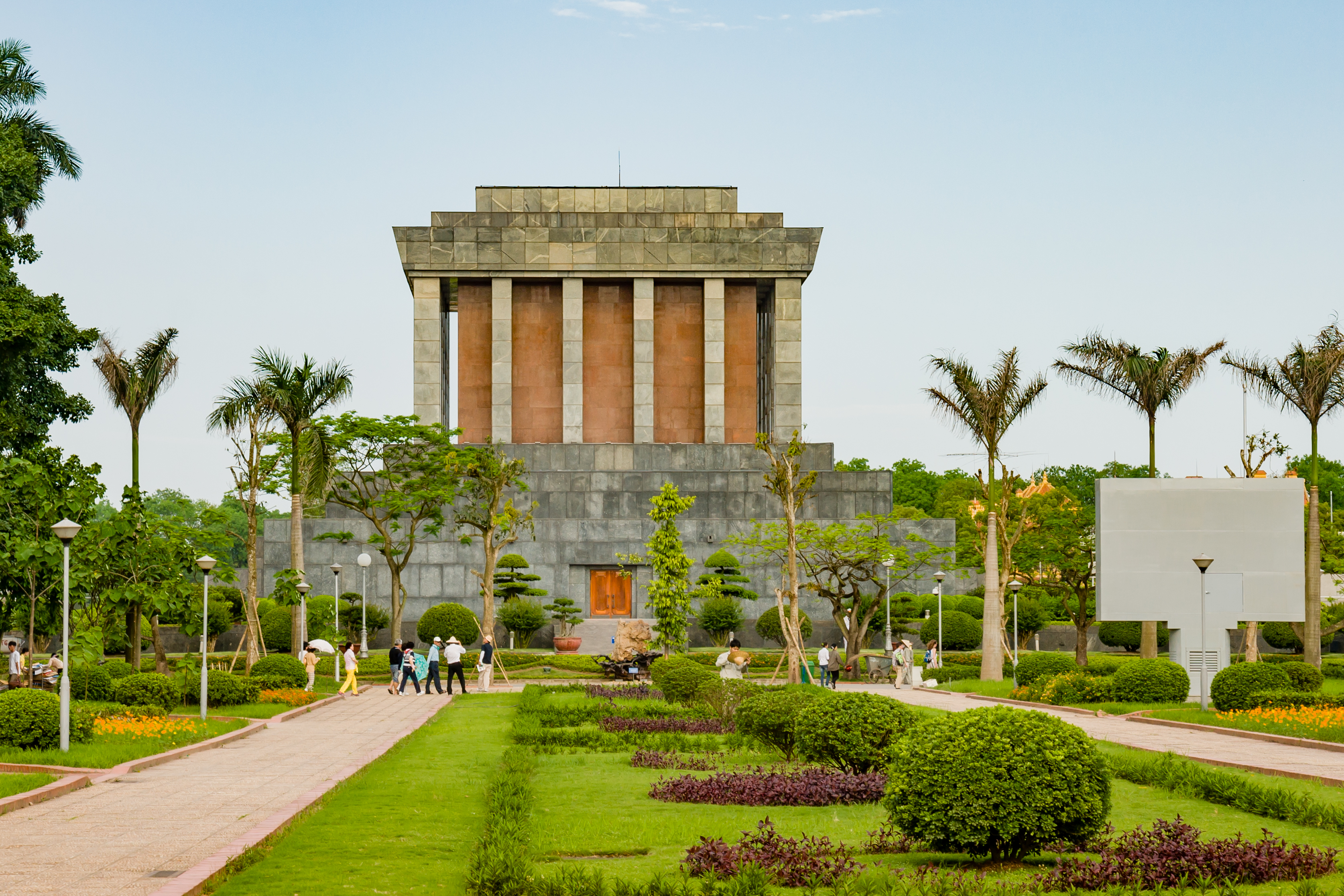
Ho Chi Minh Mausoleum carries a profound historical paradox in its very foundation: Chairman Ho Chi Minh, in a will drafted from 1965 and finalized in May 1969 — just months before his death on September 2, 1969 — explicitly requested cremation with his ashes divided into three portions to be scattered over three high mountains in northern, central, and southern Vietnam. The Party and state chose not to honour that wish, instead preserving his remains for the entire nation to visit — a decision reflecting the extraordinary historical stature the leader held in the eyes of the Vietnamese people. The date of Ho Chi Minh's death — September 2, 1969 — fell exactly on the same date he read the Declaration of Independence at Ba Dinh Square in 1945, a coincidence many Vietnamese regard as a symbol of the wholeness of a great leader's life.
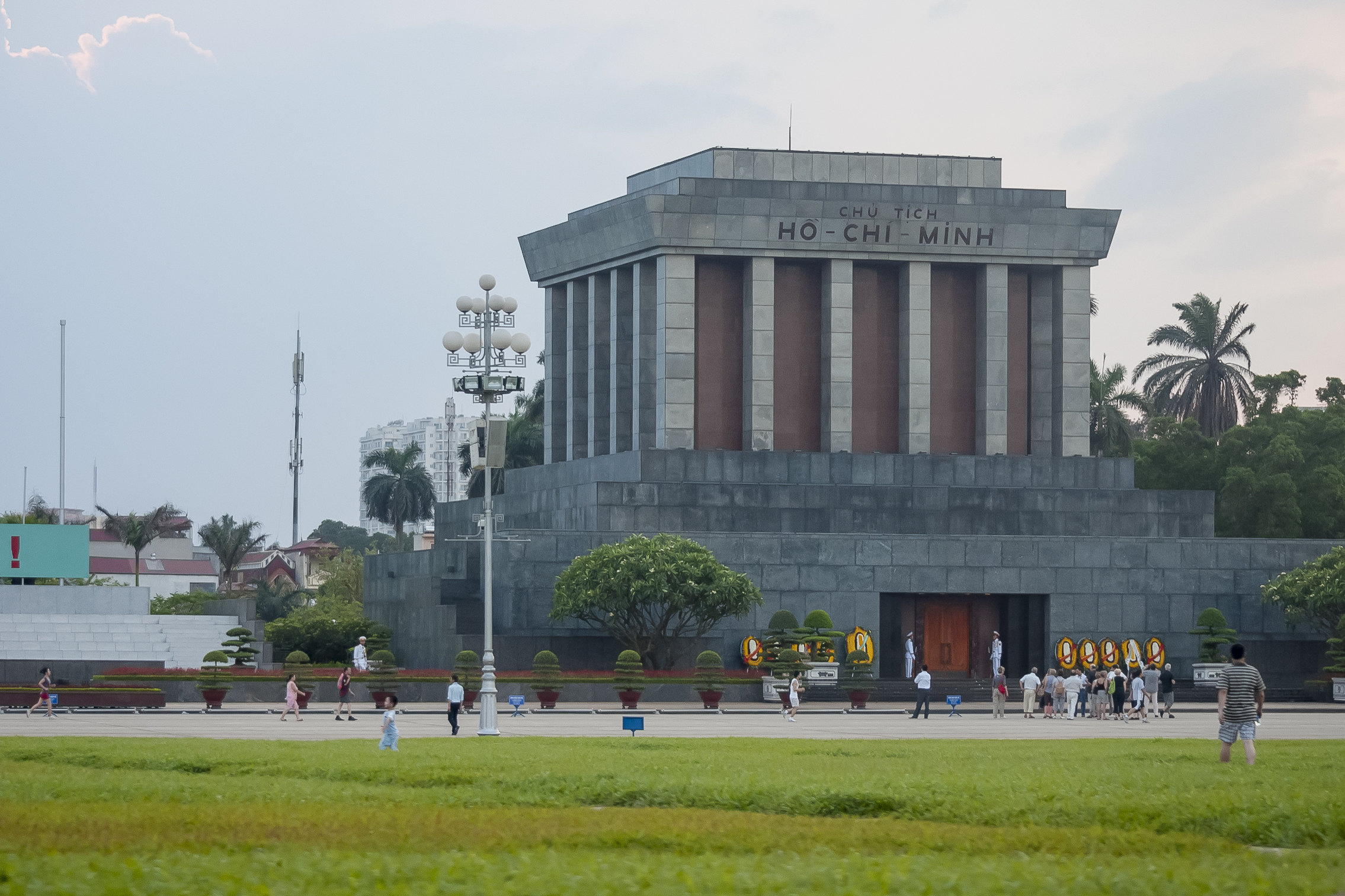
The mausoleum was built from 1973 to 1975 to designs by Soviet architect Garold Issakovich working alongside Vietnamese architects, using Crimean peninsula granite supplied by the Soviet Union. Ho Chi Minh's remains have been continuously preserved by a medical team led by Professor Sergei Debov — who was directly involved in preserving Lenin's remains in Moscow — since 1969. Each year in October and November, the mausoleum closes for two months while the remains are sent to Russia for periodic maintenance — the technical time necessary to maintain preservation quality to the highest scientific standards. Ba Dinh Square before the mausoleum holds 200,000 people and hosts the annual National Day military parade, major state ceremonies, and was the very ground where Ho Chi Minh stood to read the Declaration of Independence on September 2, 1945.
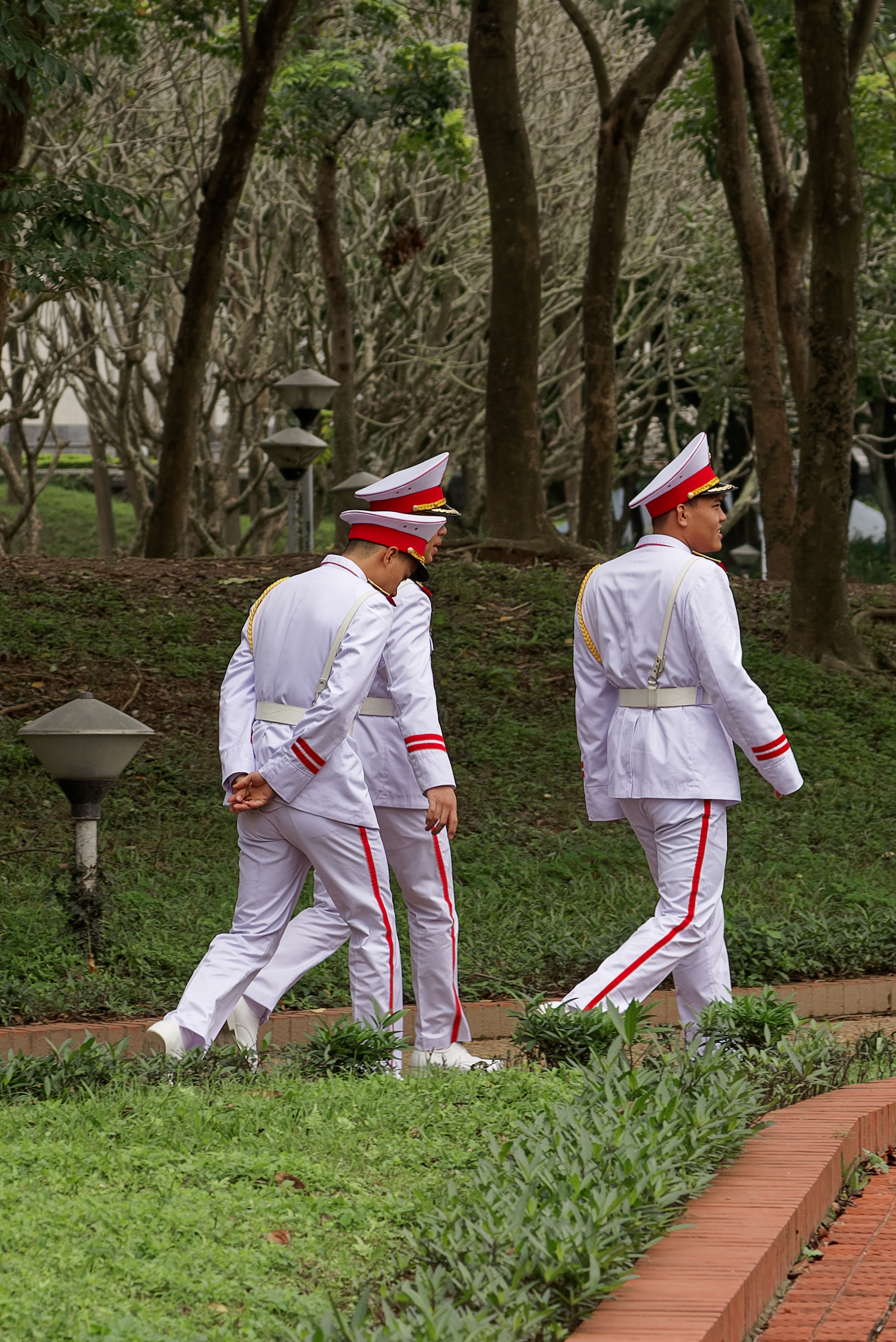
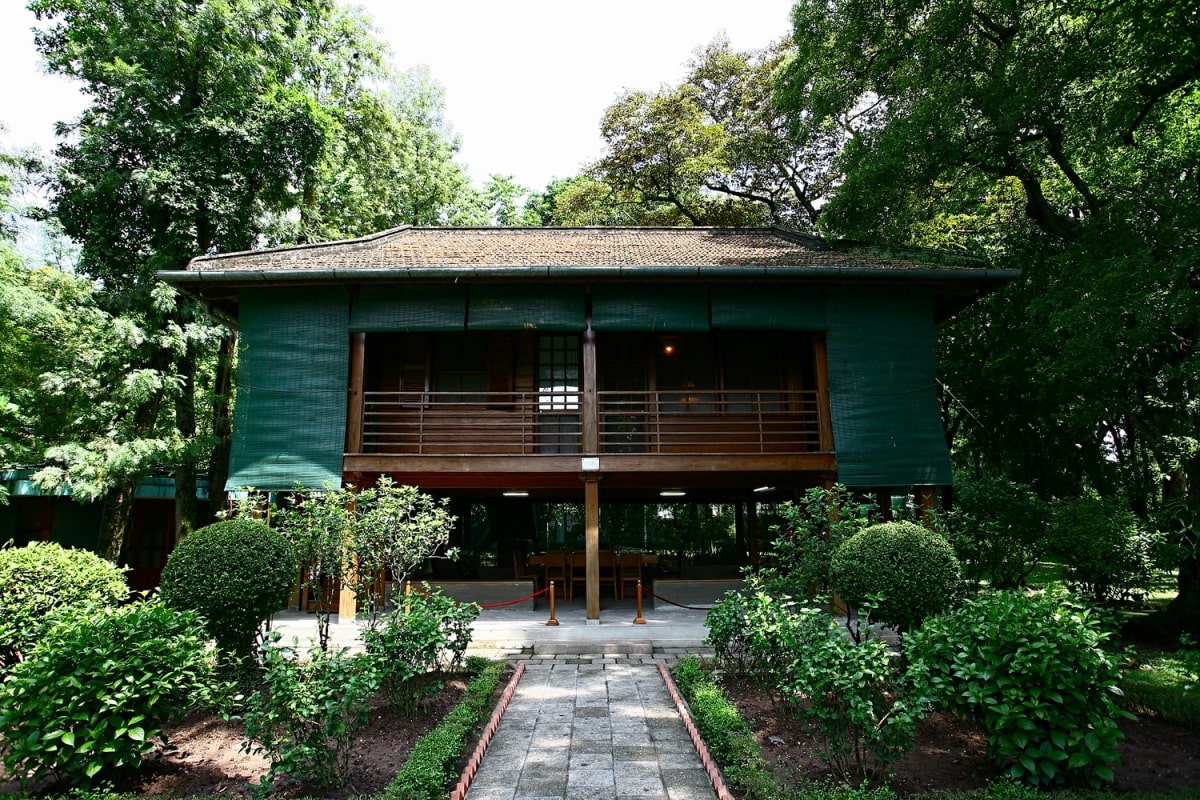
The Presidential Palace complex surrounding the mausoleum is the most complete heritage ensemble documenting Ho Chi Minh's life: the simple wooden stilt house where he lived from 1958 to 1969, beside a fish pond and garden trees he planted himself — simplicity in complete contrast to the grandeur of the mausoleum. The Ho Chi Minh Museum inaugurated in 1990 on his centenary features lotus-blossom architecture and a collection of over 3,000 original documents, photographs, and artefacts tracing his life from youth in Nghe An province through 30 years of world travel to revolutionary leadership. The flag ceremony occurs daily at 5:30 AM (summer) / 6:00 AM (winter) and at 9:00 PM — the honour guard performs with absolute precision that any visitor present will long remember.
Each day thousands of visitors — from veterans with medal-laden chests, rural families making their first Hanoi trip, school students in uniform to foreign tourists — queue in absolute silence across Ba Dinh Square waiting to enter the mausoleum. No music, no laughter — only footsteps and wind. This is a social spectacle impossible to find anywhere else in the world — the voluntary convergence of a nation before its leader, carrying meaning that far transcends tourism. The site cannot be fully understood divorced from its historical context: One Pillar Pagoda beside it recalls a thousand years of Ly dynasty Buddhism, and the Imperial Citadel of Thang Long just 5 minutes away recalls 13 centuries of urban history — together creating a historical space no other place in Vietnam can rival.
I leave my boundless love to the entire people, the entire Party, to all the fighters, to all the youth and children. I also send warm greetings to comrades, friends, and international youth and children.
Từ Di chúc của Chủ tịch Hồ Chí Minh, tháng 5 năm 1969 / From the Testament of President Ho Chi Minh, May 1969
Highlights not to miss.
Each day at 5:30 AM (summer) or 6:00 AM (winter), honour guards in white uniforms perform the flag-raising ceremony at Ba Dinh Square with absolute precision — and lower it again at 9:00 PM. This ceremony is one of Vietnam's most solemn military rituals and one of its most watched. Early-arriving visitors can watch free of charge from outside the square perimeter — autumn and winter early mornings are the most atmospheric with light mist and golden lamplight illuminating the mausoleum facade.
This simple two-storey wooden stilt house, where Ho Chi Minh lived and worked from 1958 until his death in 1969, is preserved in original condition in the Presidential Palace grounds. Just beneath the stilt house, the work desk positioned beside a window overlooking the garden is where he wrote many important articles and historical documents. The carp pond and fruit garden he planted himself are still carefully tended — the contrast between the modest dwelling and his role as national leader is the most powerful statement the entire complex makes.
Inaugurated in 1990 on the centenary of Ho Chi Minh's birth, the museum features striking lotus-blossom architecture — both a Buddhist symbol and a traditional Vietnamese cultural emblem. Inside, over 3,000 original documents, photographs, and artefacts tell the story of Ho Chi Minh's life from his youth in Nghe An province, through decades of travel across the world, to his role leading the revolution and nation-building. The exhibition covering 30 years of overseas activity (1911–1941) is a particularly fascinating section as it reveals the formation of a political philosophy through contact with many world cultures and political movements.
Just a few steps from the mausoleum, One Pillar Pagoda is Hanoi's most architecturally remarkable Buddhist structure — a small shrine placed on a single stone pillar rising from a lotus pond, built on Emperor Ly Thai Tong's orders in 1049 after a dream of seeing Guan Yin seated on a lotus offering him a son. The current structure was rebuilt in 1955 after French forces destroyed it before withdrawing in 1954 — one of countless acts of wartime destruction this monument has witnessed and survived. Easily combined into the same morning visit as the mausoleum and museum.
Wear modest, respectful clothing: covered shoulders and trousers or skirts to the knee. Visitors dressed inappropriately will be refused entry and there is no on-site clothing hire available.
How to visit & get there.
Getting There and Entering
The mausoleum is at 2 Hung Vuong, Ba Dinh — about 2 km west of Hoan Kiem Lake. Take bus routes 09 or 14 from the Old Quarter (20 minutes), or a taxi or ride-hail (10 minutes). Arrive before 8:00 to avoid long queues on weekends and holidays. Queue at the gate on Hung Vuong Street — visitors proceed in double file in absolute silence with phones kept in pockets. No large bags — free luggage storage at the counter before the gate.
Planning a Ba Dinh Morning
An ideal morning: Mausoleum → One Pillar Pagoda (2-minute walk) → Ho Chi Minh Stilt House + Presidential Palace (separate ticket, VND 30,000) → Ho Chi Minh Museum → Imperial Citadel of Thang Long (5-minute walk). The entire circuit takes 3–4 hours. Important: The mausoleum closes October–November annually for maintenance — check the schedule at bqllang.gov.vn before your visit.
Sources
- 1.Lịch sử và ý nghĩa Lăng Chủ tịch Hồ Chí Minh
Ban Quản lý Lăng Chủ tịch Hồ Chí Minh · 2025-02-28
- 2.Lịch sử xây dựng Lăng Hồ Chí Minh
VnExpress · 2025-02-28
- 3.Ho Chi Minh Mausoleum — Hanoi
Lonely Planet · 2025-03-05