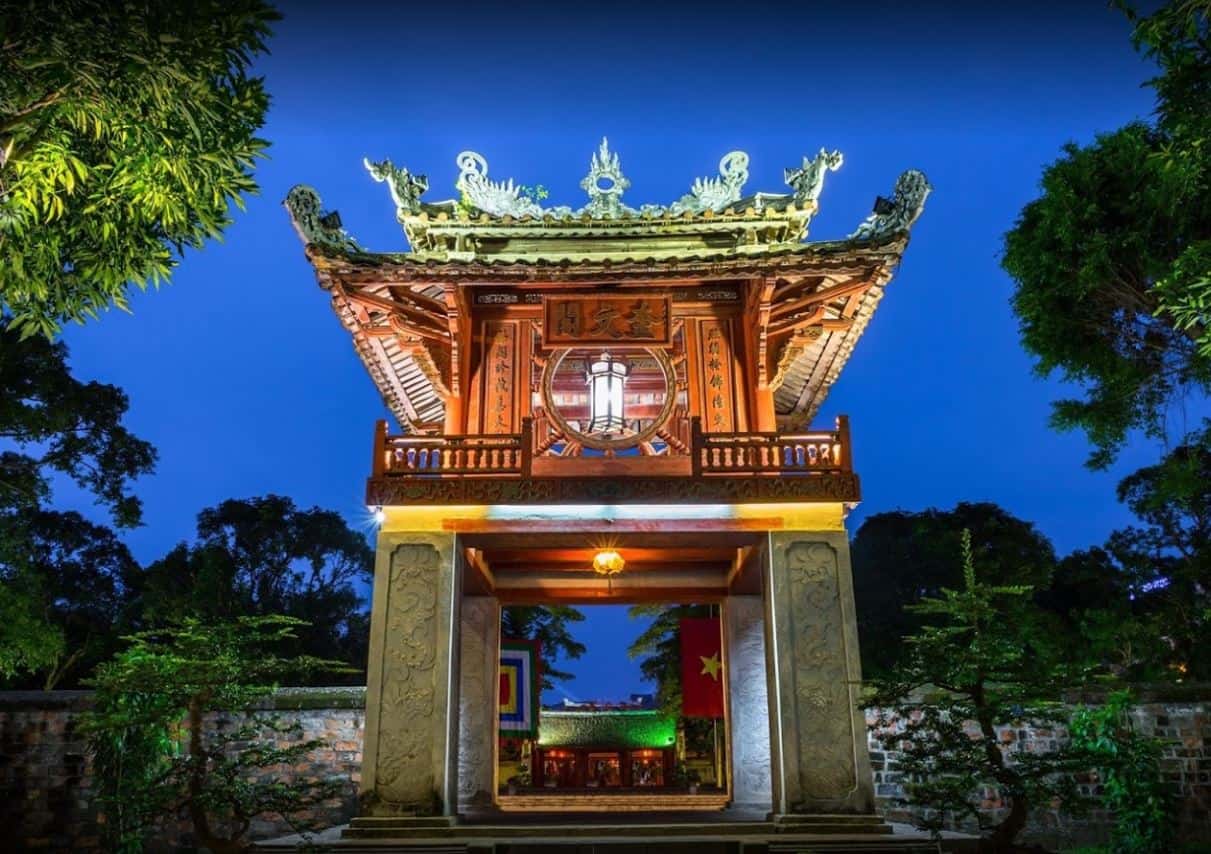
History & story.
Van Mieu was built in 1070 under Emperor Ly Thanh Tong's edict to venerate Confucius — but in 1076, Emperor Ly Nhan Tong established Quoc Tu Giam within the complex as a royal school for noble children. During the Tran dynasty (13th century), the school expanded to accept outstanding commoner students — transforming Quoc Tu Giam from a royal school into Vietnam's first national academy. In 1484, Emperor Le Thanh Tong ordered the erection of 82 doctoral stone steles recording those who passed the imperial examinations from 1442 to 1779 — of the 82 recorded examination sittings, 67 took place under the Le dynasty, reflecting the strength of the early Le Confucian examination system. In 2010, UNESCO recognized the 82 Doctoral Steles as a Memory of the World. Each year before major examinations, thousands of Hanoi students come to touch the stone turtle heads and pray for success — a custom so widespread that conservation authorities installed protective barriers around the steles from 2010.
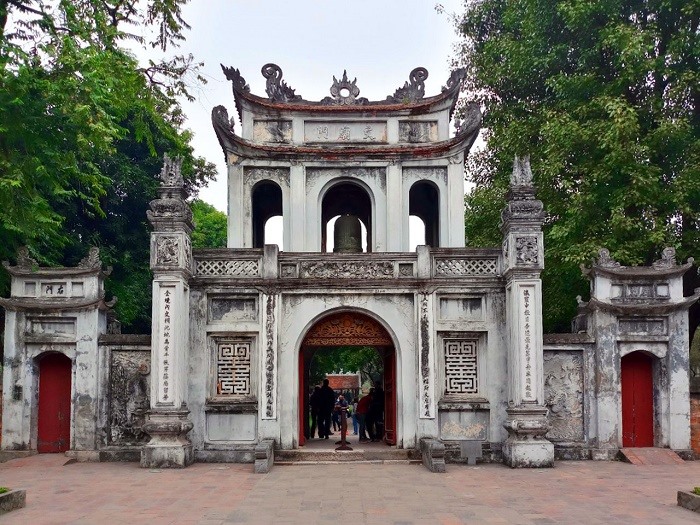
The Van Mieu — Quoc Tu Giam complex comprises five successive garden courtyards from south to north, each with its own enclosing walls and gate — this axial spatial layout reflects the Confucian philosophy of gradual advancement in learning. Khue Van Cac — a two-storey pavilion built in 1805 under Emperor Gia Long with eight circular windows symbolizing the light of the Khue star — is the official symbol of Hanoi, appearing on the city logo and the reverse of the 100,000 dong banknote. Thien Quang Well in the third courtyard, symmetrically flanked by two rows of doctoral steles, is the visual and spiritual focal point of the entire complex. During restoration of the first courtyard, archaeologists discovered Ly-dynasty ceramic shards beneath the current paving — evidence that this site has been in continuous use for nearly 1,000 years.
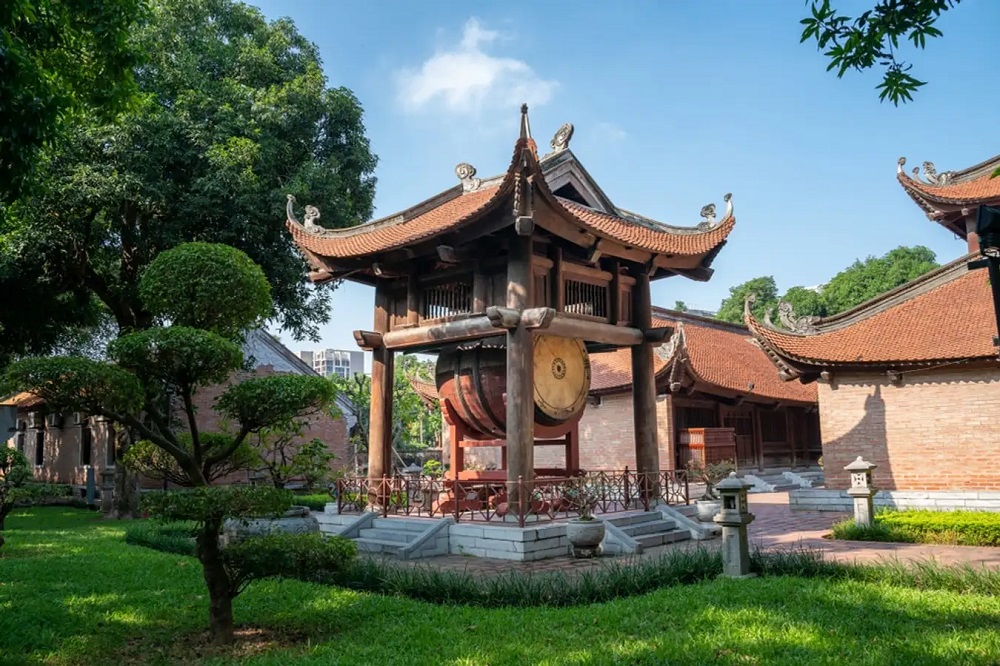
Dai Thanh Sanctuary is the central building of Van Mieu, venerating Confucius alongside his four greatest disciples — Yan Hui, Zengzi, Zilu, and Mencius — and 72 Confucian worthies. The intricately carved wooden architecture has been restored many times but retains the layout and spirit of traditional Vietnamese royal architecture with its four-sided tiled roof and double-column system. Incense burns throughout the day — especially crowded during examination season when parents and students come to offer prayers for academic success. The custom of praying for examination success at Van Mieu stretches from feudal times to the present without interruption — a cultural thread connecting Vietnamese society across more than 500 years of political and economic change.
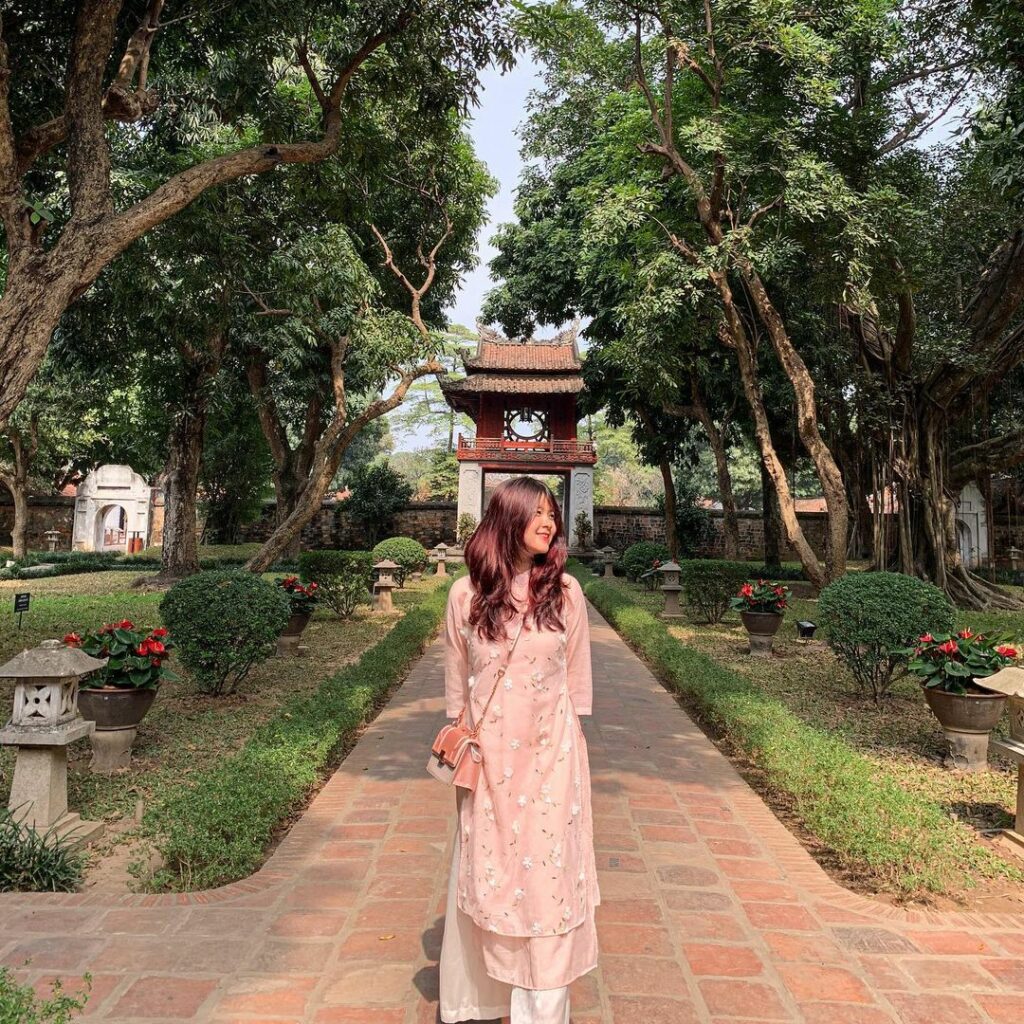
Van Mieu — Quoc Tu Giam is Hanoi's most visited heritage site with over 1.5 million visitors annually, attracting both international tourists and Vietnamese students, parents, and worshippers in equal measure. The cool, tree-shaded gardens within the complex are a peaceful sanctuary in the heart of the bustling metropolis, where many Hanoians come to reflect and rest. No address in Hanoi speaks more clearly about Vietnamese cultural identity than Van Mieu — the timeless belief that knowledge is the highest path to changing one's fate, a value that has shaped Vietnamese society for over a thousand years and remains intact today.
Men of virtue and talent are the vital breath of the nation; when this vital breath thrives, the nation is strong and prosperous; when it declines, the nation is weak and lowly.
Thân Nhân Trung, bia Tiến sĩ khoa Nhâm Tuất 1442 / Than Nhan Trung, Doctoral Stele inscription, 1442
Highlights not to miss.
Khue Van Cac, built in 1805 under Emperor Gia Long, is the symbolic centrepiece of Van Mieu and has been adopted as the official emblem of Hanoi city — its eight circular window openings symbolizing the radiance of the Khue star (the star of literature and learning in East Asian culture) appear on the city logo and the reverse of the 100,000 dong banknote. This is the most authentically preserved two-storey wooden architectural structure in the complex, with intricately carved roof brackets and corner beams in the style of early Nguyen dynasty architecture. Looking through the eight circular openings from Thien Quang Well provides the complex's finest architectural framing.
Two rows of stone stelae recording 1,307 doctoral graduates across 82 examination sittings from 1442 to 1779 are mounted on stone tortoise bases — the tortoise symbolizing longevity, implying these records will endure forever. Reality has proven the point: after more than 500 years of rain and sun, most inscriptions remain clearly legible. UNESCO recognised these as a Memory of the World in 2010. The custom of touching the turtle heads to pray for examination success became so prevalent that protective barriers were installed from 2010 — a fascinating paradox between living folk belief and heritage conservation requirements.
Dai Thanh Sanctuary is the central building of Van Mieu, venerating Confucius alongside his four greatest disciples — Yan Hui, Zengzi, Zilu, and Mencius — and 72 Confucian worthies. The intricately carved wooden architecture has been restored many times throughout history but retains the layout and spirit of traditional Vietnamese royal architecture with its four-sided tiled roof and symmetrical double-column system. Inside, incense burns throughout the day — especially crowded during examination season when parents and students come to offer prayers for academic success.
Thien Quang Well (Sky-Illuminating Well) sits in the third courtyard, symmetrically flanked by the two rows of doctoral steles in perfect bilateral symmetry — this is the visual and spiritual focal point of the entire Van Mieu complex. Its water surface reflects the sky and the Khue Van Cac pavilion beyond, creating one of the complex's finest viewpoints, especially on clear days and in the soft early morning light. Archaeologists discovered Ly-dynasty ceramic shards beneath the courtyard paving surrounding the well — evidence that this site has been in continuous use for nearly 1,000 years.
If possible, check the schedule and visit on days when human chess or traditional instrument performances are staged — these typically occur on weekends and major holidays within the Van Mieu grounds.
How to visit & get there.
Getting There & Tickets
Van Mieu is about 1.5 km southwest of Hoan Kiem Lake — a 20-minute walk or short ride on bus routes 02, 23, or 38. Vietnamese and English audio guides are available for hire at the entrance and are strongly recommended for understanding the significance of each stele and courtyard. Allow at least 90 minutes to properly explore all five courtyards.
Best Times & Special Events
Van Mieu is especially crowded and sacred during January–February (Lunar New Year and examination season) when thousands of students come to pray for success — this is the most vivid cultural experience but also the busiest time. For a quieter visit, aim for Tuesday–Thursday afternoons. On weekends and major holidays, human chess or traditional instrument performances are often staged within the grounds — check the event schedule before visiting.
Sources
- 1.Lịch sử Văn Miếu — Quốc Tử Giám
Trung tâm Hoạt động Văn hóa Khoa học Văn Miếu — Quốc Tử Giám · 2025-03-01
- 2.Doctoral Theses Stelae at Van Mieu — Quoc Tu Giam
UNESCO Memory of the World · 2025-03-01
- 3.Văn Miếu — Quốc Tử Giám: Trường đại học đầu tiên Việt Nam
VnExpress · 2025-03-05