History & meaning.
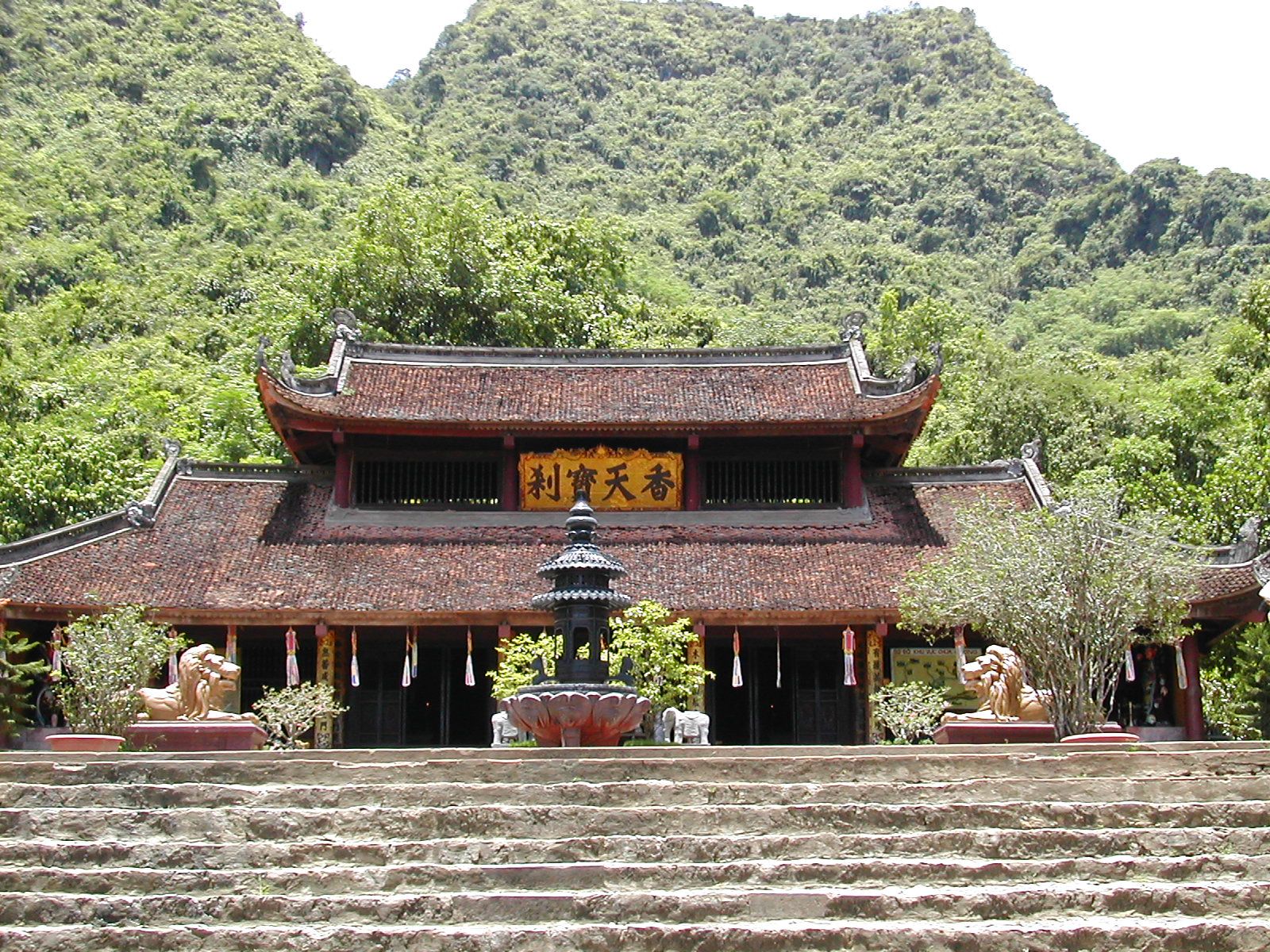
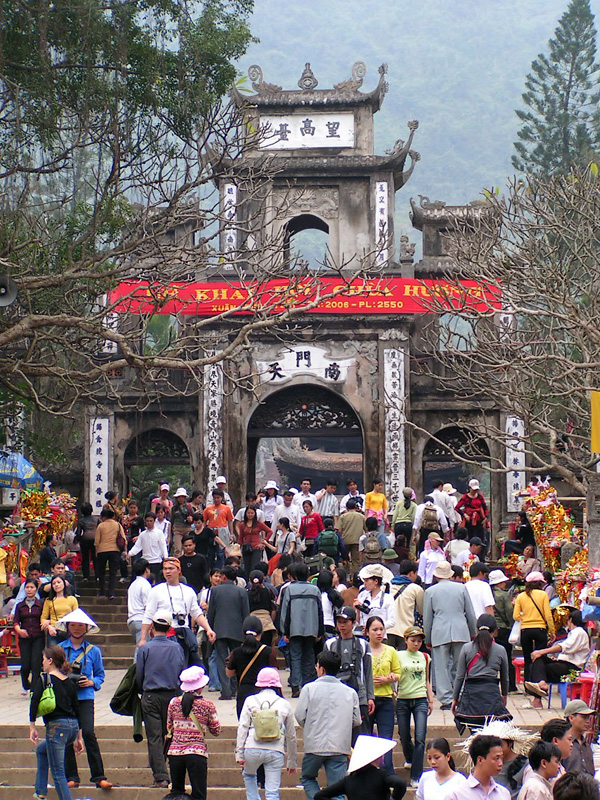
The Huong Pagoda Festival opens on the 6th day of the first lunar month and runs through the end of the 3rd lunar month — a festival spanning nearly three continuous months, drawing millions of pilgrims to the Huong Son scenic area in My Duc district, approximately 70km from Hanoi. The journey begins at Ben Duc wharf, where visitors board hand-rowed boats to glide along the Yen Stream — a small waterway winding between limestone cliffs and green rice paddies that creates an unforgettable landscape. The Huong Son scenic area encompasses numerous pagodas, temples, and caves scattered through forested mountains — with Thien Tru Pagoda as the centre and Huong Tich Cave as the main pilgrimage destination. This is not simply a festival — it is the largest collective pilgrimage of northern Vietnam, where millions each year undertake the same journey in search of something beyond daily life. The festival beautifully weaves Buddhist devotion with folk worship of Ba Chua Ba — the protective goddess enshrined in Huong Tich Cave.
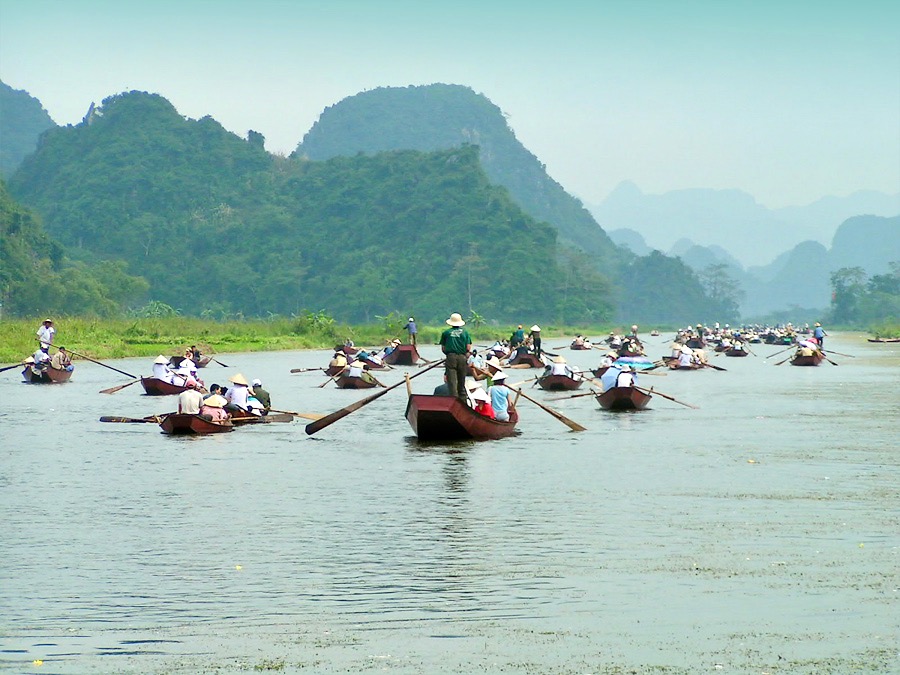
The boat journey on the Yen Stream is the most distinctive experience of the Huong Pagoda Festival — and one that cannot be found at any other festival in Vietnam. The Yen Stream is approximately 4–5km long, bordered by limestone cliffs reflected in clear green water. Flotillas of hand-rowed boats follow each other in quiet procession — passengers watching the grassy banks and white egrets on both sides. The cool first-month air, with morning mist rising from the stream surface, creates a landscape like a living ink painting. This is a rare interval when Hanoi residents — accustomed to rushing — allow themselves to sit still and do nothing but observe. The boatwomen are typically local My Duc residents, many of whom have rowed this stream for decades and can tell hundreds of Huong Pagoda stories if asked.
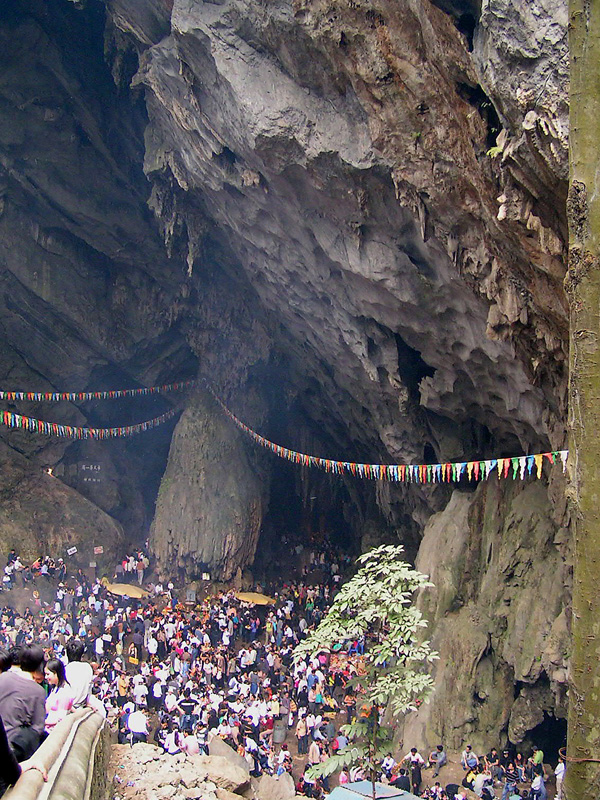
The pilgrimage's final destination is Huong Tich Cave — a large limestone cavern that King Le Thanh Tong described as 'the finest cave under southern skies.' To enter, visitors climb approximately 120 steep stone steps cut into the cliff face — this ascent is part of the spiritual challenge, and many elderly pilgrims well past 70 climb it unaided. Inside, the cave is vast and cool, hundreds of incense urns burning and sutra chanting resonating through the stone vaults. Stalactites are named by pilgrims for sacred shapes: 'the treasury,' 'the golden pig litter,' 'the Lady's breast' — names that speak of hopes for prosperity, fertility, and maternal protection. Standing in Huong Tich Cave among thousands murmuring prayers, dense sandalwood incense, and the sound of stone — this is one of the most powerful spiritual experiences available within a day's reach of Hanoi.
The Huong Pagoda Festival experience is a journey of every sense. The scent of sandalwood from hundreds of shrines along the stream and inside the caves. The sound of oars on water, the bell of Thien Tru Pagoda ringing across the hills, thousands of voices chanting in the resonant limestone vault. The taste of vegetarian food at a riverside stall after the mountain climb — simple but extraordinarily satisfying after a demanding morning. The image of elderly women, bent with age, feeding red incense urns and closing their eyes in prayer inside Huong Tich Cave — a faith alive across centuries that needs no theory or explanation.
A Buddha-realm sky / The Huong Son scene I have longed for, for so long / Behold the mountains, the waters, the clouds
Chu Mạnh Trinh, bài thơ "Hương Sơn phong cảnh ca", thế kỷ 19
Highlights not to miss.
The hand-rowed journey on the Yen Stream is the most memorable experience of Huong Pagoda Festival — and what makes it entirely distinct from any other festival. The 4–5km stream winds through karst mountains and rice paddies, its clear surface perfectly reflecting the vertical limestone walls. Small boats hold only 4–6 passengers, steered by local rowers — often women who have navigated the stream for decades. This is a rare moment when urbanisation retreats and nature enters.
Ba Chua Ba is a spiritual figure at the intersection of Vietnamese Buddhism and folk Mau belief — a prime example of Vietnam's characteristic religious syncretism. In the pilgrim's mind, she is simultaneously Bodhisattva Guanyin and the protective Mother — with no need to draw a line. Those who come to Huong Pagoda pray for everything: health, children, exam success, business prosperity — and they believe Ba Chua Ba hears it all. This is a living, undogmatic form of faith, reflecting the spiritual soul of the Vietnamese people across centuries.
Huong Tich Cave is the final and most sacred destination of the Huong Pagoda pilgrimage. Personally inscribed by King Le Thanh Tong in the 15th century, the name 'Nam Thien De Nhat Dong' (Finest Cave Under Southern Skies) is not a geographical claim but a spiritual one — the cave is believed to be the gateway to Ba Chua Ba's realm. Inside, many stalactites have been given sacred names by pilgrims through centuries of observation and imagination. The cold, humid cave air, the dense incense, and the resonating chanting — together they create a spiritual experience that cannot be manufactured.
Opening day (6th of the first lunar month) and weekends in the first and second lunar months are the most crowded — hundreds of thousands can arrive in a single day. Visit on a weekday or during the third lunar month when the festival continues but crowds thin considerably. Start the journey at 6–7am to avoid midday sun and boat traffic on the stream.
How to attend & get there.
Getting There from Hanoi
From Hanoi to Ben Duc wharf (boat departure point) is approximately 70km. Take a coach from My Dinh or Giap Bat station on the My Duc route (1.5–2 hours), or rent a motorbike/car via the Phap Van–Cau Gie expressway then turn toward My Duc. Book transport and boats in advance for weekend visits in the first and second lunar months as demand is very high.
Preparation for the Trip
Wear comfortable clothes and bring good rubber-soled shoes as you will climb wet stone into the caves. Weather in the first and second lunar months is cool and often misty — bring a warm layer. Carry food or cash — vegetarian food stalls line the stream and temple grounds. The cable car to Huong Tich Cave can shorten the mountain climb if needed.
Sources
- 1.Lễ hội Chùa Hương — UBND huyện Mỹ Đức
UBND huyện Mỹ Đức, Hà Nội · 2026-06-20
- 2.Lễ hội Chùa Hương — Vietnam Tourism
Vietnam Tourism · 2026-06-20