History & meaning.
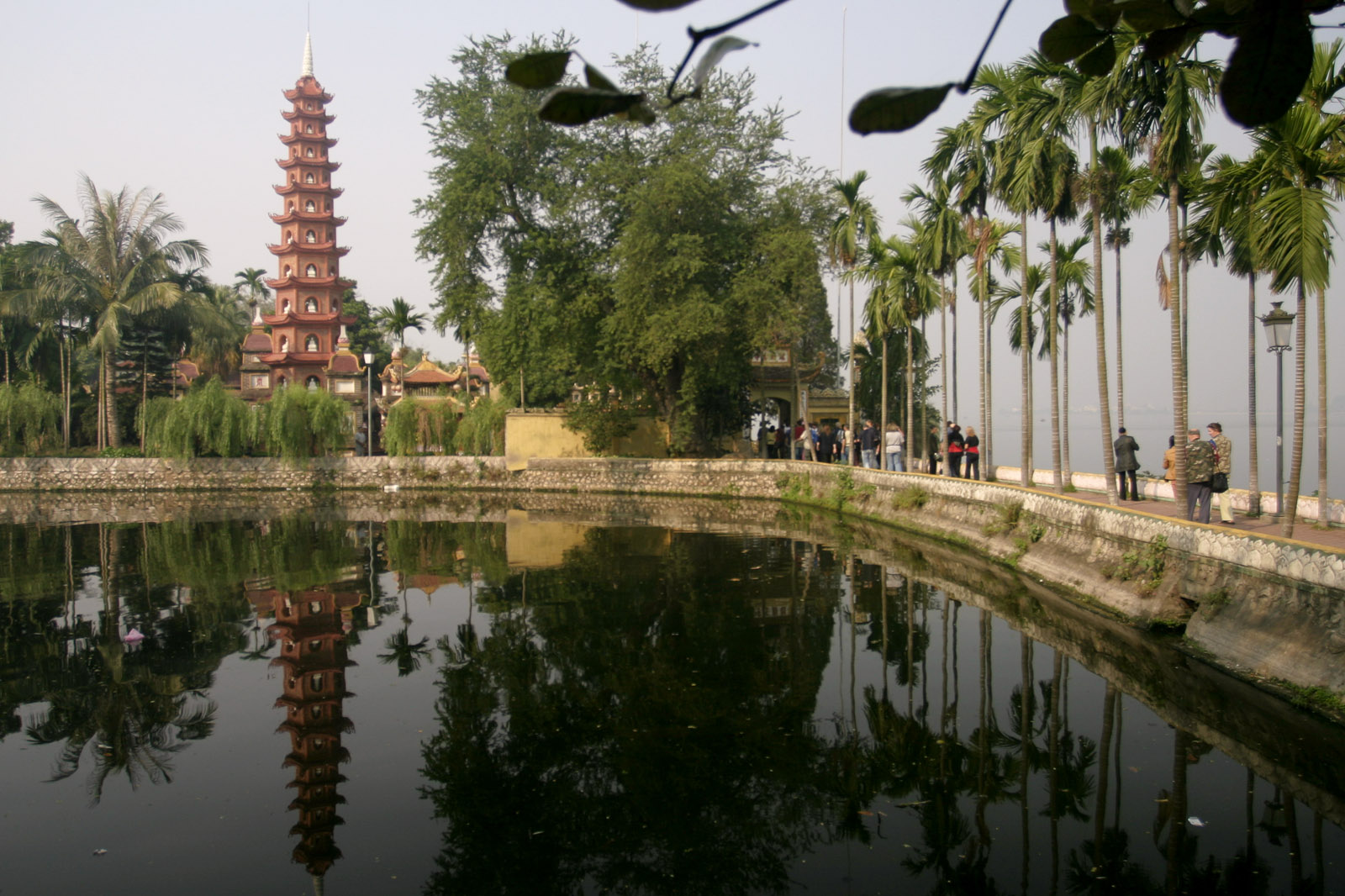
Lunar New Year in Hanoi carries the distinctive character of ancient Thang Long — from the pink peach-blossom markets on Hang Luoc Street and Thanh Nien Road to overnight banh chung-boiling sessions and the custom of visiting Van Mieu and Phu Tay Ho on New Year's morning. Hanoi marks Tet with more restraint and refinement than the south — less loud, less flashy, but with deep cultural layering and the weight of a thousand years of Thang Long memory. Old Hanoi families preserve an elegant Tet table: banh chung, pickled onions, jellied pork, bamboo-shoot vermicelli soup, and red gac sticky rice — each dish a story about the generation that passed down the recipe. Nhat Tan peach season begins around the 25th–27th day of the 12th lunar month when carts of blossoms from Nhat Tan village on West Lake's shore fill Hang Luoc and Thanh Nien Road. Hanoi residents choose their Tet peach branch the way they choose a companion — not just by appearance but by the branch's form, the angle of the buds, and an intuitive sense of which branch will bloom at exactly the right moment on New Year's Day.
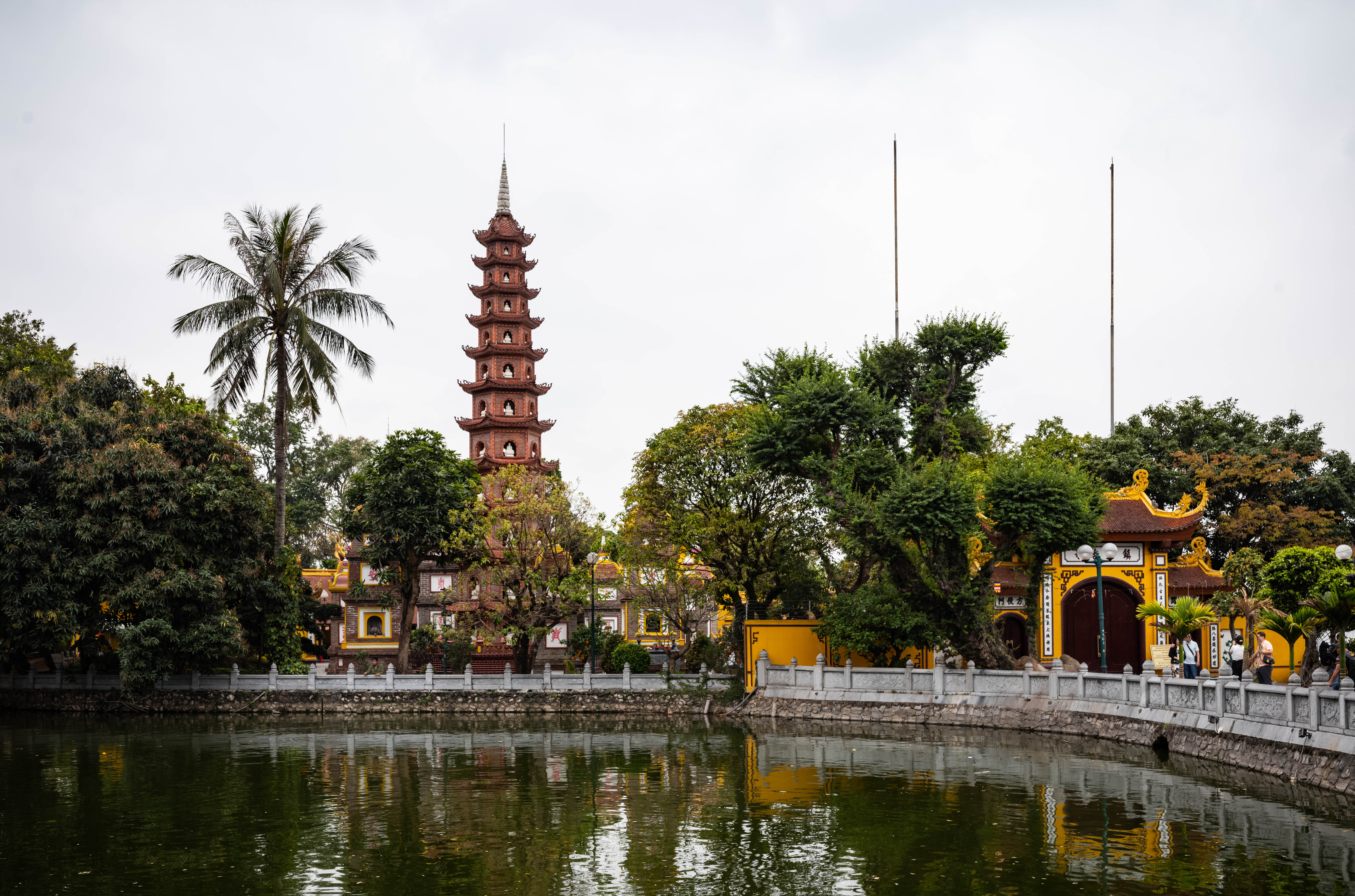
New Year's Eve in Hanoi is the strangest night of the year — the city simultaneously bustling and still, both eager and reluctant. Families gather around the bubbling banh chung pot, firelight flickering on the sleepy faces of children. The distinctive scent of dong leaves and glutinous rice rises through the cool winter night — a smell that many Hanoi residents living far from home admit can make them cry without knowing why. At midnight precisely, fireworks launch from Hoan Kiem Lake and multiple other points — the sound reverberating through Hanoi's suddenly emptied streets, red and gold light reflected on the still surface of the lake in the moment of the new year. Hanoi residents stand on balconies or spill into the streets in the transition moment — not with loud celebration, but looking up at the sky and quietly thanking another year that has passed.

On the morning of the first day of Tet, Hanoi transforms into a different city — eerily quiet compared to its daily pace. This is a rare window to walk along Hoan Kiem Lake or through the old quarter without jostling — streets normally gridlocked now hold only a few drifting motorbikes and fallen peach petals on wet pavement. Traditional Hanoi families observe the three-day first-visit circuit: Day 1 to Van Mieu for New Year calligraphy from scholar scribes writing in the Temple of Literature's Thai Hoc courtyard; Day 2 to Phu Tay Ho to offer incense for peace and prosperity; Day 3 to visit a former teacher to express gratitude. The three visits are not about asking for things — they are a way of saying that Hanoi people do not forget their origins.
Hanoi Tet is a multi-layered experience that awakens every sense in its own way. The scent of peach blossom mixed with sandalwood incense from the family altar inside — a combination unmistakeable, purely Hanoi. The flavour of sweet-sour pickled onion eaten with hot banh chung, the slice of thit dong melting on the tongue on a cold Tet morning. The sound of midnight fireworks resonating through a veil of gentle drizzle — the sound of the new year not sharp but deep and sustained. The image of elderly men and women in ao dai offering incense at Van Mieu through the mist of New Year's morning — that is Hanoi Tet: no display, no entertainment, only the continuation of a culture reminding itself that it is still here.
Fatty pork and pickled onion, red couplets / Nêu pole, firecrackers, and green bánh chưng
Câu đối Tết cổ điển của người Bắc — mô tả những yếu tố không thể thiếu của Tết truyền thống
Highlights not to miss.
Hang Luoc flower market is one of the indispensable images of Hanoi Tet — the traditional flower street operating from around the 25th–30th of the 12th lunar month, filled with deep-pink Nhat Tan peach branches and gold-laden kumquat trees. Nhat Tan peach is famous for its characteristically deeper pink compared to other growing regions, with thick multi-layered double petals and a light fragrance. Choosing a beautiful peach branch is not easy — it is an art that long-term Hanoi residents take pride in. Visit Hang Luoc on the evening of the 28th–29th of the 12th month to see the vibrant buying and selling under the electric lights playing across every pink blossom.
The New Year calligraphy custom is one of Hanoi's most beautiful and distinctive Tet traditions. Scholar scribes — ong do — sit writing in the Van Mieu courtyard from the 1st through the 3rd day of Tet, writing Sino-Vietnamese characters of auspicious meaning such as Phuc (fortune), Loc (prosperity), Tho (longevity), Tam (heart), Tri (wisdom), and Nhan (patience) on request. Beautiful calligraphy is not merely decorative — in traditional Confucian thinking, fine brushwork expresses a clear soul and sharp mind. Queuing for a scholar scribe's calligraphy on the morning of New Year's Day is an indispensable Tet activity for many old Hanoi families.
The Hanoi Tet table is a museum of food without barriers: square banh chung wrapped in green dong leaves (contrasting with the cylindrical banh tet of the south), northern-style pickled onion with sweet-sour bite, thit dong set in natural gelatin moulds (delicious only in Hanoi's cold weather), bamboo-shoot vermicelli soup with fish-paste balls and pork skin, red gac sticky rice, and crisp-fried nem rolls. Nothing on this table is cooked to look beautiful — everything is cooked to remember, because each flavour is tied to a memory, a family member, a Tet that has passed and cannot return.
On the first day of Tet, most of Hanoi is closed — but a few traditional egg coffee cafés in the old quarter open early. Sitting with a hot cup of egg coffee looking out at an empty street scattered with fallen peach petals on the first morning of the year is one of Hanoi's most memorable small experiences — modest but irreplaceable.
How to attend & get there.
Before Tet — Experience the Preparation
Arrive in Hanoi from the 25th–28th of the 12th lunar month to experience the most distinctive pre-Tet atmosphere: Hang Luoc flower market in full bloom, Thanh Nien Road lined with peach blossoms, and old-quarter families wrapping banh chung. Visit Nhat Tan peach village (Au Co Road, Tay Ho District) to see Hanoi's largest blossom village at full production before selling out on the 29th–30th.
Tet — The Golden Three Days
Early morning of Day 1: walk along Hoan Kiem Lake while the streets are still empty — this is the Hanoi you rarely see. Then go to Van Mieu for New Year calligraphy (open from 7am). Day 2: Phu Tay Ho (Tay Ho Road) for the Mau Mother Goddess experience and a morning view of West Lake. Day 3: the old-quarter streets begin reopening — stroll through Hang Gai and Hang Dao and sip a traditional egg coffee.
Sources
- 1.Nếp sống đặc biệt ngày Tết của gia đình danh giá ở Hà Nội xưa
Dan Tri · 2026-06-20
- 2.Tết Hà Nội — Nét văn hoá đặc sắc ngàn năm
Báo Hà Nội Mới · 2026-06-20