History & meaning.
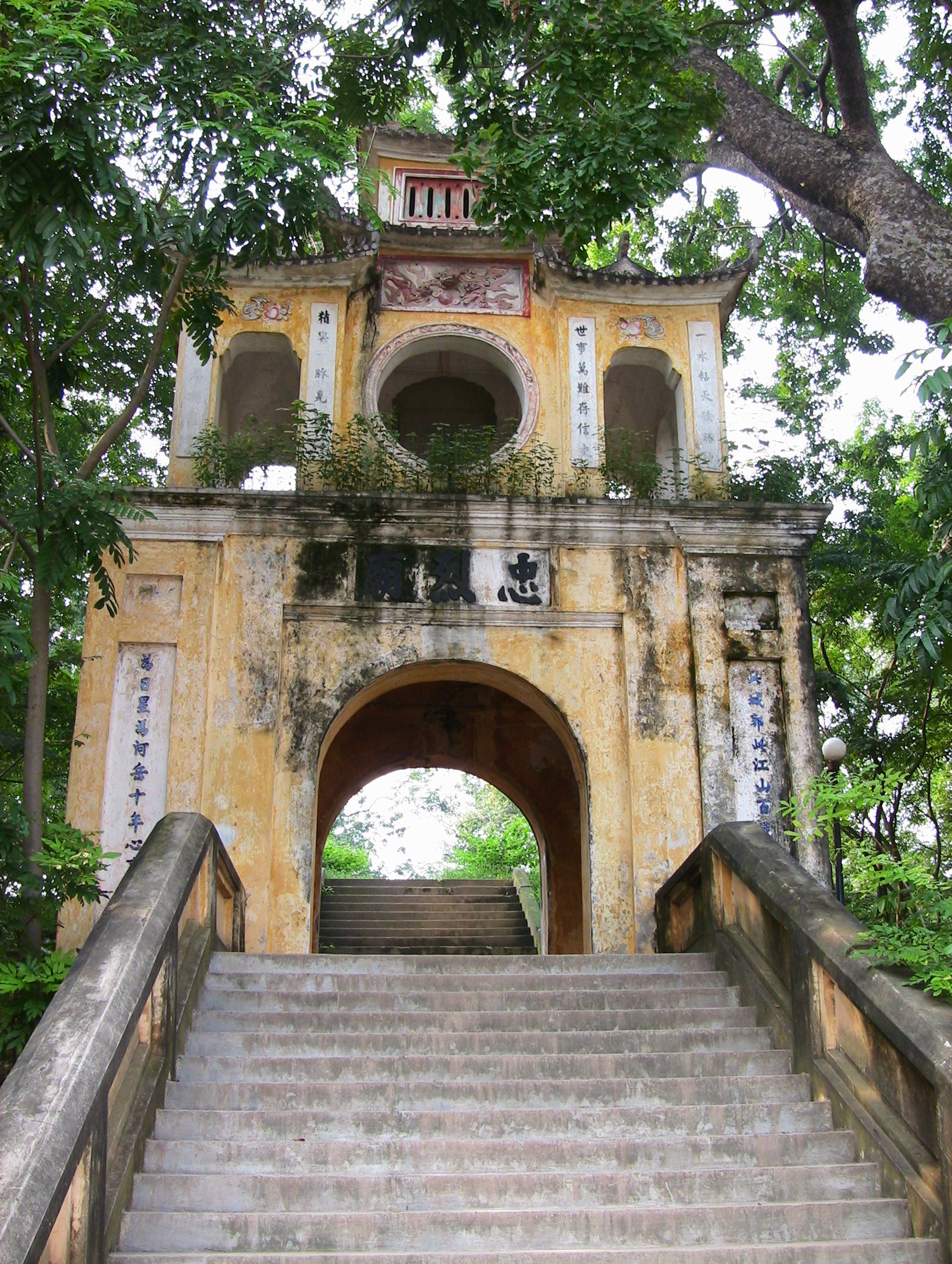
The Dong Da Festival takes place on the 5th day of Tet each year at Dong Da Mound, Dong Da District, Hanoi — commemorating Emperor Quang Trung's historic defeat of 290,000 Qing invaders in the spring of 1789. Unlike many other historical festivals, Dong Da is not merely a commemoration — it is one of the few Hanoi festivals with a nighttime artistic performance capable of reaching the deepest emotions. That performance is the fire dragon procession — the unique folk art signature of this festival, not found at any other festival in Hanoi. The day draws tens of thousands from morning to night — the morning for solemn ceremony, the afternoon for folk games, and the evening for the blazing dragon display. Dong Da Mound was designated a National Historical Relic in 1988, and today's festival retains the authentic spirit of a community voluntarily honouring national achievement.

The Dong Da Festival features the King Quang Trung palanquin procession, Tay Son battle drum performances, and dramatic re-enactments of the famous campaign. The procession with yellow banners, red robes, and traditional weapons circles Dong Da Mound to rolling battle drums — recreating the atmosphere of a court more than 200 years past. Master drummers perform Tay Son pieces on 12 large drums, playing ancient compositions said to have rung out on the night of the 1789 attack. Alongside the ceremony, folk games including wrestling, tug-of-war, and swings are vigorously held within the heritage site. The highlight everyone awaits is the dramatic re-enactment of the Tay Son army advancing on Thang Long — performed by torchlight as evening falls.
The fire dragon procession begins after complete darkness falls — typically around 7pm. The fire dragon stretches dozens of metres, assembled from hundreds of blazing bamboo torches. Each body section is carried by one person, and the entire formation moves to drum rhythm — weaving, circling, and advancing in a carefully rehearsed dance. The orange-red firelight reflects on house walls, on the faces of watchers, and on the wet winter pavement — creating a spectacle both enchanting and primal. The drums, the crowd's roar, and the warmth of hundreds of flames — this is the moment when modern Hanoi steps aside for national memory. Many spectators say it is the first time in years they felt something genuinely sacred without standing inside a temple.
The feeling of Dong Da Festival at night is one of Hanoi's most distinctive urban experiences. In the heart of a dense old-town district packed with streetlights and motorbike noise, a space suddenly blazes with ancient fire. The cold winter night — spectators' breath rising white in the firelight. The smell of torch smoke blends with sandalwood incense from the King Quang Trung Temple. The drums roll, the dragon weaves in the firelight, and in some moment, the boundary between 2026 and 1789 blurs — not entirely erased, but enough to feel that 235 years is not really such a great distance.
Dong Da recorded in the green annals for a thousand years / Who knew on that fifth day / Dong Da battlefield where bones filled the mountains
Ca dao dân gian Hà Nội về trận Đống Đa 1789
Highlights not to miss.
The fire dragon procession is Dong Da Festival's unmistakeable signature — no other Hanoi festival stages this ceremony. The dragon stretching dozens of metres is assembled from hundreds of blazing bamboo torches, weaving through the streets surrounding the mound in the darkness of the 5th night of Tet. The torch-bearers move in precise synchrony with the drums — creating the true illusion of a living, breathing creature. This is an image no camera fully captures — it can only be felt standing in the crowd and witnessed with naked eyes.
Within the festival programme, a short re-enactment of the Tay Son army's advance into Thang Long is performed by torchlight in historical costume. Though not a large-scale spectacle by other festivals' standards, this segment carries strong emotional resonance because of its setting — standing on Dong Da Mound itself, where the real battle occurred. Performers in brown Tay Son jackets carrying torches and weapons advance through the heritage gate to rolling drums — creating a moment that is both strange and deeply memorable.
The Tay Son battle drum performance is one of the festival's most distinctive musical highlights. Twelve large drums are arranged in a circle, and master performers strike in unison through ancient compositions tied to the Tay Son movement. The powerful, characteristically rhythmic sound of Tay Son drums is markedly different from ordinary festival drumming — this is genuine war music, designed to transmit energy and resolve. When all 12 drums strike simultaneously, the entire Dong Da Mound area vibrates — the audience experiences the drums not only through their ears but through their entire bodies.
Stand along the left-side kerb when facing the mound — the fire dragon typically moves counter-clockwise around the mound. Avoid the main entrance as the crowd will be densest there. Arrive 30 minutes before the start time to secure your position.
How to attend & get there.
Come in the Evening for the Fire Dragon
Dong Da Mound is on Tay Son Street, Dong Da District — about 3km from Hoan Kiem Lake. If the fire dragon procession is your goal, arrive before 6:30pm for a good viewing position — the procession typically begins around 7–7:30pm. The area around the mound gets very crowded, so keep children close and watch personal belongings.
Full Day or Evening Only?
If you have the full day, come in the morning for the opening ceremony (8–10am), enjoy afternoon folk games, and stay for the evening fire dragon — this is the most complete experience. If you can only come at one time, prioritise the evening for the fire dragon — it is the one thing that cannot be substituted by photos or video.
Sources
- 1.Lễ hội Gò Đống Đa — Bảo tàng Lịch sử Quốc gia
Bảo tàng Lịch sử Quốc gia Việt Nam · 2026-06-20
- 2.Lễ hội Gò Đống Đa ghi nhớ chiến công lẫy lừng của dân tộc
Tổ Quốc · 2026-06-20