History & meaning.
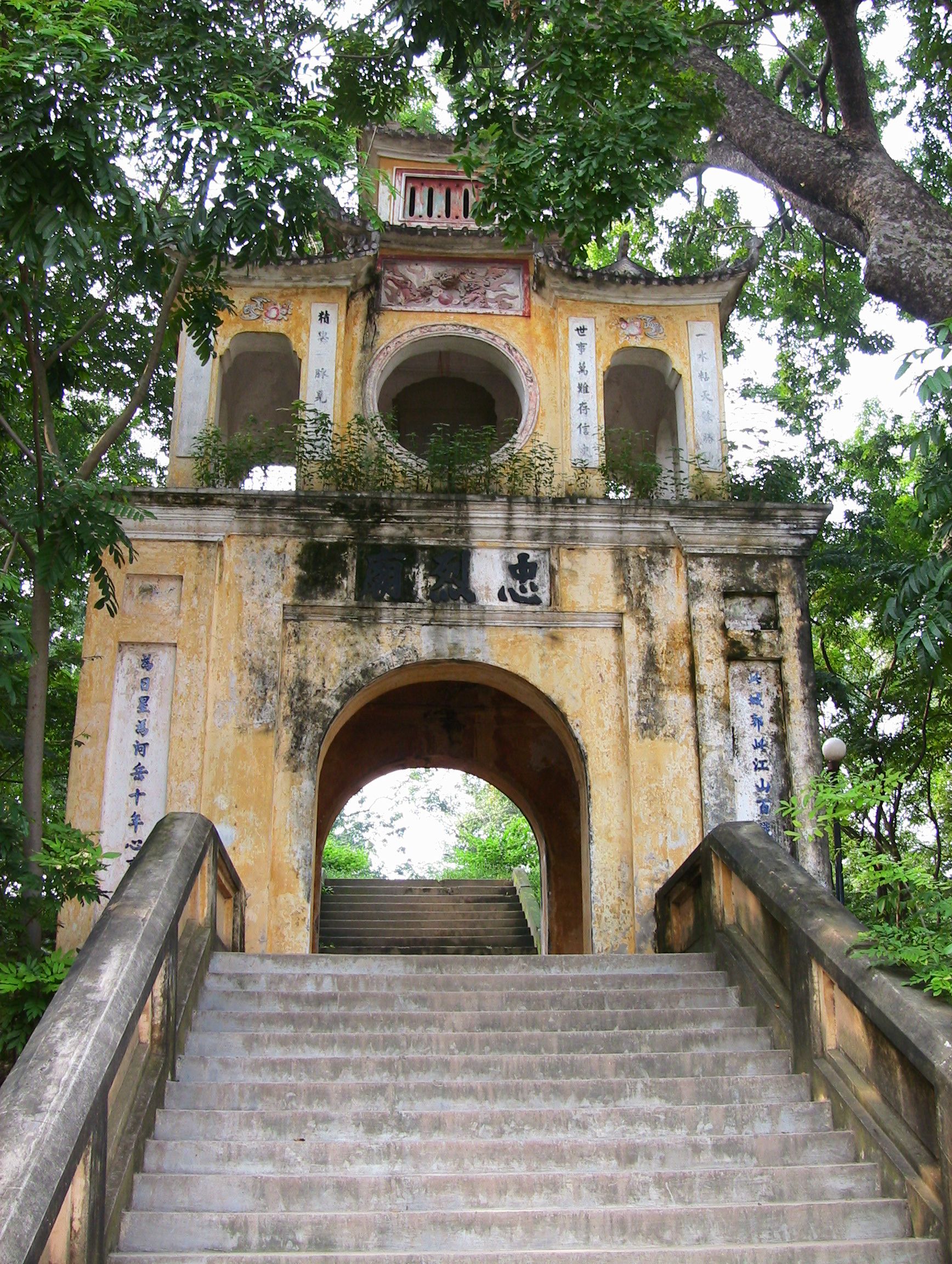
The Dong Da Mound Festival is held annually on the 5th day of the first lunar month at Quang Trung Ward, Dong Da District — marking the anniversary of King Quang Trung's brilliant 1789 victory over 290,000 Qing Chinese troops. It is one of Vietnam's most historically significant festivals, drawing tens of thousands of visitors each year. Dong Da Mound is an earthen hill in the heart of old Hanoi, said to be built from the remains of Qing soldiers who fell in battle. In a single Tet night, the Tay Son army under Quang Trung completely destroyed the Dong Da fortress, forcing Viceroy Sun Shiyi to flee back to China in humiliation. In 1988, the Ministry of Culture designated Dong Da Mound a National Historical Relic. The heritage site today includes the mound, a King Quang Trung statue, and a renovated temple — an indispensable pilgrimage site for the people of Hanoi.

The ceremonial portion is stately: incense offerings at King Quang Trung Temple, a royal-protocol palanquin procession, dragon dances, and thunderous ceremonial drum performances. The Tay Son battle drum ensemble — a distinctive musical heritage tied to the Tay Son movement — performs ancient drumming compositions said to have helped Tay Son troops maintain march rhythm and ignite fighting spirit. The drums reverberate through the streets surrounding the mound, creating an atmosphere of heroic splendour rarely found in a modern city. The incense ceremony draws city government representatives, veterans in dress uniform, and thousands of residents in traditional ao dai. It is a rare moment when Hanoi pauses from its rushing pace to look back at the past with genuine gratitude and unaffected national pride.
The festival grounds feature folk activities including wrestling, tug-of-war, traditional swings, and clay pot breaking — recreating the celebratory spirit of the Tay Son victory. Food stalls offer banh chung, che kho, banh cuon, and traditional Hanoi delicacies, creating a lively Tet market around the heritage site. Children eagerly try traditional games under the guidance of elderly artisans — a form of living cultural education more vivid than any textbook. The highlight is the fire dragon procession at night — a dragon made of hundreds of burning torches weaving through the streets surrounding the mound, accompanied by rolling drums and the cheers of thousands. Firelight reflects on upturned faces full of wonder — a moment where image and emotion merge into something beyond description.
Attending the Dong Da Mound Festival on the fifth day of Tet is a multi-sensory experience unlike any other festival. The scent of sandalwood incense drifting from the temple mingles with torch smoke and the aroma of hot banh chung from street vendors. The rolling of drums blends with cheerful conversation and children calling to each other in the festive air. The gold of ao dai, the red of the national flag, and the orange glow of torchlight create an unforgettable palette. The atmosphere of Dong Da on this day is not simply a festival — it is the collective ritual of a community reminding itself of what made it who it is.
Fight so our people may keep their long hair / Fight so our people may keep their black teeth / Fight until not one chariot wheel turns back / Fight until not one suit of armour returns / Fight so that history will know the heroes of the South have a master
Lời hịch của vua Quang Trung trước trận Đống Đa, mùa xuân Kỷ Dậu 1789 (theo Hoàng Lê nhất thống chí)
Highlights not to miss.
The incense offering at King Quang Trung Temple opens the morning of the 5th day of Tet with solemnity and reverence. The palanquin procession bearing the image of King Quang Trung circles the Dong Da Mound to the sound of traditional ceremonial music. This is the most focused moment of the festival — thousands standing in silence to honour the national hero. Elderly men and women in ao dai and traditional headwear lead the procession with the utmost dignity.
The Tay Son drum ensemble performs ancient compositions tied to the Tay Son movement — the distinctive military music of Binh Dinh and central Vietnam. Eight to twelve large drums are arranged in a circle, with master performers striking in unison through complex rhythmic patterns. The sound rolls like thunder through the surrounding streets — an unforgettable auditory experience. Many visitors say that hearing the Tay Son drums once at this festival explains why the Qing soldiers were terrified.
The fire dragon procession is the most distinctive highlight of Dong Da Festival — found nowhere else in Hanoi. The dragon is assembled from hundreds of blazing bamboo torches, weaving through the streets surrounding the mound in the darkness of the 5th night of Tet. The torch-bearers move in choreographed unison creating the illusion of a living, breathing dragon. This is the festival's defining image — brilliant light in the darkness, like the memory of victory burning bright across the centuries.
The Temple of Literature is only about 1.5km from Dong Da Mound — a pleasant walk or 5 minutes by motorbike. Visit Van Mieu in the early morning before the festival, or stop by after the midday closing to make the most of a full day in the Dong Da district.
How to attend & get there.
Arrive Early and Walk In
Dong Da Mound is on Tay Son Street, Dong Da District — about 3km from Hoan Kiem Lake. Arrive before 7:30am for a good vantage point at the opening ceremony. The area around the mound is closed to vehicles on festival day, so park on a side street and walk in. Grab or taxi should drop you at least 500m away.
Dress and Conduct
Dress respectfully — avoid shorts and T-shirts for the main ceremony. Traditional ao dai is highly appreciated and will help you feel part of the occasion. Temperature on the 5th day of Tet in Hanoi is typically 15–20°C with possible drizzle — bring a light jacket and an umbrella. Carry cash as most street vendors around the festival do not accept cards.
Sources
- 1.Lễ hội Gò Đống Đa — Bảo tàng Lịch sử Quốc gia
Bảo tàng Lịch sử Quốc gia Việt Nam · 2026-06-20
- 2.Dong Da Mound Festival — Vietnam Intangible Heritage
Vietnam National Institute of Culture and Arts Studies · 2026-06-20