Story & history.
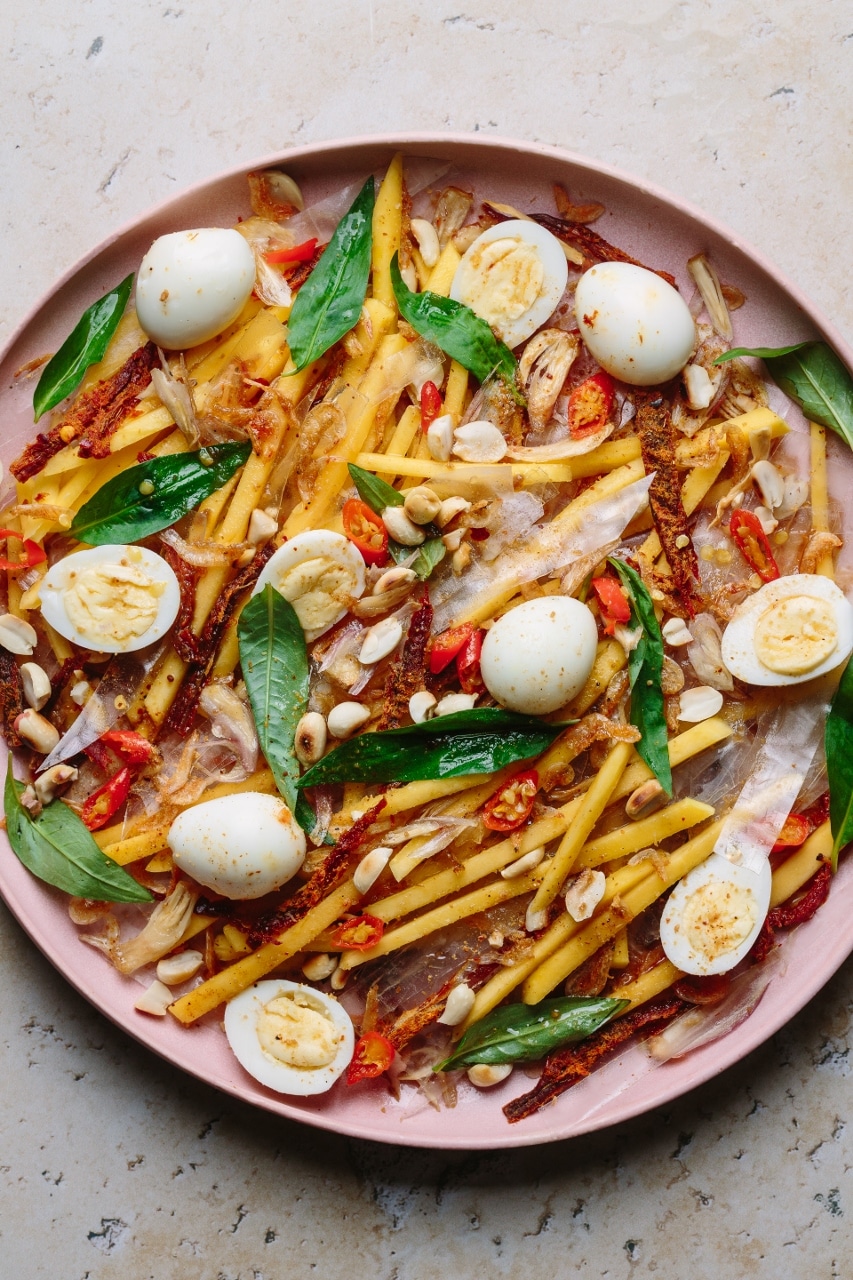
In Tây Ninh, people once collected broken rice-paper scraps from cutting machines and mixed them with scallion oil, chili salt and fish powder for home consumption — a wonderfully frugal habit that cost next to nothing. When migrants and traders flooded into Saigon, their bánh tráng trộn carts flooded the sidewalks with them, and students loved it for being cheap, delicious and immediately edible while standing. The modern recipe has evolved well beyond its origins: dew-dried rice paper (softer than standard crispy sheets) is cut into thin strips and tossed with sharp shredded green mango, pungently aromatic Vietnamese coriander, Tây Ninh shrimp salt (salty-sweet with a complex prawn fragrance), scallion-peanut oil, kumquat juice, boiled quail eggs and hand-shredded beef jerky. Nguyễn Thượng Hiền Street in District 3 — with a dozen carts jostling for space — is the undisputed pilgrimage destination for devotees, where each cart guards its own recipe secrets and regulars know every vendor by name.
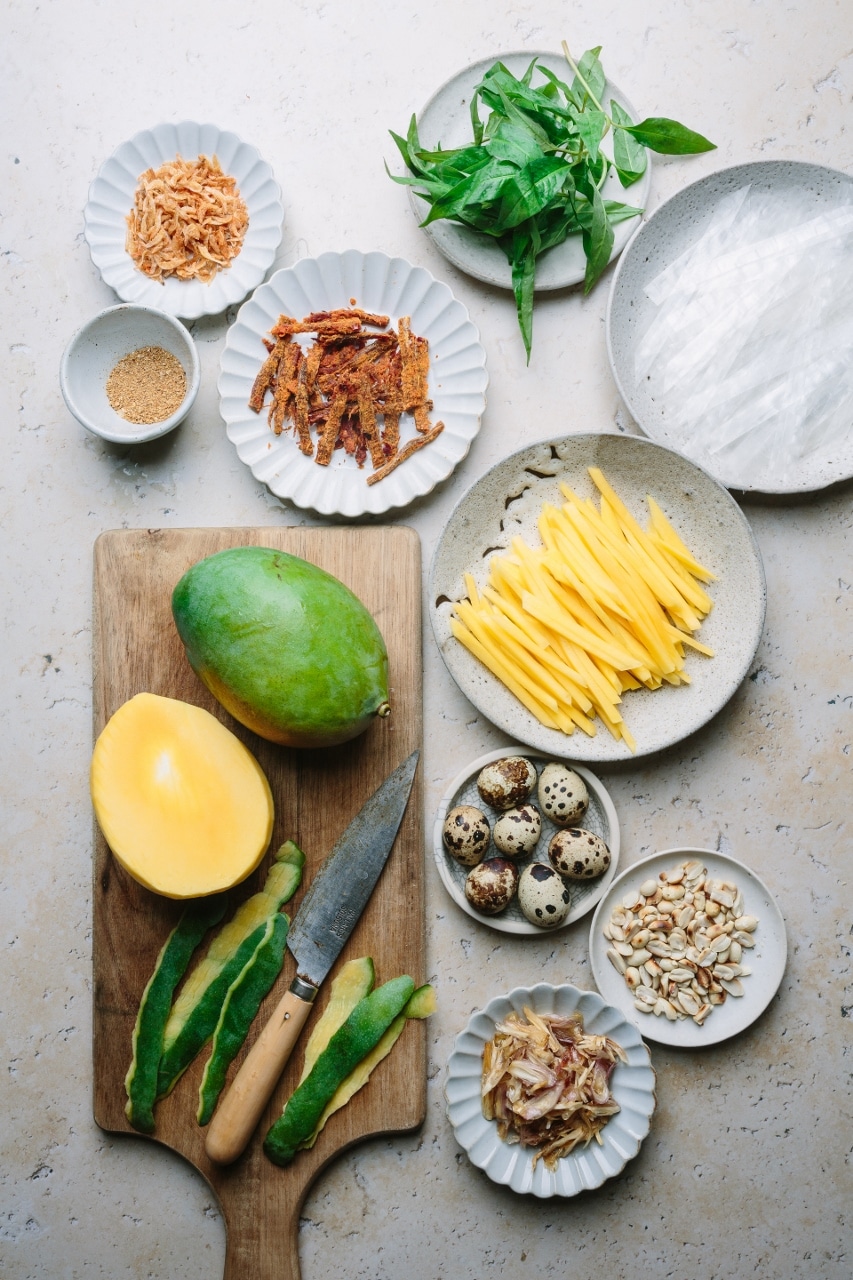
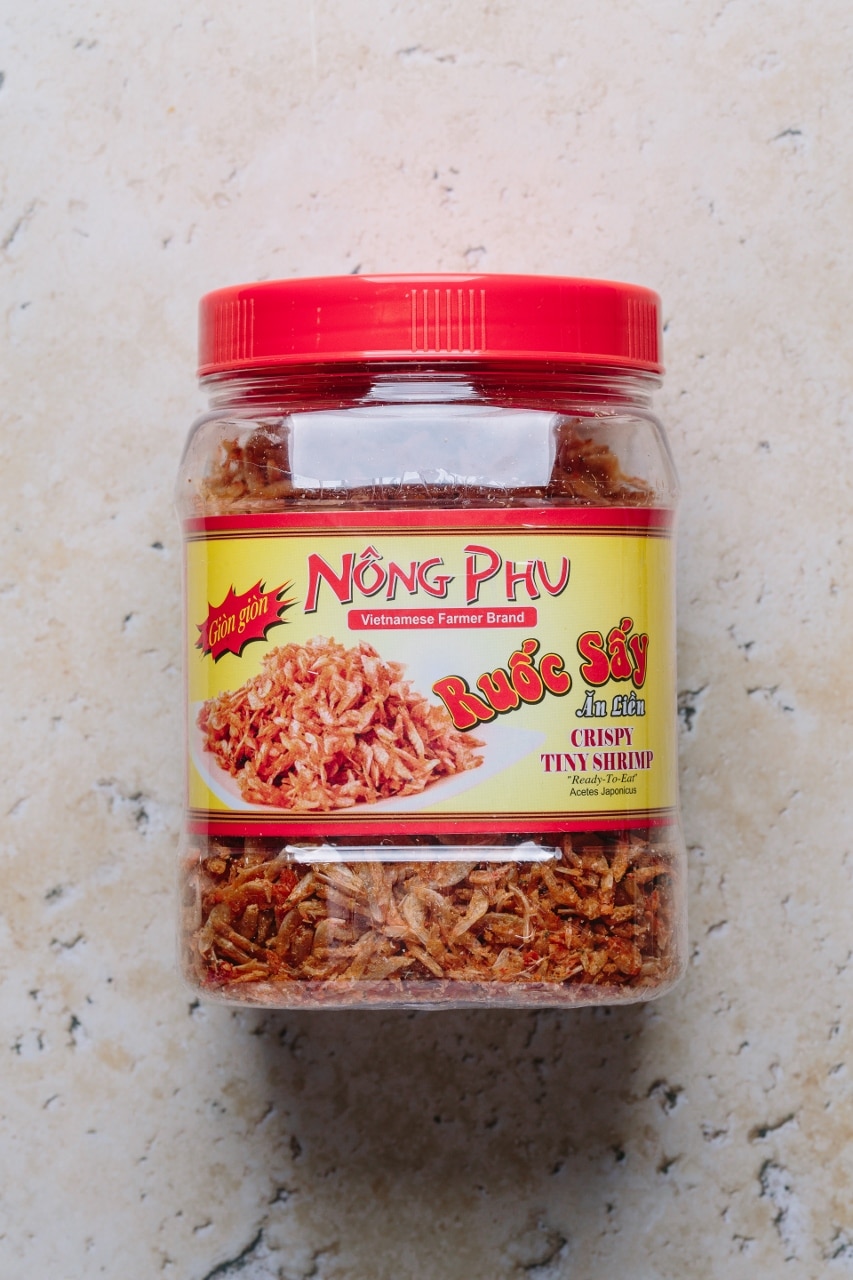
The soul of bánh tráng trộn is Tây Ninh shrimp salt — the irreplaceable seasoning of vivid pinkish-orange colour, with the aroma of roasted prawns and a complex salty-sweet flavour that no other region can replicate. Shredded green mango provides the sharp, refreshing sourness needed to balance the richness of the scallion-peanut oil; Vietnamese coriander adds a layer of distinctively pungent southern fragrance; shredded beef jerky brings rich umami sweetness and a satisfying chewy texture. When everything is mixed together in the plastic bag and finished with a squeeze of kumquat — that is the moment all the sour, spicy, salty, sweet, fatty and aromatic notes merge into something entirely new that cannot be accurately described by any single word.
Bánh tráng trộn is a generational dish — Saigonese who grew up in the 1990s and 2000s all share memories of after-school afternoons standing and eating it at the school gate. Its simplicity, low cost and immediate eat-while-standing format — qualities that seem unremarkable — are precisely what created a timeless culinary icon. Today bánh tráng trộn has crossed the sidewalk boundary: it appears on restaurant menus, is packaged for online sale and even turns up in overseas cities with Vietnamese communities — but no version tastes as good as eating it directly from a street cart on a Saigon evening at dusk.
Saigon has many luxuries, but what people most remember when they leave is often a bag of banh trang tron eaten standing on the pavement at dusk.
— Ghi chép ẩm thực đường phố Sài Gòn, VnExpress
Ingredients — what makes the flavour.
Great carts always have queues even when prices are similar nearby. Check if the green mango looks fresh and sharp — not browning or wilted — and that the shrimp salt is a vivid pinkish-orange. A reliable quality signal: the vendor mixes each order to order rather than pre-mixing — meaning the rice paper is always fresh.
How to enjoy it properly.
The authentic Saigon way
Bánh tráng trộn is a hand food — no chopsticks, no spoon. Reach into the bag, pinch a handful, and eat. This is not crude — it is the correct sidewalk protocol that Saigonese have perfected.
Adjusting the heat
Shrimp salt already carries mild chili heat. For more spice, ask the vendor for extra sa tế (chili oil) or chili sauce. If buying for children, specify 'ít cay' (less spicy) upfront as each cart has a different default heat level.
Eat immediately
Bánh tráng trộn is best within the first 10 minutes — the mango releases juice over time and the rice paper softens. This is precisely why Saigonese eat it standing right at the cart rather than carrying it home.
Editor-recommended eateries.
ⓘ Addresses and prices may change. Please verify before visiting.