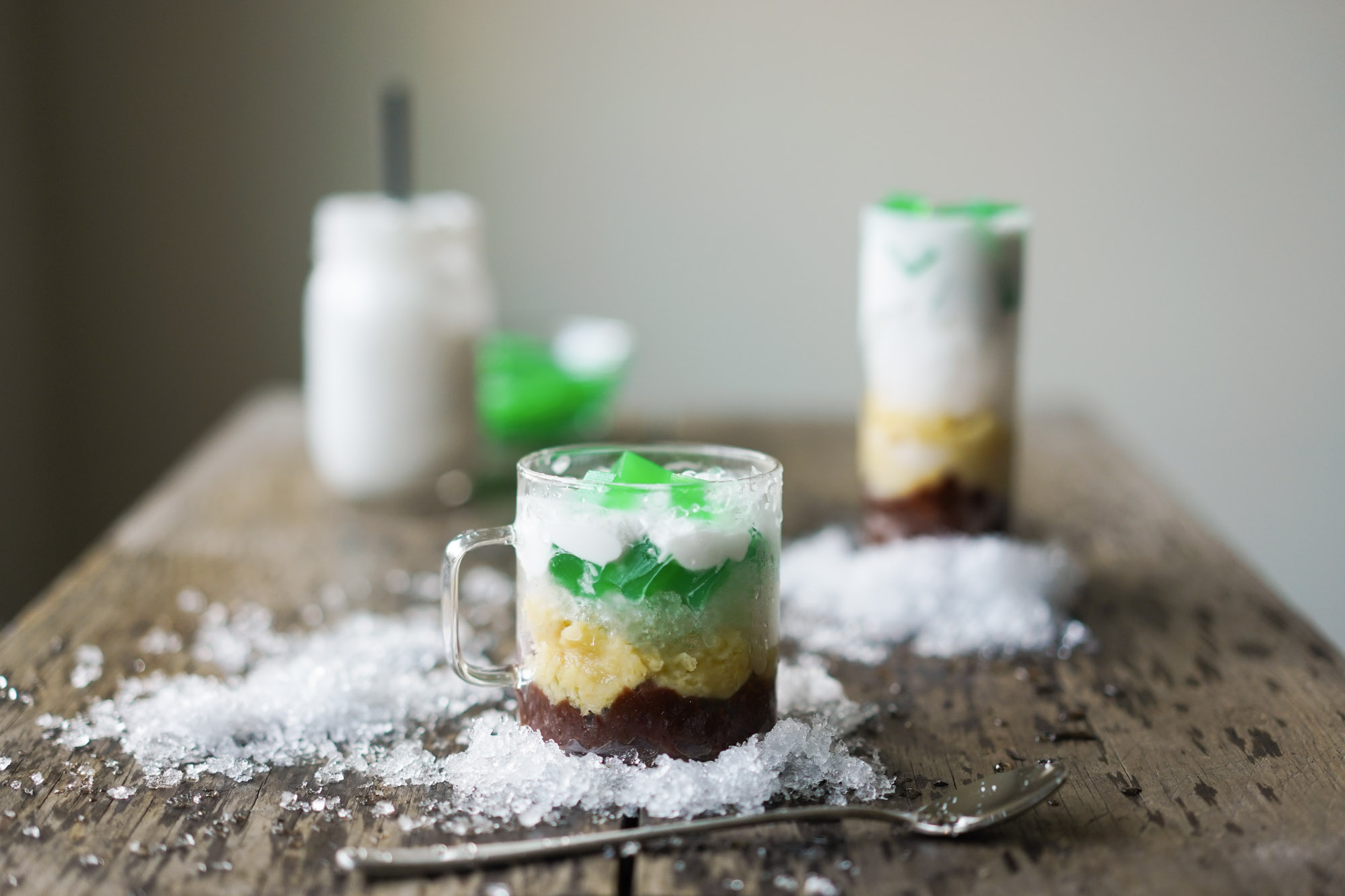
Story & history.
The first Cantonese settlers to arrive in Cholon brought tong sui — their tradition of sweet hot or cold soups with dozens of variations from peanuts and lotus seeds to fruit jellies. In tropical Saigon, they quickly adapted: shaved ice replaced hot broth, and coconut milk brought a layer of tropical richness specific to the region. Chè ba màu — slow-braised red beans, smooth blended mung bean paste, and vivid pandan-green jelly — emerged as a three-note chord of perfect contrast: earthy-sweet, silky, and fragrant, connecting Cantonese flavour with Southern Vietnamese culinary spirit. For decades, Cantonese dessert carts from Cholon threading through streets like Dương Tử Giang (District 5) and Nguyễn Phi Khanh (District 1) became unforgettable childhood memories for generations of Saigonese.
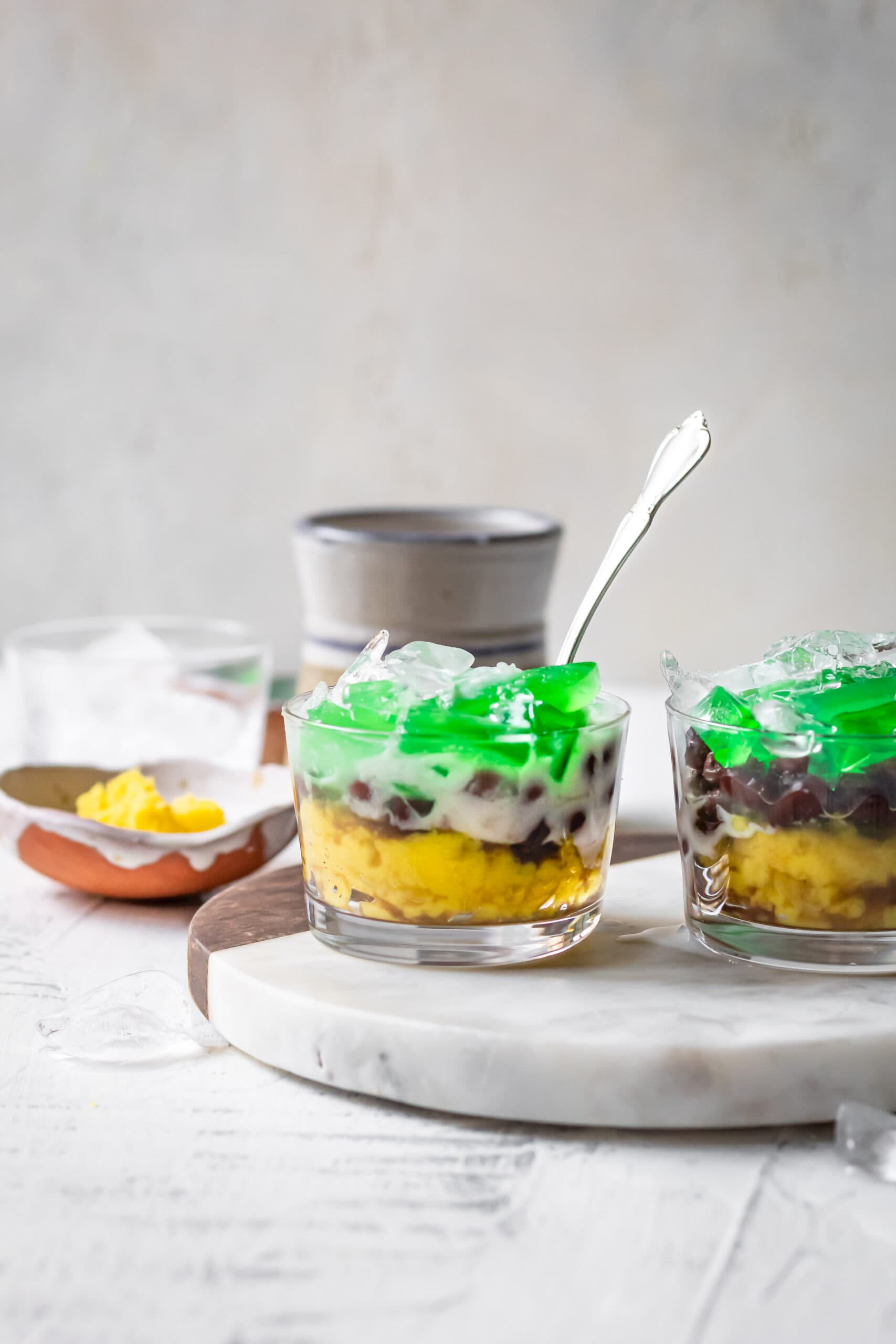
The secret of a perfect chè ba màu lies in the balance and proportion of the three layers: red beans must be soft enough but not crumbling, retaining their shape; mung bean paste must be as smooth as cream with no lumps; pandan jelly must be fragrant and firm enough not to dissolve instantly on contact with the ice. Coconut milk — rich, warming — is poured over the top, and the whole assembly rests on a base of shaved ice for cool lightness. In 2023, Taste Atlas ranked chè ba màu among Asia's top 100 desserts with a 4.1/5 score — definitively proving that Vietnamese street food greatness extends far beyond pho and bánh mì.
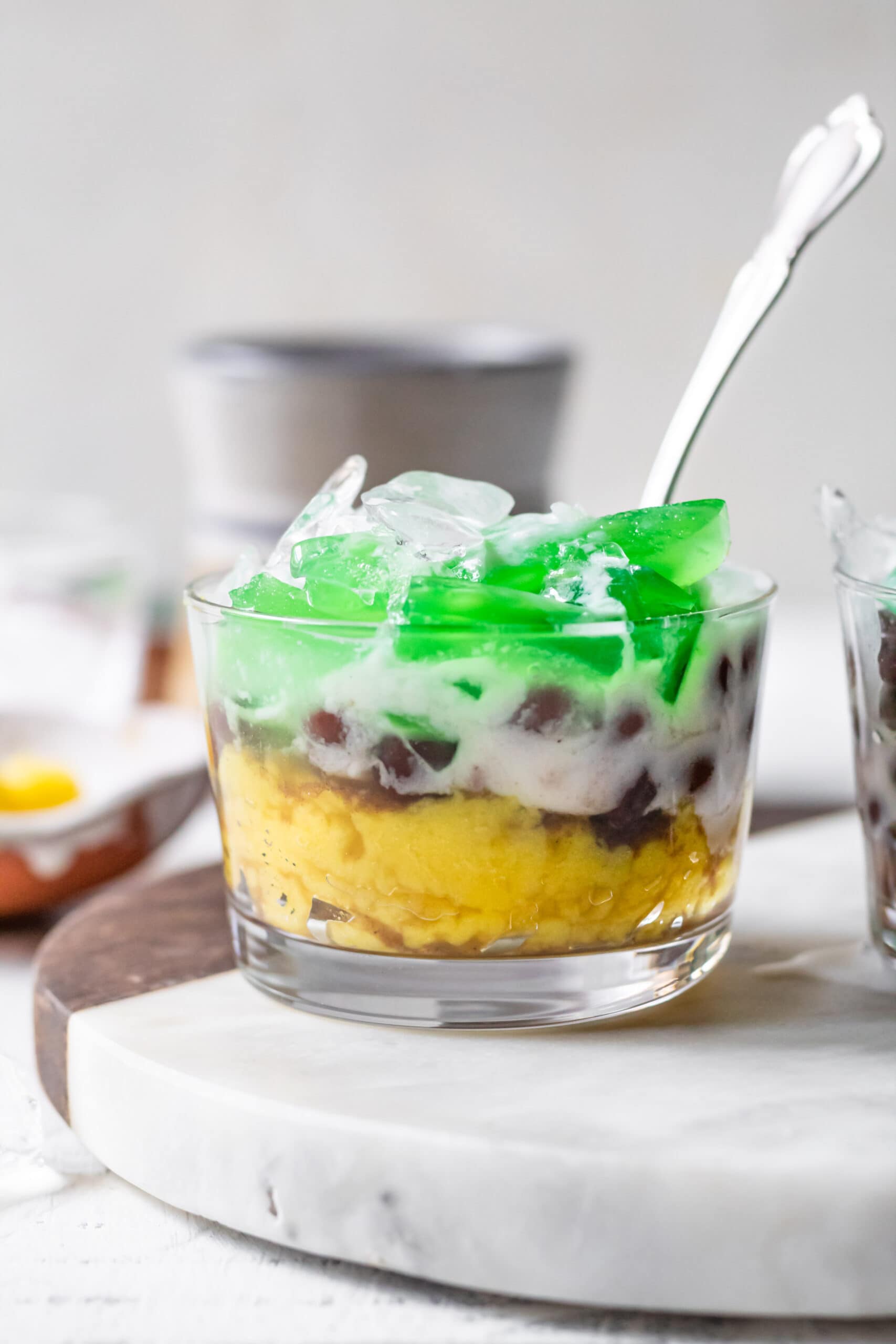
Chè ba màu is proof of how Saigon receives culture from outside: not erasing the original identity, not copying it wholesale, but creating something new that is better than either source. The Cantonese gave Saigon red beans and mung bean; the southern land added pandan leaf, coconut milk and shaved ice — and the result is a dessert that both cultures can proudly claim as their own. Today, chè ba màu appears on every Saigon street from sidewalk carts to air-conditioned dessert shops, all maintaining the three distinctive colour layers as an identity that cannot be changed.
A perfect bowl of che ba mau needs red beans that are perfectly nutty, mung bean that is perfectly smooth, and jelly that is perfectly fragrant — miss any one and the whole composition falls apart.
— Người bán chè, Chợ Lớn
Ingredients — what makes the flavour.
Traditional che ba mau has exactly three fixed layers: red beans, blended mung bean, and pandan jelly. If a vendor adds more than five different toppings, you are likely eating che thap cam (mixed dessert) rather than the pure version. Coconut milk should be served either warm or cold according to your preference — a shop that asks this question knows what it is doing.
How to enjoy it properly.
Step 1: Don't stir immediately — admire first
Che ba mau is most beautiful when the three layers remain distinct. Take a moment to appreciate the colours — or taste each layer separately to understand how they work individually before combining.
Step 2: Mix everything and eat quickly
When ready, stir all layers together with the coconut milk and shaved ice. The dessert is at its best in the first 3–5 minutes before the ice fully melts — eat too slowly and it becomes watery and lukewarm.
Variations and optional toppings
Many shops add lotus seeds, chestnuts, ginkgo nuts, or tapioca pearls. On a first visit, choose the classic three-layer version to understand the original before exploring variations.
Editor-recommended eateries.
ⓘ Addresses and prices may change. Please verify before visiting.