Story & history.
Lẩu mắm traces its roots to the fermentation traditions of Khmer and Vietnamese communities in the lower Mekong Delta — without refrigeration, fermenting fish (mắm) was both essential preservation and the defining flavour of southern cuisine. From a simple pot of fermented fish broth poured over water vegetables, Mekong cooks gradually evolved it into a communal hotpot loaded with seafood — a feast of river-country generosity. The Phước Thành restaurant on Lê Thị Riêng Street (District 10) is regarded as one of Saigon's oldest lẩu mắm establishments, tracing back to 1949 when waves of Mekong migrants brought their home flavours to the city. The characteristic pungency of mắm — deep, earthy, seductive — is the exact "taste of home" signal for millions of southerners living away from the Mekong.
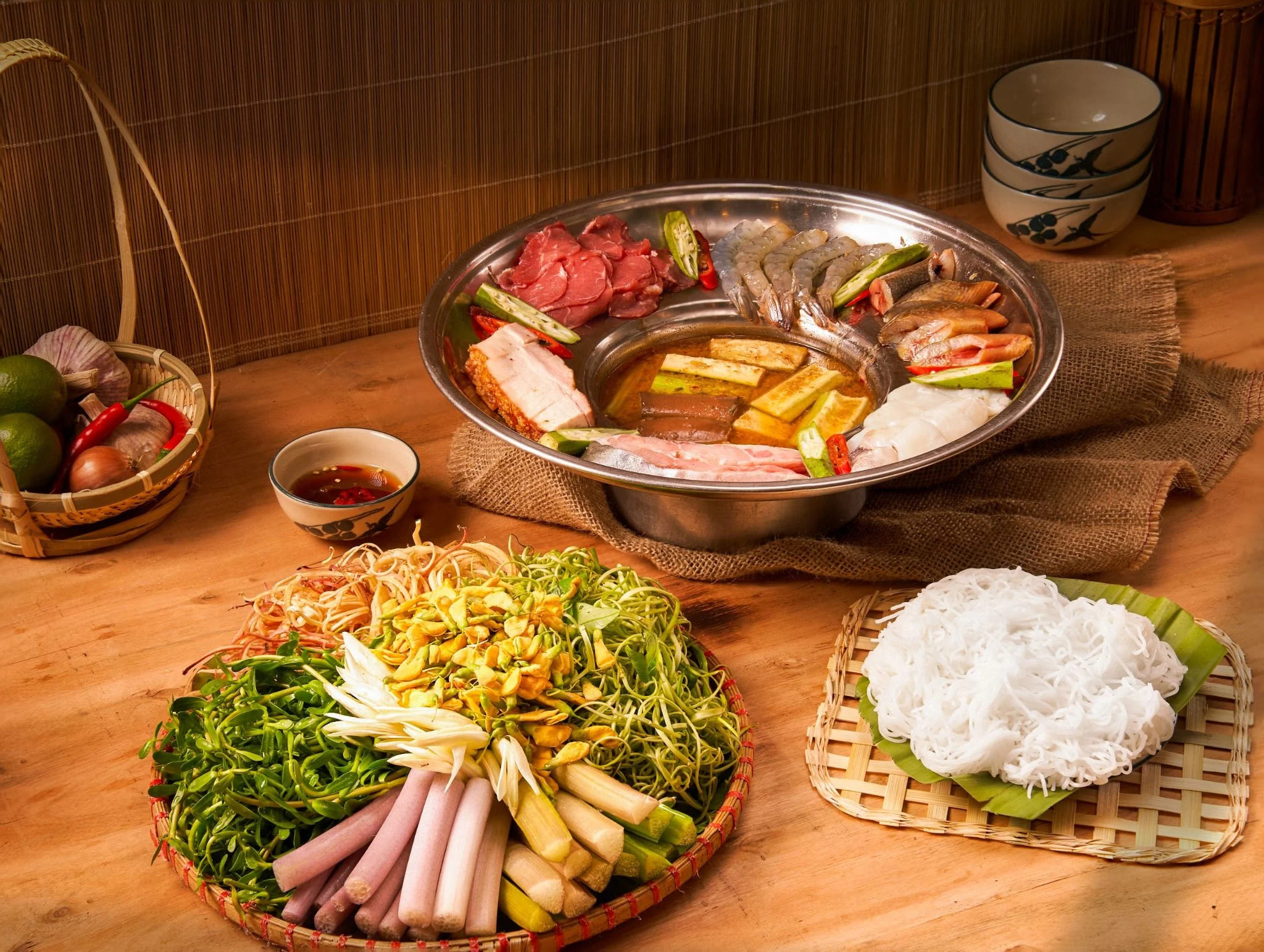
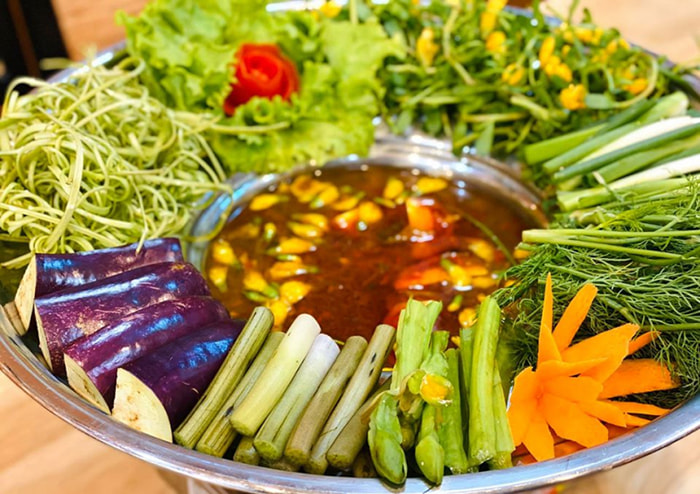
The vegetable array is what makes lẩu mắm entirely unlike any other hotpot: water lily stems, shredded banana blossom, swamp morning glory (kèo nèo), water spinach, eggplant — the kind of water-meadow greens Mekong people call affectionately their "garden vegetables." When the mắm broth — alive with lemongrass, chili and garlic — washes over these fresh greens, the result is something that cannot be described in words. Seafood — fresh snakehead fish, tiger prawns, squid — and rich pork belly are lowered into the boiling broth, each ingredient cooking at its own pace, creating a culinary symphony drawing on Vietnamese, Chinese and Khmer traditions.
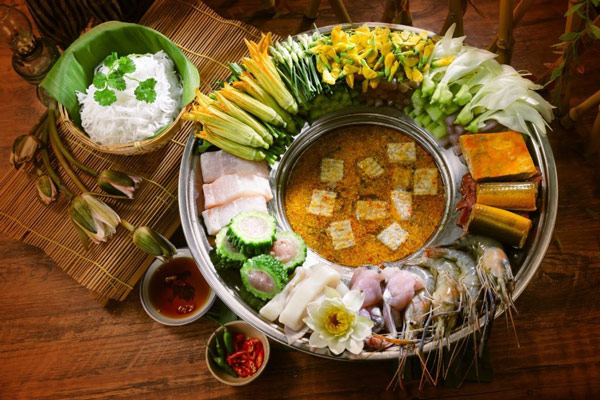
Saigon lẩu mắm today is no longer just a dish for Mekong migrants longing for home — it has become an authentic culinary experience that even international visitors seek out. Lẩu mắm restaurants cluster across District 1, District 3, and Bình Thạnh, where Saigonese gather in groups of four or more on evenings to share a steaming communal pot. No single pot of lẩu mắm is ever meant for one person alone — this is a dish of sharing, of community, and of a homesickness that cannot quite be cured.
The smell of mam is the smell of river country, of home — those who have never breathed it cannot understand the Mekong Delta.
— Câu nói dân gian Nam Bộ
Ingredients — what makes the flavour.
A great lau mam restaurant often lets you smell the mam even from the doorway — this is a very good sign, not something to avoid. The water vegetables must be truly fresh, especially the water lily stems and swamp morning glory. Authentic broth should be a warm reddish-brown — not too dark — with a glistening layer of lemongrass oil visible on the surface.
How to enjoy it properly.
Step 1: Add ingredients in the right order
Add meat and seafood first when the broth reaches a rolling boil so they cook through evenly. Vegetables go in after — soft greens like swamp morning glory need only 30 seconds, while eggplant needs 2–3 minutes to absorb flavour. Water lily stems should be briefly dipped and eaten while still slightly crisp.
Step 2: Pair with fresh rice noodles or steamed rice
Mekong-style lau mam is traditionally served with fresh rice vermicelli briefly blanched (not overcooked, to preserve chewiness) or fluffy steamed rice. Ladle broth over the noodles rather than submerging them in the pot.
Step 3: Don't waste the end-of-meal broth
Once the main ingredients are gone, the broth is at its most concentrated and flavourful — this is the moment to add leftover rice or noodles and drink it down. Southern Vietnamese call this "finishing the platter, draining the pot."
Editor-recommended eateries.
ⓘ Addresses and prices may change. Please verify before visiting.