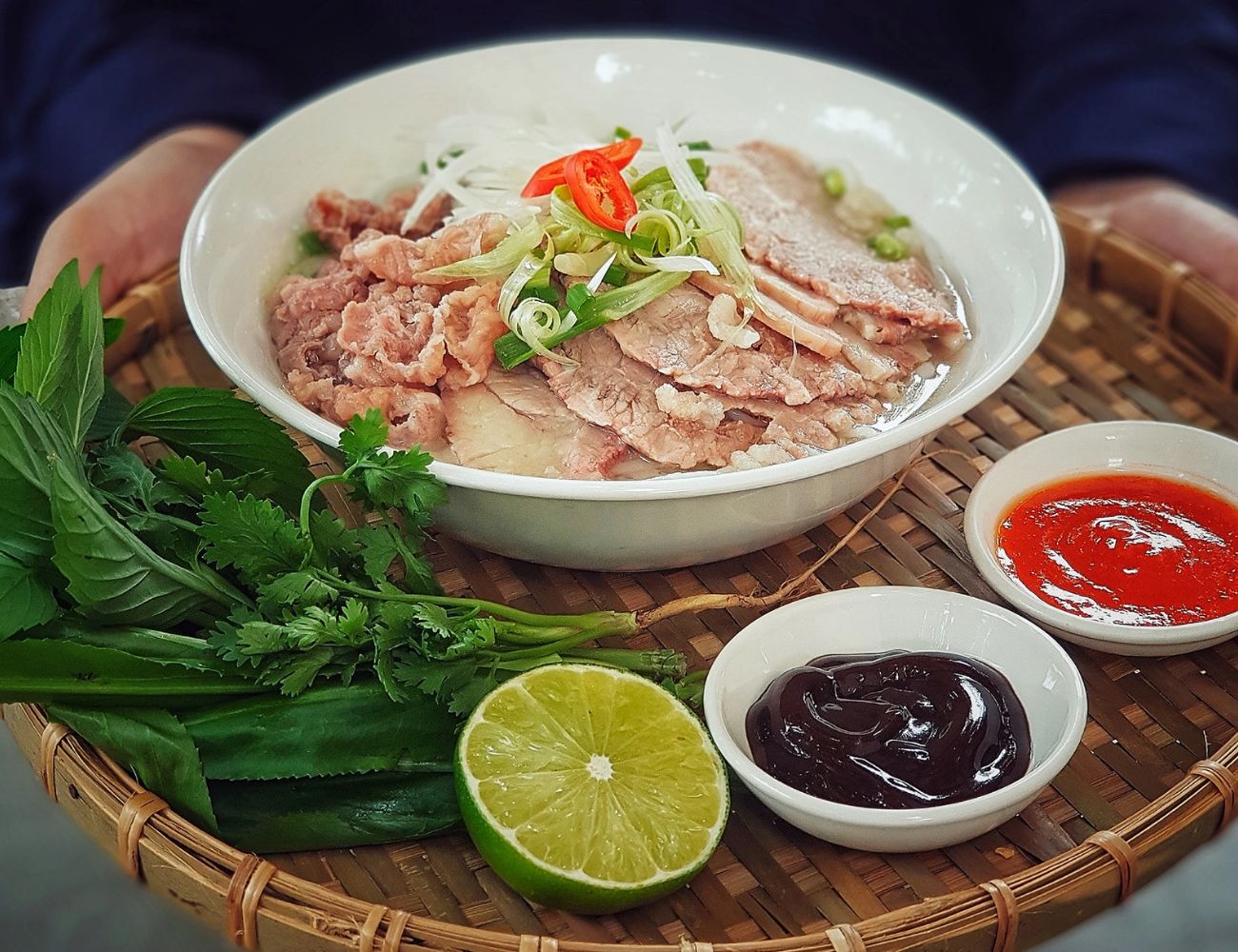
Story & history.
In 1954, tens of thousands of Northerners arrived in Saigon following the Geneva Accords, carrying pho recipes from Hanoi, Nam Dinh, and Hai Phong. But Saigonese palates were different — they craved sweeter broth, more greens, and had no reservations about blending in Cantonese condiments already familiar from generations of cohabitation with Teochew Chinese in Cholon. Gradually, perceptive pho sellers added daikon radish and rock sugar to their pots, and served platters of bean sprouts, Thai basil and sawtooth herb alongside bowls of hoisin and chili sauce. Southern pho was born not by decree but through millions of small adjustments made to please local guests over many decades.
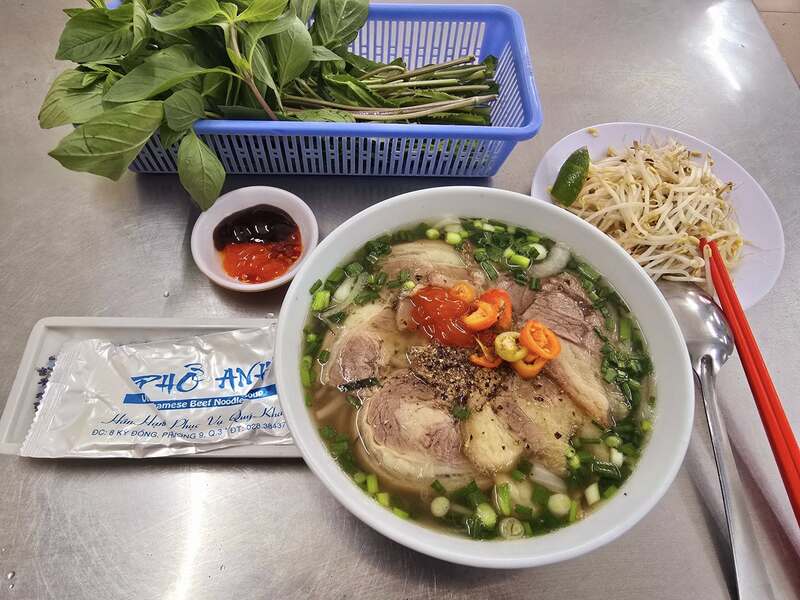
Pasteur Street in District 3 once earned the title of Saigon's "Pho Street," with dozens of shops crammed into a short stretch between Vo Thi Sau and Tran Quoc Toan. Pho Hoa — open since around 1960 — became a living landmark with queues forming at 6 AM every day without exception. Pho Minh on the same street received Michelin recognition three consecutive years from 2023, proving that Southern pho is not an inferior copy of Northern pho but a distinct entity — as colourful, urban, and open-spirited as Saigon itself.
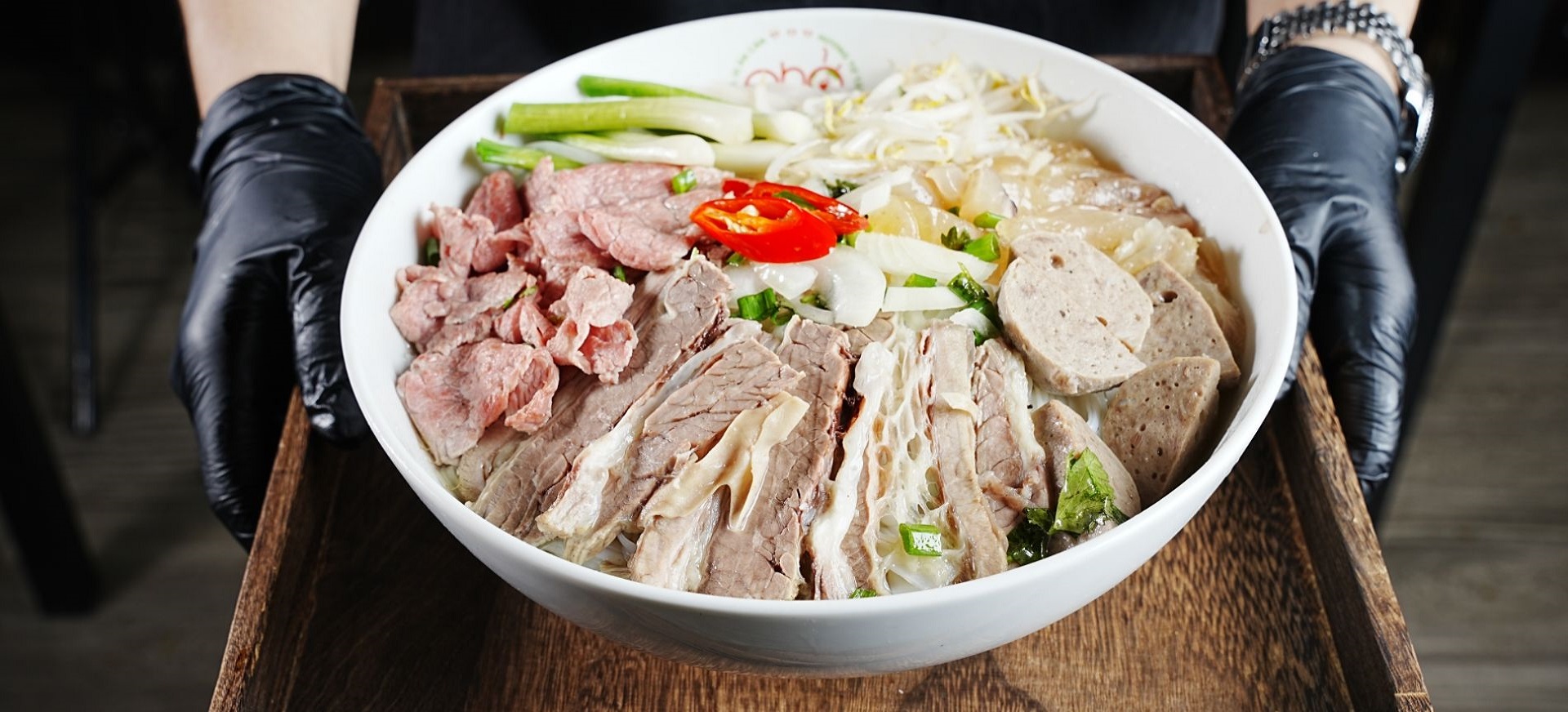
What distinguishes Southern pho from everywhere else is not just the sweeter broth or the fuller herb plate — it is the philosophy of openness. Saigonese believe a good pho bowl is one that lets the diner adjust to their own taste: add hoisin, add bean sprouts, add lime and chili, or simply drink the pure broth alone. There is no "wrong" way to eat Southern pho — and that is precisely what makes it an urban specialty reflecting the soul of a city that has always welcomed millions of people from everywhere.
Southern pho is not inferior to Northern pho — it is simply a different person, raised in a different land.
— Nhà báo ẩm thực, Tuổi Trẻ
Ingredients — what makes the flavour.
Authentic Southern pho broth should be clear and gently sweet — fragrant with star anise and cinnamon but never cloying. The herb plate must include Thai basil, sawtooth herb, and bean sprouts — missing any one of them signals a shortcut. And crucially, hoisin and chili sauce should be on the table before you even sit down.
How to enjoy it properly.
Step 1: Prepare the herb plate first
The platter of fresh herbs, bean sprouts, lime, and chilies is the soul of a Southern pho bowl. Squeeze lime into the broth first, then add bean sprouts and herbs — keeping the sprouts crisp and the herbs intact.
Step 2: Mix your sauces
Southern pho differs from Northern precisely because hoisin and chili sauce are expected. Mix them in a small side dish for dipping meat, or add sparingly directly into the bowl. This Sino-Vietnamese condiment tradition is authentic Saigon — don't skip it.
Step 3: Eat hot, eat fast
Pho is at its peak in the first three minutes when the broth is still billowing steam. Don't linger over photos — the noodles swell and lose their texture quickly. Add fresh herbs in stages to keep each bite lively.
Variations worth trying
Pho tai chin (half-rare, half-well-done), pho gan sach (tendon and tripe), pho bo vien (beef ball) — each has its own texture. For a first visit, order "pho dac biet" (special pho) to experience every cut.
Editor-recommended eateries.
ⓘ Addresses and prices may change. Please verify before visiting.