Story & history.
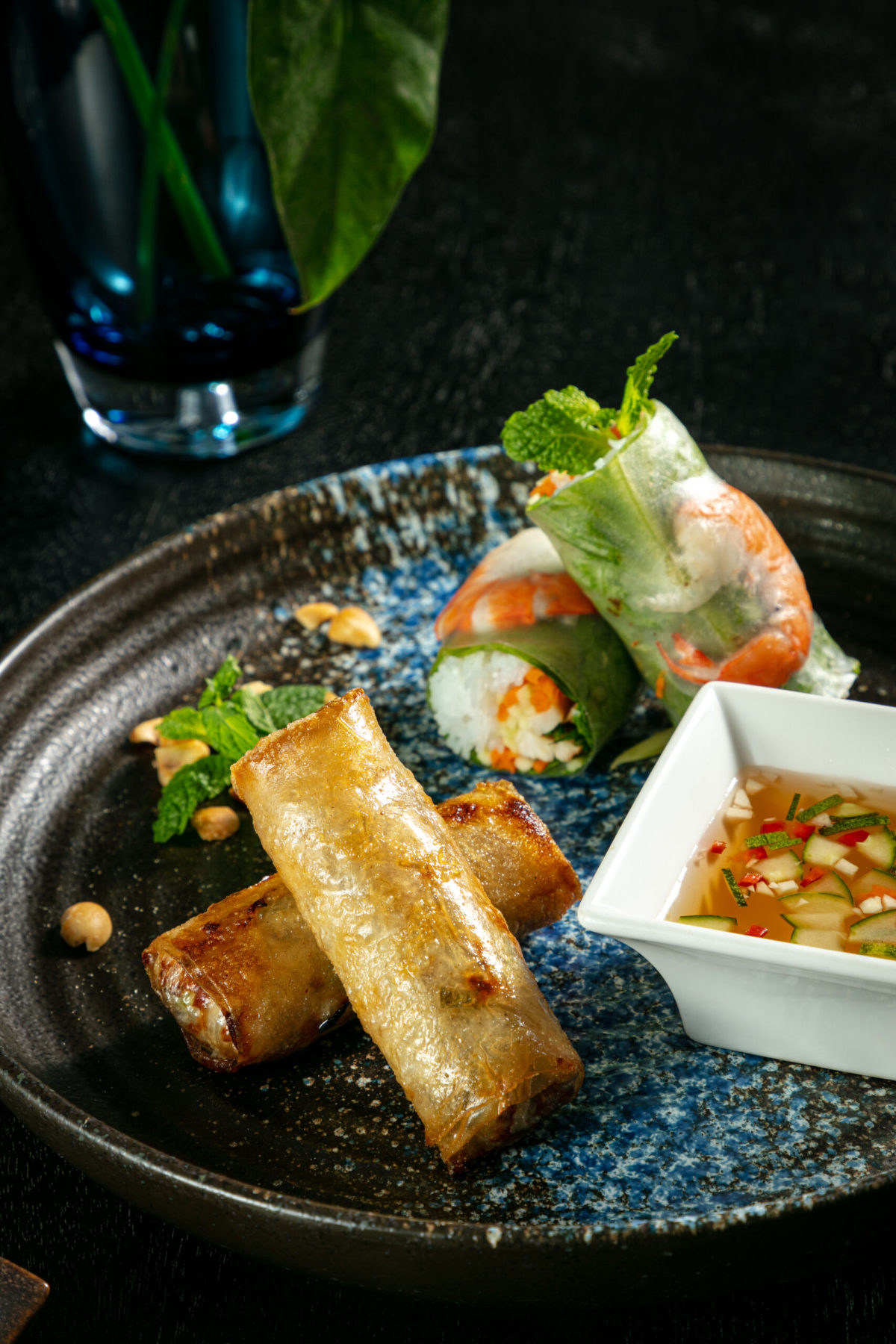
Gỏi cuốn and chả giò are two answers from southern Vietnamese cuisine to the same question: how do you capture the flavours of the delta in something that fits in the palm of your hand? Gỏi cuốn was born from tropical climate — in Saigon where temperatures rarely drop below 25 degrees, the body craves something cool, light and refreshing. Rice paper as thin as silver foil, so translucent you can see the pink shrimp and green herbs within, wrapped around soft vermicelli, sweet poached shrimp and fresh herbs — that is gỏi cuốn. Dipped in sweet-sour fish sauce or rich peanut sauce, eating one roll is like drinking a cool breeze on a Saigon summer noon.
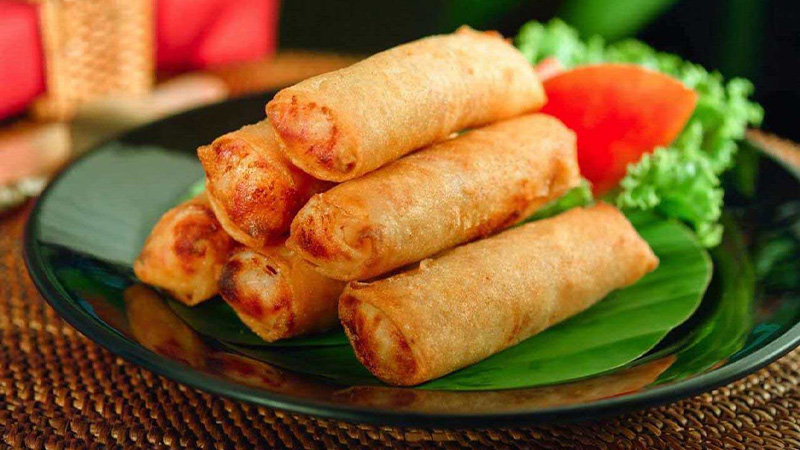
Chả giò is the other answer — what gỏi cuốn becomes when fire intervenes. Same rice paper, same shrimp and pork filling, but this time the filling is mixed with wood ear mushrooms, glass noodles and shredded carrot, then rolled tight and lowered into boiling oil. Minutes later what emerges is entirely different: golden-brown crust shattering with each bite, heat rising with the savoury-sweet scent of the filling. The South has a saying: fresh rolls are summer, fried rolls are winter — both together make a complete Saigon meal.
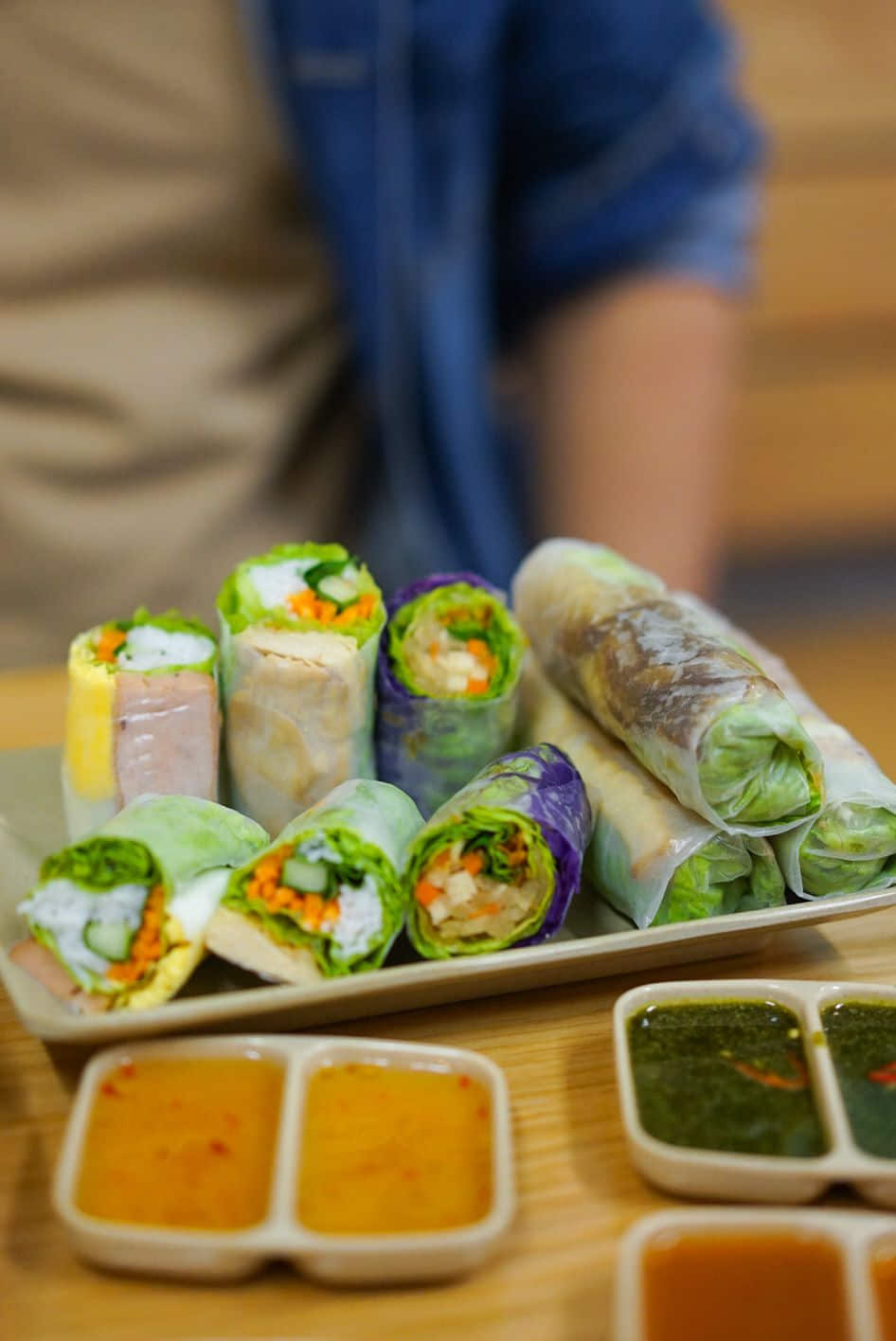
Both dishes reflect the southern Vietnamese culinary philosophy: respect for fresh ingredients, balance across flavours, and never forcing the diner into a single prescribed way. Eating gỏi cuốn and chả giò in Saigon is not merely tasting a dish — it is experiencing how southerners relate to food: inventive, flexible, generous and always putting the diner first. No Saigon vendor would ever use wilted herbs or stale shrimp for these two dishes — that is an unwritten rule every seller understands and honours.
Fresh rolls are summer, fried rolls are winter — together they are Saigon cuisine.
— Triết lý ẩm thực Nam Bộ
Ingredients — what makes the flavour.
Quality gỏi cuốn has **glossy, translucent rice paper** — you should clearly see the pink of the shrimp and green of the herbs inside. Opaque, wrinkled, or dry paper means the rolls are too old. Quality chả giò has a **golden-brown, shattering crust** — when you bite, it cracks audibly, not yielding softly. Pale brown or soft exterior means under-fried or cooled too long.
How to enjoy it properly.
Gỏi cuốn — how to eat
Hold with both hands. Dip one end into sauce — don't submerge; rice paper softens quickly and loses its bite. Eat decisively; the wrapper is thin so no force is needed. Eat immediately after the rolls are made — gỏi cuốn begins to lose freshness after about 15 minutes.
Sauce choice: fish sauce (sharp, light, palate-stimulating) suits morning and lunch. Peanut sauce (rich, filling, warming) suits afternoon and evening. Some Saigon stalls offer both — try each before committing.
Chả giò — how to eat
Wait 30 seconds after the fried rolls are served — the filling inside is scalding. Hold one end, dip the other into sauce, then bite. The crust cracks when you bite — if it doesn't, the rolls have cooled or were under-fried.
Chả giò can also be eaten alongside rice vermicelli and fresh herbs like gỏi cuốn — many stalls serve it this way as a more complete meal.
The pairing strategy
Many Saigon regulars eat gỏi cuốn first (cool, palate-opening), then move to chả giò (hot, satisfying). Alternating between the two in the same meal is the optimal approach — cool and hot in turns, neither flavour overwhelming the other.
Editor-recommended eateries.
ⓘ Addresses and prices may change. Please verify before visiting.