Story & history.
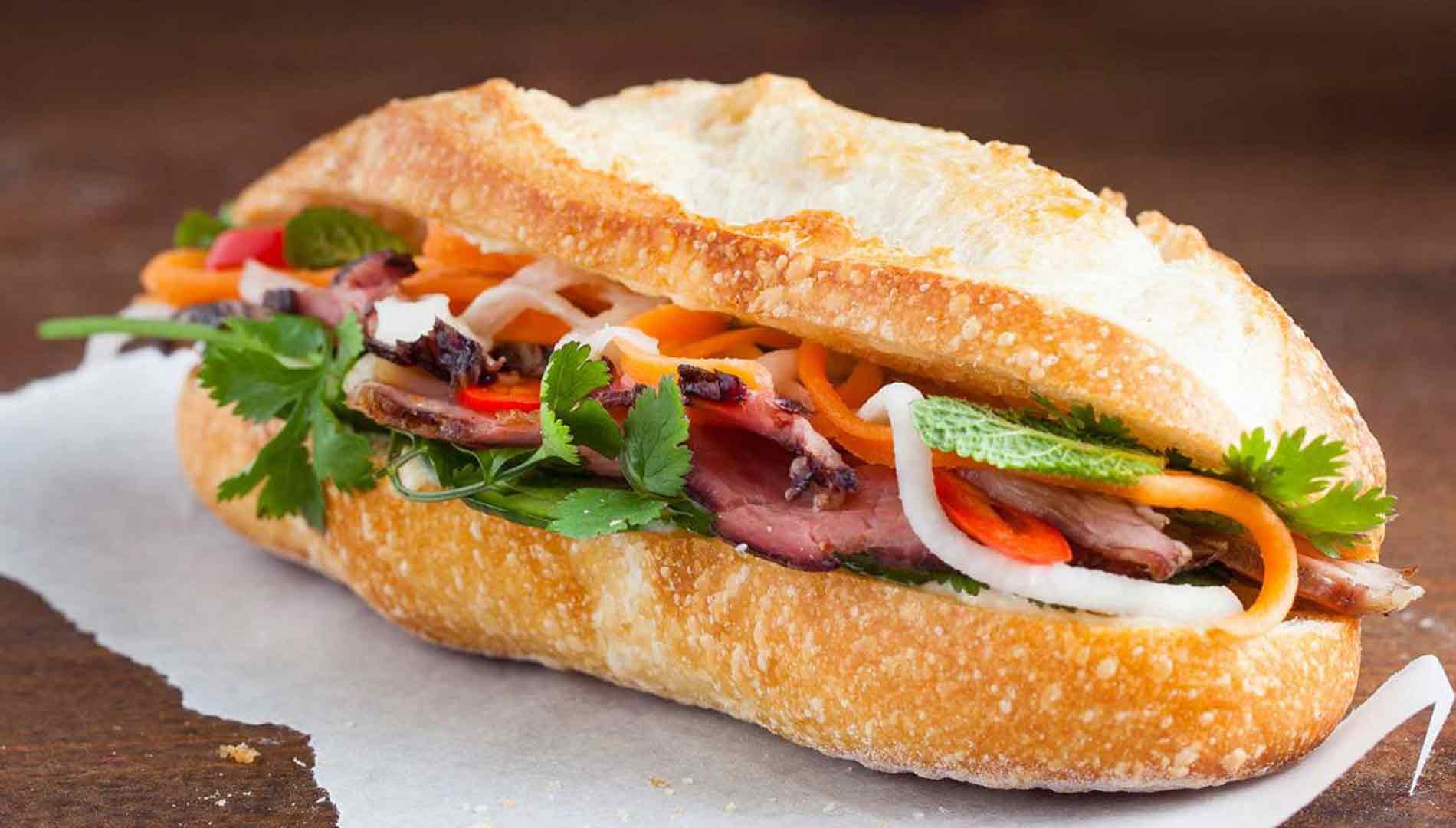
Bánh mì Sài Gòn is not an ordinary sandwich — it is 150 years of history compressed between two halves of bread. In 1860, the French brought the baguette to Saigon as a symbol of colonial "civilization," but Vietnamese people have never simply consumed what is imposed on them — they receive, then transform. During World War I, when wheat imports were interrupted, Saigon bakers began blending rice flour into wheat dough, producing a lighter and airier loaf than pure French baguette — an accidental evolution that became a defining characteristic. By 1958, the Hòa Mã bakery in District 3 — opened by northern migrants Lê Minh Ngọc and Nguyễn Thị Tịnh — formally defined the modern bánh mì thịt with pâté, Vietnamese sausage, pickled vegetables, and fresh herbs.
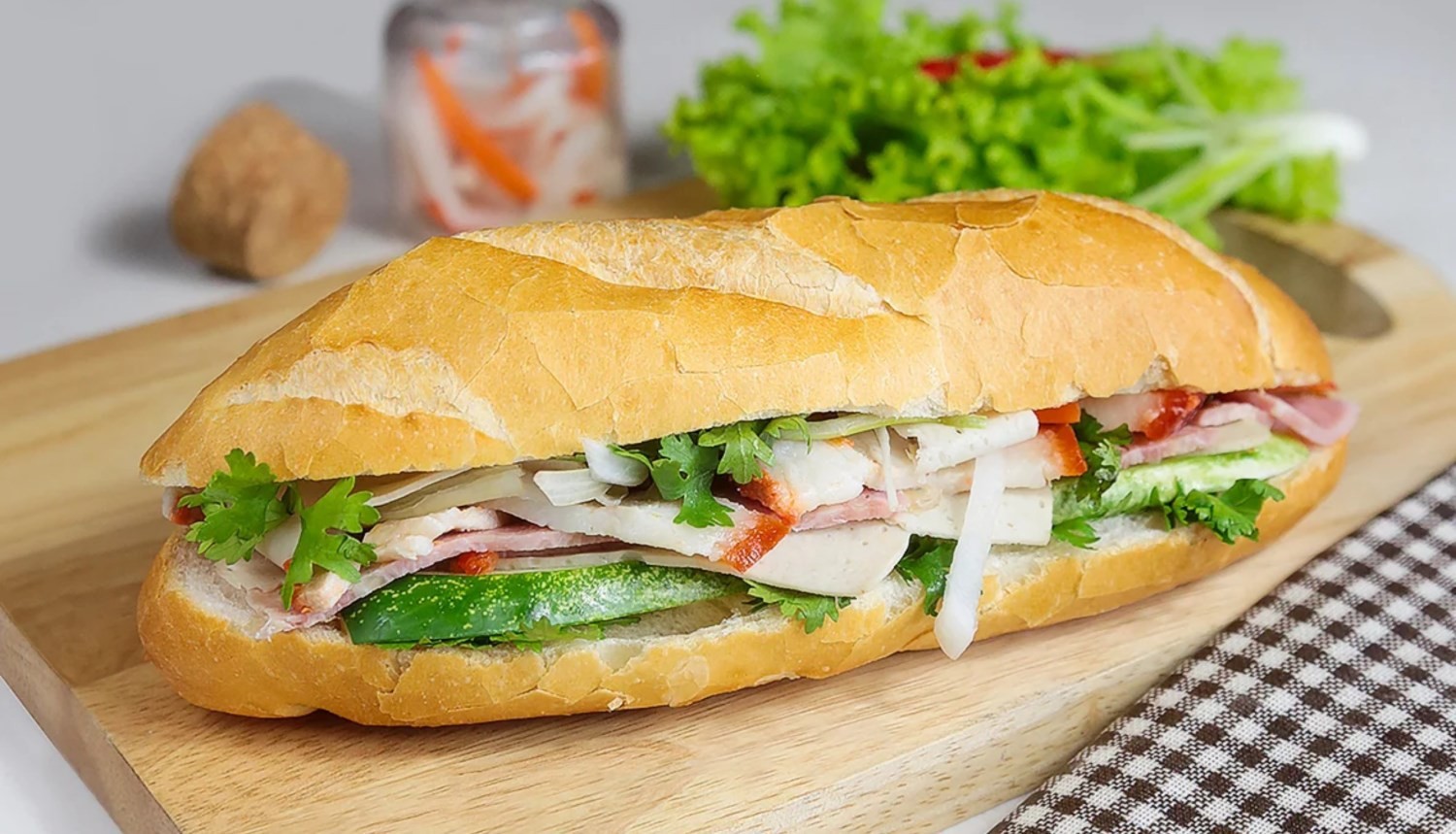
What distinguishes Saigon bánh mì is its crust: the exterior shatters with each bite while the interior is so light and airy it feels almost weightless — a direct result of the specific rice flour ratio that each Saigon bakery guards like a family secret. Rich pork liver pâté is spread evenly inside, followed by a layer of mayonnaise for binding, then thinly sliced Vietnamese sausage, sweet char siu pork, tangy pickled vegetables cutting through the richness, and aromatic cilantro. The balance of fat-sour-sweet-salty-fragrant in a hand-length loaf is something no Michelin-starred restaurant can replicate with premium ingredients.
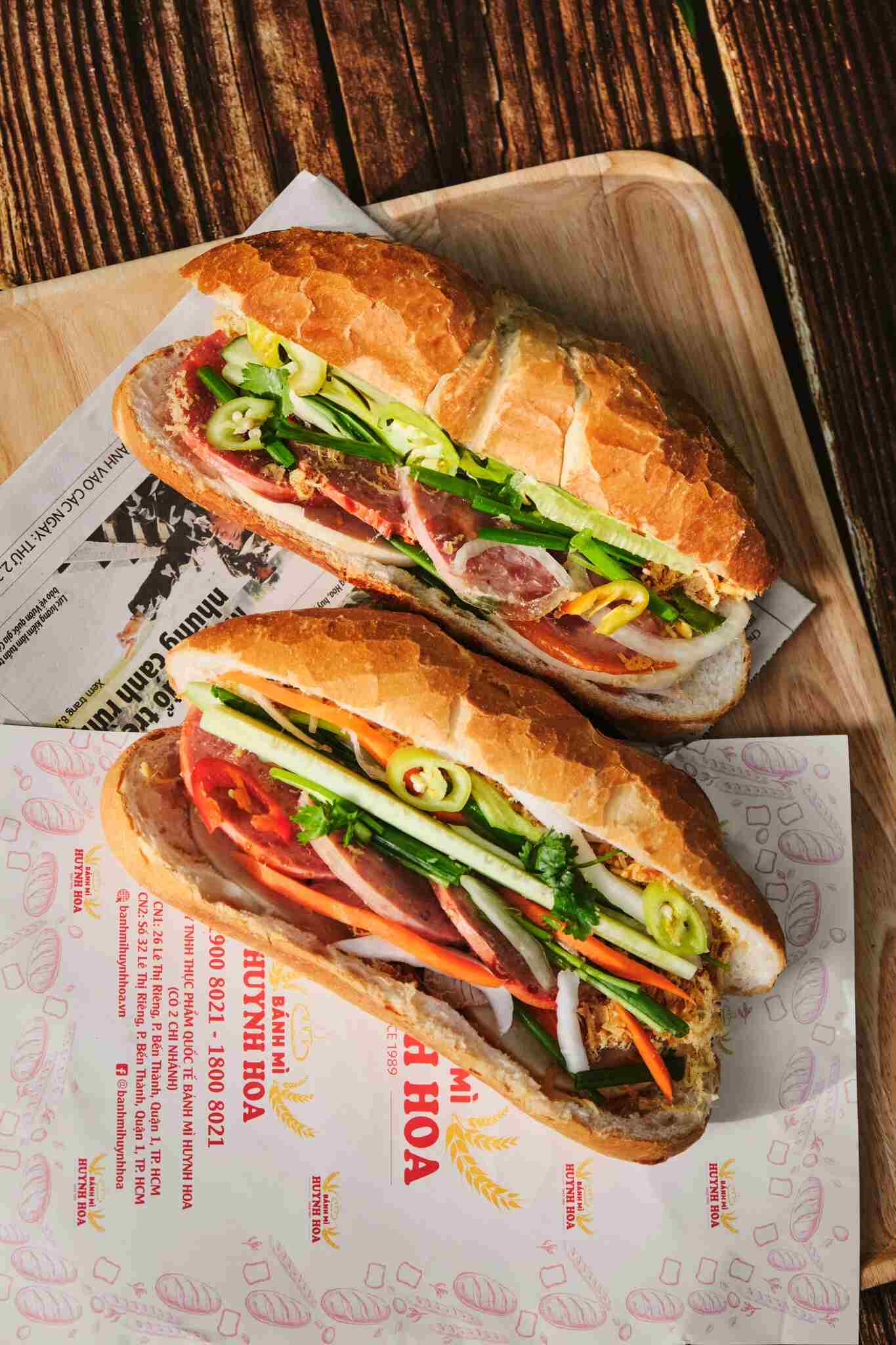
Today, Saigon bánh mì appears in Paris, New York, and Tokyo — the very places that once sent colonists with baguettes to Saigon. In 2012, the word "bánh mì" appeared in the Oxford English Dictionary for the first time — a rare cultural milestone. Each day in Saigon, millions of bánh mì are sold from 4 AM through to midnight, from sidewalk carts to modern chain stores — all proving that history can be wrapped up, held in the hand, and eaten right there on the street.
Saigon bánh mì is not a French baguette, not a Vietnamese roll — it is a third thing, purely Saigon.
— Tiệm Hòa Mã, Quận 3 · thành lập 1958
Ingredients — what makes the flavour.
Great stalls have **long queues forming before dawn**, bread **coming out of the oven continuously** during peak hours, and vendors **assembling each bánh mì to order** — never from a pre-made stack. The mingled scent of pâté, fresh cilantro and hot bread is your green light. Avoid shops where bread comes pre-wrapped in plastic bags.
How to enjoy it properly.
Selecting your bread
Freshly baked is ideal — the crust still warm, crackling when gently squeezed. Avoid bread that's been wrapped in plastic or sitting in a display case. The faint scent of baking and a long early-morning queue are the best signs.
Choosing your filling
First-timers should order đặc biệt (special) — usually pâté, Vietnamese sausage, char siu, egg, pickled vegetables, cilantro and fresh chili. This is the most complete way to understand bánh mì Sài Gòn. On subsequent visits, explore sườn nướng (charcoal-grilled pork) or an extra fried egg.
The eating technique
Grip with both hands. Bite decisively from the pointed end. Pâté and mayo will ooze — keep the bánh mì slightly angled and have a napkin ready. Eat while warm — the crust goes soft fast.
Regional variations
Saigon bánh mì has more filling than Hanoi-style and is larger than Hội An-style. If you find a stall that specialises in just one filling type — that's usually a sign of a focused shop that has chosen to do one thing exceptionally well.
Editor-recommended eateries.
ⓘ Addresses and prices may change. Please verify before visiting.