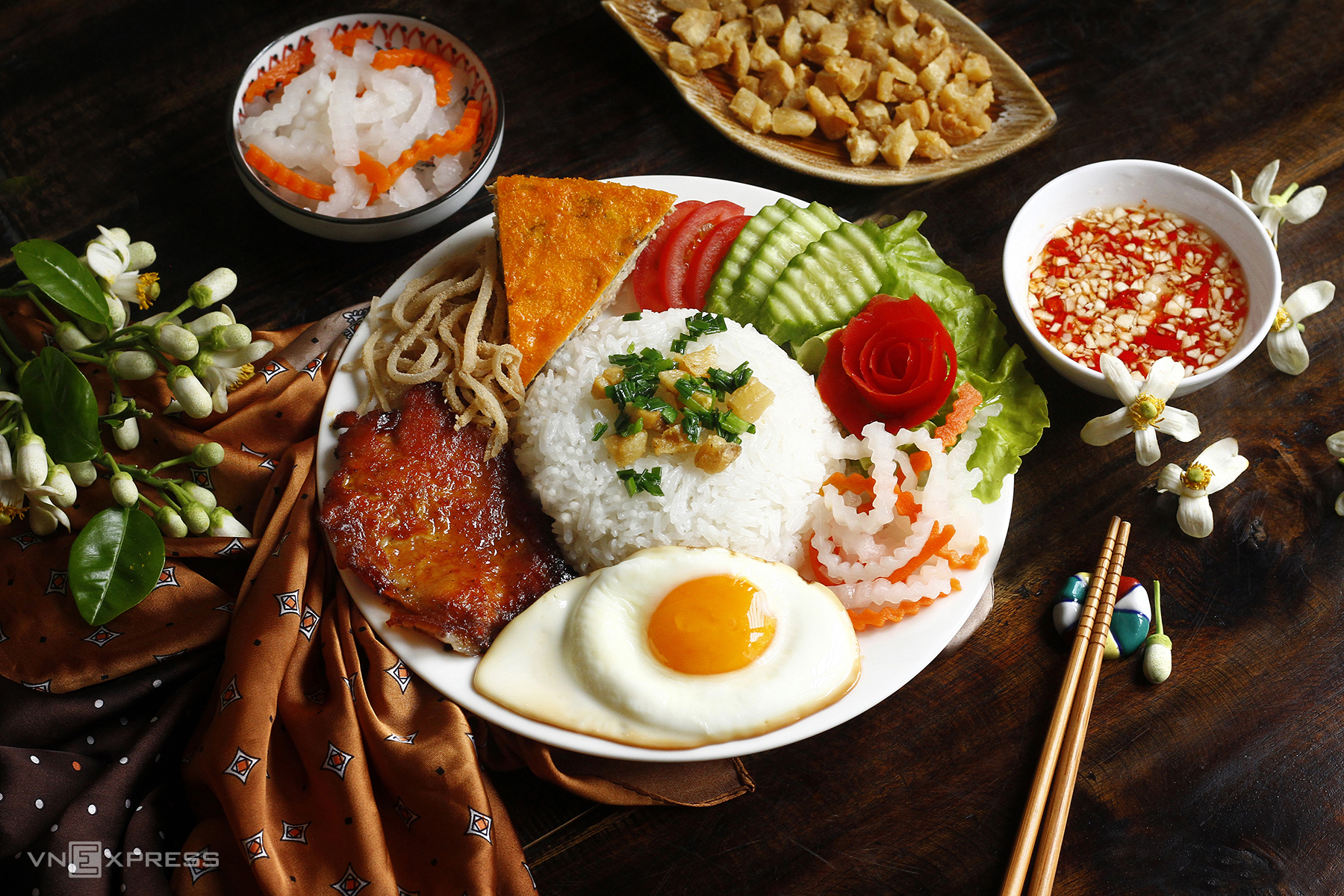
Story & history.
Com tam begins in poverty and ends in national glory. In the 1930s, as Saigon was becoming a major port city under French colonial rule, millions of construction workers, dock hands and laborers needed cheap, filling meals. Broken rice grains — byproducts of the milling process, discarded as livestock feed — were sold for next to nothing outside the rice mills. The poor bought them out of necessity; but it was from this scarcity that Saigon street vendors saw potential that the wealthy overlooked.
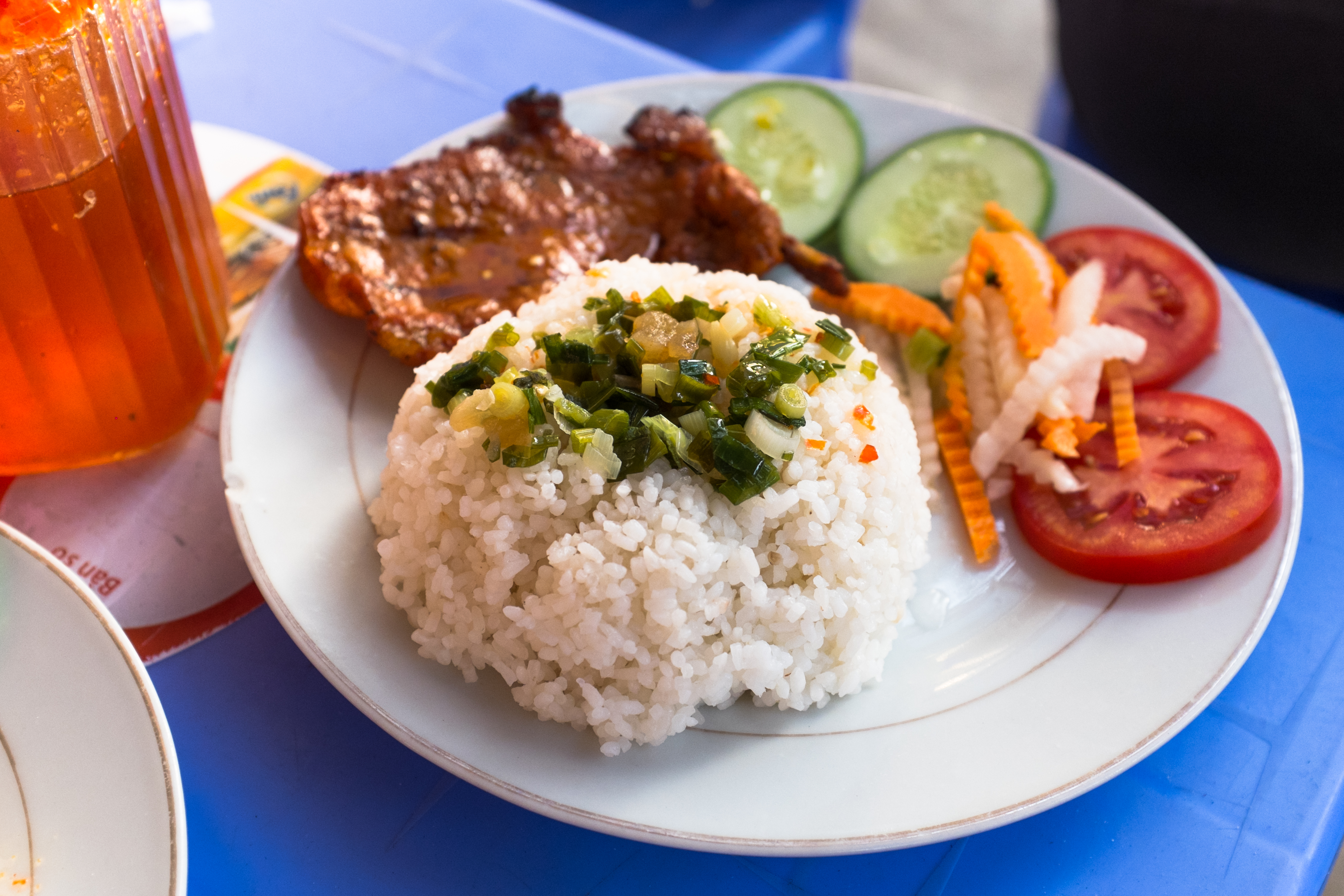
They cooked the broken rice and topped it with golden-brown grilled pork chops, finely shredded pork skin, silky steamed egg cake, fried eggs and fresh herbs. The dipping fish sauce — the soul of the dish — is carefully balanced between salty, sweet, sour and spicy, with each restaurant guarding its own secret recipe. From waste to food, from food to icon — that is the Saigon way: transforming discarded things into gold through craft and relentless creativity.
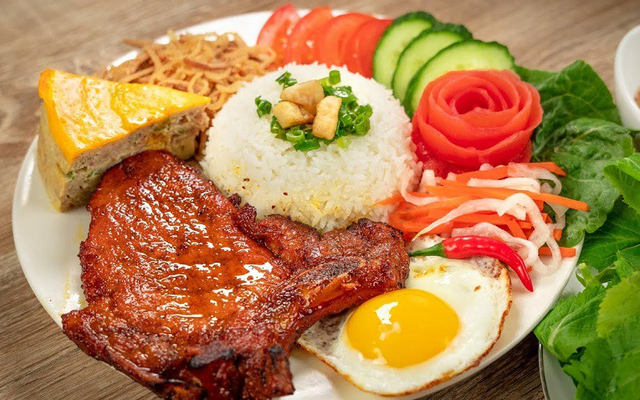
More than ninety years later, com tam has traveled further than those first street vendors could have imagined. In 2023, TasteAtlas ranked it second in its Top 100 Most Tasty Rice Dishes in Asia, behind only Yangzhou fried rice. The Asia Record Organisation recognized it among Vietnam's ten most important culinary treasures. Major com tam chains have dozens of branches across the city, serving thousands of customers daily from 4 AM through to late at night.
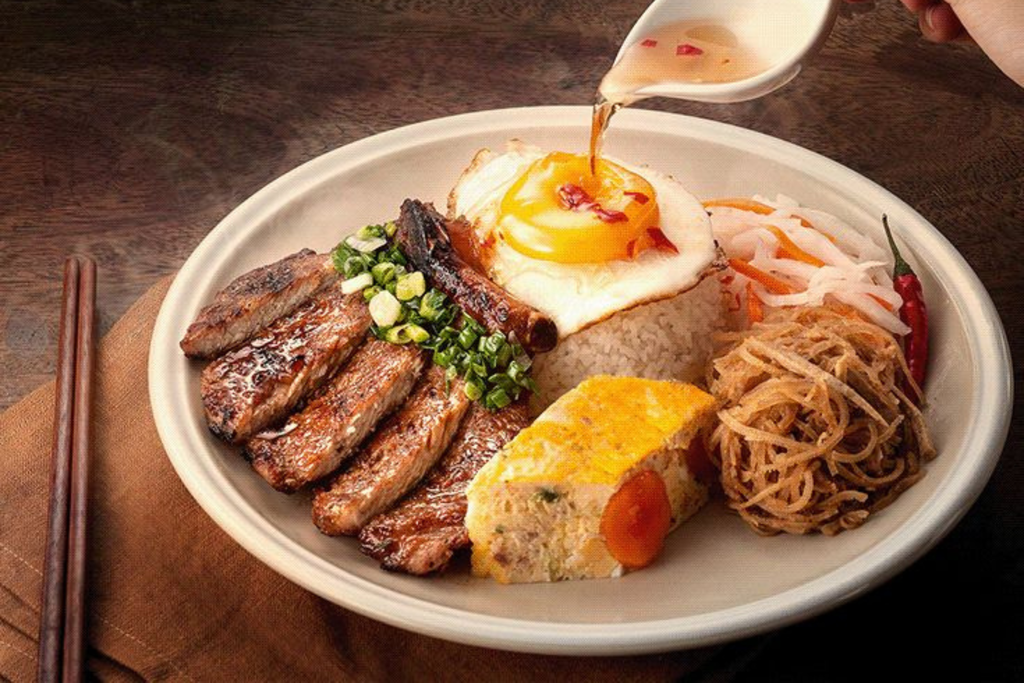
A saying has passed through generations in the South: Hanoians eat pho, Saigon people eat com tam. This is not merely a statement about food — it speaks to identity, to how each part of Vietnam nurtures its own culture from whatever it has at hand. Com tam has become part of daily ritual for Saigon residents: breakfast before work, lunch with friends, a late-night meal after a long evening — there is no moment that feels wrong for a plate of broken rice.
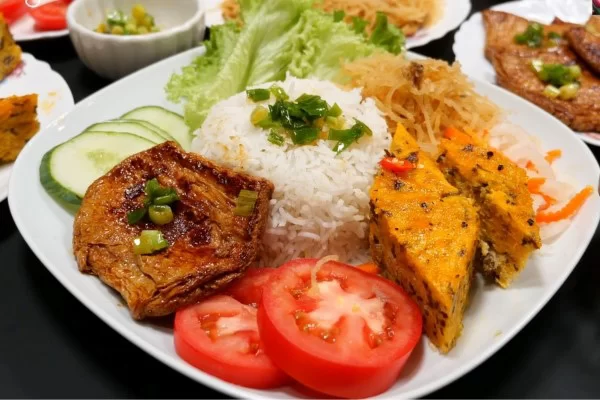
Hanoians eat phở, Saigon people eat cơm tấm.
— Câu nói dân gian Nam Bộ
Ingredients — what makes the flavour.
Quality pork chops glow golden-brown with lightly charred edges, yet stay tender when bitten. If the meat looks pale, too dry, or lacks the scent of charcoal smoke, find another stall. And never skip asking for extra **scallion oil** — that's the reason you'll come back.
How to enjoy it properly.
The technique
Use your spoon to gently mix all components before eating — broken rice, pork chop, shredded pork, egg, vegetables, and scallion oil all belong together. Don't eat each element separately. Wait a moment for the fried egg to cool slightly, then break the yolk with your spoon and let it seep into the rice — this is the most important step.
Fish sauce is the soul
The sweet-sour fish sauce is not a side condiment — it's the binding force. Drizzle a small spoonful directly onto the rice before each bite, or dip each piece of pork chop into a separate sauce bowl. Don't pour all the sauce in at once — the flavours will muddy.
Variations & customisation
Want extra pork or an extra egg? Just ask — most stalls charge by the piece. Cơm tấm is equally good eaten late at night (night stalls keep charcoal burning, so the pork has a slightly chewier, smokier edge). Avoid drinking water immediately after eating — scallion oil needs time to be fully appreciated.
Editor-recommended eateries.
ⓘ Addresses and prices may change. Please verify before visiting.