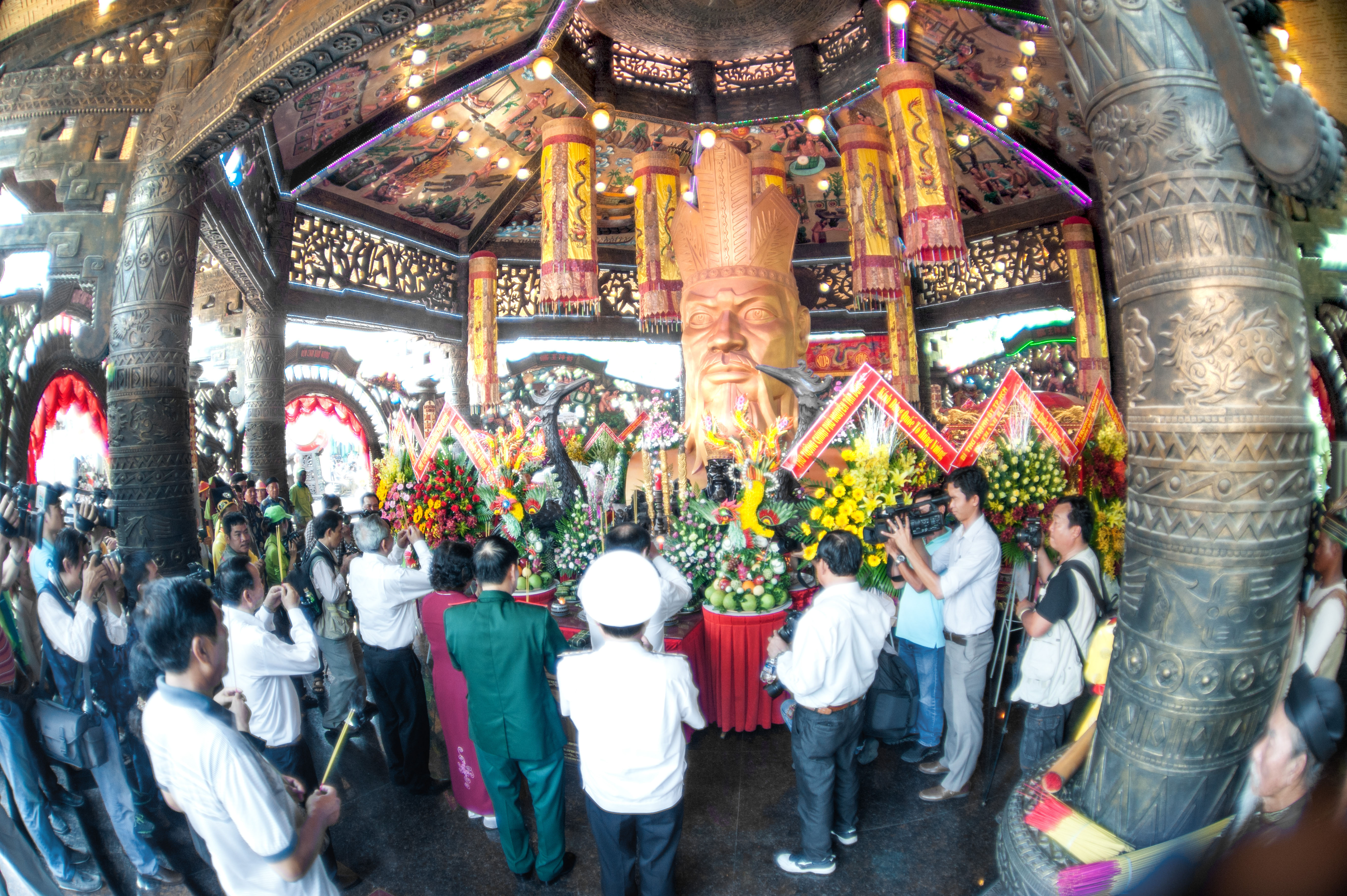
History & meaning.
The cult of Hung Kings worship traces back to the Bronze Age, when ancient Vietnamese performed harvest rituals and venerated clan leaders. According to tradition, eighteen generations of Hung Kings ruled the Van Lang kingdom for over 2,000 years — from approximately 2879 BCE to 258 BCE. Though these figures belong to mythology, archaeology has confirmed the existence of a flourishing Dong Son civilization in the Red River Delta from the 7th century BCE. The veneration of the Hung Kings evolved continuously across dynasties — from the Dinh, Ly, and Tran to the Nguyen — all of whom issued royal decrees and maintained ritual offerings at Hung Temple in Phu Tho. In 2012, UNESCO recognized the "Worship of Hung Kings in Phu Tho" as a Representative Element of the Intangible Cultural Heritage of Humanity — a rare acknowledgment for a national ancestral cult. In Ho Chi Minh City, migrant communities from the north established Hung Kings temples from the mid-20th century, maintaining cultural threads connecting them to the ancestral land thousands of kilometers away.
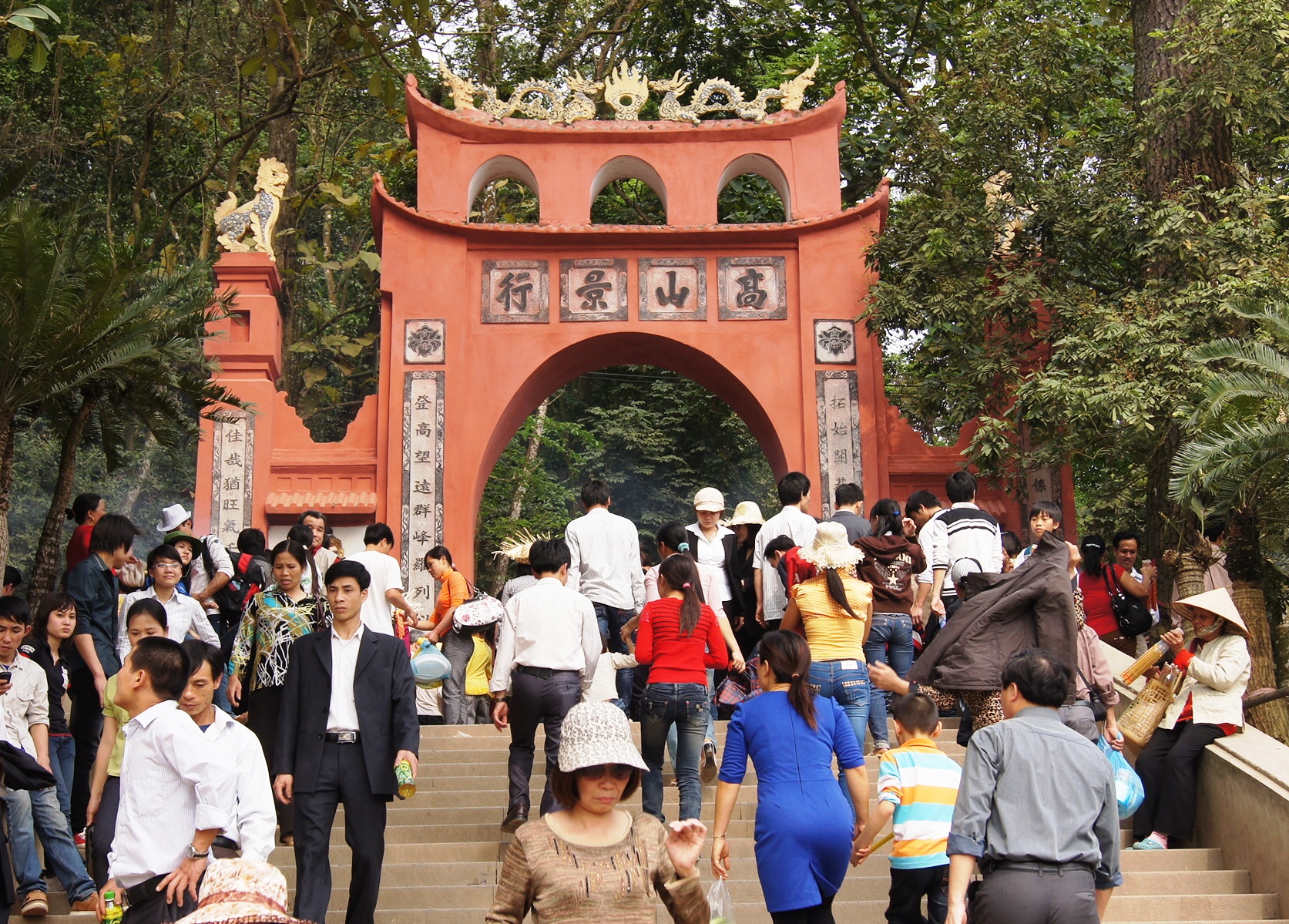
The main ceremony at Hung Kings Temple in Dam Sen begins at 7am with traditional ritual forms. The officiating team wears red and gold traditional dress and performs ritual steps carefully documented from feudal times: offering incense, rice wine, flowers and fruit, and above all banh chung — the square cake symbolizing Earth — and the round banh giay symbolizing Heaven. A hat xoan singing and dance troupe performs the three traditional sections: ritual singing, gift singing, and festival singing, with graceful movements and archaic lyrics. The bronze Dong Son drums — instruments synonymous with the Hung Kings' civilization — sound to open and close each ritual segment. After the main ceremony, worshippers queue to offer individual incense — an act that is simultaneously sacred and collectively practiced.
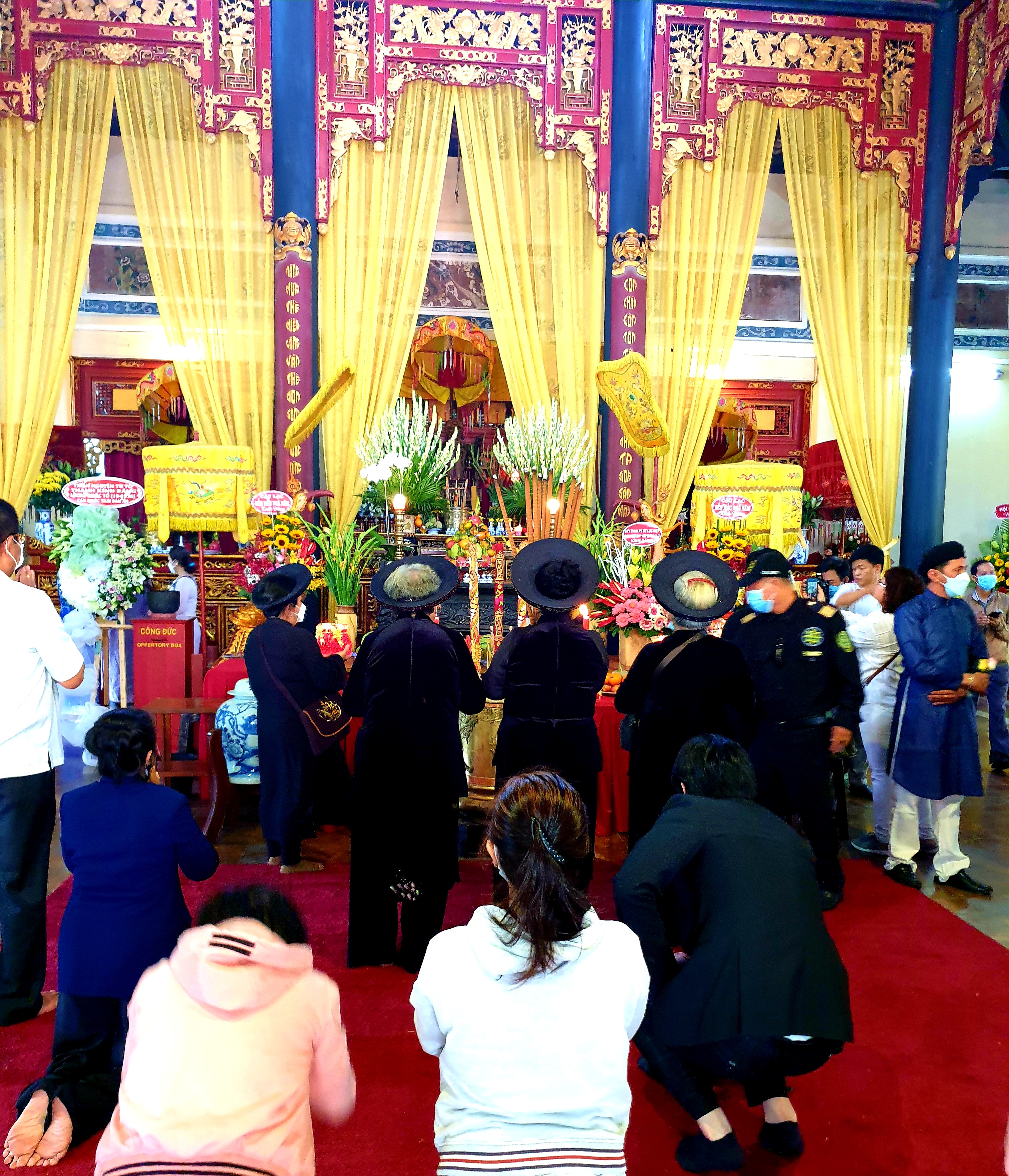
The meaning of the Hung Kings Commemoration today extends well beyond the purely religious or historical. It is a day of national identity convergence — particularly significant in Ho Chi Minh City, where diverse regional cultures coexist. The holiday reminds people that wherever they come from, they share the same Lac Hong bloodline. In schools, teachers tell the story of banh chung and banh giay to young students; in workplaces, the public holiday is often used to return to hometowns to visit parents. It is also an occasion for overseas Vietnamese communities to hold Hung Kings ceremonies at Vietnamese associations around the world — a manifestation of cultural endurance despite the distance from home.
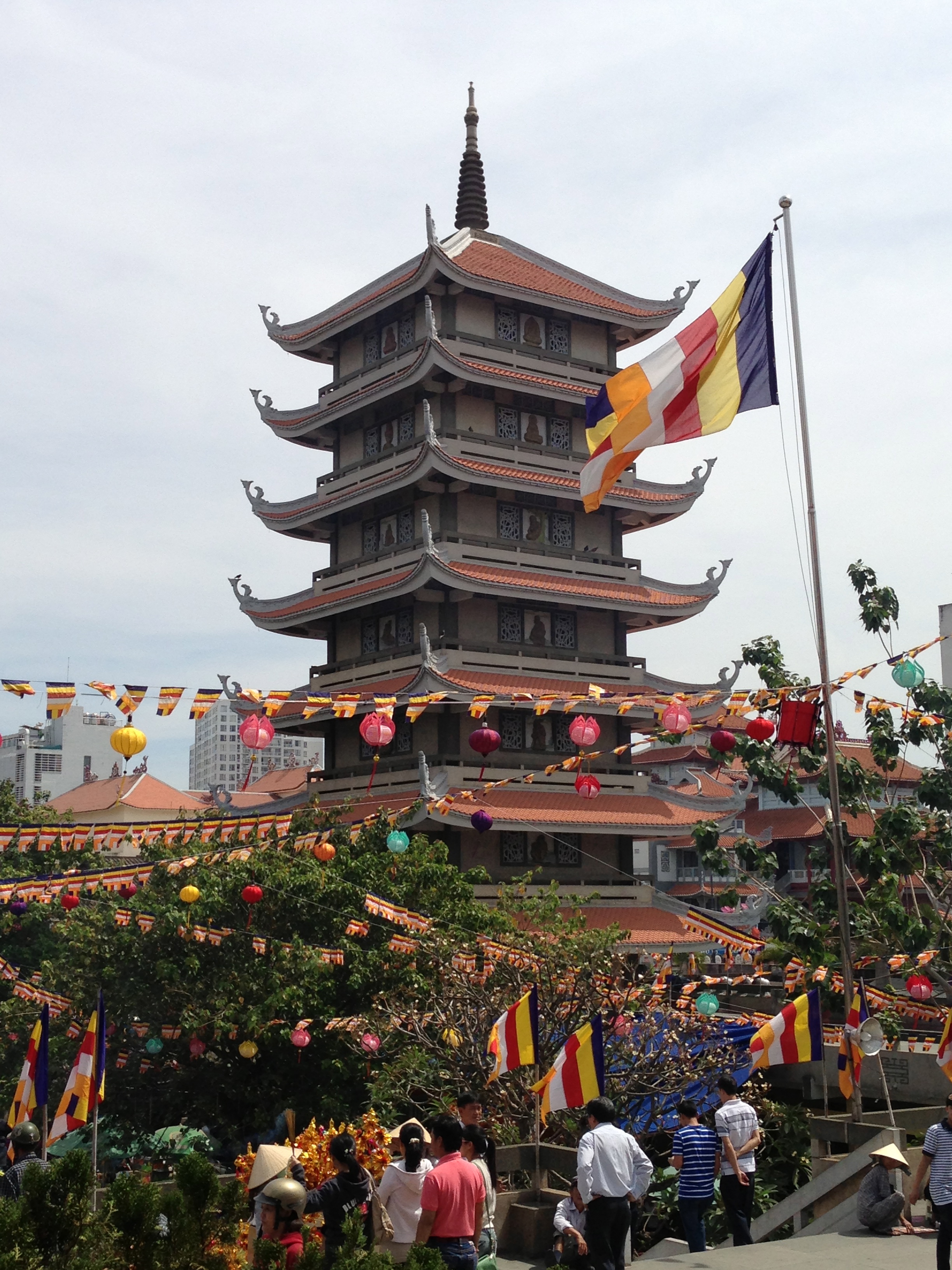
Unlike many festivals with entertainment at their core, the Hung Kings Commemoration in Ho Chi Minh City carries genuine solemnity and real emotion. Watching thousands of people queue to offer incense in the early morning — hands clasped around smoking sticks, heads bowed in reverence — one understands that this is not cultural performance but an authentic connection to roots. The scent of incense mingles with gardenia flowers and quiet recitations of prayer, creating an atmosphere impossible to replicate. Particularly moving is the sight of elderly residents who migrated south from the north after 1954, now frail with age but still arriving at Dam Sen's Hung Kings Temple each year — to remember their homeland, their ancestors, and themselves.
"Wherever you may roam, near or far / Remember the ancestor's memorial on the tenth of the third month"
Ca dao Việt Nam — truyền miệng qua nhiều thế kỷ
Highlights not to miss.
The Hung Kings ceremony at Dam Sen is preserved according to feudal-era protocols: red and gold ritual robes, Dong Son bronze drums, and an offering tray that must include square banh chung and round banh giay. The ceremony begins at 7am and concludes before 10am, after which worshippers queue individually to offer incense. This is one of the most carefully and accurately reconstructed ancient rituals in Ho Chi Minh City.
Hat Xoan is Vietnam's oldest folk performing art, connected to Hung Kings worship rituals for thousands of years. Hat Xoan troupes from Phu Tho province are often invited to Ho Chi Minh City to perform during the Hung Kings Commemoration. UNESCO recognized Hat Xoan as Intangible Cultural Heritage in 2011. Hearing Hat Xoan at a genuine ceremony — not a tourist stage — is an unusually profound cultural experience.
Beyond Dam Sen, many historic communal houses in Ho Chi Minh City hold their own Hung Kings ceremonies: Phu Nhuan Communal House (Phan Dinh Phung Street), Binh Dong Communal House (District 8), and Thong Tay Hoi Communal House (Go Vap District). These neighborhood ceremonies tend to carry a warmer community spirit — smaller in scale but more genuinely emotional, with local residents cooking sticky rice, wrapping cakes, and offering incense to their ancestors together.
After the Hung Kings Commemoration, visit the Ho Chi Minh City Museum of History (2 Nguyen Binh Khiem Street, District 1) to see the Dong Son civilization exhibition and actual Hung Kings-era bronze drums. Combining these two stops creates a journey into Vietnamese origins deeper than any textbook.
How to attend & get there.
Getting to Hung Kings Temple at Dam Sen
Address: Dam Sen Cultural Park, Lac Long Quan Street, District 11. Arrive before 7:30am to attend the main ceremony and avoid peak crowds. Take bus routes 139 or 20 from the city center; ample motorbike parking at the entrance.
Dress Code and Etiquette
Dress respectfully — collared shirts, avoid shorts and short skirts when entering the temple area. Observe silence during the ritual ceremony. Bring incense sticks for your individual offering after the main ceremony. Incense and flowers are available for purchase at reasonable prices at the temple gate.
Sources
- 1.Hung Kings Festival in Ho Chi Minh City
Ho Chi Minh City People's Committee Portal · 2026-06-20
- 2.Giỗ Tổ Hùng Vương — Nguồn gốc và ý nghĩa — Báo Nhân Dân
Báo Nhân Dân · 2026-06-20