History & meaning.
The cult of whale worship among southern Vietnamese fishermen originates from Cham culture — the ethnic masters of this land before Vietnamese settlers moved south. The Cham venerated whales as embodiments of Po Riyak, the sea god. When Vietnamese fishermen settled in Can Gio from the 17th and 18th centuries, they absorbed this belief and blended it with Vietnamese folk veneration of the Dragon King and the gratitude of people whose lives depended on the sea. According to fishermen's beliefs, when a whale dies and washes ashore it is a heaven-sent good omen — Ong has "sacrificed" himself to protect the community. Fishermen hold funeral rites as for a family member: designating mourners, burying the whale carefully with full ceremony, and after three years exhuming the bones to enshrine in the lăng. Ong Thuy Tuong Shrine in Can Thanh currently holds whale skeletons hundreds of years old — this is the center of all Nghinh Ong rituals.
The 15th of the 8th lunar month — the main day of Nghinh Ong — begins before dawn. By 4–5am, Can Gio fishermen are already assembled at Ong Thuy Tuong Shrine in solemn ceremonial dress. The ritual master and ceremony team perform the summoning rites — carrying the spirit tablet and incense burner from inside the shrine to the dock and placing them aboard the largest, most elaborately decorated escort vessel. Around 6am, the fleet departs to the sound of firecrackers and ritual music. Hundreds of fishing boats of all sizes — multi-colored pennant flags flying, banners reading "Nghinh Ong" — move in rectangular formation out to sea. The deity's escort vessel travels in the center, flanked by the other boats on both sides. On reaching the designated sea area, the ritual master performs offerings at sea — prayers for national peace and prosperity, calm waters and gentle winds, holds full of fish and shrimp. The fleet then turns back to dock to the cheers of thousands of fishermen and onlookers on shore.
Can Gio is not only a festival venue — the land itself is an exceptional natural destination within Ho Chi Minh City. The Can Gio Mangrove Biosphere Reserve — recognized by UNESCO in 2000 — is the city's "green lung," home to Vietnam's largest mangrove ecosystem with hundreds of species of birds, crocodiles, and long-tailed macaques. During Nghinh Ong, many visitors combine the festival with a trip to the mangrove forest and Monkey Island. Can Gio seafood — crab, mud crab, squid, clams — is distinctly fresher and cheaper than in the city. On festival days, dozens of restaurants and food stalls line the road into Can Thanh town displaying live seafood — a seafood meal in Can Gio on Nghinh Ong day is a well-earned reward after the journey.
The experience of Nghinh Ong Festival affects outside visitors so strongly not because of grand spectacle but because of its absolute authenticity. Can Gio's fishermen are not performing for visitors — they are enacting what they genuinely believe, as generations before them did. When an elderly man in ceremonial dress bows before the spirit tablet, his hands trembling slightly with emotion, there is nothing performative in that moment. Can Gio's sea is not beautiful by tourist standards — the water is muddy with silt from the Dong Nai River, there are no white-sand beaches. But this is a living sea, the sea of a fishing community of nearly a thousand people who have made their living from it generation after generation — and Nghinh Ong is how they speak to it.
"When Ong returns he blesses us / May the boat go out in peace / May the hold return full of fish and shrimp / May the nation prosper and the people live safely"
Lời cầu nguyện truyền thống của ngư dân Cần Giờ trong Lễ Nghinh Ông
Highlights not to miss.
The fleet of boats escorting Ong departing at 5–6am on the 15th of the 8th lunar month is the climactic moment of the festival — and of the entire year for Can Gio's fishermen. Hundreds of flag-and-flower-adorned fishing boats move in formation out to sea in the light of dawn, firecrackers and ritual music sounding far across the water. To witness this, visitors need to stay overnight in Can Gio on the night of the 14th and arrive at the dock before 5:30am.
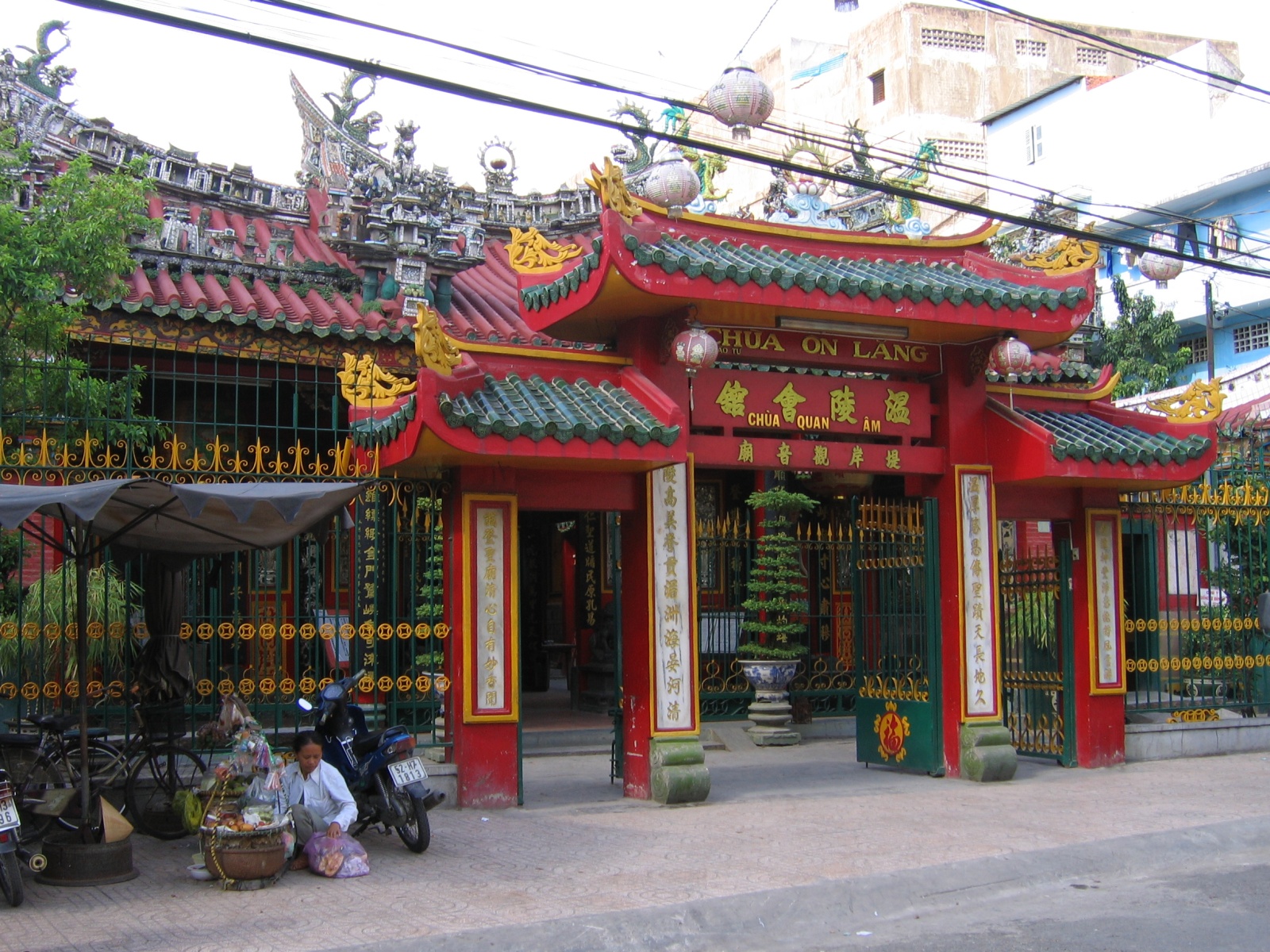
Ong Thuy Tuong Shrine in Can Thanh town preserves the bones of many whales and sacred fish collected and venerated by fishermen across centuries. The architecture blends southern Vietnamese communal house style with Cham influences — curved roofs, red lacquered columns, and an enormous incense burner. This is the only site in Ho Chi Minh City where visitors can see actual whale bones enshrined in folk worship.
Combining Nghinh Ong with a visit to the Can Gio Mangrove Biosphere Reserve (UNESCO, 2000) and Monkey Island creates a full-day journey well worth the trip. A lunch of fresh seafood — steamed blue swimming crab, salt-roasted mud crab, grilled squid — at restaurants along the Can Thanh road, priced at roughly half what the same meal costs in the city. The Can Gio mangrove forest is a rare natural experience within the boundaries of Ho Chi Minh City.
During the three festival days, guesthouses and hotels in Can Thanh fill up weeks in advance. Book at least one month ahead if you want to stay overnight to attend the dawn procession. If accommodation cannot be secured, visiting on the 16th for the festival portion (boat races, seafood) is possible as a day trip — but the most sacred parts of the ceremony will be missed.
How to attend & get there.
Getting to Can Gio
From the city center, take Nguyen Huu Tho Road toward Nha Be, cross the Binh Khanh ferry (runs 24/7, approximately 15 minutes wait per crossing), then continue approximately 30km to Can Thanh town. Total travel time about 1.5–2 hours. Best to go by motorbike or hire a private vehicle. There is no direct bus service from the city center to Can Thanh.
Optimal 2-Day Itinerary
14th of 8th lunar month: Arrive in Can Gio in the afternoon, eat seafood, stay overnight at a guesthouse in Can Thanh. Evening of 14th: Attend the opening ceremony at Ong Shrine. Early morning of 15th, before 5:30am: Head to the dock to watch the fleet depart to escort Ong. Afterward, visit the Ong Shrine, have a seafood breakfast, and tour the mangrove forest in the afternoon.
Sources
- 1.Lễ hội Nghinh Ông Cần Giờ — Di sản Văn hoá Phi vật thể Quốc gia
Báo Nhân Dân · 2026-06-20
- 2.Lễ hội Nghinh Ông - Tết của người xứ biển Cần Giờ
Tuổi Trẻ · 2026-06-20