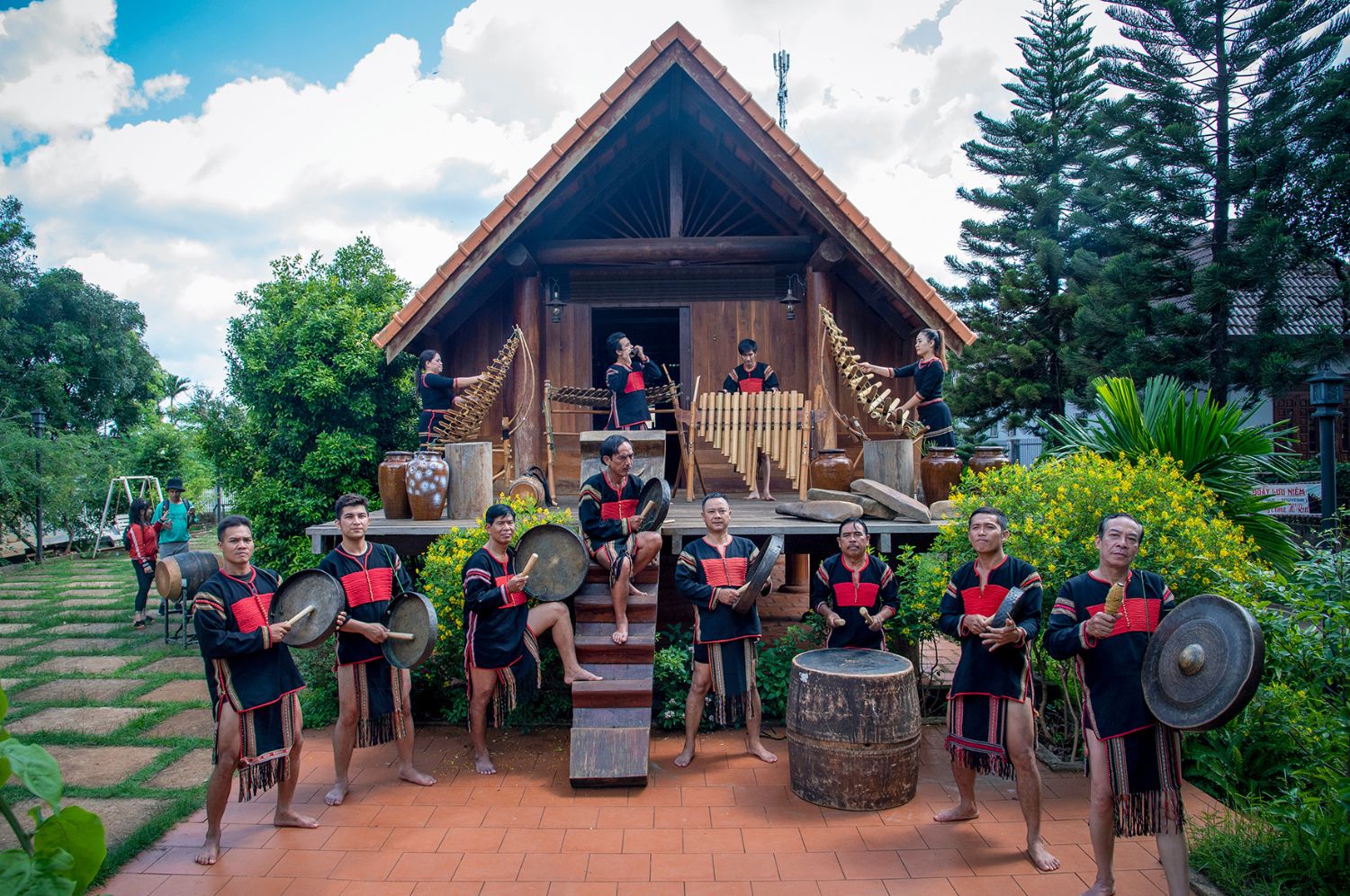
History & story.
Buon Ako Dhong is one of the oldest intact Ede villages, located entirely within Tan Loi Ward of Buon Ma Thuot city. The name 'Ako Dhong' in Ede means 'head of the stream' — the village was established beside a small stream more than 300 years ago. What makes Ako Dhong an extraordinary living heritage is the completeness of its traditional social system in the heart of a modern city: around 40 longhouses with wooden posts and leaf roofs are still actual residences of extended matrilineal families, not exhibition halls or museums. The village of around 600 Ede people includes many who hold modern office jobs or run businesses while fully maintaining matrilineal customs at home.
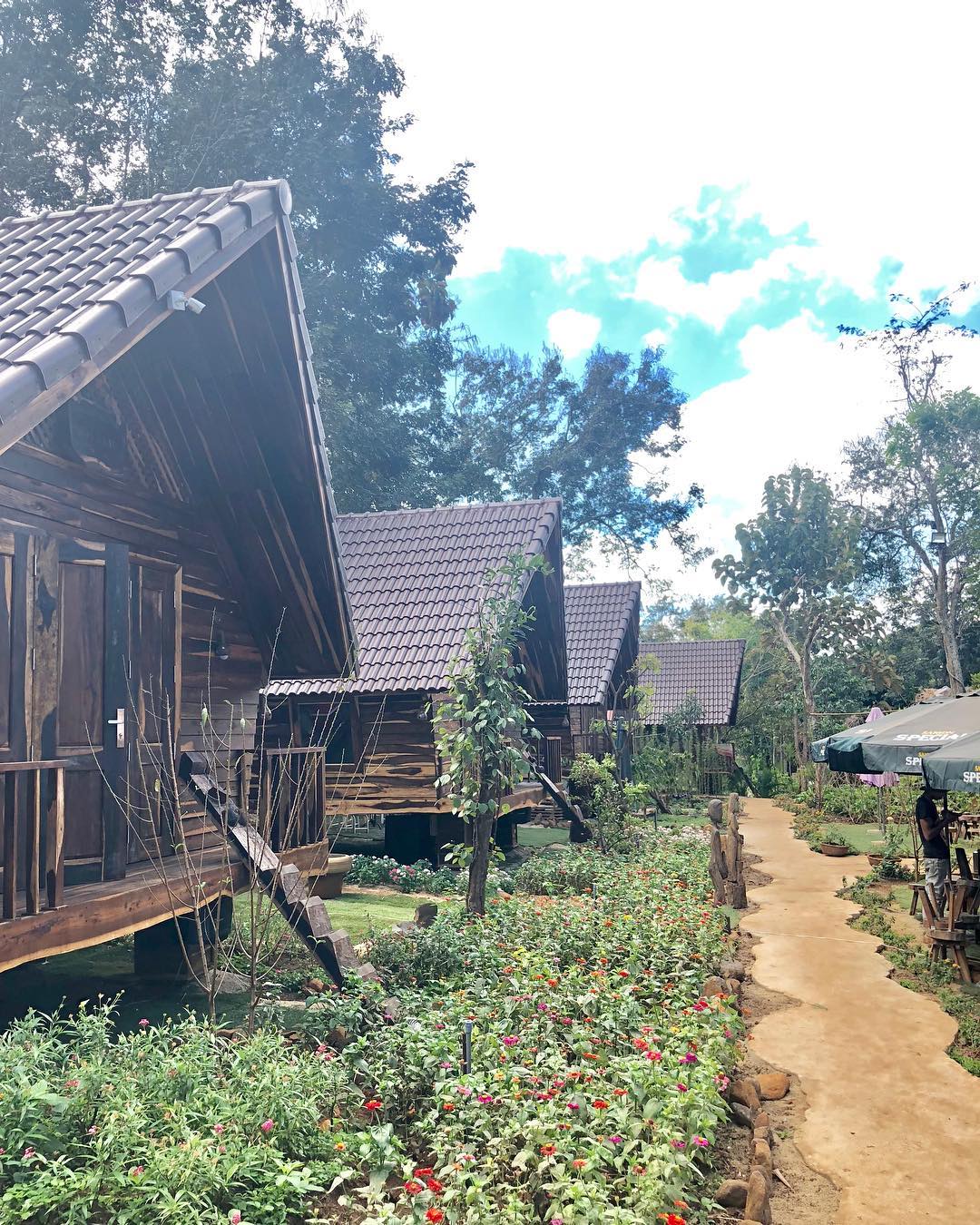
Ede longhouses in Ako Dhong range from 15 to 50 metres long depending on how many generations live together — each time a daughter marries (in matrilineal custom the husband moves to his wife's home), the family extends the house at the back to house the new couple. Inside the longhouse, the 'gah' communal sitting space occupies the front end and 'ok' private marital quarters extend down the back. Ede longhouse staircases are distinctive: carved from a single tree trunk with breast and crescent-moon motifs at the top — symbols of matrilineal identity. Above each entrance hang buffalo horns — relics of significant family sacrifice ceremonies.
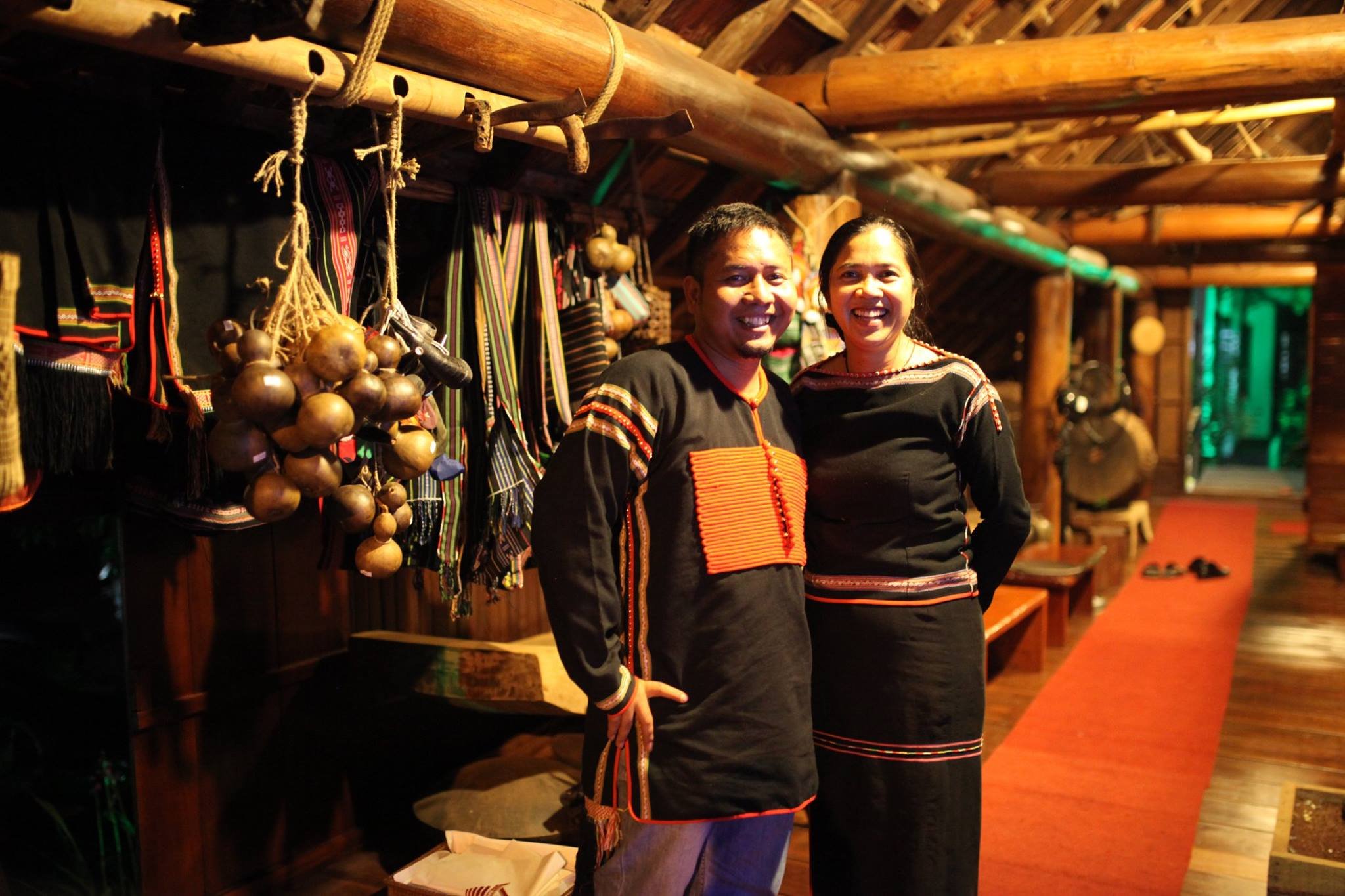
Buon Ako Dhong is known for traditional brocade weaving and gong performances. Village women, especially those aged 40 and over, weave brocade daily on floor looms — Ede brocade is characterised by a black ground with red-gold diamond, stripe, and eight-petal flower patterns. Each Saturday evening the village holds a gong performance with around 30 participants — men and women, elders and children — seated and standing around a central bonfire in the village common. Ede gong music has no conductor: each person strikes one instrument in a collective ensemble passed down orally across generations.
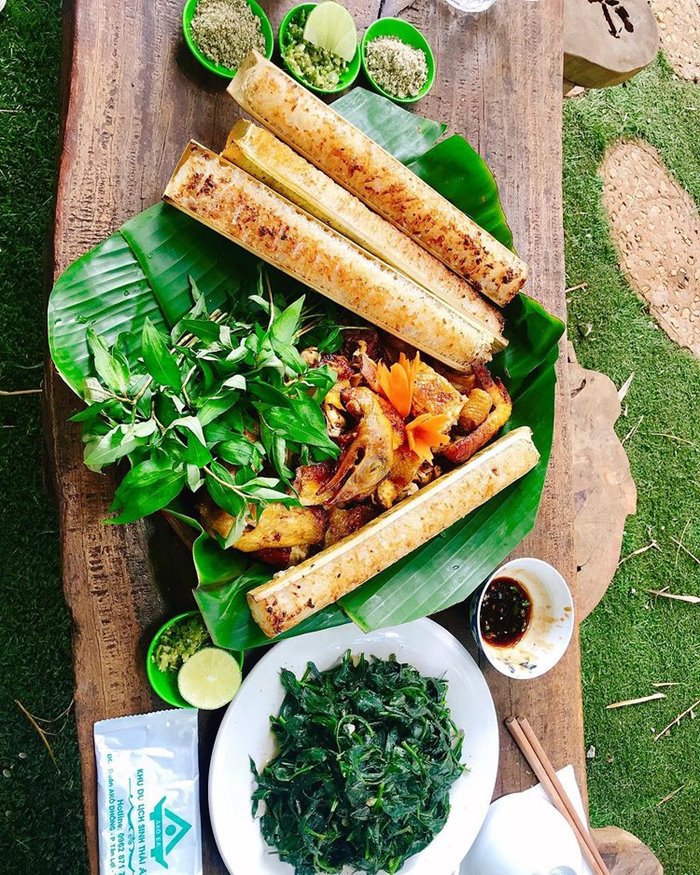
Visitors wanting a deeper experience can book a homestay inside a longhouse — minimum 1 night, including family meals and living alongside household members. The next morning guests are typically taken to the family's small coffee garden — every household keeps one beside the house — to see traditional hand-picking during the November–December harvest. Buon Ako Dhong is recognised by UNESCO and numerous international organisations as one of the most successful examples of living culture preservation under urbanisation.
Our longhouse grows long with the years — each daughter who marries adds another room at the back. The house is the memory of all who have lived within it.
Amí H'Linh Hmok, chủ nhà sàn thế hệ thứ 7 tại Ako Dhong / Ami H'Linh Hmok, 7th-generation longhouse owner at Ako Dhong
Highlights not to miss.
Some longhouses in the village have passed through 7–8 generations and reach 40–50 metres in length. Ironwood frames and bamboo flooring remain structurally sound though sections have been replaced over time. The homeowner typically knows the name and story of each generation who lived in the house and shares them with guests during homestay evenings.
Not a tourist performance — this is an authentic community cultural gathering. Around 30 participants join, including children learning gongs for the first time and 80-year-old elders still striking each beat with precision. Guests sit in the outer circle, are served rice wine, and are invited to try striking gongs after the main performance. The bonfire and music run until 9:30–10:00 PM.
Around 8–10 families in the village accept pre-booked homestay guests. Dinner includes com lam (rice steamed in bamboo tubes), charcoal-grilled meat, and forest vegetables stir-fried in pork fat. The next morning typically starts early with the host, drinking garden coffee before visiting the family's coffee plot. The entire experience has no tourist script — you live with the family as a member for the day.
The atmosphere of Ako Dhong is most beautiful at 5:30–6:30 AM — kitchen smoke rising from longhouses, roosters calling, elders heading to their gardens — while the city outside still sleeps. Stay overnight to experience that moment.
How to visit & get there.
Getting There Buon Ako Dhong is in Tan Loi Ward, just 2 km from central Buon Ma Thuot. **Walk** from central hotels if staying nearby; **motorbike or Grab** (5 minutes) from further away.
Visiting Tips **Book homestay at least 2 days ahead** by contacting families directly — most Buon Ma Thuot guesthouses have a contact list. **Visit on Saturday evening** for gong music — this is a real community event, not a tourist show. **Dress modestly** when entering longhouses — no shorts or sleeveless tops.
Sources
- 1.Buôn Ako Dhong — điểm đến văn hóa Ê Đê giữa lòng thành phố Buôn Ma Thuột
Tổ Quốc · 2026-06-25
- 2.Buon Ako Dhong — a living Ede cultural village
Vietnam Tourism · 2026-06-25