History & story.
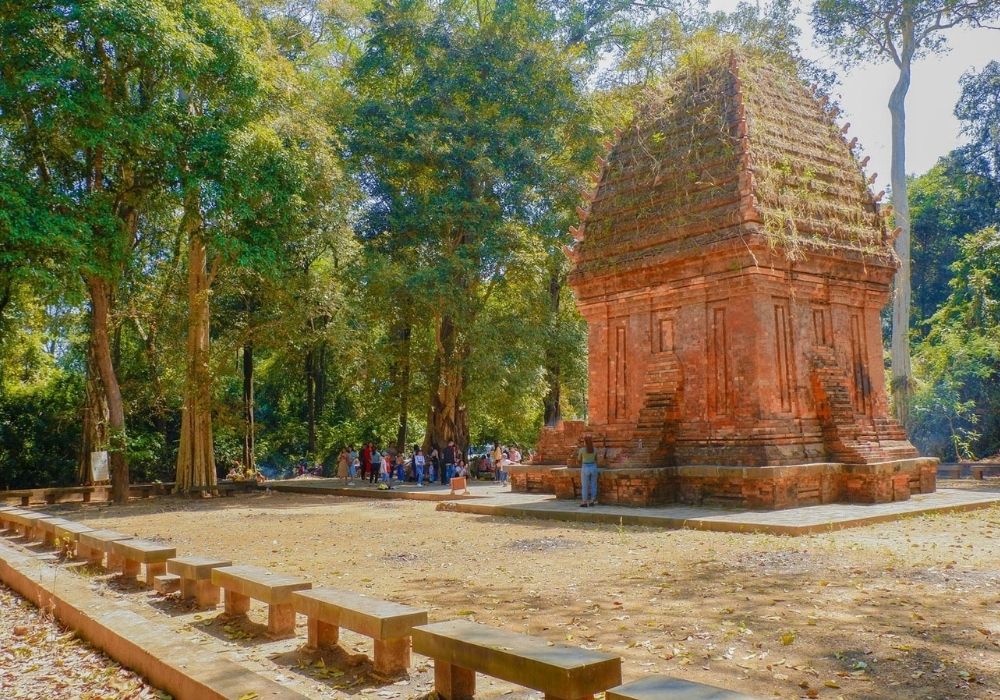
Yang Prong Tower was built in the late 13th century, estimated around 1280–1285 under Cham King Jaya Simhavarman III — the same period when My Son sanctuary was at its height and the Mongols were attacking the Cham kingdom from the north. The tower's location — deep in Ea Sup forest, completely removed from the coastal Cham kingdoms — remains a mystery to researchers. The most accepted hypothesis is that it served as a rest and worship point on a trade route from the central coast into the Central Highlands interior. 'Yang Prong' in Ede means 'the spirit of the great elephant' — the local Ede people incorporated the tower into their own belief system and continue to venerate it as a sacred site.
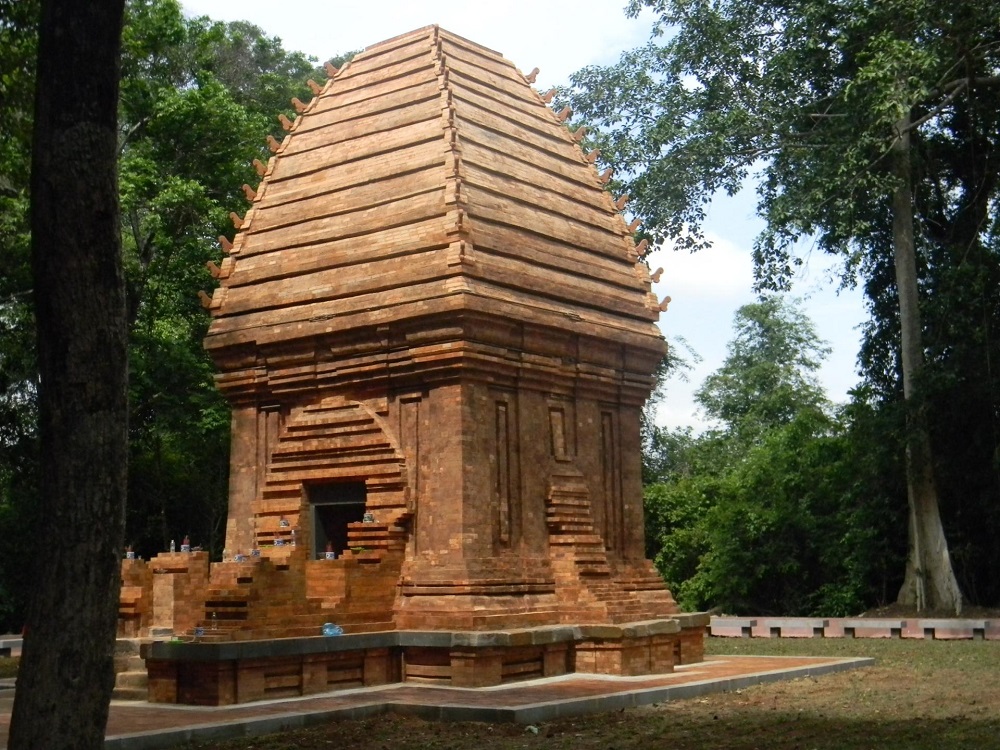
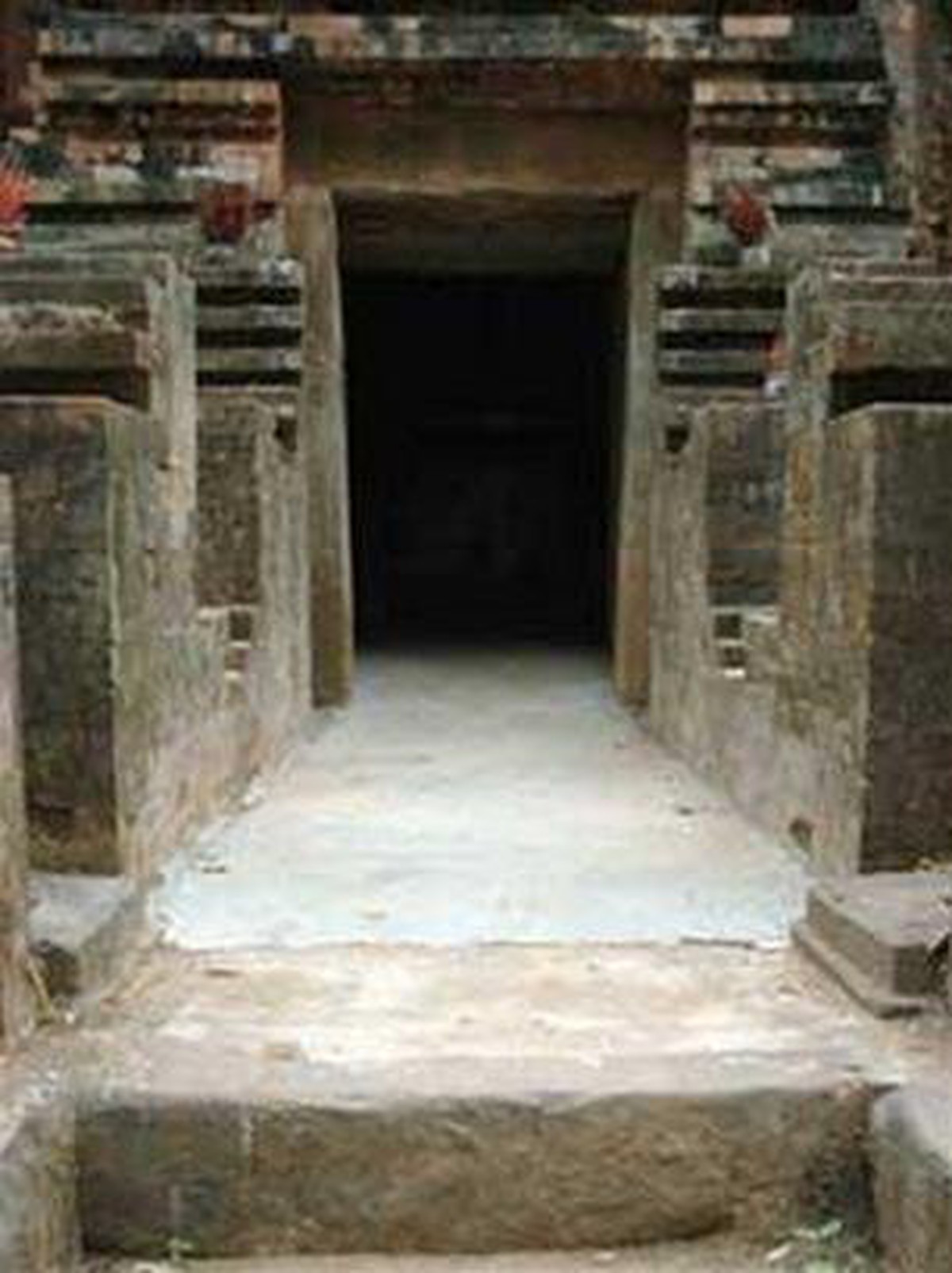
The tower stands about 9 metres tall with a 4 × 4-metre square plan, built entirely from fired red brick without mortar using traditional Cham technique — bricks ground to tight fit and bonded with tree resin. The tower elevation has three vertical sections: the base platform, the tapering body, and the spire in the form of Mount Meru — Hinduism's sacred mountain. The main ornamentation consists of pilaster facing and ogival-arch blind niches at the three false doors; only the east-facing door is real, leading into the tower interior. Inside the 2.5 × 2.5-metre chamber stands a sandstone Linga–Yoni — the Shiva symbol found in Cham towers throughout central Vietnam.
Yang Prong Tower was designated a national historic monument in 1991. However, reaching it remains a small adventure: a 10-km unpaved road off National Highway 14C winds through M'Nong villages and highland fields before the tower appears unexpectedly among old-growth trees. Local residents — both Ede and M'Nong — still burn incense at the tower on special days, blending Cham Hindu beliefs with Central Highlands folk religion in a way that has developed naturally over centuries.
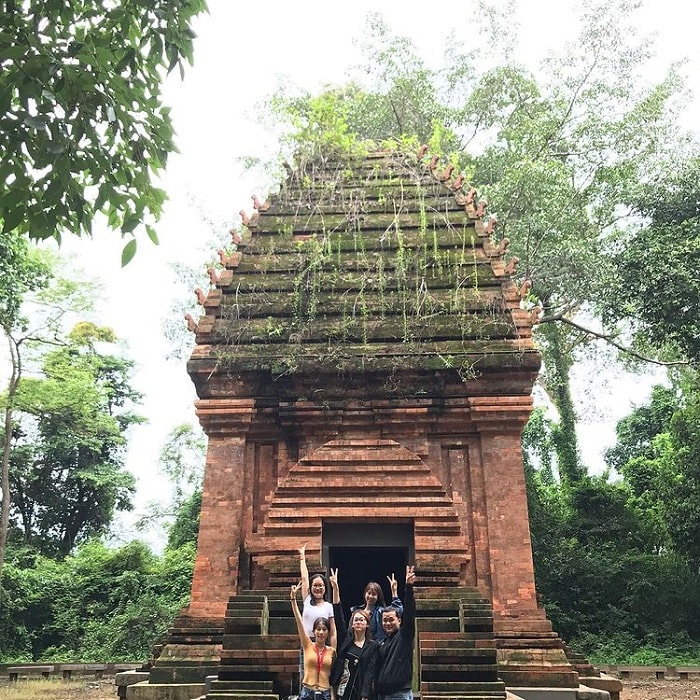
Surrounding the tower is dry dipterocarp forest of the Ea Sup conservation area — from November to February the entire forest turns golden-red, creating an unusually dramatic backdrop for the ancient brick tower. This is a remarkable photography location in both seasons: the green season shows the red brick tower standing against bright foliage, while the golden season creates a warm red-earth and gold-leaf palette found only in the Central Highlands.
This tower is no longer Cham. It belongs to us, to the Ede — we have cared for it for 700 years since the Cham people stopped coming.
Y Thih Êban, già làng xã Ea Rốk / Y Thih Eban, village elder, Ea Rok Commune
Highlights not to miss.
The secret of Cham tower construction is the absence of mortar — instead, bricks are ground-smooth to fit tightly and bonded with tree resin. After over 700 years, the structure still stands despite surrounding forest and harsh weather. Looking closely at the tower face reveals the ground-smooth, uniformly red bricks — evidence of highly skilled masons and strict quality control.
Inside the 2.5 × 2.5-metre chamber sits an original sandstone Linga–Yoni — the Linga as Shiva's masculine symbol, the Yoni as its feminine base. This is one of the few intact Linga–Yoni sets remaining in Cham towers in Vietnam, undamaged by war or theft. The local Ede have added incense bowls and forest flowers around it, blending Hindu beliefs with Ede ancestral veneration custom.
From November to February, the dry dipterocarp forest of Ea Sup surrounding Yang Prong turns golden-red — creating a red-brick-against-gold-leaves scene found nowhere else in Vietnam. In early morning, sunlight angles through the sparse canopy and filters golden dust down onto the ground and tower — photographers typically arrive at 6–8 AM to capture this light.
The 10 km of unpaved road to Yang Prong turns to deep mud in the rainy season (May–October) and is extremely difficult even by motorbike. Only visit November through March when the track is dry.
How to visit & get there.
Getting There Yang Prong Tower is 70 km northwest of Buon Ma Thuot on National Highway 14C to Ea Sup district, then 10 km of unpaved road. **Motorbike or 4WD** is required for the dirt section — no sedans. Total time from Buon Ma Thuot: 2–2.5 hours.
Visiting Tips **Go with a local on your first visit** — the road to the tower has no clear signage and is easy to miss. **Bring water and snacks** — there are no food or drink stalls near the tower. **Combine with Yok Don National Park** on the same day if hiring transport from Buon Ma Thuot — the two sites are about 40 km apart.
Sources
- 1.Tháp Yang Prong — Nét văn hóa Chăm giữa đại ngàn Tây Nguyên
Tổ Quốc · 2026-06-25
- 2.Tháp Yang Prong — Công trình Chăm duy nhất ở Đắk Lắk
Báo Đắk Lắk · 2026-06-25