History & story.
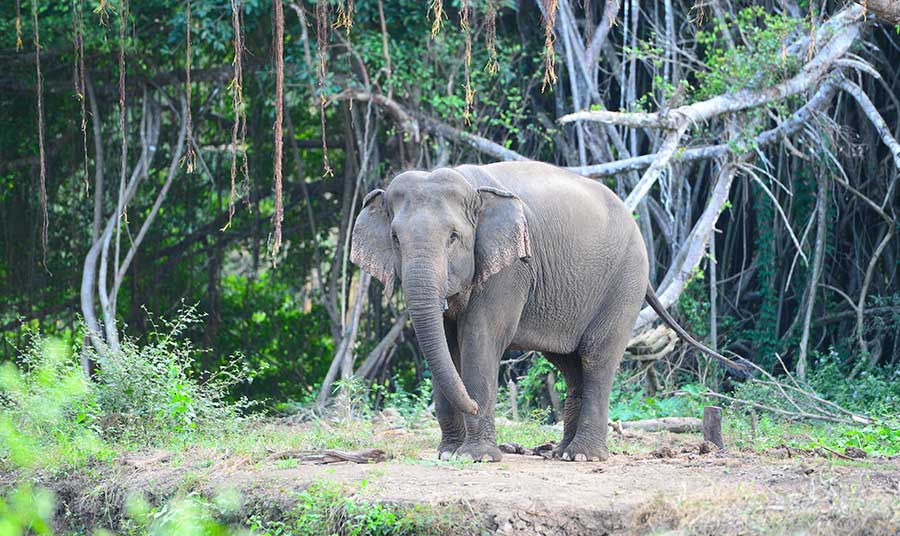
Buon Don sits on the bank of the mighty Serepok River, 50 km northwest of Buon Ma Thuot. The name 'Buon Don' in Lao means 'island village' — a settlement on a spit of land between two branches of the Serepok. The first settlers were Laotian communities migrating down from Luang Prabang around the 17th–18th centuries, later joined by M'Nong and Ede families to create a uniquely multi-ethnic community. Buon Don's prosperity was built on the capture and taming of wild elephants — from the 19th century to the early 20th, the village supplied elephants to the Siamese (Thai), Burmese, and Vietnamese courts. The pinnacle was Elephant King Y Thu Knul (1828–1938), who lived to 110 and tamed over 400 elephants across his lifetime.
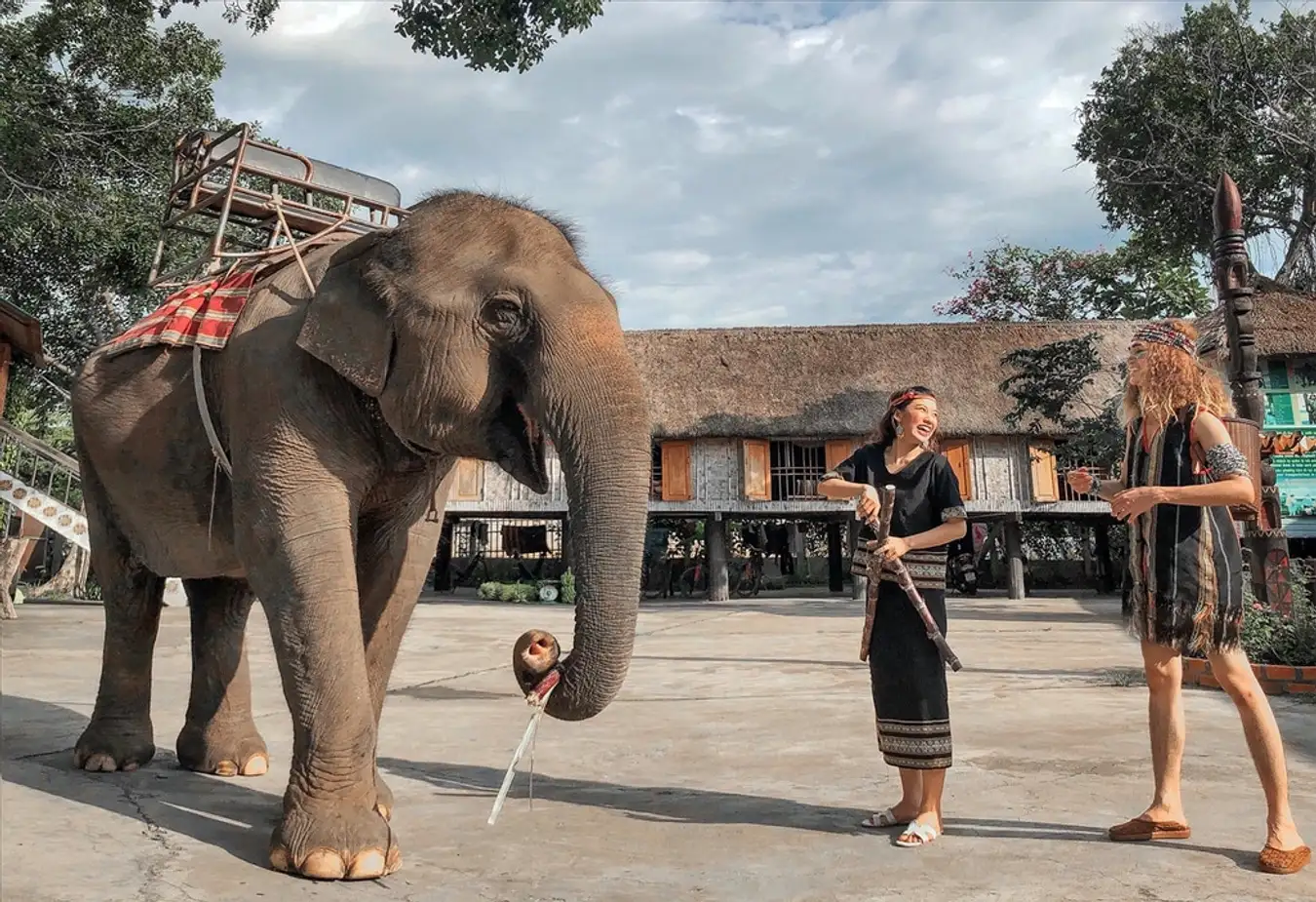
The tomb of Elephant King Y Thu Knul stands on a raised mound in a quiet garden. The tomb follows a hybrid Lao–M'Nong architectural style with a red brick dome and elephant-carved stone columns. Y Thu Knul was honoured as 'Elephant King' (Khun Yu Nob in Lao) — the only person in Southeast Asian history to capture and tame a rare white elephant, later presented to the Siamese king. Beside the tomb stands a 130-year-old Laotian-style stilt house — one of the few intact ancient stilt houses in Vietnam, with ironwood columns and floor planks 50 centimetres wide.
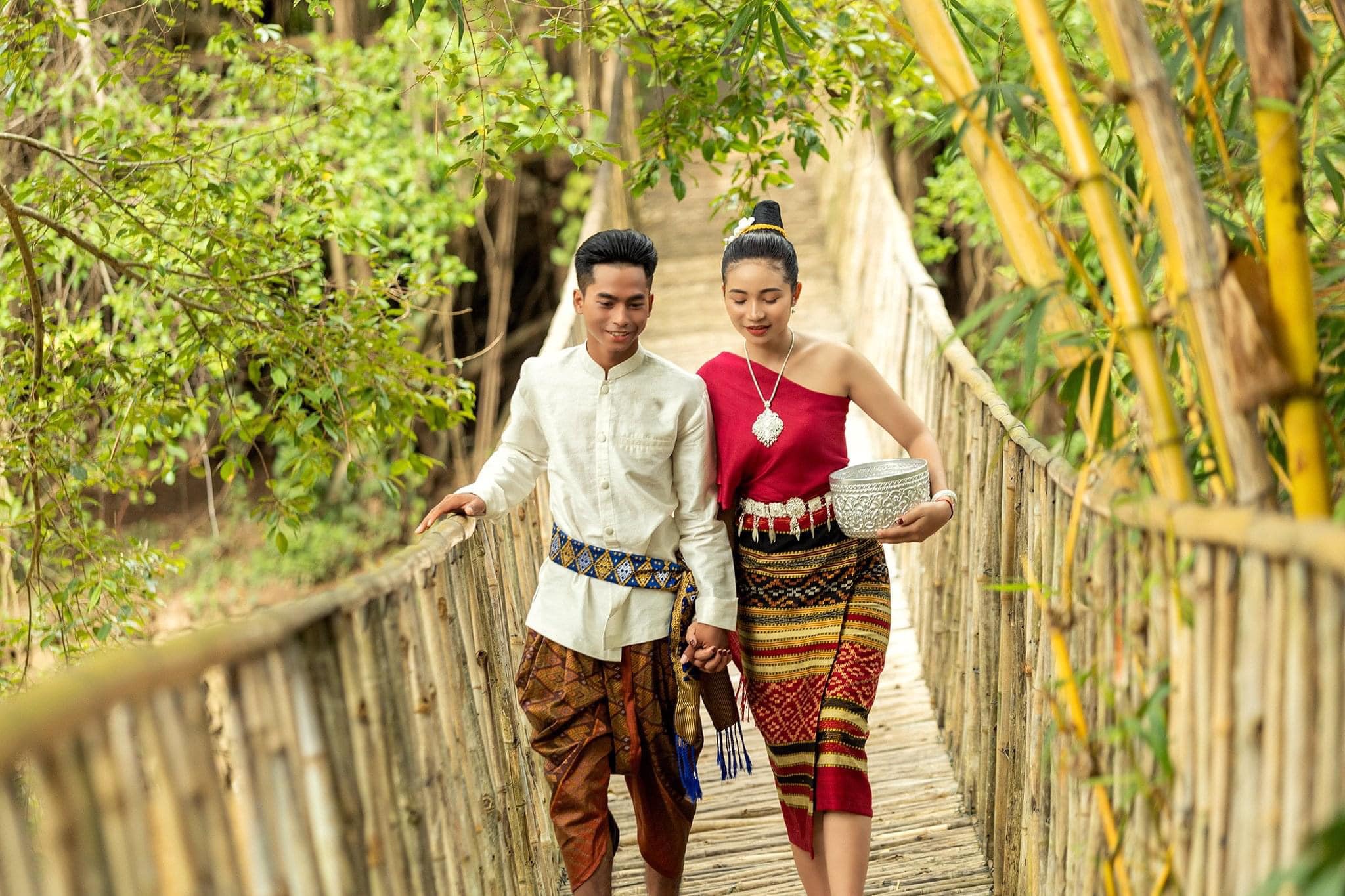
The bamboo suspension bridge crossing the Serepok stretches over 1 kilometre — one of Southeast Asia's longest bamboo bridges, woven from fresh bamboo and rebuilt after each flood season. Crossing it means swaying gently above the sound of rushing water, looking down at the Serepok's white-capped rapids — the only westward-flowing river in Vietnam, running contrary to every other in the country. Since 2023, elephant-riding tours at Buon Don have been suspended following international elephant welfare standards — visitors can still meet and feed elephants in a semi-natural sanctuary environment.
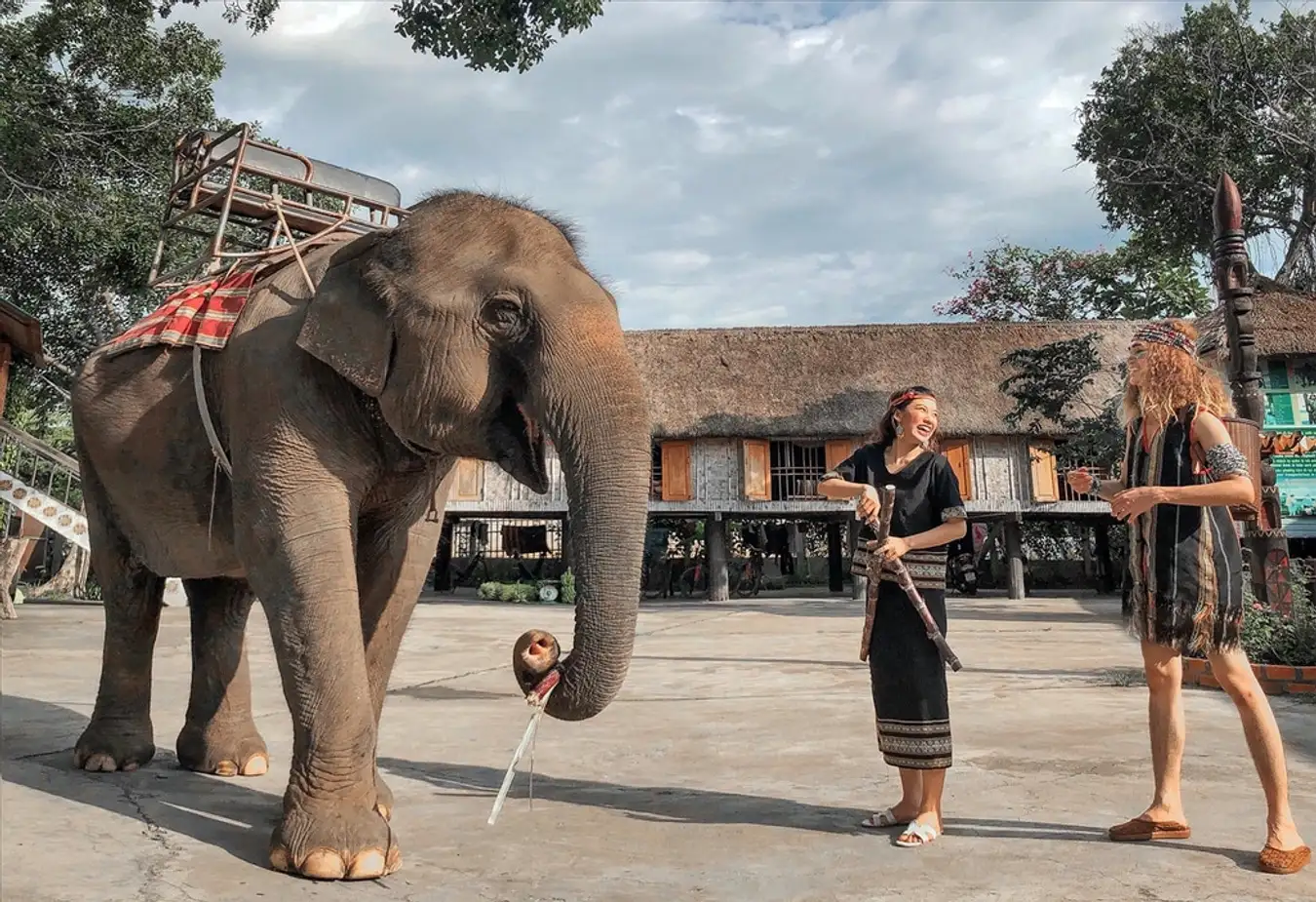
Each March, Buon Don hosts the Elephant Racing Festival alongside the Buon Ma Thuot Coffee Festival. The elephant festival is the only occasion in the year when elephants compete directly in speed races, river swimming, and log-pulling contests. On ordinary days, entering Buon Tri A village means entering a rare multi-cultural space: Laotian stilt houses beside Ede longhouses, M'Nong wood-spirit shrines beside Lao Buddhist temples, all coexisting within a few hundred square metres.
The people of Buon Don do not fear elephants. We live with them, sleep beside them — elephants are our brothers.
Y Moan Knul, cháu nội Vua voi Y Thu Knul / Y Moan Knul, grandson of Elephant King Y Thu Knul
Highlights not to miss.
Y Thu Knul's tomb follows hybrid Lao–M'Nong style, with a red-brick dome and columns carved with elephants and eagles. Alongside stands his 130-year-old Laotian-style stilt house — floors raised 2 metres, ironwood columns a full arm-span thick, floorboards 50 cm wide in ironwood. Inside still rest original elephant-hunting tools: rattan lassos and a teak elephant saddle.
The 1-km bridge is woven from thousands of fresh bamboo canes in a cross-hatch pattern, able to bear dozens of people simultaneously. Each year after the October–November floods, villagers rebuild it together completely in 3–4 days. From the middle of the bridge, the Serepok's white-capped rapids rush below, and on clear days you can see Yok Don forest on the far bank.
Since 2023 Buon Don ended elephant-riding tours following international elephant welfare standards. Visitors can still feed elephants bananas and sugar cane, bathe with elephants alongside their mahouts, or walk beside elephants in the forest with a guide. The 2-hour programme's revenue directly funds elephant care costs.
If visiting Dak Lak in March, don't miss the Buon Don Elephant Racing Festival — the only opportunity in the year to watch elephants race across a grass track, swim across the river, and pull logs. Book Buon Ma Thuot accommodation at least 2 months ahead as the city fills completely during festival season.
How to visit & get there.
Getting There Buon Don is 50 km northwest of Buon Ma Thuot on Provincial Road DT1. **Motorbike** (60–75 minutes) is the best choice — flat road, light traffic. **Day tours** from Buon Ma Thuot hotels typically combine Buon Don and Yok Don National Park in a single day.
Visiting Tips **Arrive before 8 AM** to avoid midday heat and catch elephants drinking at the riverbank. **Wear long trousers and long sleeves** when entering Yok Don forest — mosquitoes increase in the afternoon. **Do not negotiate** entrance fees at the gate — prices are fixed and revenue funds elephant conservation.
Sources
- 1.Elephants and the legendary land of Buon Don
Vietnam.vn · 2026-06-25
- 2.A Comprehensive Dak Lak Travel Guide
Izitour · 2026-06-25