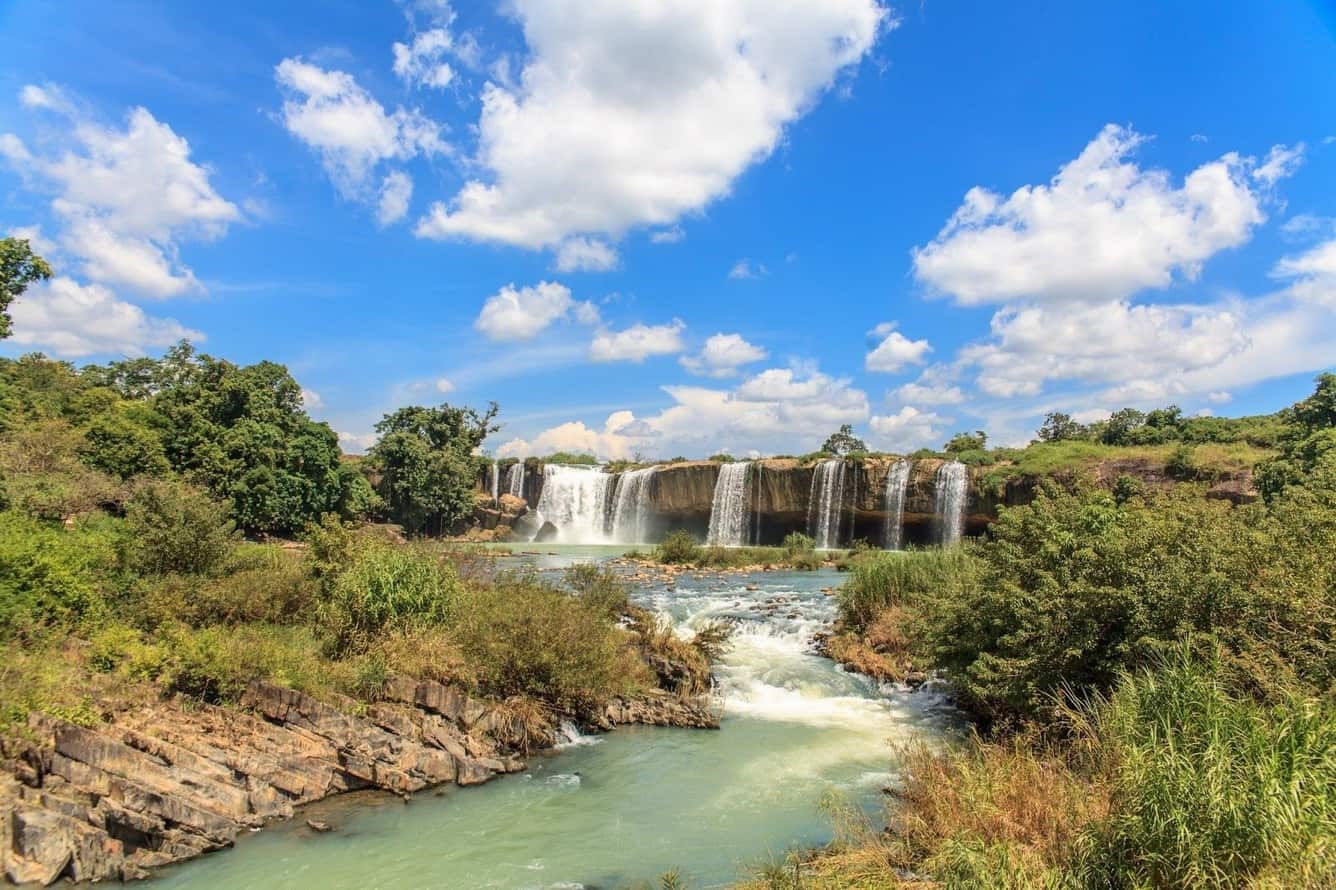
History & story.
Dray Nur Waterfall sits on the Krong Ana River — a tributary of the Serepok — 30 km south of Buon Ma Thuot. In Ede, 'Dray' means waterfall and 'Nur' means female or mother. It forms a legendary pair with Dray Sap — the male waterfall — 3 km upstream. Ede legend tells of lovers forbidden by their families who leapt together into the Serepok; their bodies became the two cascades — Dray Sap for the man and Dray Nur for the woman — forever flowing side by side though unable to be together.
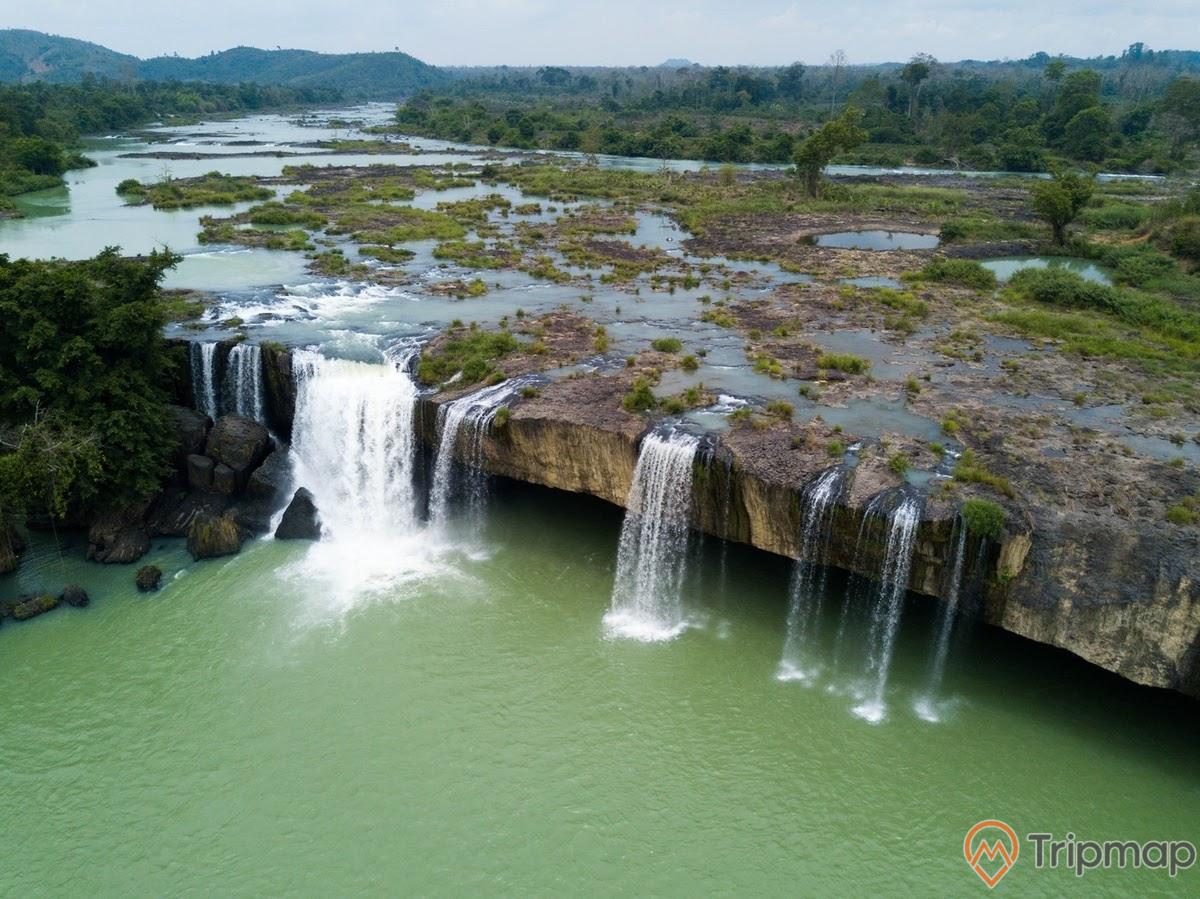
At 250 metres wide and 30 metres tall, Dray Nur is the widest waterfall in the Central Highlands. During the high-water months of September–November, the entire 250-metre cliff face disappears behind a churning white curtain, the roar audible a kilometre away. In the dry season from January to March, sections of exposed rock create a series of smaller cascades, and the plunge pool below clears to reveal its green-stone bottom — the ideal time to swim and explore the cave behind the falls.
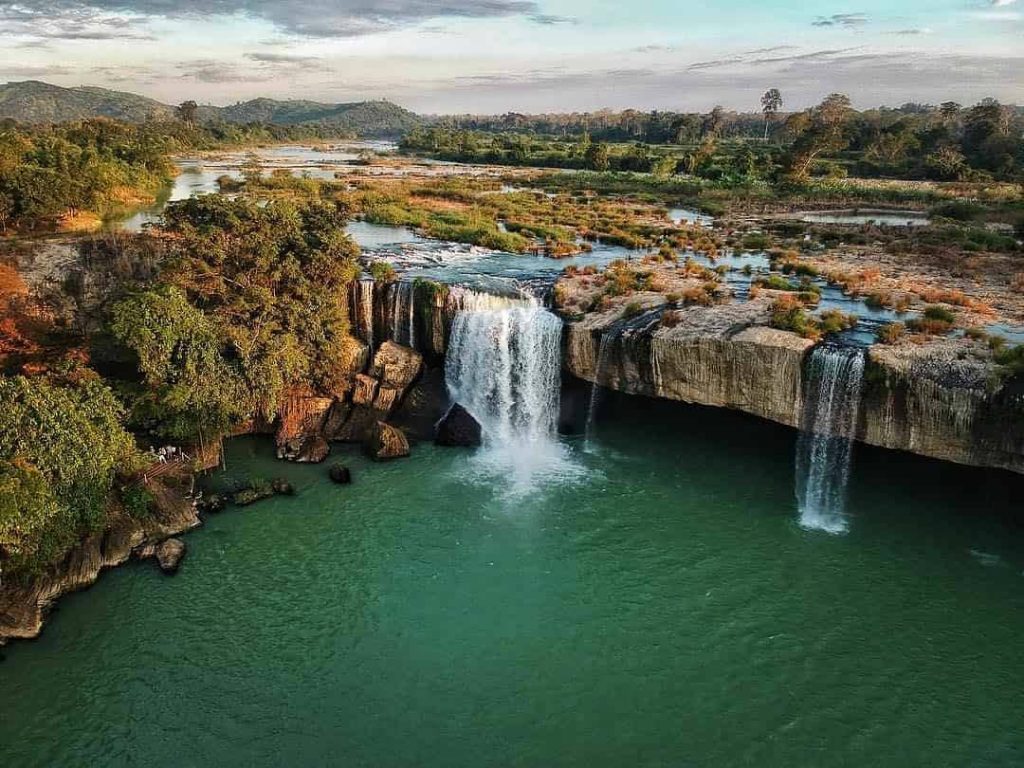
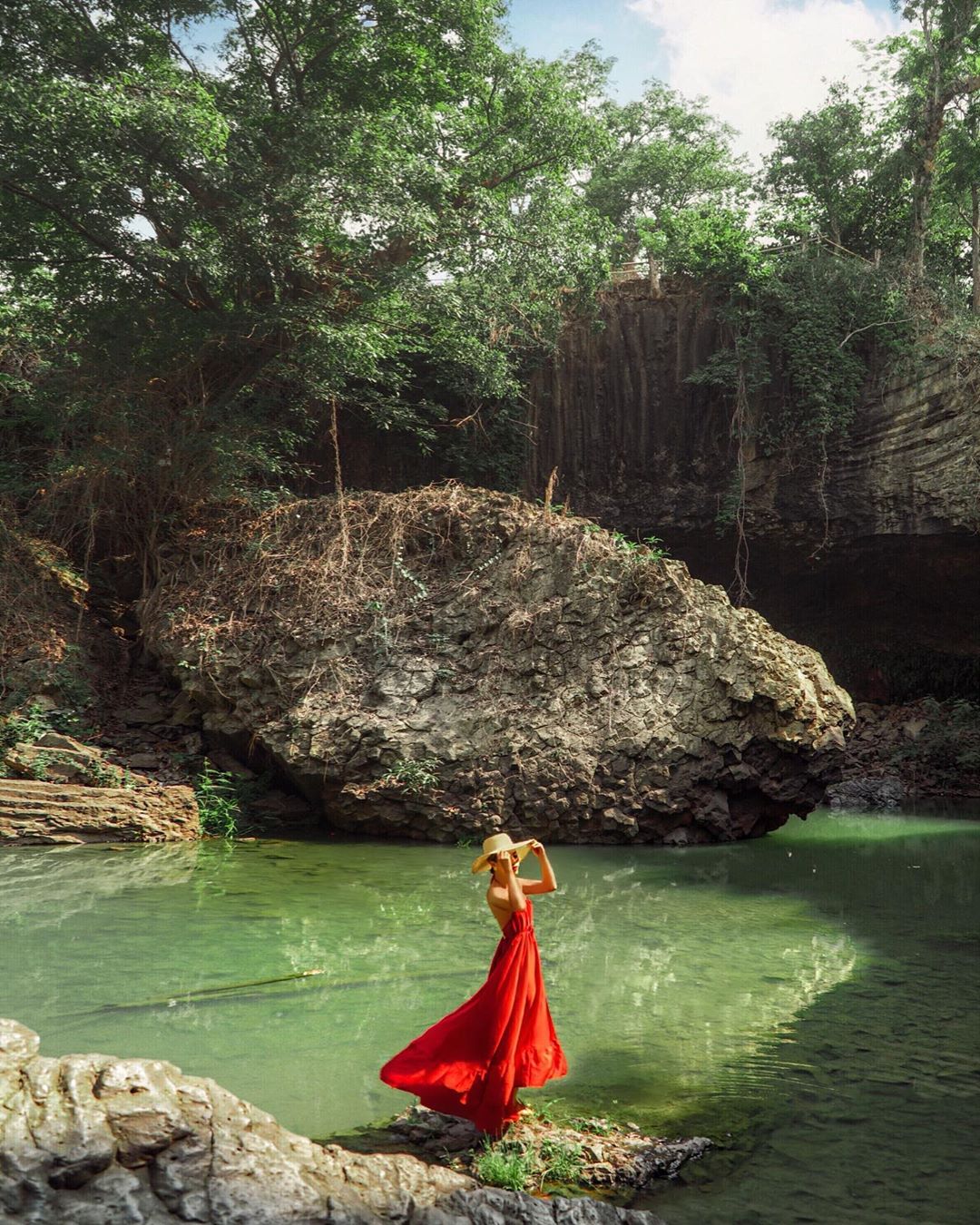
Dray Nur's most mysterious feature is the 300-square-metre cave hidden behind the water curtain. Reaching it means wading through knee-deep water at the falls' edge, then walking 50 metres along a wet, moss-covered cliff face as the roar of water surrounds you completely. Inside the cave, the air drops suddenly cool, and light filtered through the water curtain creates an otherworldly jade-green glow. Natural stalactites formed over thousands of years of erosion line the ceiling, and looking out through the curtain of falling water from within is an unforgettable perspective.
The Dray Nur eco-tourism complex has a 3-km walking trail along the Krong Ana riverbank through secondary forest rich with wild orchids and Central Highlands scrub. Along the trail you may spot Yellow-cheeked Gibbons in the high canopy — primates endemic to the Central Highlands. At the falls, stone tables and shelter provide picnic space, and the site rents life jackets and swim goggles for exploring the plunge pool.
Dray Nur is the mother of the Central Highlands' water. In the rains she is fierce, in the dry season she is gentle — but she is always there, flowing endlessly day after day.
Nghệ nhân Ê Đê Y Wil, xã Đắk Nuê / Ede artisan Y Wil, Dak Nue Commune
Highlights not to miss.
Dray Nur is the widest waterfall in the Central Highlands — at peak flood in September–November, all 250 metres of cliff face disappear behind unbroken white spray. From the far bank it looks like a massive wall of water falling into a bottomless void. The roar of 400,000 litres per second over the cliff face carries a kilometre away.
The 300-square-metre cave hidden behind the water curtain is Dray Nur's greatest secret. Route in: wade through knee-deep water at the falls' edge, then cling to wet cliff and walk 50 metres in dripping darkness. Inside, the temperature drops 5–7°C below outside, and light filtering through the water curtain creates an irreproducible blue luminescence. Entry is only safe in the dry season, January–April.
In the dry season, Dray Nur's plunge pool clears so completely that individual green stones are visible on the 3–5-metre bottom. The water runs cold, clean, and still — one of the finest natural swimming spots in the Central Highlands. The site rents life jackets and swim goggles, with a lifeguard on duty at the bank.
In the dry season, don't forget your swimwear — the cool, crystal-clear plunge pool at Dray Nur's base is the best part of the visit. The water is completely clean and runs at about 20–22°C even at midday.
How to visit & get there.
Getting There Dray Nur is 30 km from Buon Ma Thuot on National Highway 27 then a turn onto Provincial Road DT7. **Motorbike** (40 minutes) is most convenient; parking is available inside the eco-tourism complex gate.
Visiting Tips **Wear sandals or grip shoes** — the cliff path into the cave is slippery even in the dry season. **Never enter the cave during rainy season** (May–August) — water rises rapidly and can trap visitors. **Best photography** from early morning (7–9 AM) when eastern light shines directly onto the falls creating a rainbow across the mist.
Sources
- 1.Dray Nur Waterfall, the majestic beauty of the Central Highlands
Authentik Travel · 2026-06-25
- 2.Dray Nur Waterfall: Location, history and things to do here
Vinpearl · 2026-06-25