History & story.
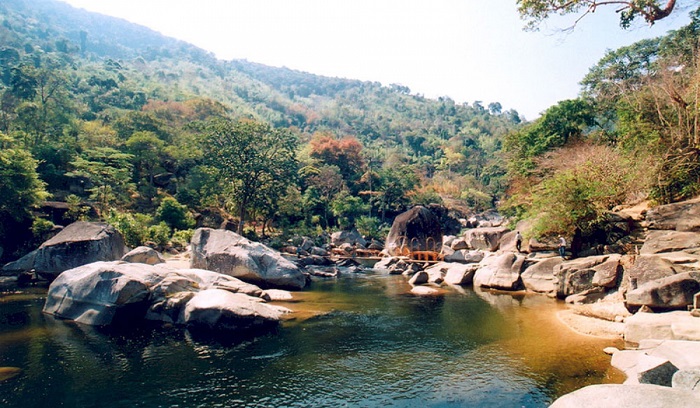
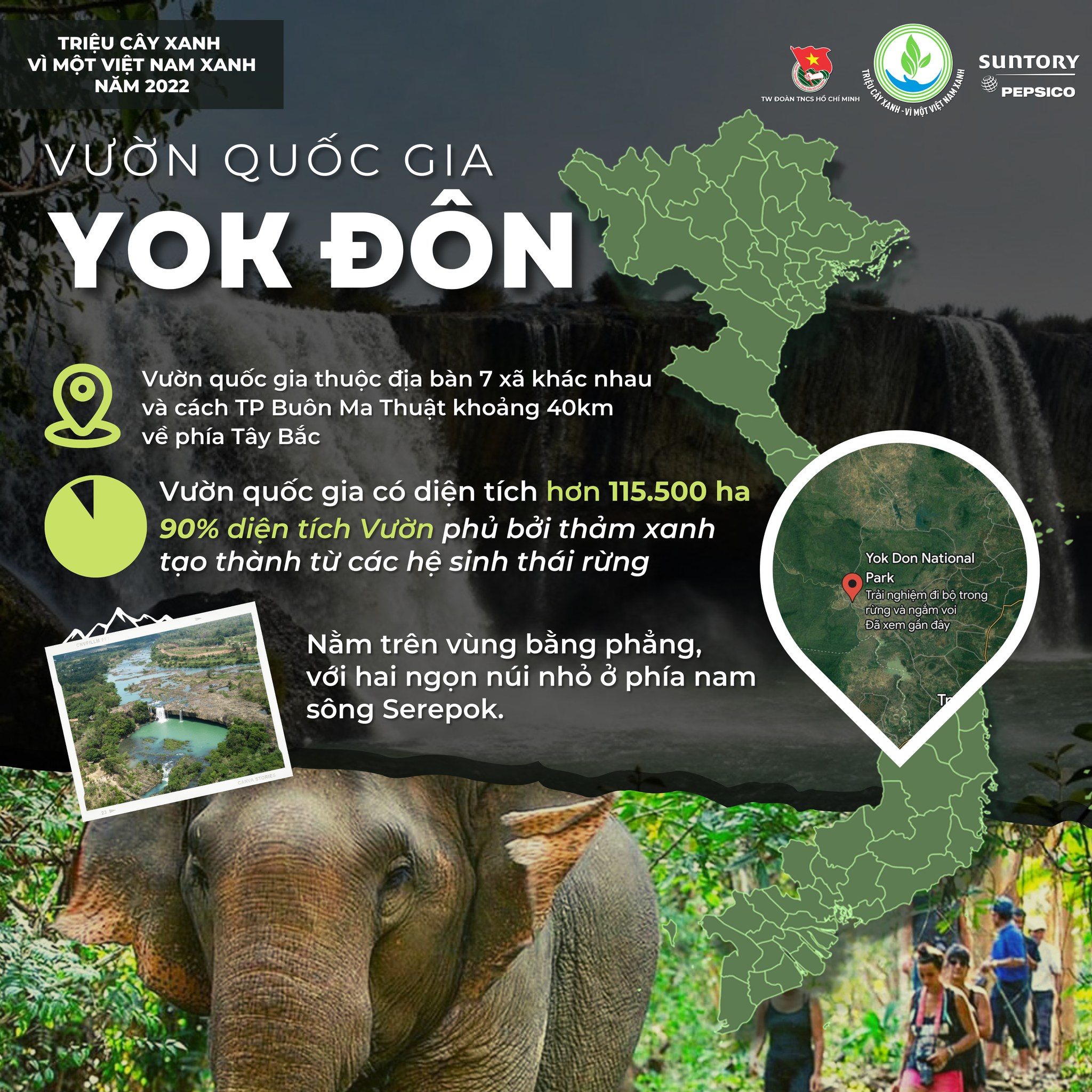
Yok Don National Park was established in 1986 on the foundation of a nature reserve dating from 1977, covering 115,545 hectares — roughly equivalent to the area of Hanoi city. It is Vietnam's second-largest nature reserve and the only place in the country preserving dry dipterocarp forest — scientifically classified as Tropical Dry Dipterocarp Forest. This forest type is endemic to mainland Southeast Asia and constitutes less than 1% of global forest coverage. Unlike the dense rainforests typical of Vietnam, dry dipterocarp forest is open and spacious, with tall straight trees that shed all their leaves during the dry season from November to April.
The dry dipterocarp vegetation is dominated by three characteristic species of the dry dipterocarp forest: Dipterocarpus tuberculatus (smoked wood), Shorea obtusa (white meranti), and Xylia xylocarpa (pyinkado). From November to February, the entire canopy transitions from green through gold to orange-red, leaves falling to carpet the ground in a rustling brown-gold mat. This is the only sight in Vietnam evoking North American or European autumn forests. In March–April the trees flush new pale-green leaves before the rains return. Around 90% of the forest area is primary growth undisturbed since French colonial times.
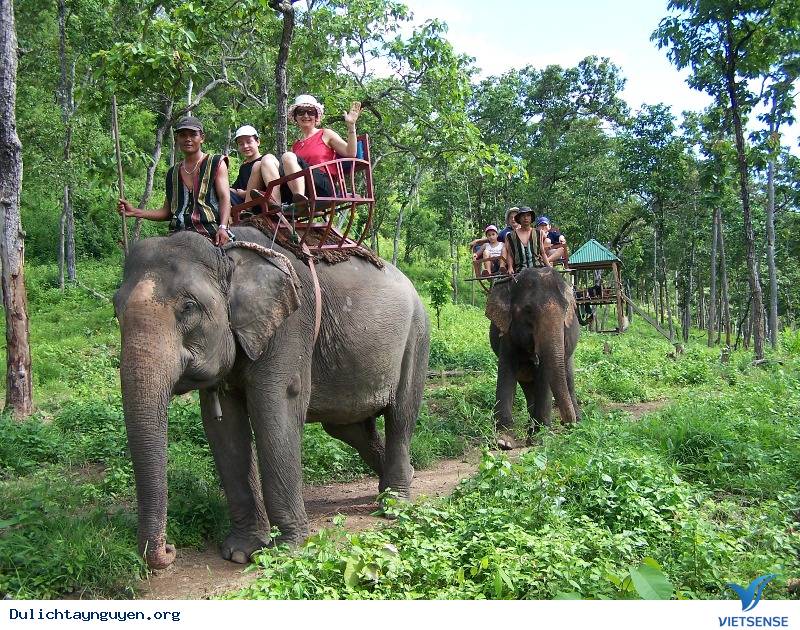
Yok Don records 89 mammal species, 305 bird species, 40 reptiles, and 13 amphibians. Most significant is the wild Asian elephant herd — estimated at 40–80 individuals, the last wild herd in Vietnam, most ranging back and forth across the Cambodian border along the Cardamom-Kongtum corridor. Other notable species include Gaur, banteng, sun bear, Dhole (Asian wild dog), silver pheasant, and numerous rare birds. Three minority communities live in the park's buffer zone: Ede, Lao, and M'Nong.
The park offers trekking routes from short (2 hours) to multi-day (5-day overnight deep-forest expeditions). The most popular is the 1-day 15-km riverside trek along the Serepok — walking through dry dipterocarp forest, swimming in streams, and returning by wooden boat downstream. The 2–3-day routes venture into the core zone where wild elephant evidence — dung, footprints, broken trees — is commonly found. All routes require indigenous guides.
Yok Don's dry forest is not noisy like a rainforest. It is silent, dry, and upright. In the leaf-fall season, standing in the forest listening to the rustle of leaves is the moment you understand why our ancestors called this the place where the spirits rest.
Kiểm lâm viên Y Dhih Nie, Vườn Quốc gia Yok Đôn / Ranger Y Dhih Nie, Yok Don National Park
Highlights not to miss.
From late November, Yok Don's dry dipterocarp forest begins its colour transition from green through gold to vivid orange-red. Peak season is December–January when the entire canopy is transformed and fallen leaves carpet the ground. This is a landscape found at no other forest in Vietnam, drawing photographers from across the country to document it.
The 15-km Serepok River trekking route is Yok Don's most celebrated walk. Departing at 7 AM from the ranger station, the group walks through primary dry dipterocarp forest, wades through clear streams, and stops for midday swimming on a white sand beach at the river. In the afternoon everyone boards a wooden boat to drift back downstream — total duration 8–9 hours.
On 2–3-day treks into the core zone, experienced Ede guides read elephant signs: fresh dung (herd passed within 6 hours), footprints in muddy ground, trees snapped mid-trunk. Direct elephant sightings are rare as the herd is extremely wary of humans, but spending nights in the forest and hearing elephant calls carry from the distance is an extraordinary experience.
December–January is when Yok Don's dry forest is at its most spectacular — the entire canopy golden-red and fallen leaves blanketing the ground. If you can plan your timing, this is the single reason to choose the dry-season months for a Dak Lak trip.
How to visit & get there.
Getting There Yok Don National Park adjoins Buon Don — the main gate is 50 km from Buon Ma Thuot on Provincial Road DT1. Most visitors combine Yok Don on the same day trip as Buon Don village.
Booking Treks **Advance registration is mandatory** for all trekking routes — at least 1 day before, contact the Park Management Board by phone. **Indigenous guides** are not just required but the best part of the experience — they read the forest and tell compelling stories about each tree, animal, and bird species encountered.
Sources
- 1.Yok Don National Park: Admire Vietnam's largest dipterocarp forest
Vietnam.vn · 2026-06-25
- 2.About Yok Don National Park
Yok Don National Park official · 2026-06-25