History & meaning.
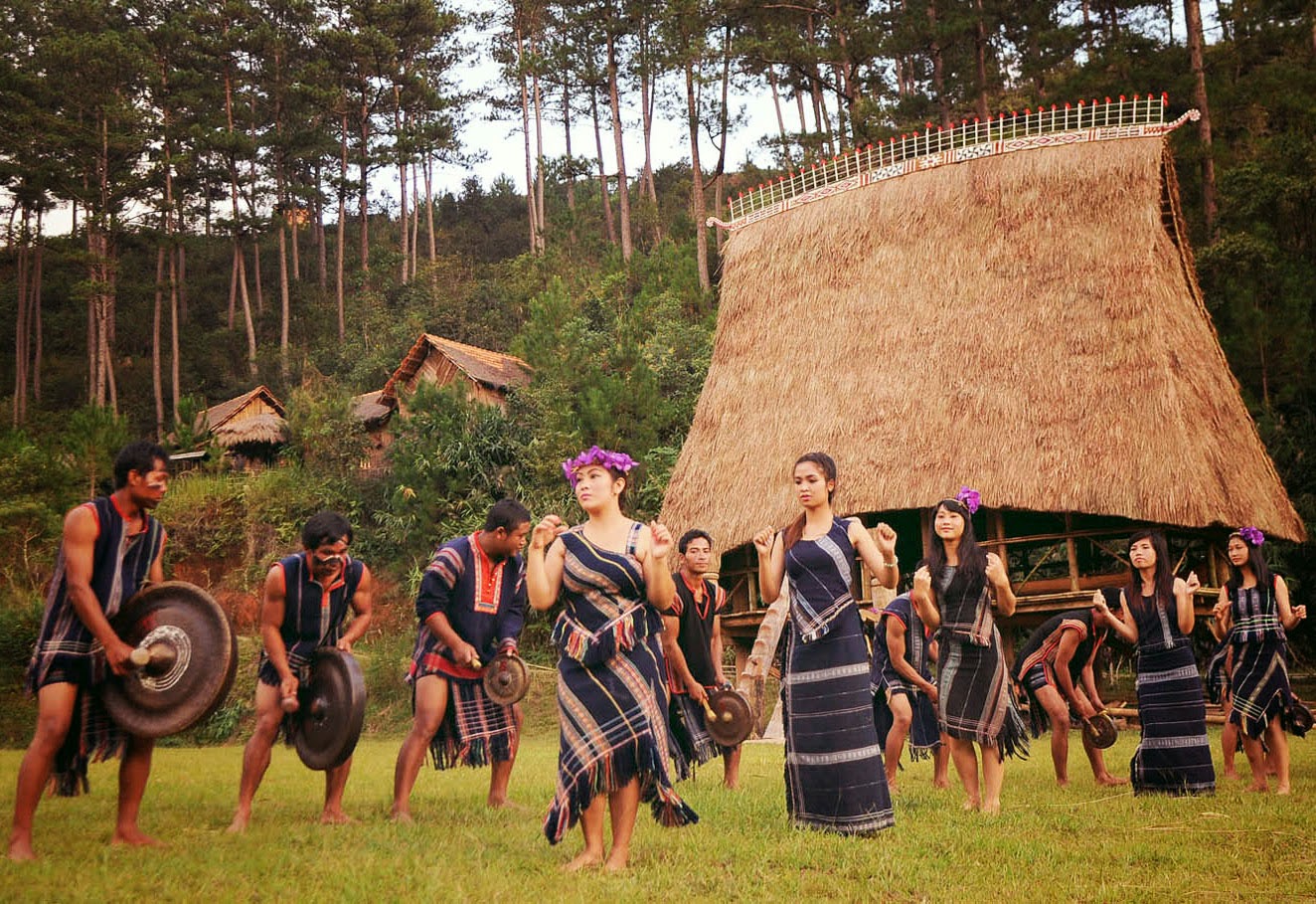
The Central Highlands Gong Cultural Space was recognized by UNESCO as an Intangible Cultural Heritage of Humanity in 2005 — but for the Ê Đê and M'Nông peoples who have lived in Dak Lak for millennia, gong music has never been a museum artifact. The Central Highlands gong set is a complex instrument system of 3 to 15 pieces, cast from bronze alloyed according to each ethnic group's secret proportions — a fine gong set may have passed through 5–7 generations. Gongs appear at every important lifecycle ceremony: birth, coming of age, marriage, death, and all agricultural rituals. The Central Highlands Gong Culture Festival rotates among 5 provinces: Dak Lak, Dak Nong, Gia Lai, Kon Tum, and Lam Dong. When Dak Lak hosts, it draws the largest gathering of artisans in the region.
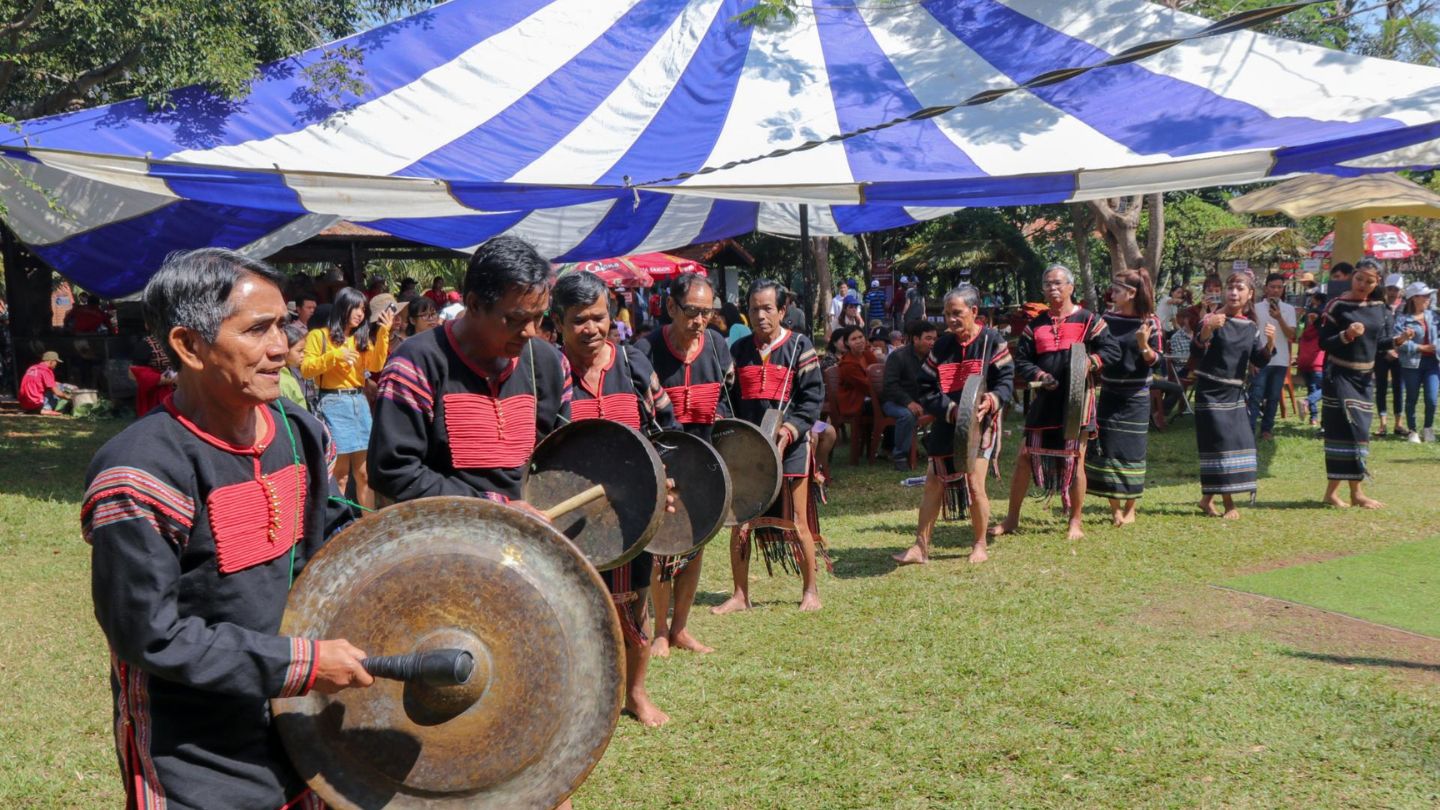
The festival's opening night is the largest gong grand concert in the Central Highlands, gathering over 800 artisans and folk performers from 26 delegations representing Ê Đê, M'Nông, Gia Rai, Ba Na, and Xê Đăng ethnic groups from across the province. Each delegation brings their own gong set played in their group's distinctive technique — the Ê Đê play in a hierarchical circle formation, while the M'Nông rest gongs on their thighs and strike barehanded. When hundreds of gong sets sound simultaneously at March 10th Square, the music fills the city with a sound that is simultaneously mystical and jubilant. After the opening night, artisans disperse to surrounding villages to perform in gong music's most authentic setting — the living community.
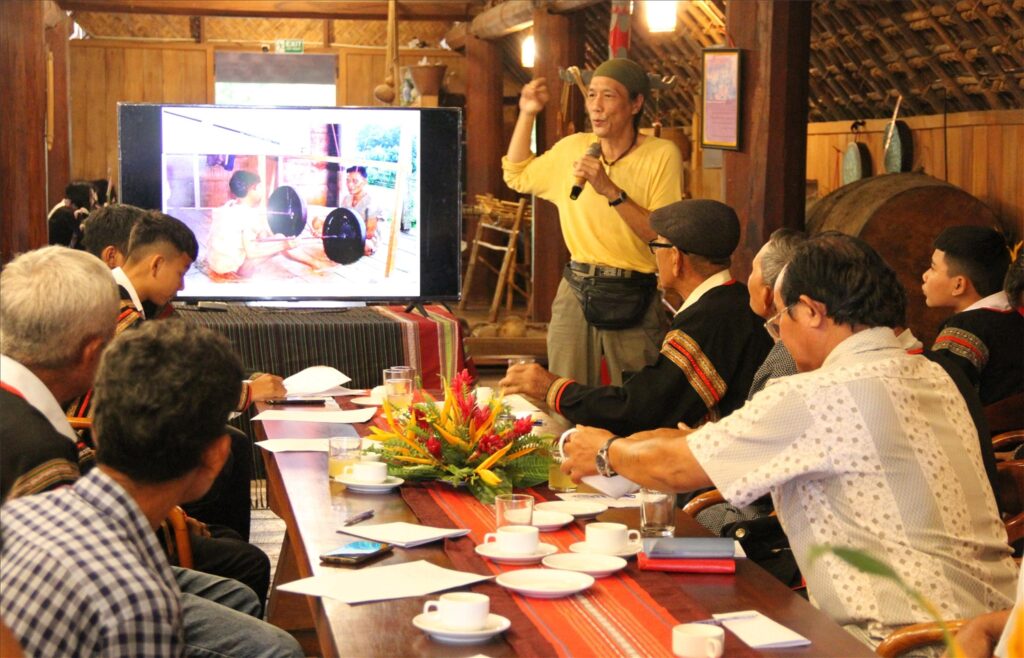
The significance of gong music to the Central Highlands peoples cannot be separated from their animist beliefs. The Ê Đê believe that each gong set is inhabited by a divine spirit (yang) — gongs must never touch the ground, must not be hung higher than a person's head, and may only be played during sacred ceremonies. Gong sets are also a measure of wealth and social status: a prosperous family might own multiple antique sets worth the equivalent of dozens of water buffaloes. When a village loses its ancient gong set — through sale to traders or wartime loss — village elders consider this the loss of the community's "soul." This is why the festival is not only an arts event but an effort to restore interrupted cultural memory.
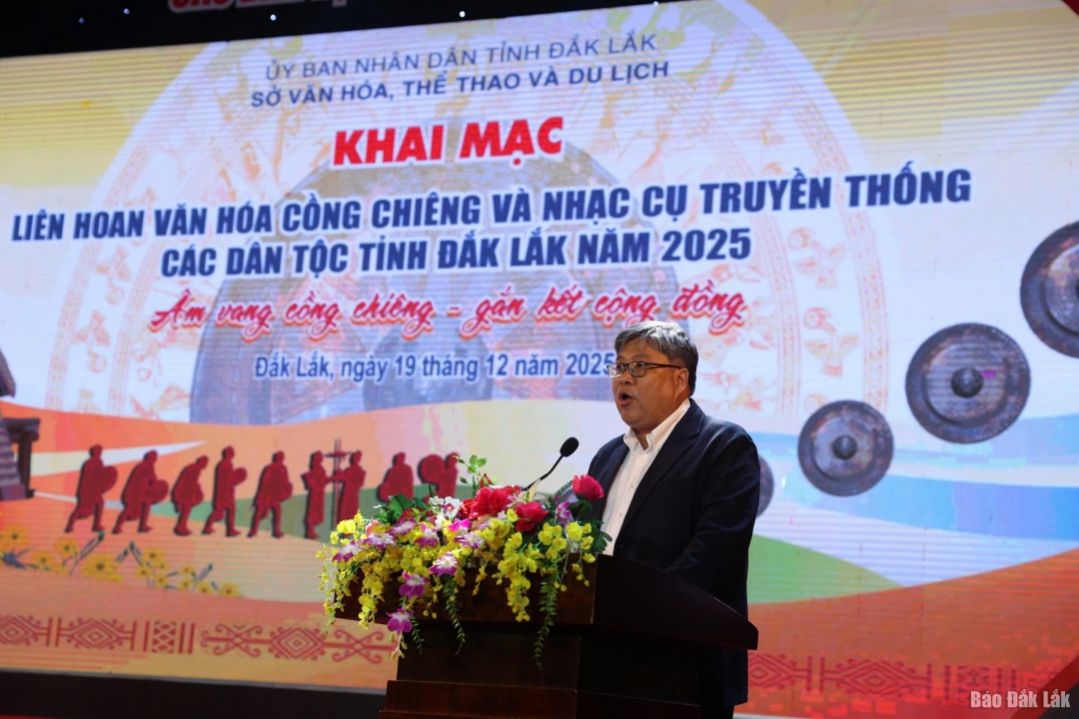
As part of the festival, visitors can join village tours to Ako Dhong — one of the few intact Ê Đê communities surviving within Buon Ma Thuot city. Here, senior artisans share the history of each piece in their family gong collection, explain the complex musical system, and perform live the gong pieces used in specific ceremonies. The traditional instrument exhibition within the festival also introduces đàn đá (lithophone), đàn T'rưng (bamboo xylophone), and bamboo instruments characteristic of each ethnic group. The Central Highlands Gong Culture Festival is the only occasion where all gong traditions from the five Central Highlands provinces converge in one place.
"The gong is the voice of the ancestors, the bridge between the living and the departed, between humans and the divine."
Nghệ nhân ưu tú Ama H'Lan, buôn Ako Dhông, Buôn Ma Thuột / Master artisan Ama H'Lan, Ako Dhong village, Buon Ma Thuot
Highlights not to miss.
The opening night gathers over 800 artisans and folk performers from 26 delegations representing communes and districts across Dak Lak province. Each delegation brings their own gong set reflecting the traditions of their ethnic group — Ê Đê, M'Nông, Gia Rai, Ba Na, Xê Đăng — creating an unprecedented highland symphony. The outdoor stage at March 10th Square becomes a vast spiritual space at the city's heart.
Beyond stage performances, the festival brings visitors directly into traditional villages to witness gongs in the context of authentic ritual — water source ceremonies, new rice celebrations, and housewarming rites. At Ako Dhong village — one of the last intact Ê Đê communities within Buon Ma Thuot — visitors are invited to sit around communal fires and share rượu cần rice wine with master artisans. This is an experience impossible to replicate on any stage.
Alongside gongs, the festival showcases the full repertoire of Central Highlands traditional instruments: đàn đá (lithophone), đàn T'rưng (bamboo xylophone), đinh tút and đinh goong wind instruments. Bronze-casting artisans from Phuoc Kieu craft village (Quang Nam) demonstrate traditional gong-casting techniques — a nearly extinct craft where a single gong can take up to three months to complete. Visitors hear explanations of how a gong's pitch is tuned by grinding or adding bronze — a technique mastered only by the most experienced casters.
Ako Dhong village (near the Dak Lak Museum) is one of the few places where you can purchase bronze gongs directly from artisans. Prices range from 2–15 million VND depending on size. Even if you don't buy, artisans are usually happy to explain the meaning of each gong type and let you hear it ring — an unforgettable cultural encounter.
How to attend & get there.
Schedule and Venues **Opening night (December 19)**: Arrive at March 10th Square before 6 PM to secure a good spot for the grand concert. Bring a warm jacket — December nights in Buon Ma Thuot can drop below 15°C. **Days 2–3**: Book village tours through local travel companies — it is not advisable to go independently as many villages have no signage and require a local guide.
Cultural Respect **Ask permission before photographing** artisans during ceremonies — some rituals are considered sacred and not appropriate for camera lenses. **Do not touch gong sets** unless invited — to the Ê Đê, gongs are sacred objects carrying "yang" and only authorized persons may handle them. **Dress modestly**: Wear long trousers; shorts are not appropriate when entering villages and ceremonial areas.
Sources
- 1.Dak Lak opens the 2025 Gong Culture and Traditional Musical Instruments Festival
Nhân Dân Online · 2026-06-26
- 2.Dak Lak Boosts Efforts to Preserve UNESCO-Recognised Gong Culture
VietnamPlus English · 2026-06-26