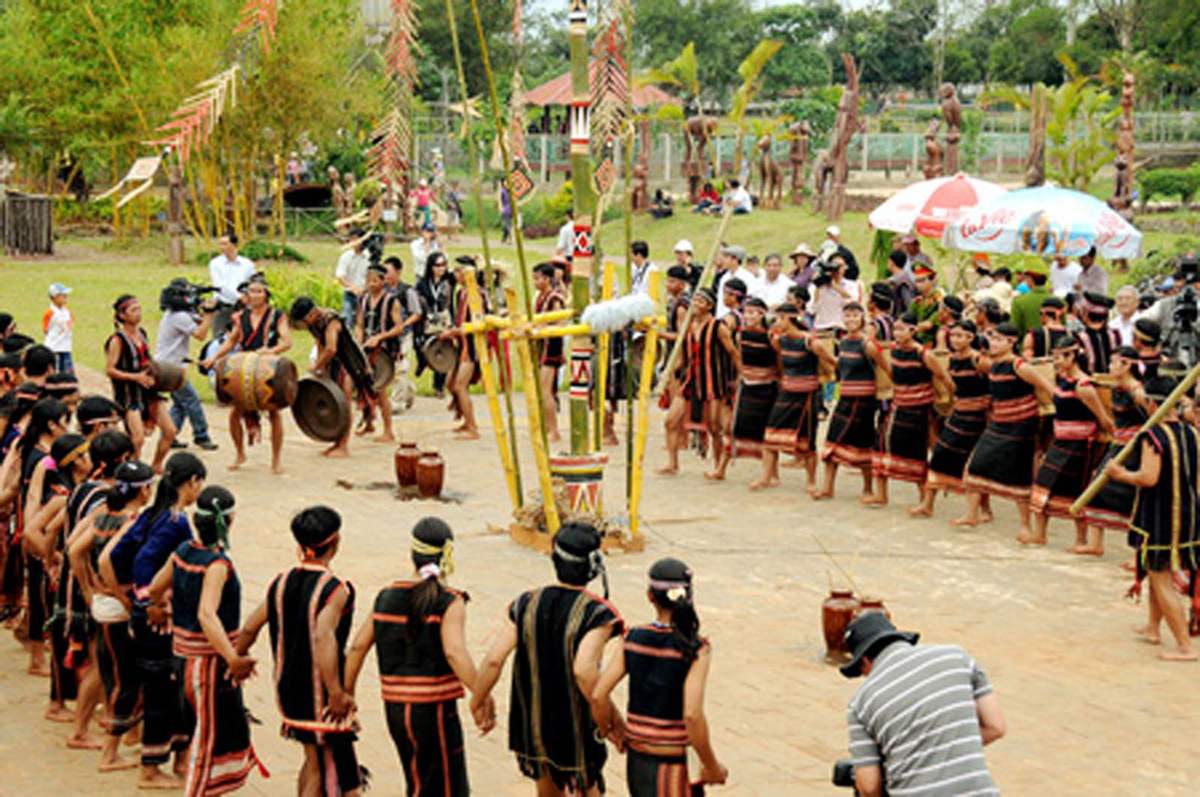
History & meaning.
The M'Nong New Rice Festival has its roots in the swidden upland rice farming that has been central to Central Highlands life for millennia. In M'Nông belief, rice is not an inert plant but a sentient being with a "soul" (yang ndrong) — the rice soul can be joyful, sorrowful, or leave the granary if offended. Consequently, every stage of the agricultural cycle — from choosing land, clearing the field, and sowing seeds to harvesting — requires accompanying rituals to keep the rice soul present and at peace. The New Rice Festival is the most sacred culmination of this farming cycle, when the rice soul is ceremonially "escorted" from the field back home after a successful harvest. The ceremony has no fixed date; village elders and the shaman observe the crop's ripeness and select an auspicious day — typically when the rice has just reached peak ripeness, before the full field is harvested.
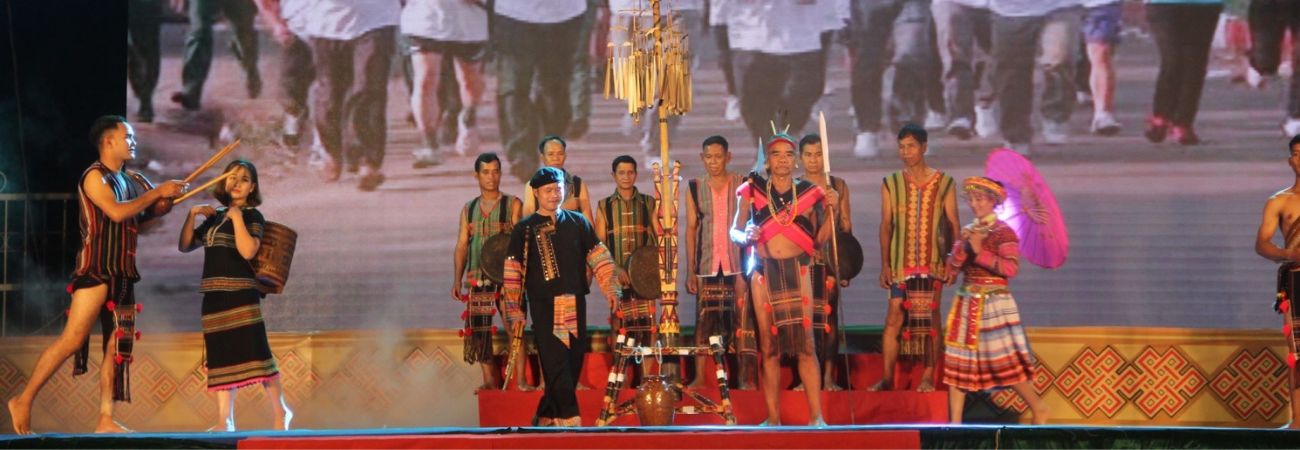
The ritual begins when the eldest woman in the family (in M'Nông matrilineal society, she is the keeper of the granary and holder of agricultural ceremony rights) goes to the field at dawn, cuts the first bundle of rice stalks, and solemnly carries it home escorted by the entire village's gong ensemble. No one may speak loudly, laugh, or make sudden noise throughout the procession — for fear of startling the rice soul away. The bundle is placed before the ancestral altar with invocations of gratitude to the deity Giàng for favorable weather and fertile soil. The shaman performs the offering ritual: a white rooster, pork, rượu cần, and nine cups of new rice are ceremonially arranged. Farming tools — field knives, hoes, axes — are also anointed with pig blood and new rice in gratitude to these "fellow companions" of the harvest.
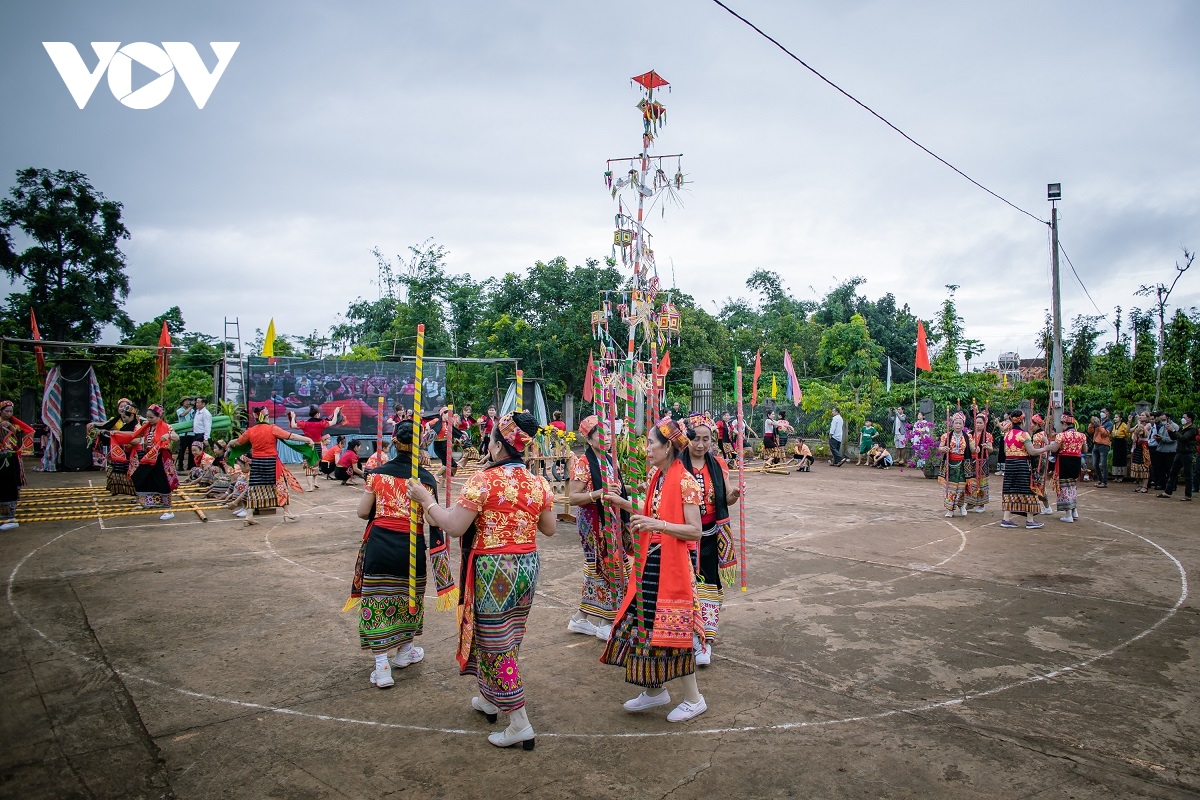
The deeper significance of the New Rice Festival lies in a philosophy of symbiosis between humans and nature — a philosophy the M'Nông have practiced for millennia before "sustainability" became a global trend. Performing offerings for the rice is not superstition but a way for humans to remind themselves that they are not the land's owners but its dependents. The M'Nông never harvest all the rice from a field — they always leave a portion for birds, forest animals, and for the "rice soul" to shelter through winter without being abandoned and hungry. This is why traditional M'Nông swidden land retained its fertility across generations without chemical fertilizers. The New Rice Festival is an agricultural philosophical practice, not merely a religious ceremony.
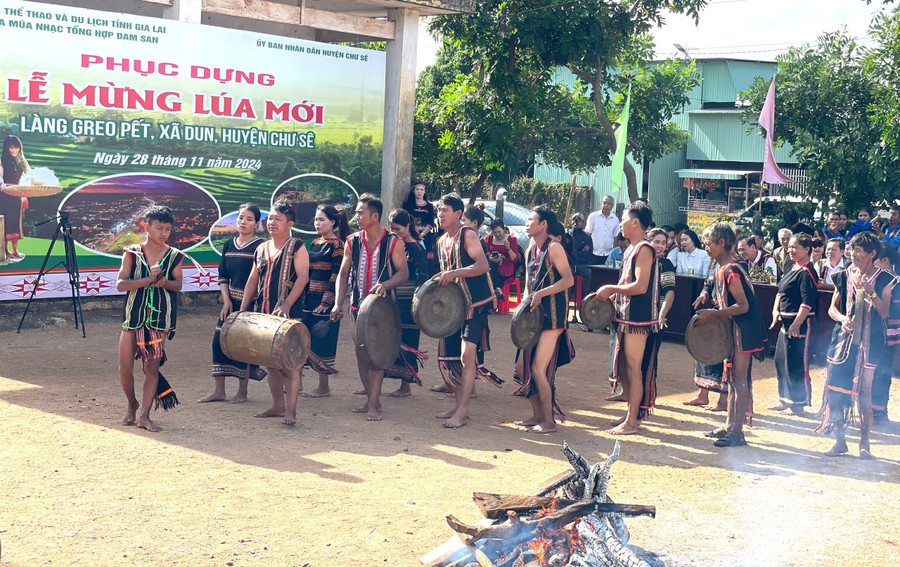
After three days of ritual, the entire village — young and old, men and women — gathers around communal fires to eat new rice, drink rượu cần, and dance to gong rhythms through the night. The rice wine is fermented from new glutinous rice and forest leaves in ancient earthen jars, each large enough for the whole village to take turns drinking through bamboo straws. This is the only time of year when everyone stays up through the night together — not to work or pray, but simply to rejoice and give thanks. Visiting guests are invited to eat lam (rice steamed in bamboo tubes), taste grilled wild boar, and sample delicacies made from freshly harvested upland glutinous rice. This experience is one of the rarest opportunities to witness M'Nông community life in its most natural and joyful state.
"Rice has a soul, and the rice soul must be invited home before people are allowed to eat."
Tục ngữ M'Nông, huyện Lắk, Đắk Lắk / M'Nông proverb, Lak district, Dak Lak
Highlights not to miss.
The eldest woman in the family goes to the field, cuts the first bundle of rice stalks, and solemnly carries it home escorted by gong music — this is the most sacred moment of "welcoming the rice soul." The bundle is placed in the granary with prayers asking the rice soul to remain, multiply, and protect the family. Throughout this process, no one may speak loudly, laugh, or make sudden noise for fear of startling the rice soul away.
The shaman performs offerings at the ancestral altar: chicken, pork, rượu cần, and new rice are ceremonially arranged. The shaman recites invocations in archaic M'Nông language, thanking the deity Giàng for favorable weather, fertile soil, and abundant harvest. Notably, farming tools — field knives, hoes, axes — are anointed with pig blood and new rice as thanks to "fellow companions" throughout the growing season.
After the ceremony, the entire village gathers around communal fires to eat new rice, drink rượu cần, and dance to gong rhythms through the night. The rice wine is fermented from new glutinous rice and forest leaves in ancient earthen jars, each large enough for the whole village to take turns drinking through bamboo straws. This is the only time of year when the entire village community — young and old, men and women — stays up through the night together in gratitude to the earth and sky.
The New Rice Festival has no fixed date — it depends entirely on when the rice ripens in a given year. Contact a local guide or the Dak Lak Tourism Promotion Center in August–September to learn the expected window. Don't wait until November — by then the harvest season has passed and no village will be celebrating.
How to attend & get there.
How to Access the Festival **You cannot go independently**: The New Rice Festival is a family and community ceremony — outside visitors need an M'Nông guide as intermediary and must obtain prior consent from the host family. Contact community tourism companies in Lak district (near Lak Lake) such as **Buon Jun Eco Tour** or inquire at **Lak Lake Guesthouse** to be connected with villages that have official guest-welcoming programs.
Respectful Conduct **Ask permission to photograph** from the outset and follow your guide's instructions. **Do not refuse rượu cần** when offered — this is considered disrespectful. If you cannot drink alcohol, tell your guide in advance so they can explain on your behalf. **Arrive empty-handed** or bring small gifts (fruit, sweets) rather than cash — cash can make the host family uncomfortable. Wear simple, modest clothing and avoid bright colors during ceremonial periods.
Sources
- 1.Lễ mừng lúa mới của người Mnông
Báo Nhân Dân · 2026-06-26
- 2.Vui Lễ hội mừng lúa mới với đồng bào dân tộc Xơ Đăng ở tỉnh Đắk Lắk
VietnamPlus · 2026-06-26