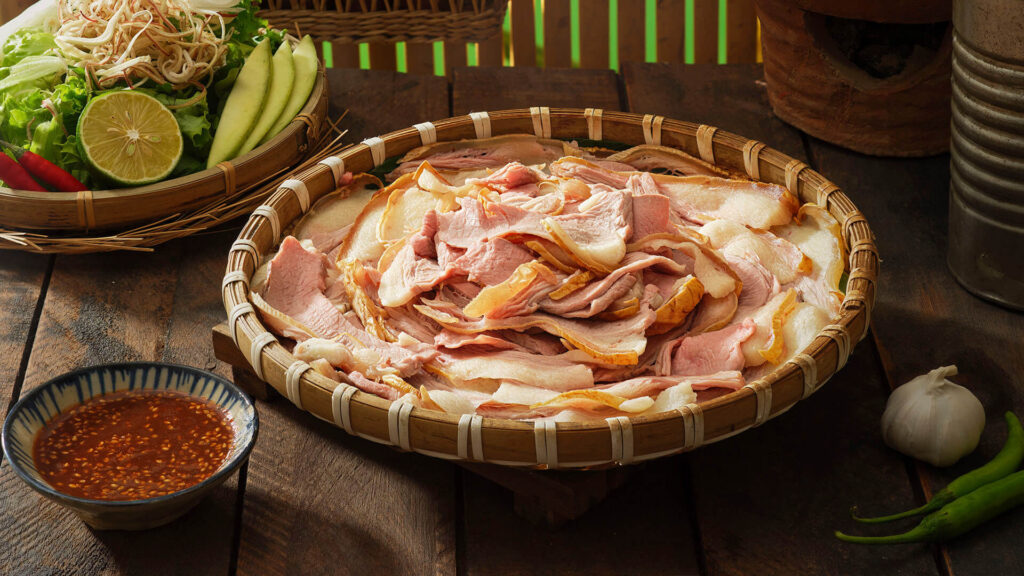
Story & history.
Be thui Cau Mong is a uniquely Central Vietnamese slow-roasted specialty, originating from the Cau Mong area (Dai Hiep commune, Dai Loc District, Quang Nam) — where locals raise veal calves using traditional methods and developed a distinctive straw-smoking technique that produces veal with a rosy pink colour, juicy tenderness and a fragrance no ordinary grilled beef can match. The straw-smoking technique is entirely different from standard roasting: the whole calf is smoked over slowly burning dry rice straw at low, steady temperature for many hours, allowing the meat to cook gradually while retaining all its juices without charring the surface. The calf skin after smoking takes on a beautiful glossy golden-brown, lightly crisp on the outside while the subcutaneous fat remains sweetly melted — this is what connoisseurs consider the finest part. The dish has been present in Quang – Da cuisine since at least the early 20th century and is regarded as a ceremonial food for ancestral commemorations and community festivals.
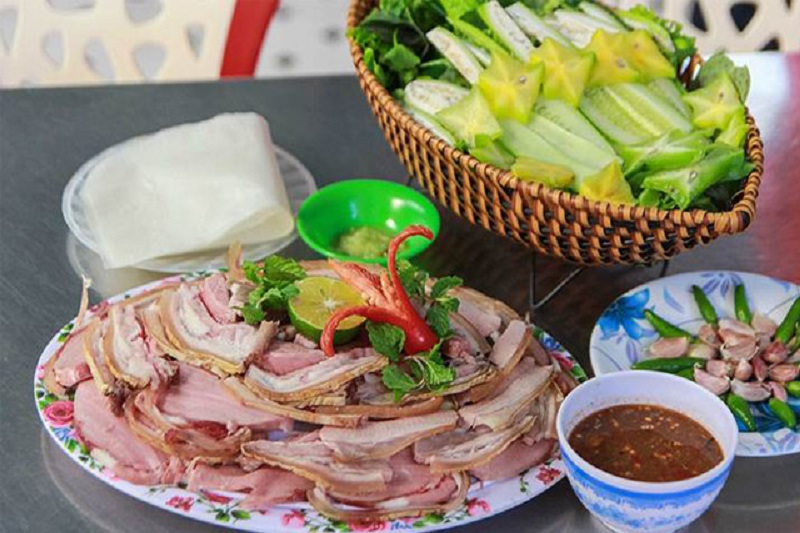
The way of eating be thui Cau Mong also carries the strong character of Central Vietnamese cuisine: the thinly sliced veal is rolled in thin rice paper together with fresh herbs, sliced green banana, green fig and dipped into mắm nêm mixed with garlic and chili — similar to the rice paper roll style but with a completely different flavour profile from the delicate sweetness of young veal. Fresh veal from livestock farmers in Dai Loc is transported to Da Nang daily, ensuring be thui always uses calves that are no more than 3 months old — the strict quality standard that renowned shops like Be Thui Ong Gia on Ong Ich Khiem Street have maintained for generations. Summer is the best time to enjoy be thui because calves born in spring reach the right age in May and June.
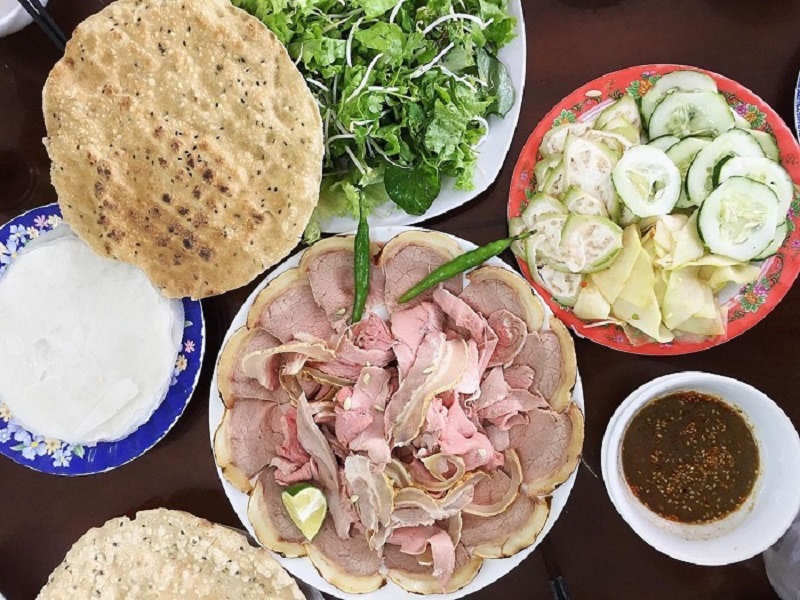
Be thui Cau Mong has today crossed beyond Central Vietnam's borders and appears on the menus of many upscale restaurants in Hanoi and HCMC as a "regional specialty." However, Da Nang people always insist that authentic be thui can only truly be eaten on location — because the veal must be sliced and eaten within a few hours of smoking, impossible to transport far without losing its flavour. This is why be thui Cau Mong is simultaneously a source of local culinary pride and a compelling reason for food lovers to come to Da Nang themselves.
Cau Mong roasted veal — eat it once, remember it for life.
— Báo Nhân Dân, 2024
Ingredients — what makes the flavour.
Popular bê thui shops sell out at weekend lunchtimes — call ahead to reserve your portion, especially for larger groups.
How to enjoy it properly.
How to roll correctly
Place a slice of roasted veal on a moistened rice paper sheet, add a pinch of bean sprouts, a slice of unripe banana, a slice of carambola, and a few herb leaves. Roll firmly into a compact cylinder. Dip only the tip — never submerge the whole roll — into the prepared mắm nêm.
Important note
Do not add plain water to the mắm nêm if it has been properly blended — diluting it destroys the flavour balance. Ask whether pineapple has been added to the sauce — this step is critical for neutralising rawness and contributing natural sweetness.
Editor-recommended eateries.
ⓘ Addresses and prices may change. Please verify before visiting.