History & story.
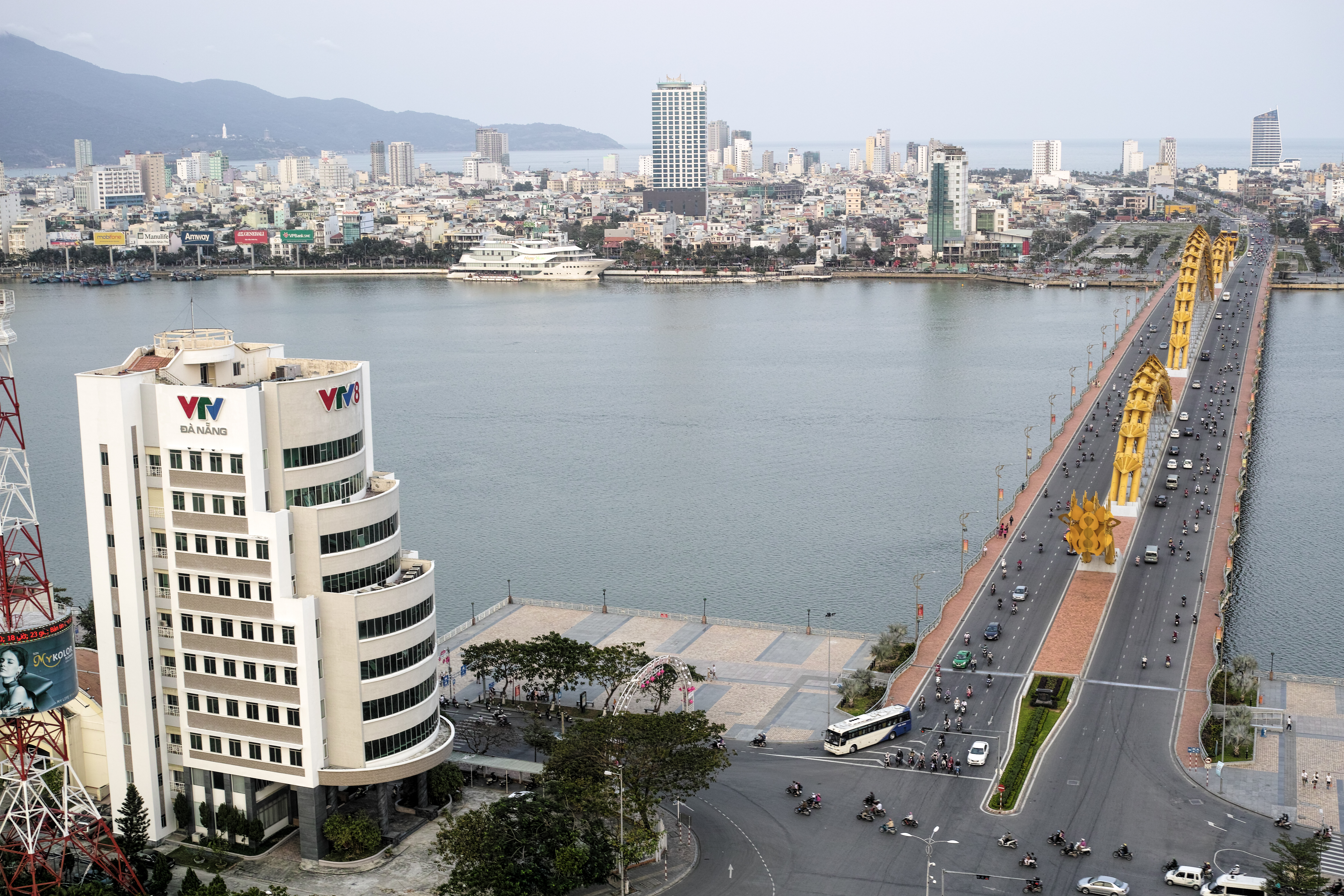
The Han River — the natural identifier dividing Da Nang into east and west — flows about 7 kilometers from its confluence with the Cam Le River before emptying into Da Nang Bay. Before 2000, the river was an economic barrier: the eastern bank lay almost entirely undeveloped without a bridge crossing. Han River Bridge — inaugurated in 2000 as Vietnam's only rotating drawbridge — was partly funded by voluntary public donations, launching the era of eastern-bank urbanization. Dragon Bridge, 666 meters long, designed by US firm Louis Berger from 2009 and inaugurated in 2013 with a 9,000-tonne dragon steel frame and 256-color LED system, represents the pinnacle of Da Nang's bridge era.
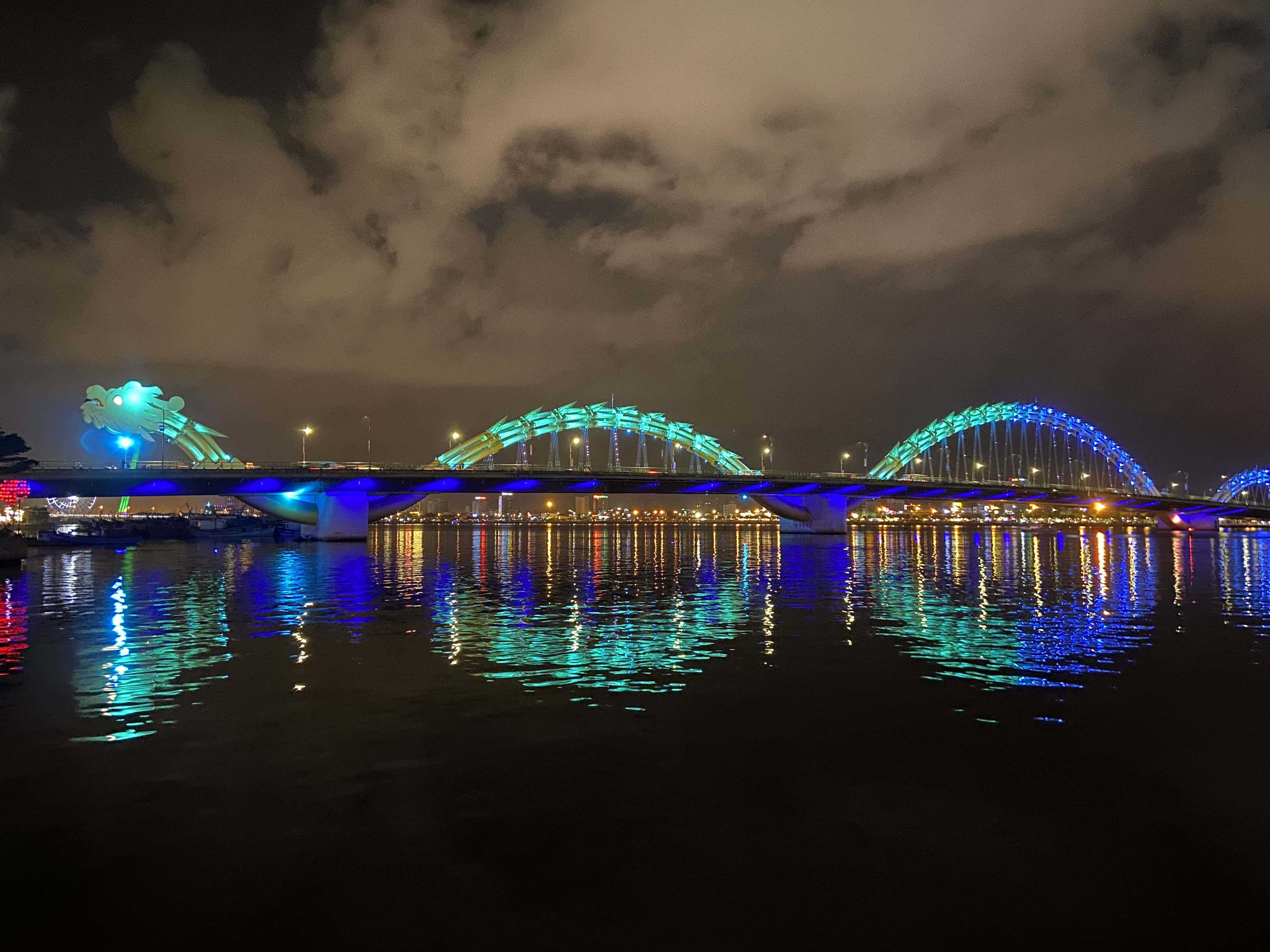
The dragon's mouth at the eastern end carries a real fire-and-water system — not a screen projection — with two standby firefighters present at every performance. Every Saturday and Sunday at 9 pm, the 15-minute show draws tens of thousands of spectators. The 666 in the bridge name is not coincidental — in East Asian culture, six signifies smooth progress and fortune, and the entire bridge is a design manifesto about Da Nang's development ambition. The steel frame clad in blue glass reflects sunlight like glinting dragon scales by day; at night 256-color LEDs cycle continuously — red, gold, green — making the dragon appear to move across the water.
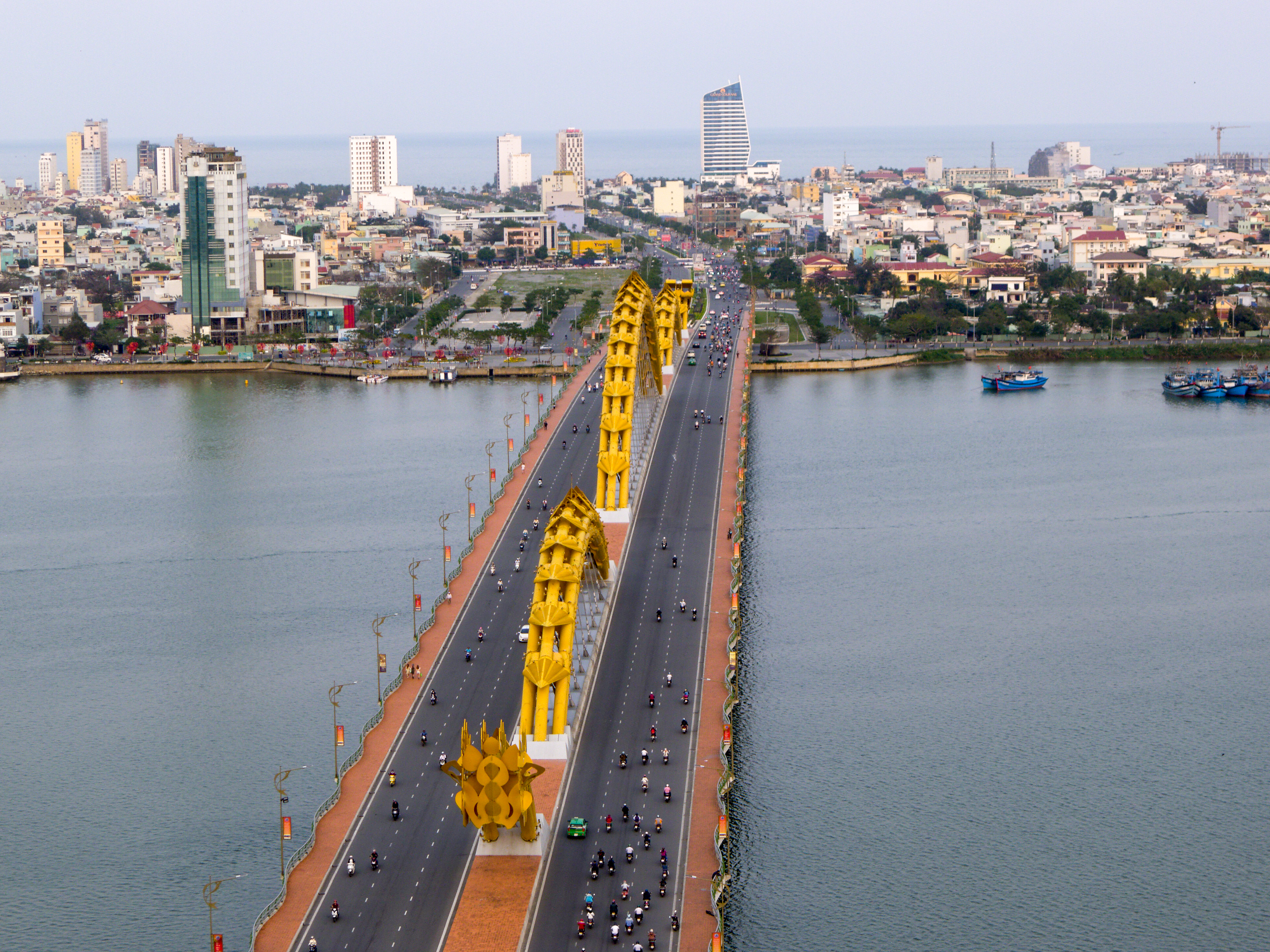
Bach Dang Wharf on the western bank — where French warships anchored in 1858 to begin the Indochina invasion — has been transformed into riverside parks and tourist boat docks. Love Bridge — a small pedestrian footbridge covered in love locks following a South Korean tradition — sits just a few hundred metres from Dragon Bridge. The Bach Dang pedestrian strip gathers street food vendors, artists, and live music every weekend, turning both riverbanks into a cultural corridor over 3 kilometers long. From a sightseeing boat departing Bach Dang Wharf, the full illuminated bridge ensemble reflected on the water is a skyline found nowhere else in Vietnam.
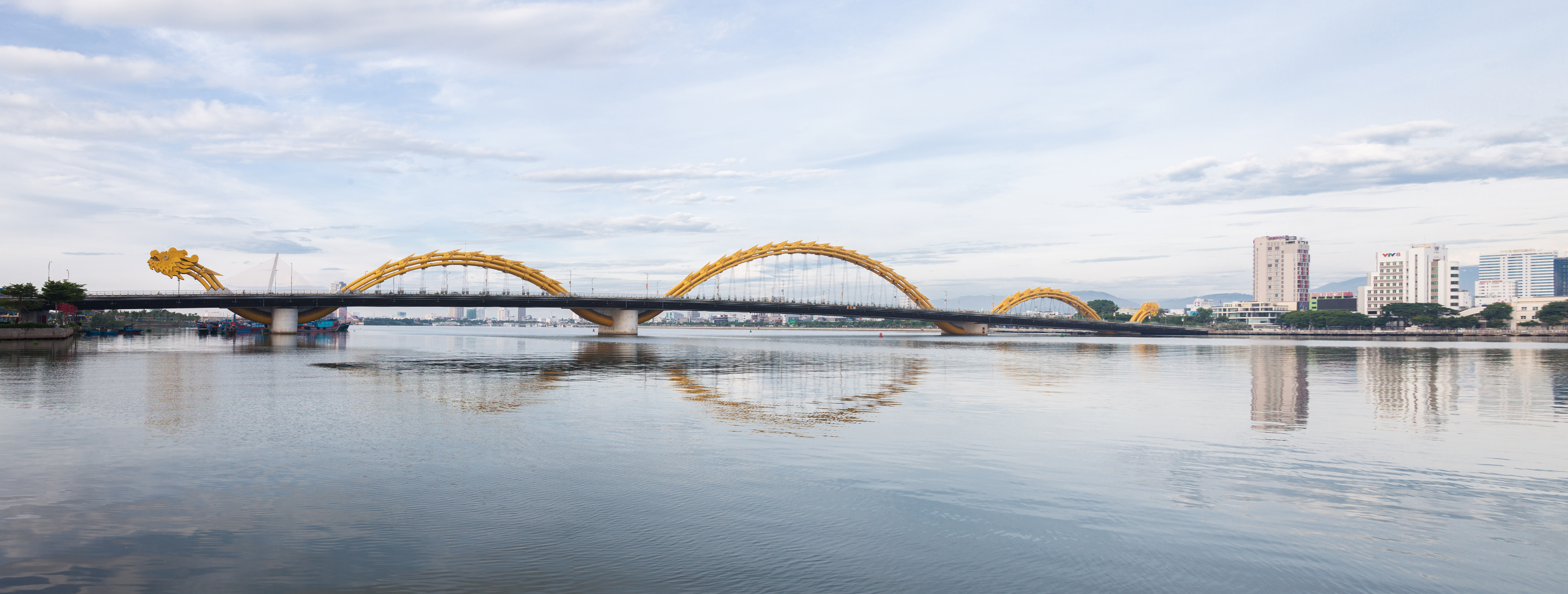
The Han River has borne silent witness to every era of Da Nang's history: from a 10th-century Cham trading port, to the French colonial port of Tourane, to a major American military base in wartime, then a derelict riverfront after 1975 before the explosive urbanization. The transformation of both banks from the 1990s to today is the fastest river metamorphosis in Vietnamese history: from muddy ferry landings to a corridor of light with eight illuminated bridges. The bridge collection is not merely transport infrastructure but an architectural manifesto — that Da Nang, Vietnam's youngest centrally administered city, is ready to compete in urban image with any city in Southeast Asia.
The dragon rises from the Han River — a symbol of Da Nang reaching toward the open sea, embodying the young city's aspiration for prosperity.
Ban Quản lý dự án Cầu Rồng, 2013
Highlights not to miss.
Every Saturday and Sunday at 9 pm, the dragon's head at the eastern end of the bridge breathes real fire and sprays real water for approximately 15 minutes — not a screen projection or animation effect. The system operates with two standby firefighters on site at every performance to ensure absolute safety. The best viewing position is the east bank (Vo Nguyen Giap Street) to look directly into the dragon's mouth, or the west bank to see the full illuminated bridge silhouette.
Han River Bridge inaugurated in 2000 is Vietnam's only rotating drawbridge — its central section can swing 90 degrees in 45 minutes to allow river traffic through, rather than using a vertical lift or bascule mechanism. More remarkably, this bridge was partly funded by voluntary donations from Da Nang residents — a community act rare in Vietnamese infrastructure history. On weekends in the small hours (1–4 am), the bridge rotates to let fishing vessels pass — a sight found nowhere else in the country.
Bach Dang Wharf on the western bank of the Han River is a site of historic significance — where French warships anchored in 1858 to begin the Indochina invasion — now transformed into Da Nang's most beautiful riverside park with water fountains, cafes, and sightseeing boat docks. Steps away is Love Bridge — a small pedestrian footbridge covered in love locks following a South Korean tradition, making it the city's most romantic meeting spot. The Bach Dang pedestrian street on weekends concentrates street food, street art, and live music in the characteristic riverside atmosphere of Da Nang.
From sightseeing boats departing Bach Dang Wharf, visitors can take in Da Nang's full bridge ensemble from the water — an experience impossible to recreate from the shore. Dragon Bridge, the tilted Tran Thi Ly, Han River Bridge, and Thuan Phuoc suspension bridge illuminated in the night sky form a corridor of light stretching over 3 kilometers. Cruises typically last 45–60 minutes at around 150,000–200,000 VND per person, with multiple departures from 7 pm to 10 pm daily.
Book a table at one of the rooftop cafes with river views on Tran Phu or Bach Dang streets before the fire show begins — you will have a comfortable seat and an excellent vantage point without the street-level crowds.
How to visit & get there.
Getting to Dragon Bridge
Dragon Bridge sits right in Da Nang city centre, easily walkable or by Grab from most hotels near the Han River. To watch the fire show, arrive at least 30 minutes early (by 8:30 pm) to secure a viewing spot on Tran Hung Dao or Vo Nguyen Giap Street near the bridge ends. The east bank looks directly into the dragon's mouth; the west bank sees the full illuminated bridge silhouette. Avoid bringing personal vehicles on weekends as traffic along the riverside becomes extremely congested during the fire show.
Exploring the Han River Corridor
After the fire show, walk south along Bach Dang Wharf to discover Love Bridge, riverside parks, and the night food strip. Book a sightseeing boat at Bach Dang Wharf early as Saturday evening cruises typically sell out before 7 pm. The Han River rotating bridge is about 1 km north — if you stay until after 1 am on weekends, you can watch the unique bridge rotation to let fishing vessels through.
Photography and Timing
Sunset (5:30–6:30 pm) is the golden hour for photographing Dragon Bridge with orange-red light reflecting on the river surface. The bridge appears silver by day and cycles through LED colors at night. Long-exposure photography from the opposite bank gives the best results.
Sources
- 1.Cầu Rồng — Biểu tượng của Đà Nẵng
Cổng thông tin điện tử TP. Đà Nẵng · 2025-01-15
- 2.Dragon Bridge Da Nang — Traveller Reviews
TripAdvisor · 2025-01-15
- 3.Cầu Rồng — Biểu tượng mới của thành phố Đà Nẵng
VnExpress · 2025-01-15