Story & history.
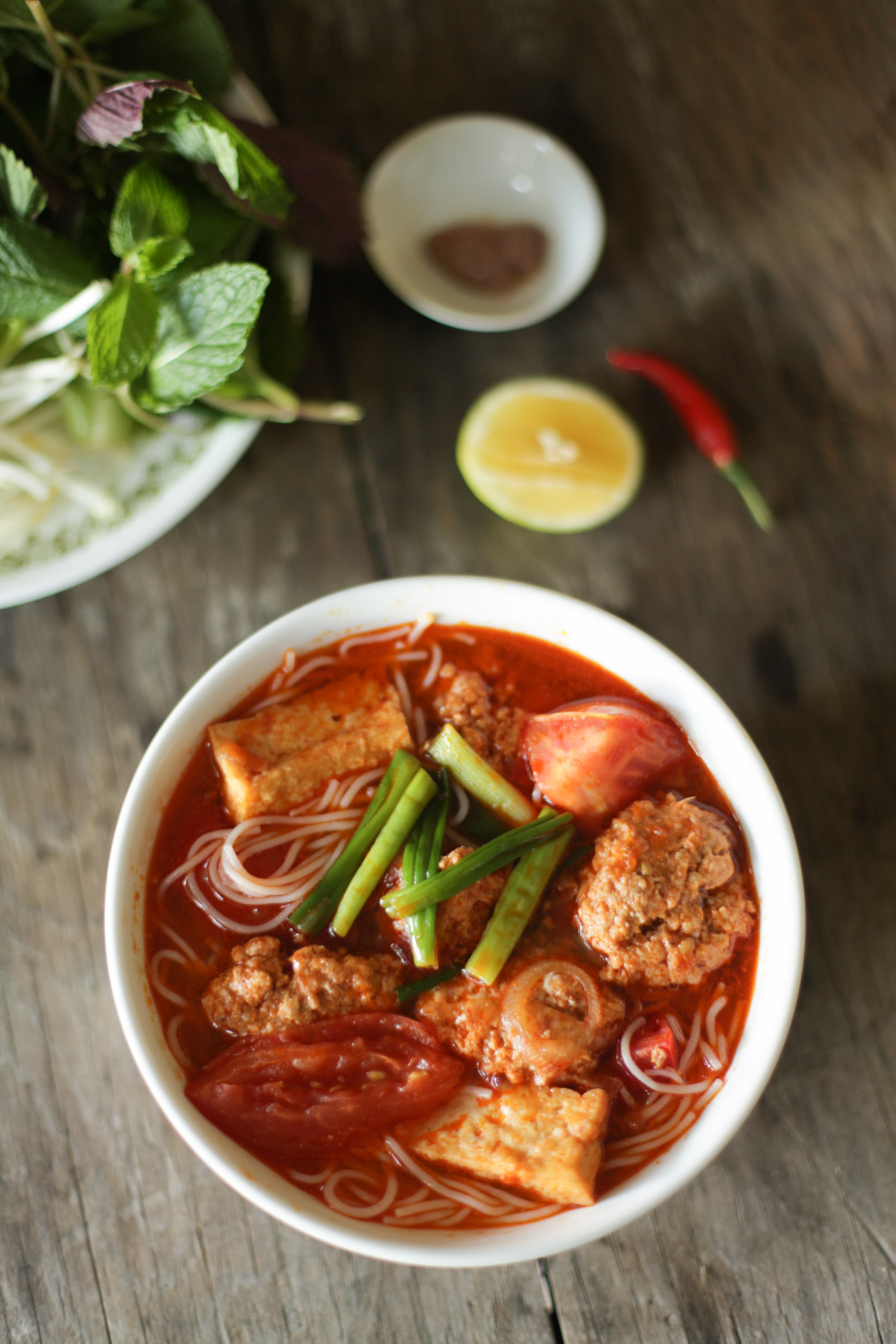
Bun rieu cua is a quintessential Hanoi breakfast and main dish with an unmistakable flavor profile — a vivid red tomato broth scattered with floating golden crab roe, white rice vermicelli, and golden fried tofu pieces bobbing in the bowl, creating a brilliant color palette and the fragrance of crab roe impossible to find in any other dish. Gach cua — the orange essence of freshwater crabs — is the soul of this dish: extracted from fresh field crabs pounded fine, the crab paste coagulates into beautiful golden clumps when processed in hot broth and creates a sweet richness impossible to replicate with any substitute. Field crabs — small crabs living in the flooded rice paddies of the northern delta — are increasingly scarce and expensive, leading many stalls to use sea crab instead, but Hanoi connoisseurs remain loyal to genuine field-crab bun rieu. Mam tom — fermented shrimp paste, a northern specialty — is the indispensable condiment when eating bun rieu cua: a few spoonfuls of shrimp paste fried with shallot oil added to the bowl completely transforms the flavor experience.
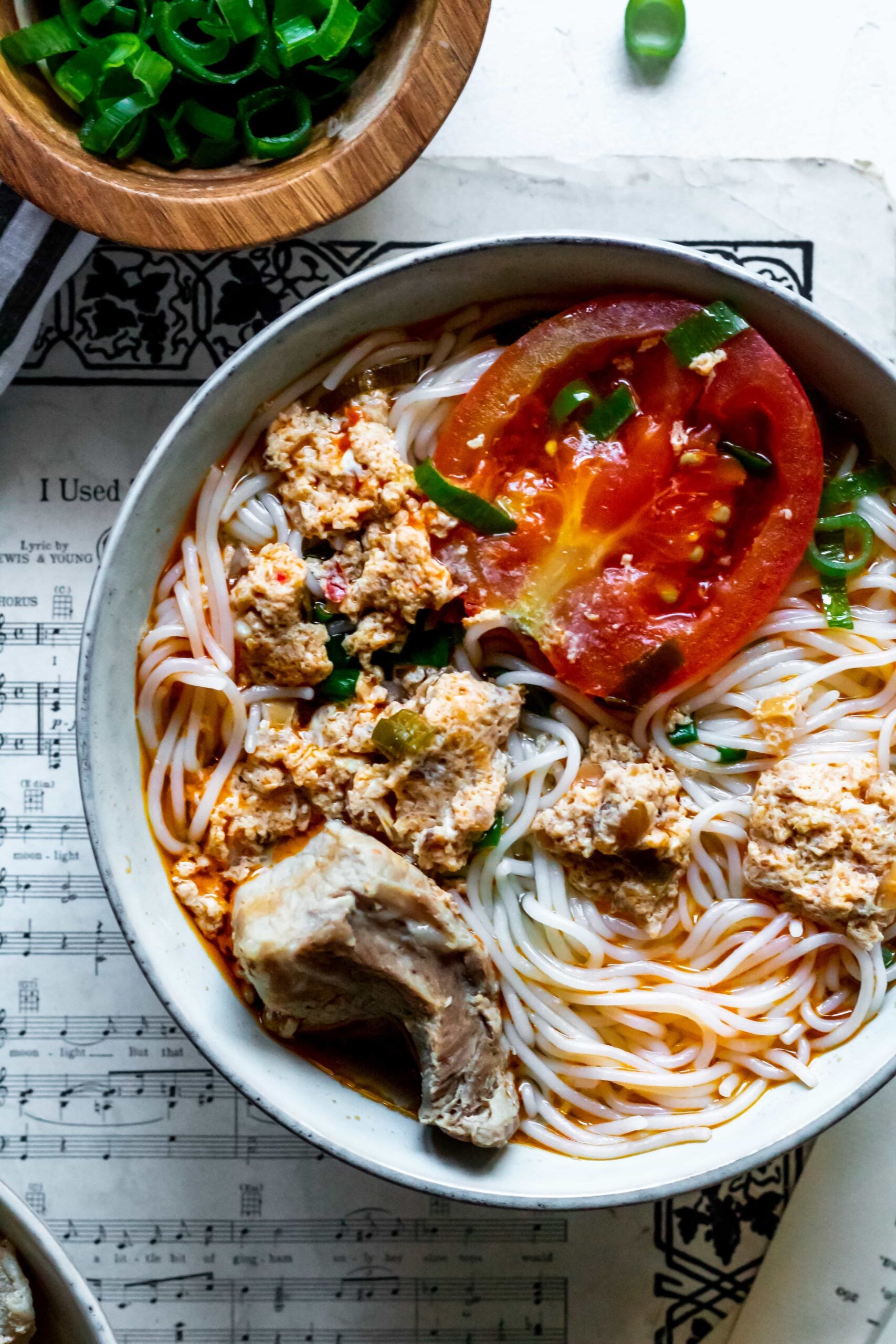
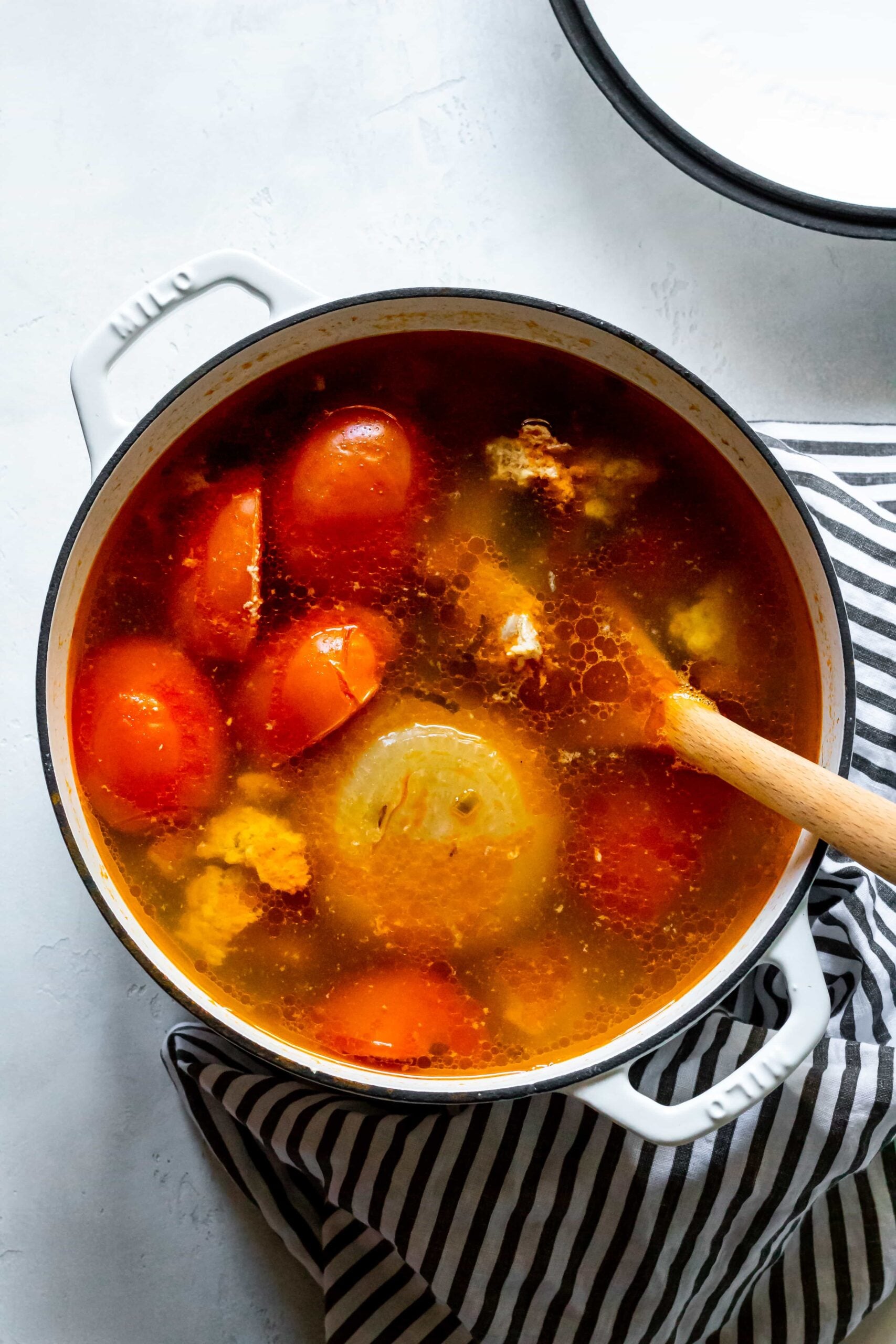
Bun rieu cua broth is built on pork or chicken bones simmered many hours for a clean sweetness, then pureed ripe tomatoes are added and stir-fried in for color and gentle acidity — the tomato ratio determines the broth's hue: red enough but not too dark to lose freshness. Field crabs are pounded fine with their shells and strained through a sieve to extract crab water — this liquid is heated separately until the roe rises and coagulates into clumps, then scooped out to float on each bowl. The strained crab solids are shaped into small balls, seasoned, and simmered in the broth to create 'cha cua' — the sweet, tender crab protein distinctive to bun rieu cua. The classic northern herb quartet accompanies bun rieu cua: pungent Vietnamese balm, purple perilla, boiled water spinach, and shaved banana blossom — each contributing a distinct flavor dimension to the whole.
Bun rieu cua is tied to the childhood memories of many Hanoians — numerous families have a tradition of ordering bun rieu cua to bring home for Sunday breakfast, and the fragrance of crab roe rendering in a pan is one of the deepest sensory memories for older Hanoians. Today bun rieu cua is served throughout Hanoi at prices ranging from street food to restaurant, but the best stalls remain the early morning pushcarts around Dong Xuan market, Hom market, and the city's older residential neighborhoods — where the broth pot is prepared from the night before and service continues until sold out. This is one of the rare dishes carrying sufficient color, fragrance, and flavor in a single bowl — and a wonderful demonstration of Hanoi's culinary creativity in transforming the most humble ingredients of the rice fields into a proud culinary achievement.
Old Hanoi bún riêu needed only crab paste, tomato and a touch of lard — humble, yet more fragrant than any lavish feast.
— Theo Tuổi Trẻ Online
Ingredients — what makes the flavour.
Authentic Hanoi bún riêu broth should be clear and faintly rosy-orange from tomatoes — never cloudy or dark like hot-pot stock. Real crab paste should be golden-orange and hold together firmly; if it is white and perfectly smooth, egg has likely been added to stretch it. The aroma of freshwater crab sautéed with fried shallots should hit you the moment the bowl is set in front of you.
How to enjoy it properly.
How to enjoy traditional bún riêu
When your bowl arrives, resist the urge to stir immediately — admire the golden crab dumpling and red tomato floating in the clear broth. Lower your spoon slowly to capture both broth and crab paste in each mouthful.
Taste the broth before adding any condiment — Hanoi-style broth is already balanced, so add vinegar only if you want more acidity. Shrimp paste is served separately; add it a little at a time according to your preference.
Herbs and accompaniments
Fresh herbs — perilla, lettuce and bean sprouts — should be added gradually rather than all at once to preserve their crisp freshness. A few slices of fresh chilli or Hanoi chilli sauce adds heat without overwhelming the crab's delicate flavour.
Connoisseur's tip: Order an extra piece of fried tofu on the side — dip it in seasoned fish sauce and alternate bites between mouthfuls of noodles to refresh the palate.
Editor-recommended eateries.
ⓘ Addresses and prices may change. Please verify before visiting.