Story & history.
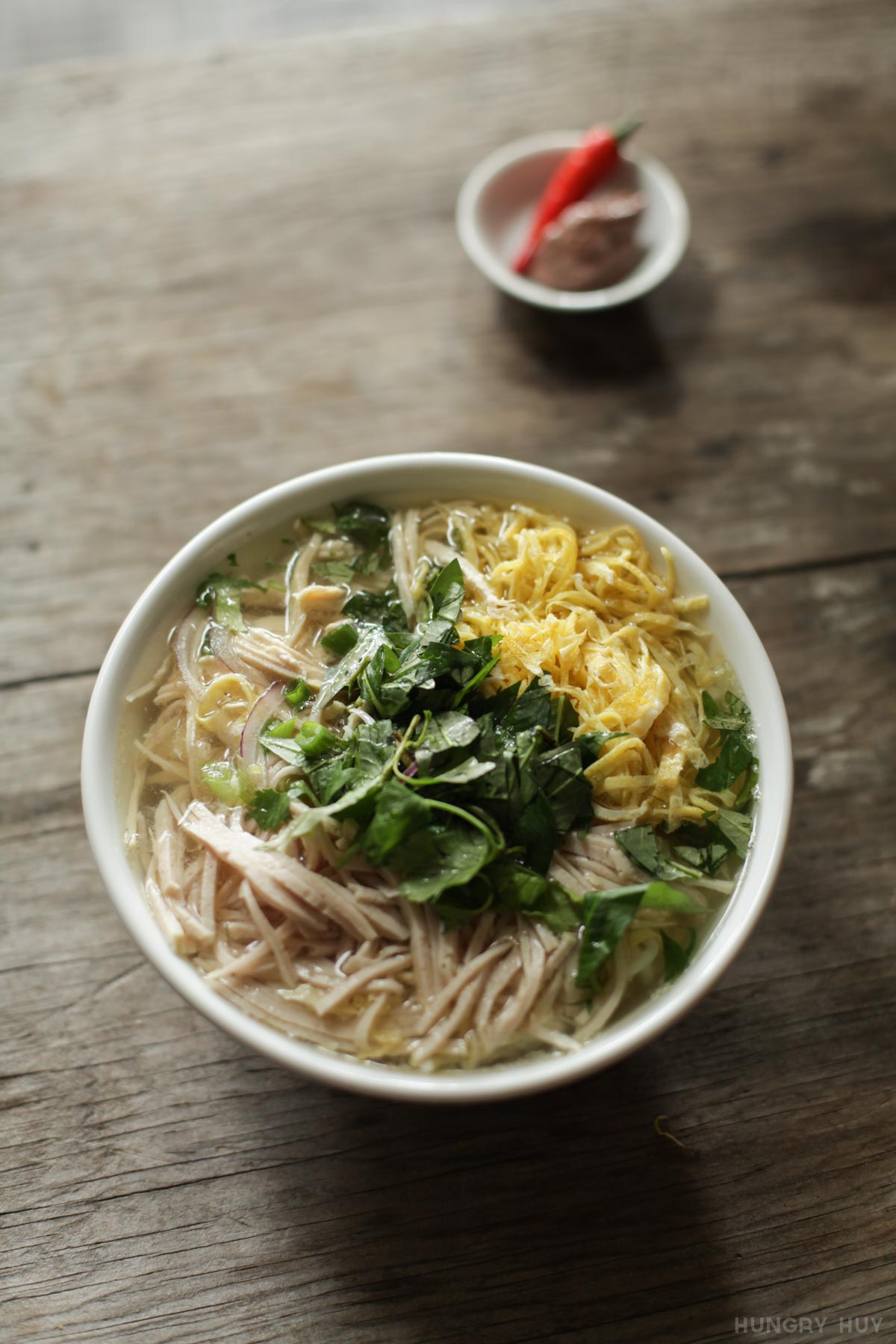
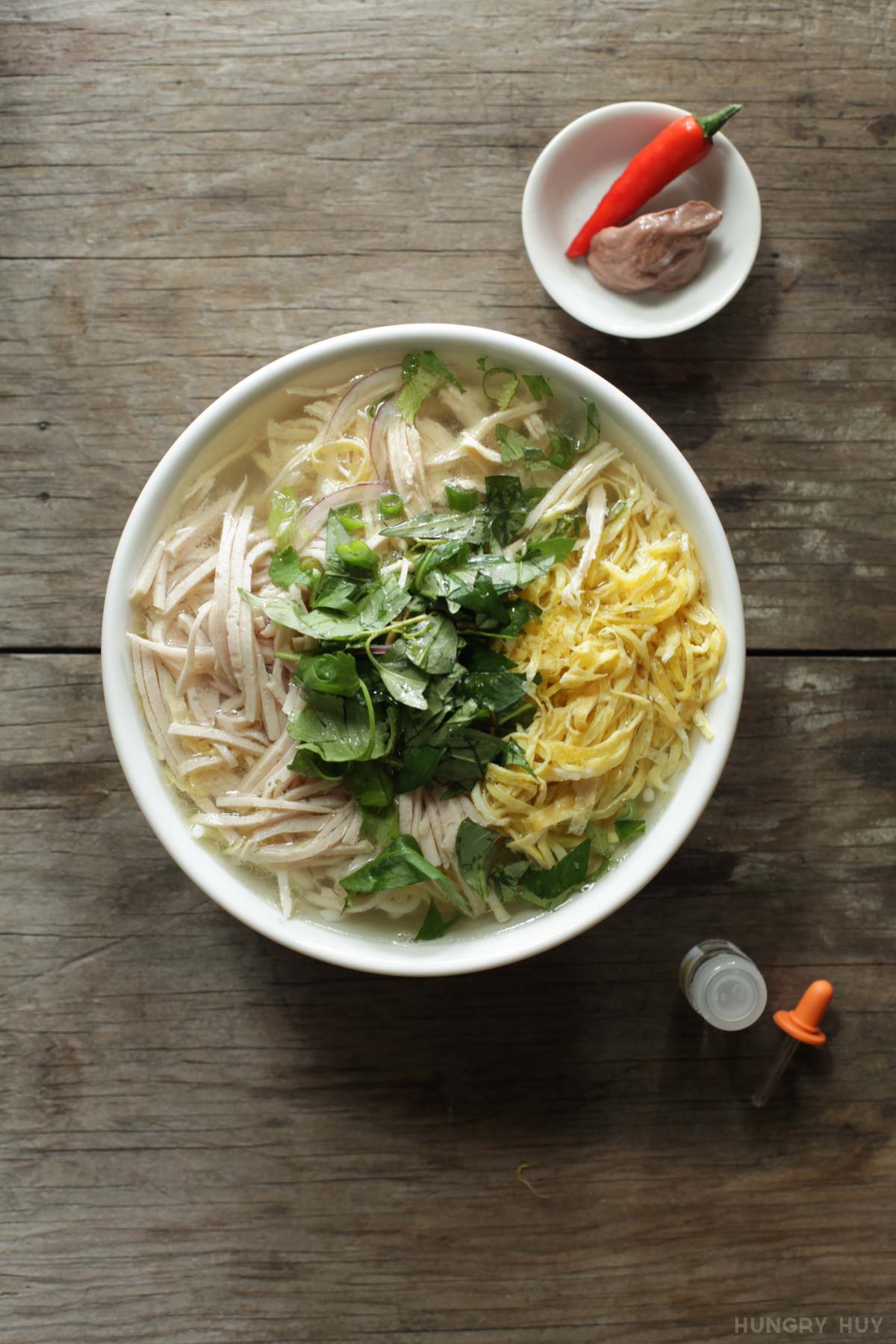
Bun thang is the 'queen of Hanoi noodle soups' — the most elaborate and refined bowl in the capital's cuisine, with a pure crystal-clear chicken broth over which each ingredient is artfully arranged in layers: golden shredded chicken, pale pink julienned cha lua, beautiful yellow julienned egg crepe, orange-red dried shrimp, and green Vietnamese coriander — all composed like a miniature painting before diners break the perfection with chopsticks. The name 'bun thang' derives from the Chinese character 'thang' meaning soup or broth — this is a noodle bowl eaten with broth drunk like a soup rather than sipped spoonfully. Bun thang is believed to have originated from post-Tet meals when Hanoians repurposed leftovers: remaining boiled chicken, unfinished cha lua, extra fried eggs — all combined in a clear chicken broth to create the most elegant 'post-holiday refresher' in northern Vietnamese cuisine. Mam tom and ca cuong essence — the two most distinctive and elusive condiments in Hanoi cuisine — are what complete a bowl of bun thang: a touch of shrimp paste stirred into the clear broth creates deep salty sweetness, a few drops of ca cuong create an indescribable special fragrance.
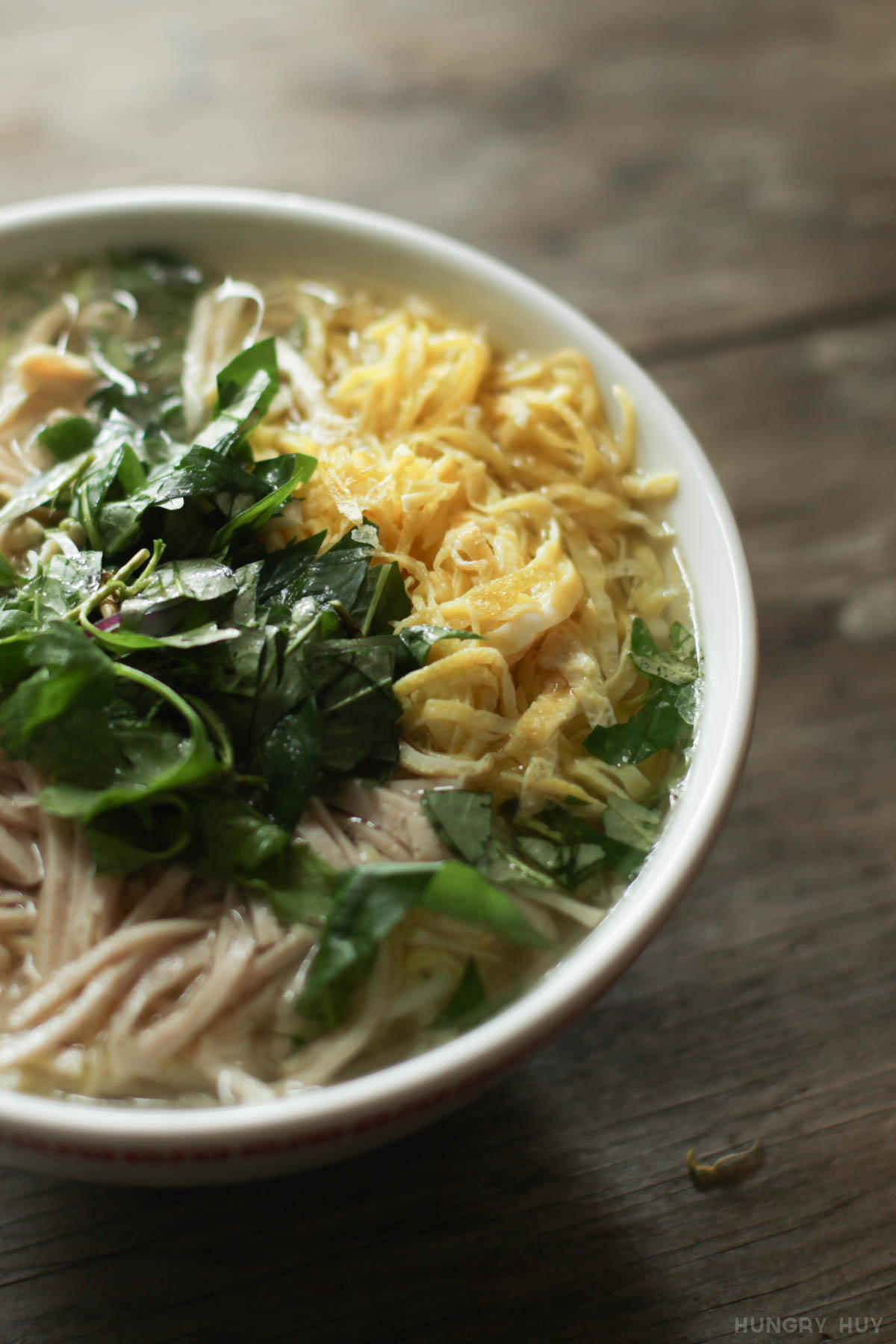
Bun thang broth must use free-range chicken — village-raised birds with firmer meat and sweeter cooking liquid than industrial chickens — simmered for many hours with charred onion and ginger, then strained through cloth to perfect clarity. No coloring or broth-clouding seasoning is permitted — clarity of broth is the primary requirement and the greatest technical challenge of the dish. The bun thang egg crepe must be thin as tracing paper and julienned as fine as silk threads — a skill demanding craft mastery and patience. Cha lua and dried shrimp must be cut to the same standard so the complete bowl looks like a painting. Every celebrated bun thang stall in Hanoi guards at least one 'secret' in its recipe — perhaps a specific chicken breed, a particular ginger-charring method, or the ratio of shrimp paste in the broth.
Bun thang is a dish gradually fading from Hanoi's modern culinary landscape — elaborate in preparation, requiring many high-quality ingredients and genuine craft skill, leaving few young people inclined to learn. The truly traditional and finest bun thang stalls in Hanoi can be counted on one hand — Cau Go street, Hang Hanh street, and a few addresses in the Old Quarter still maintain classical standards. Eating a genuine bun thang in Hanoi is the culinary equivalent of hearing a classical composition performed by a master musician — each element perfect in itself and more perfect still in combination with the others. This is an invaluable Hanoi culinary heritage that every food lover should have the opportunity to experience at least once in their lifetime.
Bún thang is the measure of refinement in Hanoi cuisine — those who truly appreciate bún thang understand the soul of Hanoi's food culture.
— Theo VnExpress Ẩm thực
Ingredients — what makes the flavour.
Authentic bún thang broth must be crystal-clear — no surface fat, no cloudiness. Silk sausage should be julienned by hand, not machine-cut; hand-cut strips have uneven thickness that creates a more natural texture when eaten. If a restaurant does not serve pickled daikon alongside the bowl, that is often a sign that traditional authenticity may have been compromised.
How to enjoy it properly.
The art of eating bún thang
Pause to appreciate your bowl before eating — each ingredient lies in place, colours distinct, not yet mingled. This is the moment the dish's artistry is most visible. Do not stir immediately — let the first spoonful honour that perfection.
Ladle the steaming broth gently over the toppings, then add a few drops of fresh lime juice if you prefer a brighter note. Shrimp paste is served separately in a small dish — add just a small amount to one corner of the bowl rather than pouring it into the centre, so each bite can be calibrated to your preference.
Eating with pickled daikon
Pickled daikon is non-negotiable. Alternate bites — a few crisp pieces of pickled daikon after each spoonful of bún thang. The sharp crunch cuts through the chicken broth's sweetness, cleanses the palate and keeps appetite alive throughout the bowl. This is the Hanoian's secret to finishing a bowl full of rich toppings without palate fatigue.
Editor-recommended eateries.
ⓘ Addresses and prices may change. Please verify before visiting.