Story & history.
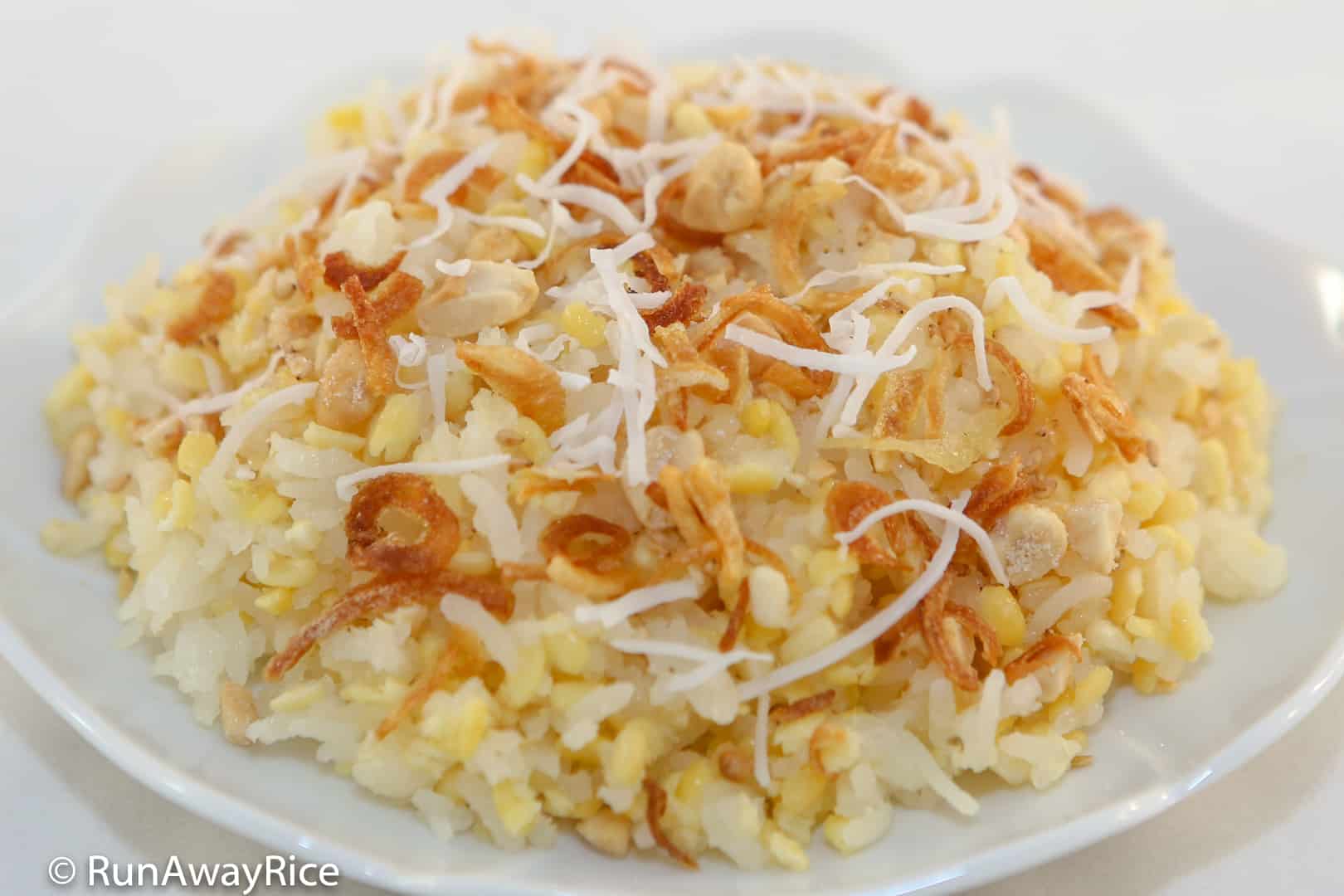
Xoi xeo is Hanoi's most characteristic morning sticky rice dish — steamed glutinous rice covered with a smooth, golden layer of mashed mung bean, drizzled with fragrant scallion oil and topped with crispy fried shallots, all combining into a rich, gently sweet, and deeply fragrant result that is simple in ingredients yet harmoniously perfect in flavor. The name 'xeo' in old Hanoi dialect means slanted or diagonal — referring to the traditional serving method: the vendor scoops sticky rice at an angle to create the characteristic diagonal cut, rather than scooping straight down as with ordinary rice. Good sticky rice must be steamed in a wooden steaming basket with boiling water below — this method produces more evenly tender and fragrant results than electric cookers. Skinless mung beans steamed and mashed with a touch of salt form the layer that transforms plain sticky rice into xoi xeo — the naturally turmeric-golden color of cooked mung bean creates the dish's characteristic color without artificial additives.
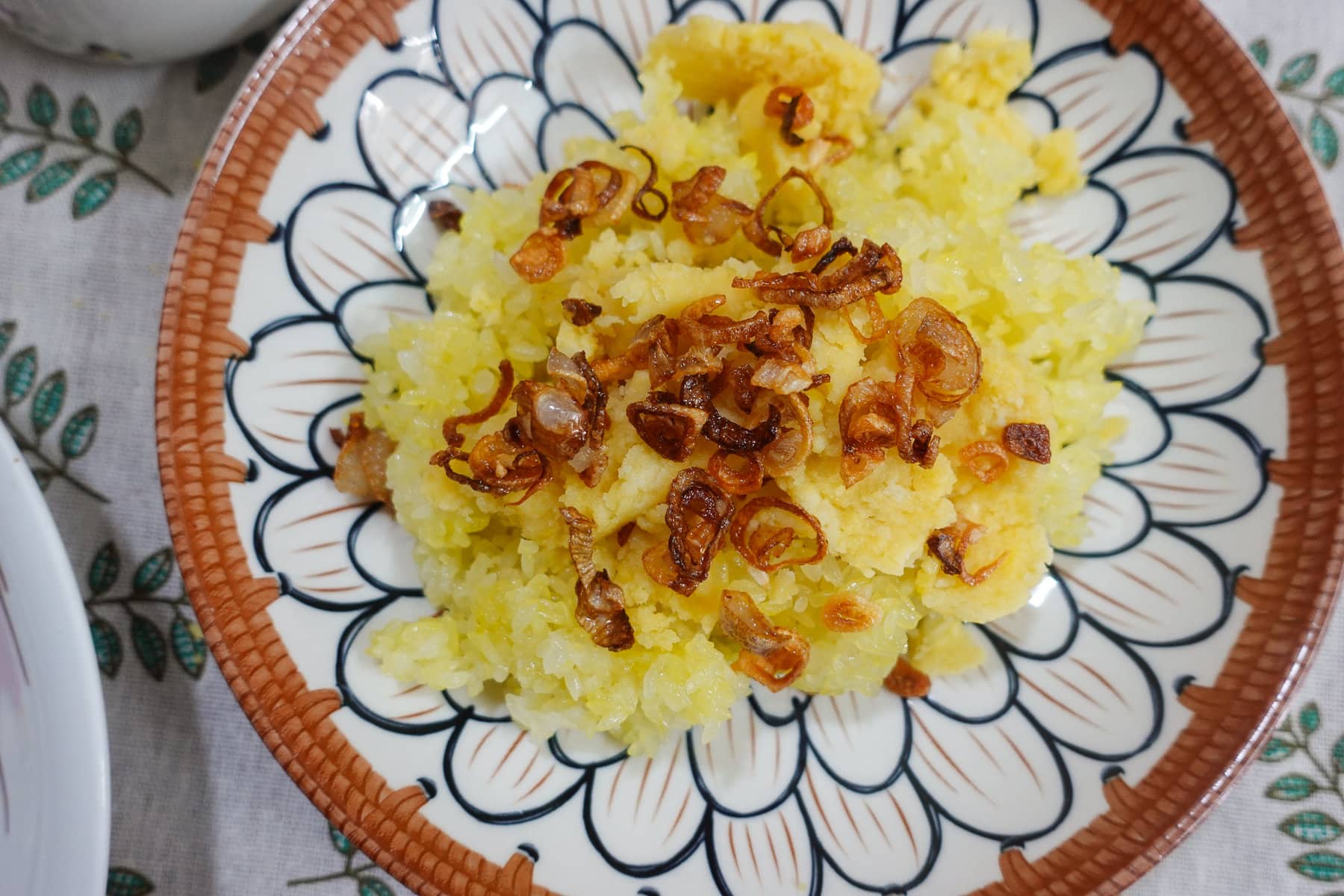
Scallion oil is the soul of xoi xeo — cooking oil or lard heated and poured over finely sliced green onions in a bowl, the fragrant sizzle and the color of the scallions transitioning from green to pale yellow marking the moment the scallion oil is perfect. Cooled scallion oil drizzled over sticky rice and mung bean creates a glossy richness and characteristic fragrance impossible to replicate with any ordinary vegetable oil. Crispy fried shallots — added last — provide crunch and caramelized sweetness creating pleasant contrast with the soft chewiness of sticky rice and mung bean. Xoi xeo can be eaten alone or with pork floss (cha bong) or thinly sliced cha lua — the combination with pork floss creates a perfect salty-sweet flavor for breakfast. Hanoi xoi xeo stalls typically have no large signs — just follow the fragrant scallion oil aroma in the early morning to find one.
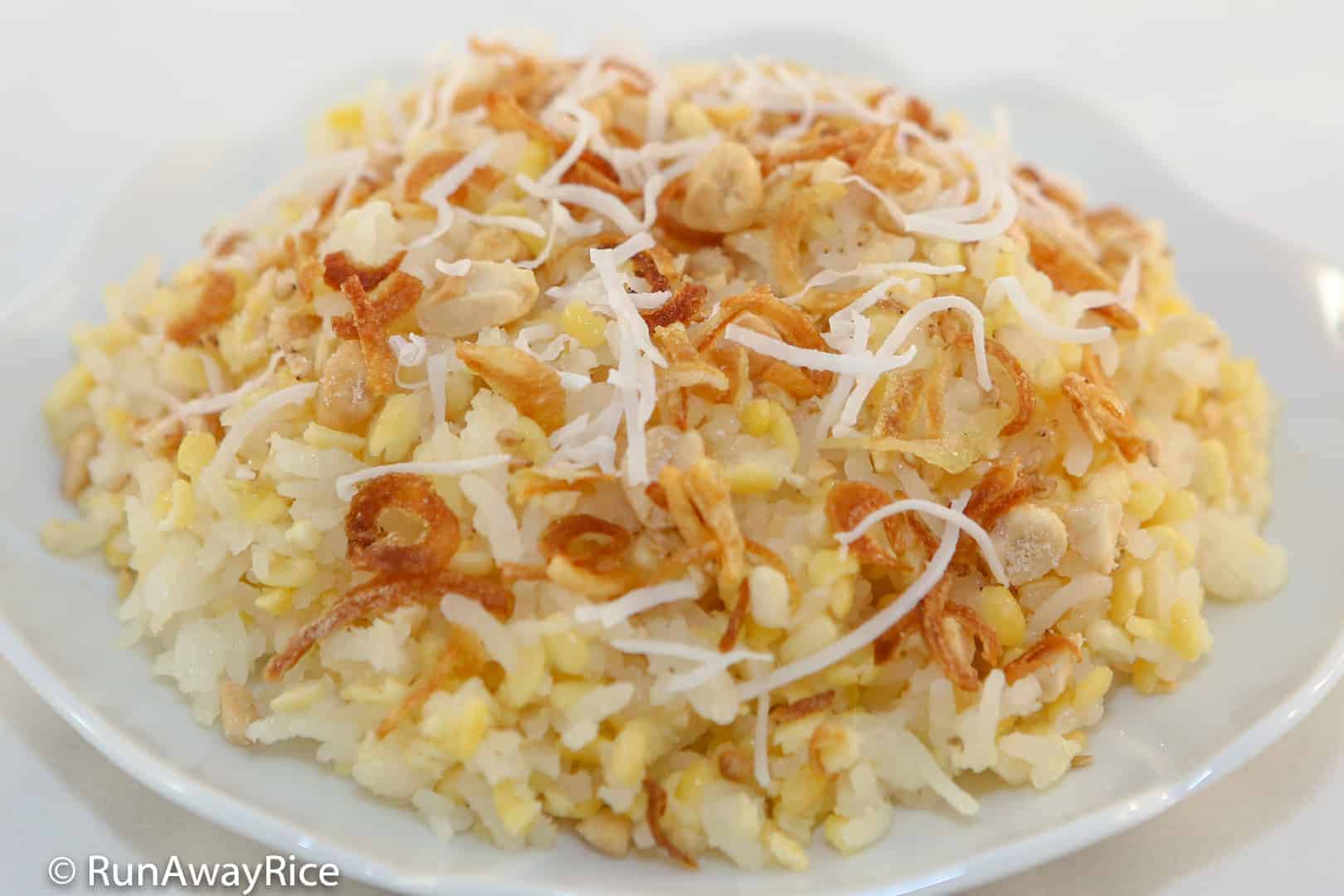
Xoi xeo is as much a part of the early Hanoi morning as strong black coffee and the calls of street vendors — it is the breakfast of workers, students, and everyone who needs a quick, filling, and affordable meal. Luong Ngoc Quyen street, Hang Gai, and the Dong Xuan area concentrate many celebrated xoi stalls, but excellent xoi xeo can actually be found on any Hanoi street if you rise early enough. The finest xoi xeo sells from 6 to 9 AM — after which the sticky rice cools and loses the characteristic fragrance of fresh scallion oil and freshly mashed mung bean. This is a dish that Hanoians rarely make at home because the proper steaming technique and mung bean grinding require specialized equipment — instead they return to their familiar xoi stall each morning as a ritual start to the day.
Hanoi has countless things to remember, but the most persistent memory is always a hot parcel of xôi xéo in your hands on an early winter morning, steam rising in the cold air.
— Theo Nhân Dân Online
Ingredients — what makes the flavour.
Great xôi xéo has glossy, translucent sticky rice grains and an even mung-bean coat with no lumps. The fried shallots must be crisp — if they are soft and limp, the xôi has been sitting too long. A simple test: hold the parcel and feel warmth radiating through the wrapper — that means it is freshly made. If the packet is cold, move on to the next vendor.
How to enjoy it properly.
How to enjoy xôi xéo properly
Xôi xéo is at its best when piping hot — the earthy mung bean, crisp shallots and fragrant scallion oil must be experienced the moment the parcel is unwrapped. Open the banana leaf or paper wrapping slowly to let the steam and aroma escape — this is the most rewarding part of the Hanoi street-food experience.
Traditional xôi xéo needs no condiments or dipping sauce. For a more substantial breakfast, it pairs beautifully with silk sausage (giò lụa), pork floss (chà bông) or a salted duck egg. Some Old Quarter vendors also sell a small spoonful of savoury floss to sprinkle on top.
The art of the sticky-rice vendor
The best Hanoi xôi vendors portion the rice with a small bamboo sliver, never a metal spoon — bamboo avoids crushing the grains and transfers no off-flavours. When you see a vendor wrapping your portion in fresh banana leaf, that is a sign of a conscientious stall: the leaf retains heat longer and preserves the rice's natural aroma.
Editor-recommended eateries.
ⓘ Addresses and prices may change. Please verify before visiting.