History & story.
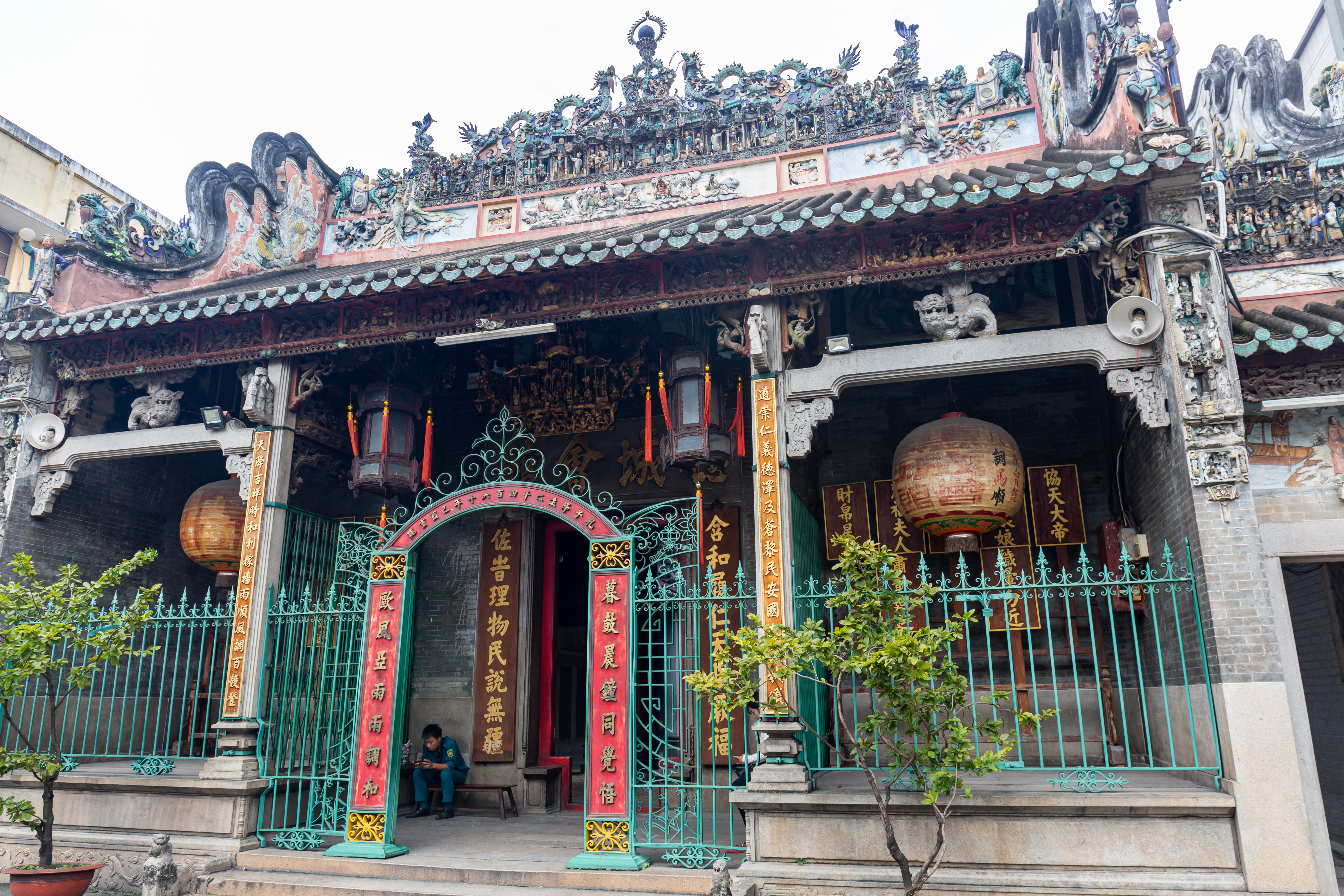
Cholon — literally "Big Market" — is the largest Chinatown in Southeast Asia, formed in the late 17th century when Chinese people fleeing dynastic changes in China settled in the marshy land west of Saigon. They were predominantly Cantonese, Fujianese, Teochew and Hainanese speakers — each group bringing their own trades, culture and customs, together building an insular but extraordinarily dynamic community. Assembly halls — community organizations organized by dialect group — were the backbone of Cholon's social life, and many of them, such as the Nghia An Assembly Hall, On Lang Assembly Hall and Thien Hau Pagoda, still operate with their full traditional rites to this day.
Commerce has always been the lifeblood of Cholon — the Chinese community once controlled most of the wholesale trade throughout Southern Vietnam, from rice and fabric to medicine and metals. This legacy remains visible on every street: Hai Thuong Lan Ong Street is lined with hundreds of traditional medicine shops selling herbs; Luong Nhu Hoc specialises in silk; Phung Hung Street is famous for lanterns and Tet decorations. Cholon food is a completely distinct experience: Teochew noodle soup from 5 AM, Cantonese dim sum in alley restaurants, hot tong sui desserts at dusk, and roasted char siu pork hanging in front of every shop.
Today Cholon remains the most dynamic and distinctly characterful neighbourhood of Ho Chi Minh City. Around 500,000 Chinese Vietnamese still live here, maintaining their language, customs and festival calendar. The Nguyen Tieu Lantern Festival (first full moon of the lunar new year) in Cholon is the city's largest street festival — recognized as a National Intangible Cultural Heritage in 2020 — with a procession of thousands, lion and dragon dances, and the escorting of deities through assembly halls from midnight through dawn. This is the only urban space in Vietnam where Chinese and Vietnamese culture coexist to create something unique that transcends both origins.
Cholon's assembly-hall network — Tue Thanh, Nhi Phu, Ha Chuong, Nghia An, On Lang — is a dialect-based mutual-aid system with no equivalent at this scale anywhere else in Vietnam. Each hall serves a different language group — Cantonese, Fujianese, Hainanese, Teochew — and still organises its own festivals, maintains welfare funds, and operates a nursery or school. Hai Thuong Lan Ong Street specialises in traditional Chinese medicine, its dozens of pharmacies hanging dried herb sacks from ceiling to floor; Luong Nhu Hoc is the centre for ceramic and ritual-goods trade. This is not a tourist Chinatown — it is a living urban ecosystem where every alley has its own language.
Cholon is not a neighbourhood — it is a separate city that has lived beside Saigon for three centuries, preserving its Cantonese dialect and incense smoke while the world around it changed hands four times.
Trần Hữu Quang, Đô thị học lịch sử Sài Gòn, Nhà xuất bản Tổng hợp TP.HCM, 2014
Highlights not to miss.
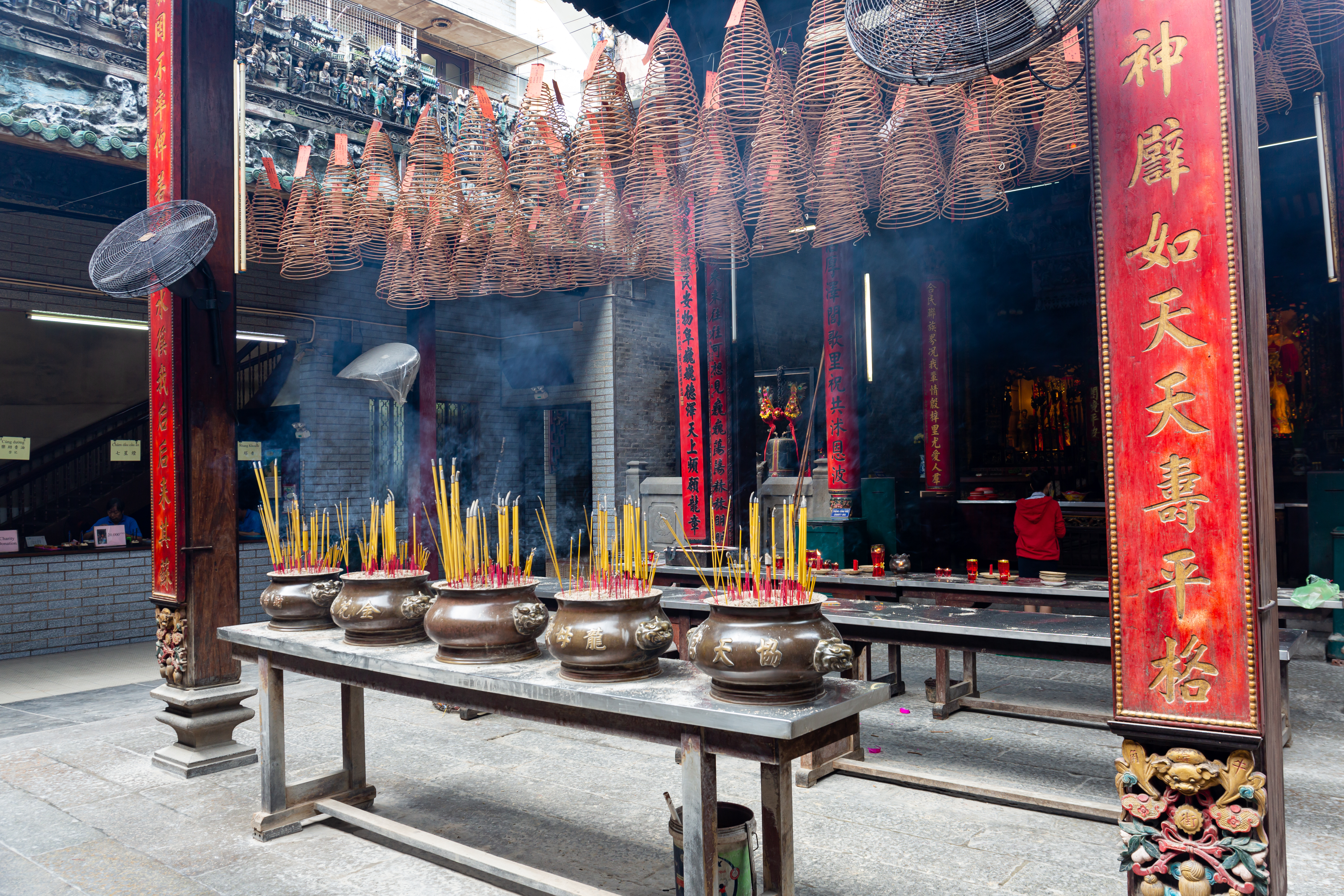
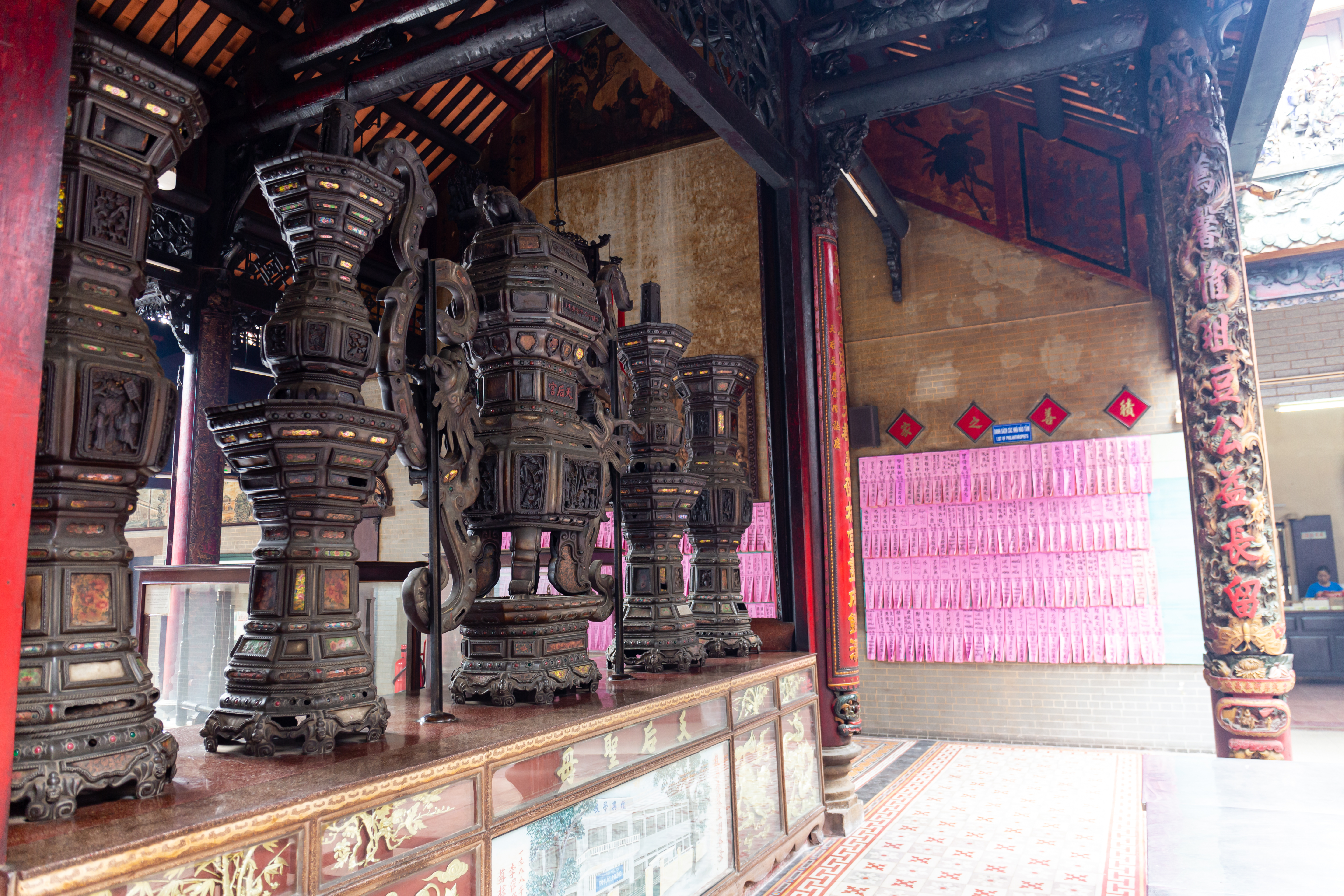
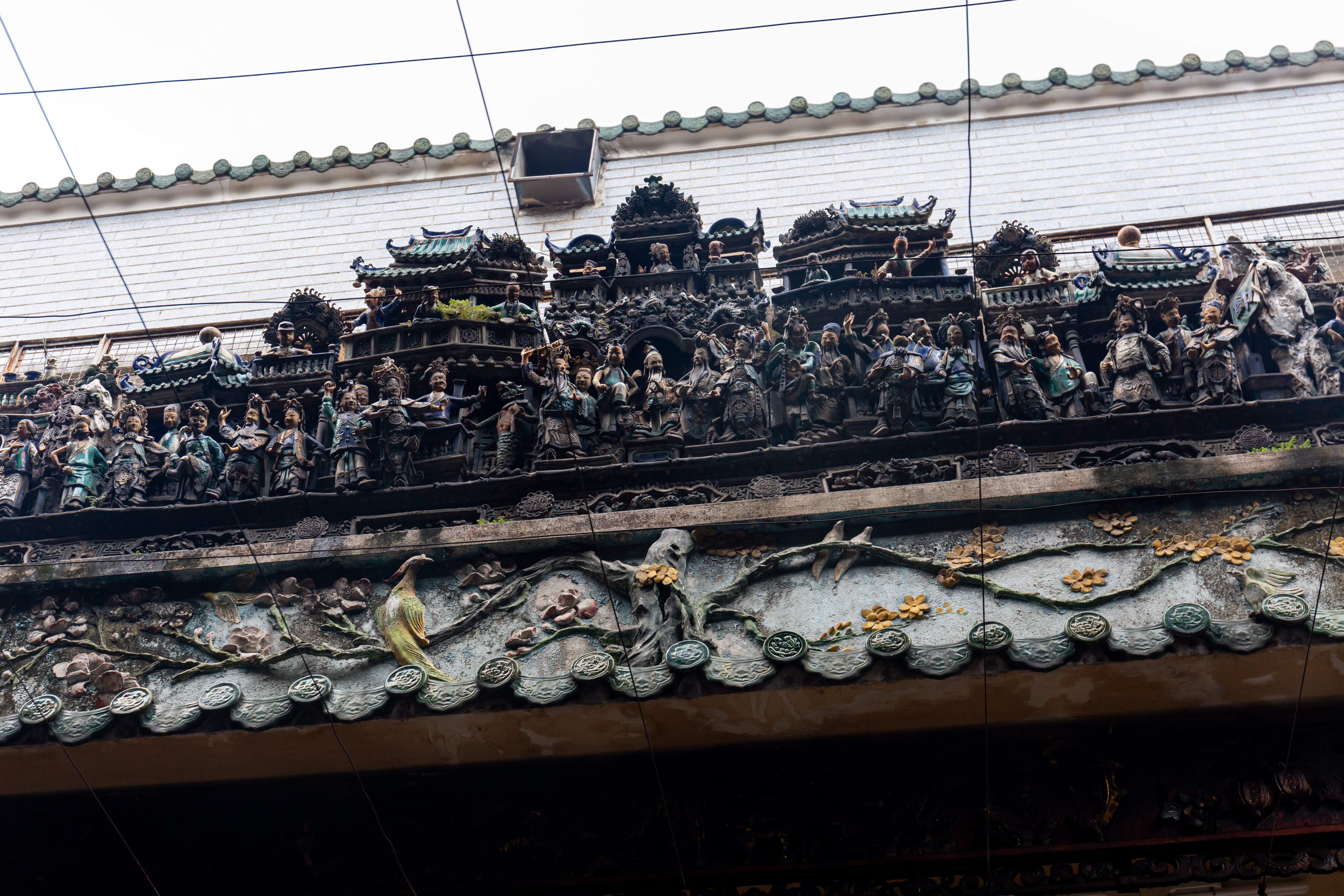
Thien Hau Temple (Hoi Quan Tue Thanh), built in 1760 by the Cantonese community, venerates Mazu, Goddess of the Sea — protector of Chinese migrants who crossed open water to reach Saigon. The defining feature is the grid of enormous spiral incense coils suspended from the ceiling beams, each taking two weeks to burn and donated by devotees as prayer commitments. Clay figurines of Mazu's attendant generals — Thousand-Mile Eye and Fair-Wind Ear — flank the main altar, painted in the vivid primary colours of Lingnan folk art.
Binh Tay Market was built in 1928 and funded almost entirely by Cantonese merchant Quach Dam, who personally donated the land and construction costs to the French colonial government. Unlike Ben Thanh, Binh Tay is primarily a wholesale venue: stalls trade in 50-kilogram sacks of dried goods, crates of preserved vegetables and bulk spices at prices unavailable in retail markets. The four-sided central tower with Chinese curved eaves, the courtyard fountain, and carved stone gate plaques bearing classical Chinese maxims make it one of the most architecturally complete Chinese market buildings remaining in Southeast Asia.
The most celebrated dim sum houses cluster along Trieu Quang Phuc and Chau Van Liem streets, the oldest having operated continuously since the 1950s. Lao Tien Ky on Luong Nhu Hoc is known for its har gow steamed in bamboo baskets stacked six trays high; That Hien teahouse on Trieu Quang Phuc pours high-mountain oolong alongside clay-pot rice. Arrive before 7 AM on weekends to join the regular Cantonese-speaking customers, most of them in their seventies, who have held the same tables since before reunification.
The Nguyen Tieu procession typically begins after midnight at Nghia An Assembly Hall on Nguyen Trai Street, moving through the major assembly halls — Tue Thanh (Cantonese), Nhi Phu (Fujianese), Ha Chuong (Hainanese) — before returning at dawn. Each deity is carried on an elaborately carved wooden palanquin amid lion dancers, gongs and firecrackers whose smoke fills the narrow streets all night. The 2020 National Intangible Heritage recognition formally protects the route and ritual sequence, but the experience itself — gunpowder smoke, five-dialect drumming — is impossible to document on paper.
Come on a Saturday or Sunday morning to catch the week's liveliest dim sum breakfast scene. The older Chinese residents here are very friendly and happy to recommend good dishes if you ask.
How to visit & get there.
Getting There From central District 1, allow 15–20 minutes by car (avoid rush hour). **Grab or Bus No. 1** (Ben Thanh – Cho Lon) are good options. Walking the narrow lanes is the best way to explore — the area rewards slow wandering.
Suggested Route Start at **Thien Hau Temple** (Nguyen Trai Street), then walk to Binh Tay Market and weave through the back alleys. Don't miss a morning dim sum at the teahouses along Chau Van Liem or Trieu Quang Phuc streets. Bring cash — most small shops don't accept cards.
Sources
- 1.Khu phố Chợ Lớn — lịch sử và văn hóa
Cổng thông tin điện tử TP.HCM · 2025-03-01
- 2.Chợ Lớn — khu phố người Hoa lớn nhất Đông Nam Á
VnExpress · 2025-03-01
- 3.Cholon — Ho Chi Minh City
Lonely Planet · 2025-03-01