History & story.
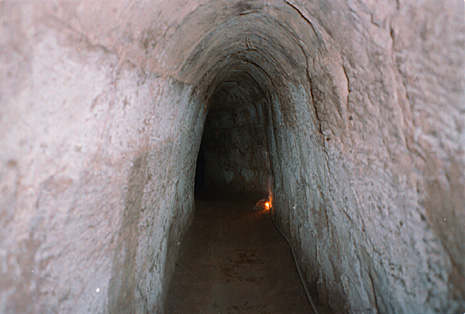
The Cu Chi Tunnels are a nearly 250-kilometre network of underground passages dug entirely by hand over many decades, spread across more than 400 square kilometres in Cu Chi District, about 70 kilometres northwest of central HCMC. Construction began around 1948 in the communes of Tan Phu Trung and Phuoc Vinh An under the direct leadership of Nguyen Van Linh, Vo Van Kiet and Tran Bach Dang during the resistance against France, then expanded significantly during the Vietnam War when the tunnels became a command headquarters, field hospital, kitchen, weapons workshop and shelter for thousands of fighters and civilians. The United States dropped more than 500,000 tonnes of bombs and spread 480 tonnes of defoliant chemicals on Cu Chi; Operation Cedar Falls in January 1967 deployed 30,000 troops and bulldozers to level entire villages and expose tunnel entrances — yet the red clay soil was firm enough not to collapse under tanks while soft enough to dig with primitive tools. On September 17, 1967, the State awarded Cu Chi the title "Iron Land of Steel" — a designation no amount of firepower could revoke.
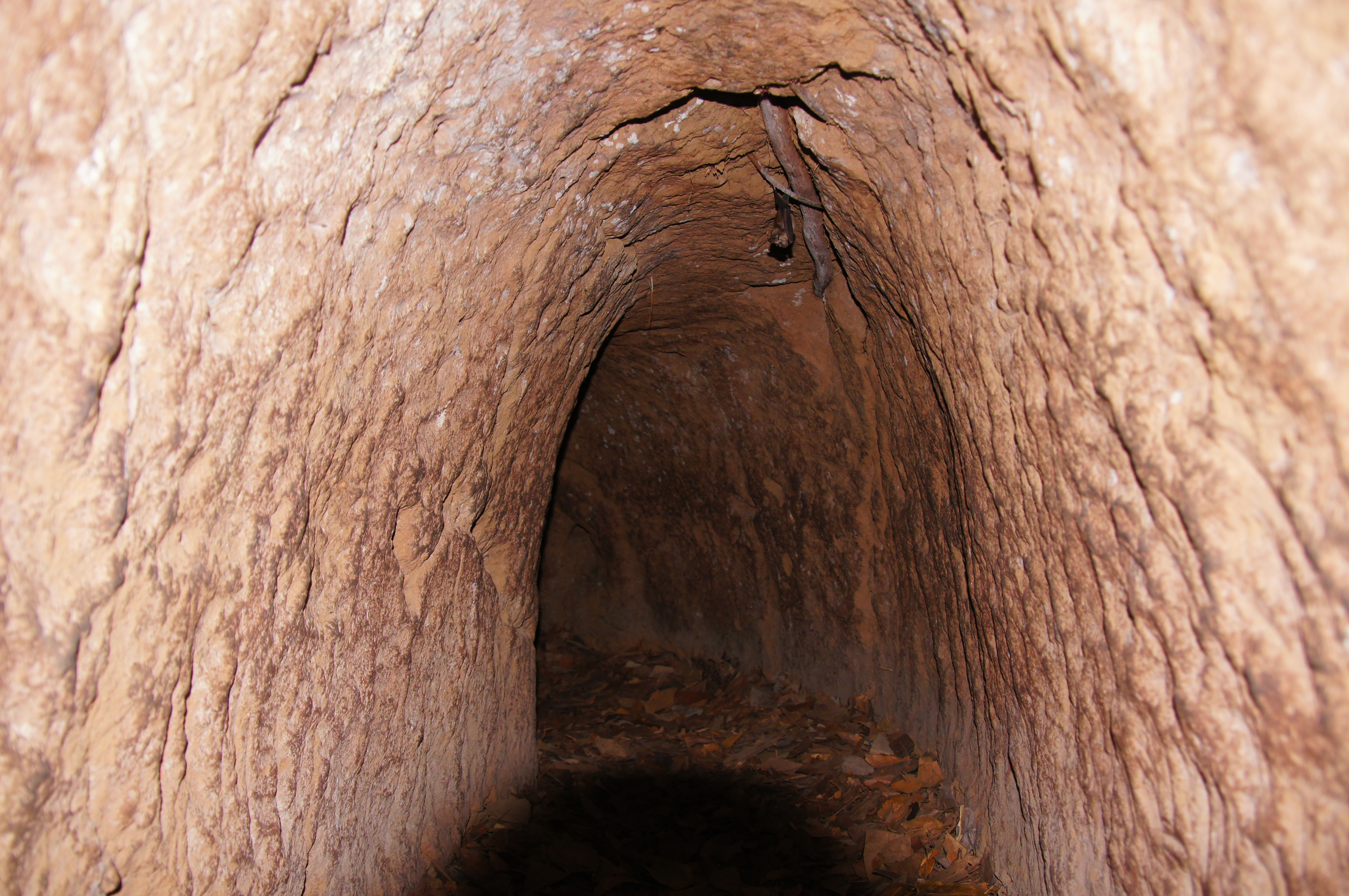
The tunnel system has three levels at different depths: the shallowest (3-4 metres) for movement and daily living, the middle level (6-8 metres) for cadre housing and work, the deepest (8-12 metres) as a fortified command headquarters capable of withstanding B-52 bombs. The Hoang Cam stove — invented in 1961 by engineer Hoang Cam — was a stroke of genius: smoke pipes branched and threaded through the earth to emerge at multiple points far from the cooking fire, completely invisible from the air; cooking smells were also dispersed in multiple directions to avoid military dogs. More than 500 kilometres of connecting trenches formed a complete defence network with ingeniously designed booby traps, camouflaged gun emplacements and escape routes beneath the Saigon River. During the war, this was a complete underground city with schools, a cinema, weapons workshops and performance stages for entertainers who kept morale alive. The women of Cu Chi — known as the "long-haired army" — played an indispensable role in digging and maintaining this system throughout the years of resistance.
The Ben Duoc site also preserves the Ben Duoc Martyrs Memorial Temple — inaugurated in 1995 with a 10.6-metre tower and 45,666 stone tablets engraved with the names of fallen soldiers. This is the largest collective memorial in Southeast Vietnam, where annual commemorations on July 27 draw tens of thousands of people. The two sites of Ben Duoc (70 km) and Ben Dinh (40 km) offer similar content but Ben Duoc is quieter and less crowded — ideal for those who want a genuinely deep visit. The "Moonlit Resistance Zone" night tour launched on August 28, 2023 — a 2.5-hour experience across 9 dramatized scenes with a Tran Huu Trang performance stage and a 3D film about Operation Cedar Falls — has become the most sought-after experience, selling out every weekend. Each year more than 1 million domestic and international visitors come to Cu Chi to understand why one of the world's most powerful armies could not prevail on this particular patch of ground — even after dropping 500,000 tonnes of bombs on it.
Cu Chi is the land of people who refused to be defeated.
Nhà văn Nguyễn Trung Thành
Highlights not to miss.
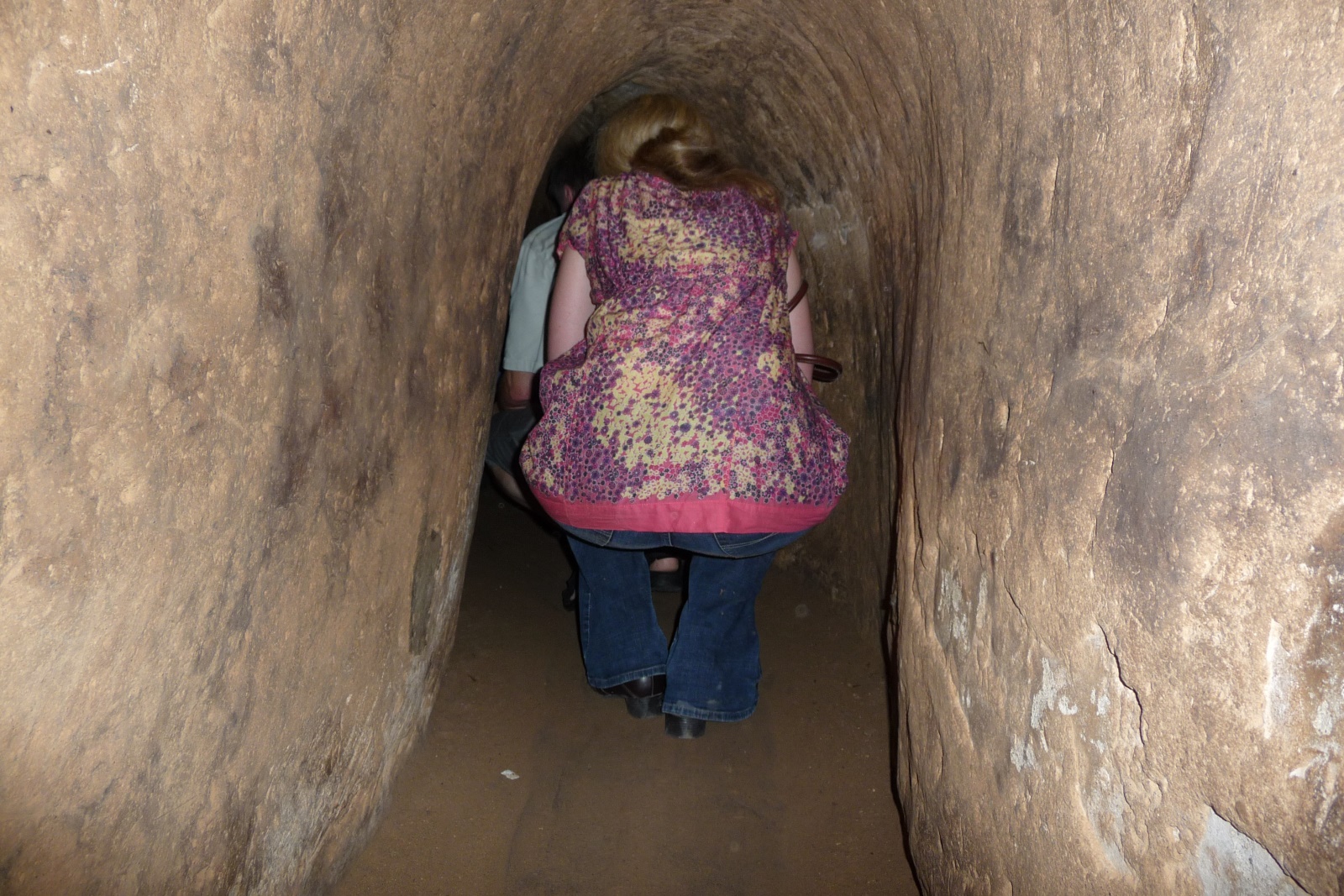
The main tourist tunnel at Ben Dinh runs 20 metres and has been widened to approximately 80 cm wide and 80 cm high — still low enough to require a full crouch. At Ben Duoc, an optional original-width section (approximately 60 cm × 60 cm) is available for those who want the unmodified experience; only visitors of slight build can manage it without removing shoes. Both sites use low-wattage yellow bulbs spaced every few metres — enough to see the next turn but not enough to prevent claustrophobia in a space that once housed thousands.
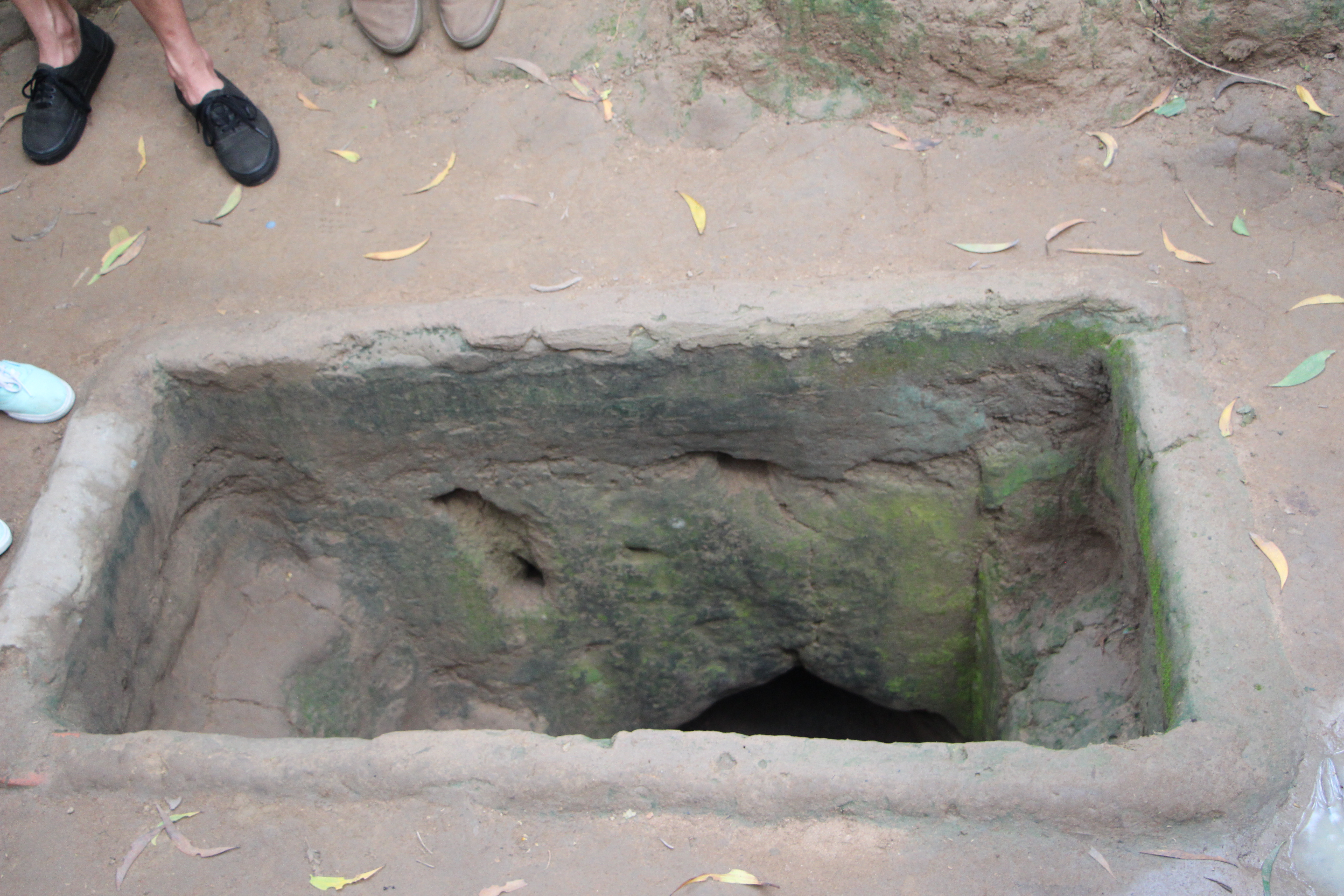
The outdoor display shows eight reconstructed trap types: the bamboo whip, the rotating spike pit, the four-sided spike box, and the hinged-plank leg-snare — all made from sharpened bamboo, repurposed US military scrap metal and salvaged wire. A guide demonstrates the triggering mechanism of each; visitors can operate the wooden trigger levers to see how a step of the right weight releases it. What strikes most visitors is not the complexity but the minimalism — these weapons required no manufacturing infrastructure, only time, bamboo and ingenuity.
Boiled cassava is served at a thatch-roofed rest station near the tunnel entrance at both Ben Dinh and Ben Duoc — visitors receive a small plate of sliced roots alongside a shallow dish of pounded roasted peanut salt. The cassava grown in Cu Chi's iron-rich red clay has a starchier, drier texture than the tropical varieties sold in city markets, and the peanut salt — coarser than table salt, with a faint smoky bitterness — is the only flavour added. Guides explain that on days when supply lines were cut, this was the only food; on better days, dried shrimp or fish paste was added.
Visitors can purchase ammunition and try firing AK-47 or M16 rifles at the on-site shooting range. This attracts many visitors, especially from the US and Europe, and offers a direct sense of the weight and recoil of the weapons that millions of people lived with on this soil.
Inaugurated in 1995 within the Ben Duoc site, the temple features a 10.6-metre memorial tower and 45,666 stone tablets engraved with the name of every soldier killed at Cu Chi — the largest collective memorial in Southeast Vietnam. Each year on July 27, tens of thousands come to light incense and read each soldier's name aloud. This shaded, solemn space often brings visitors to silence after the more active demonstration areas of the site.
Choose a tour departing at 7–8 AM to arrive before the most intense heat. Wear dark-colored clothing as the red tunnel soil will stain light fabrics. For the Moonlit Resistance Zone night tour (VND 399,000) — book at least one week ahead via the official website as it sells out every weekend.
How to visit & get there.
Getting There
The Cu Chi Tunnels are 40–70 km from central Ho Chi Minh City depending on the site. A full-day tour departing from District 1 (around VND 150,000–250,000 per person including transport and guide) is the most convenient option — book through travel agencies or your hotel. You can also self-drive a rented motorbike (Highway 22, about 1.5 hours) or take Bus Route 13 from An Suong bus station to Cu Chi. Prefer the Ben Duoc site (70 km) if you want quiet — it's less crowded than the popular Ben Dinh site (40 km) which often fills with group tours.
Must-See Inside
Wear dark clothing and closed-toe shoes — the red clay tunnels will stain light-coloured clothes. Try crawling at least one original-size tunnel section (not the widened tourist version) to feel the actual space. Set aside time at the Ben Duoc Martyrs Memorial Temple — 45,666 stone tablets engraved with individual soldiers' names. Bring plenty of water and sunscreen as outdoor areas are in direct sun. Book the "Moonlit Resistance Zone" night tour (VND 399,000/person) at least one week ahead via the site's website — the 18:00–20:40 program runs on scheduled dates each month and sells out every weekend.
Sources
- 1.Khu di tích lịch sử địa đạo Củ Chi
Cổng thông tin điện tử TP.HCM · 2025-03-01
- 2.Địa đạo Củ Chi — kỳ tích của chiến tranh nhân dân
VnExpress · 2025-03-01
- 3.Cu Chi Tunnels
Lonely Planet · 2025-03-01