Story & history.
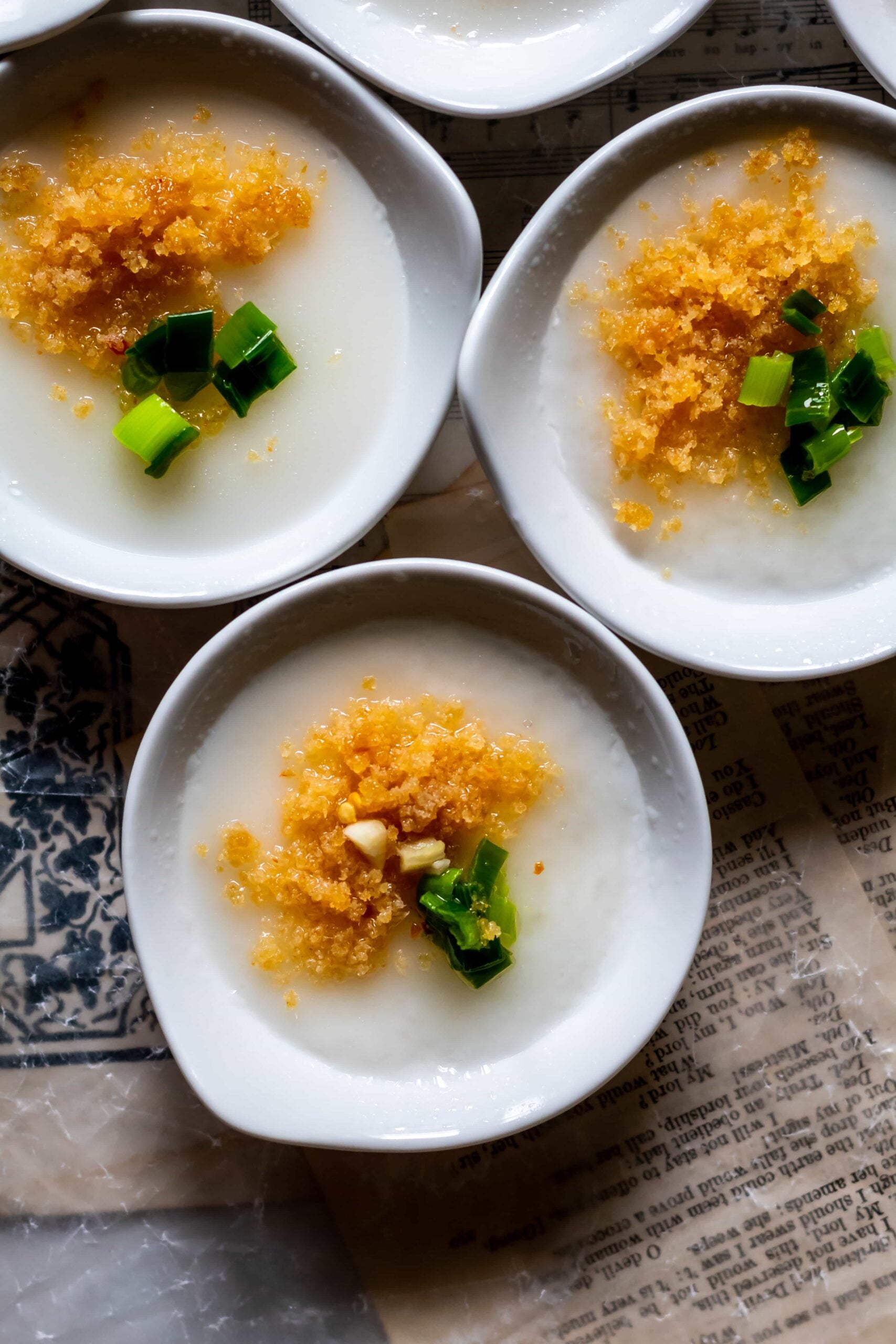
Banh beo is one of the most refined emblems of Hue's royal cuisine — delicate rice flour cakes steamed in small porcelain cups, paper-thin and white, topped with golden dried shrimp, bright green scallion oil, and crispy shrimp crackers. The name 'banh beo' comes from the shape resembling a floating duckweed leaf — thin, light, and simple in appearance yet concealing meticulous preparation technique that outsiders rarely suspect. The dish traces its origins to Nguyet Bieu village along the Perfume River, where local women once carried baskets of banh beo into the imperial palace, gradually becoming a favorite of Nguyen dynasty queens and court ladies. A serving typically includes 8 to 12 small cups eaten with a dipping sauce of good fish sauce, sugar, lime, and chili — Hue people eat banh beo with a toothpick or small spoon, savoring each cup slowly.

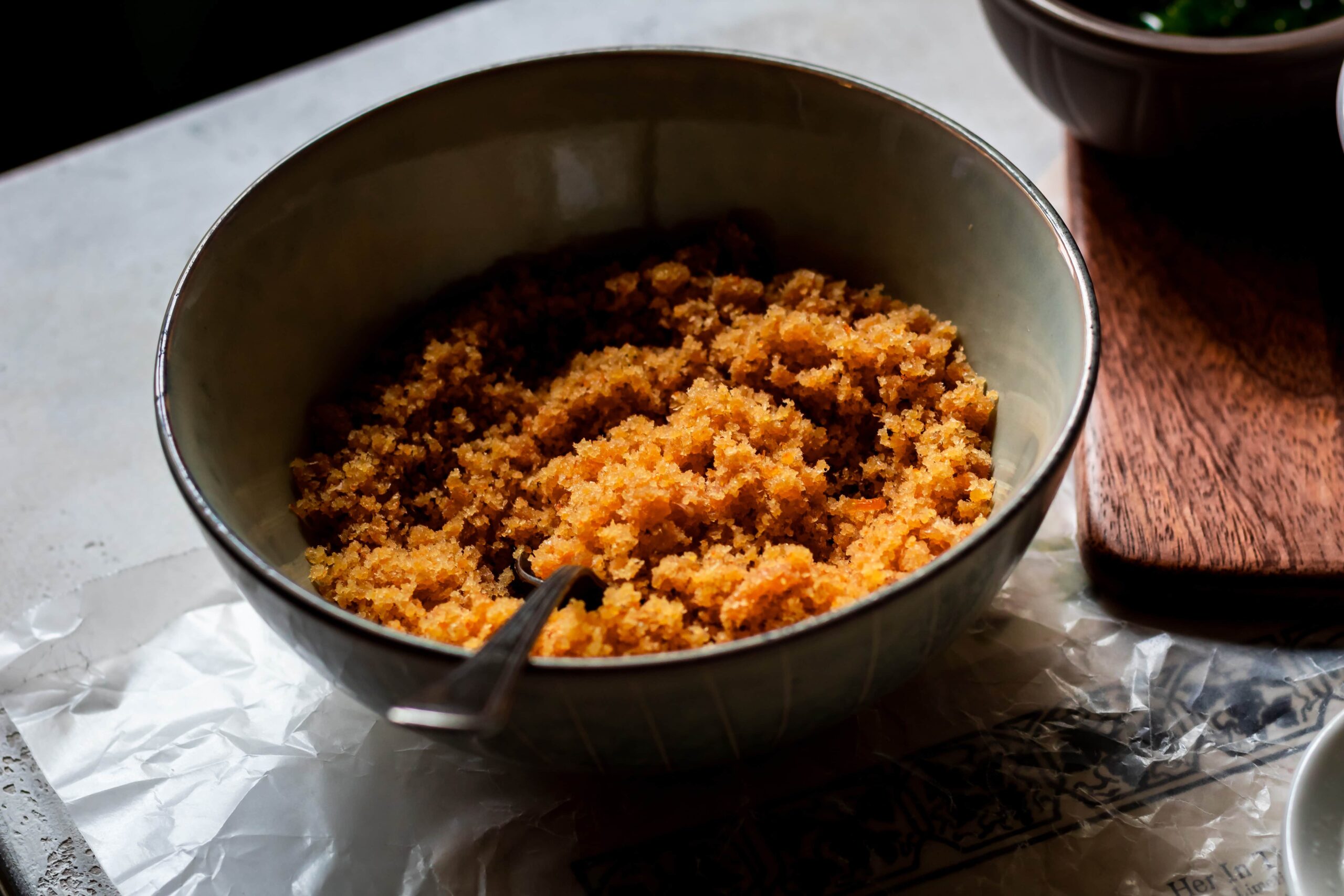
The banh beo batter must be ground from rice soaked overnight, diluted to exactly the right consistency so that steaming produces a smooth, thin cake that holds together without becoming too thick and losing its characteristic lightness. The dried shrimp topping — the dish's primary filling — is made from fresh sea shrimp slow-roasted dry then pounded fine with seasoning; it must be bright orange and fragrant, never dark or fishy. The art of blending the dipping sauce is each stall's proprietary secret — the ratio of fish sauce, sugar, and lime is calibrated to an inherited taste, and this is what separates an excellent banh beo shop from an ordinary one. In Hue, banh beo stalls concentrate most densely on the small streets of the old Gia Hoi quarter and the area around Tu Dam Pagoda.
Banh beo belongs to Hue's tradition of 'refined royal small cakes' — grouped with banh nam, banh loc, banh uot, and dozens of other rice cakes that Hue people collectively call 'banh Hue.' This collection of Hue cakes was recognized by UNESCO as an Intangible Cultural Heritage of Humanity as part of the Hue Folk Cake-Making Craft in 2024. Hue women have long been celebrated for their dexterity and patience in cake-making — a skill passed from mother to daughter across generations and a source of cultural pride inseparable from Hue identity. Eating a tray of banh beo in Hue is not merely a dining experience but a moment of contact with the heritage of a refined imperial civilization that encoded its soul into small, beautiful cakes.
"A plate of Hue bánh bèo is not a meal — it is a ritual of slowness and refinement."
— Tuổi Trẻ, "Bánh bèo Huế trong mắt WSJ"
Ingredients — what makes the flavour.
Bánh bèo is best eaten fresh from the steamer, still releasing wisps of steam — once it cools it hardens and loses its silky texture. Look for shops with **a steamer visibly active** near the kitchen. The afternoon window (2–5pm) is the golden hour, as many shops steam fresh batches only for afternoon service.
How to enjoy it properly.
Cup Etiquette Bánh bèo Huế is eaten directly from the small cup — do not tip it out onto a plate. Use the **tiny spoon** provided to scoop each bite, dipping into the sweet-sour fish sauce bowl on the side. Do not pour all the sauce into the cup — the cake will become oversaturated and lose its texture.
The Ideal Sequence Eat the first cup plain to appreciate the rice-flour and shrimp flavours. On the second, add a sliver of fresh chili — locals pair it with **thinly sliced green chili**. A proper serving is 8–10 cups — eat in quick succession while **piping hot** for the full effect.
Editor-recommended eateries.
ⓘ Addresses and prices may change. Please verify before visiting.