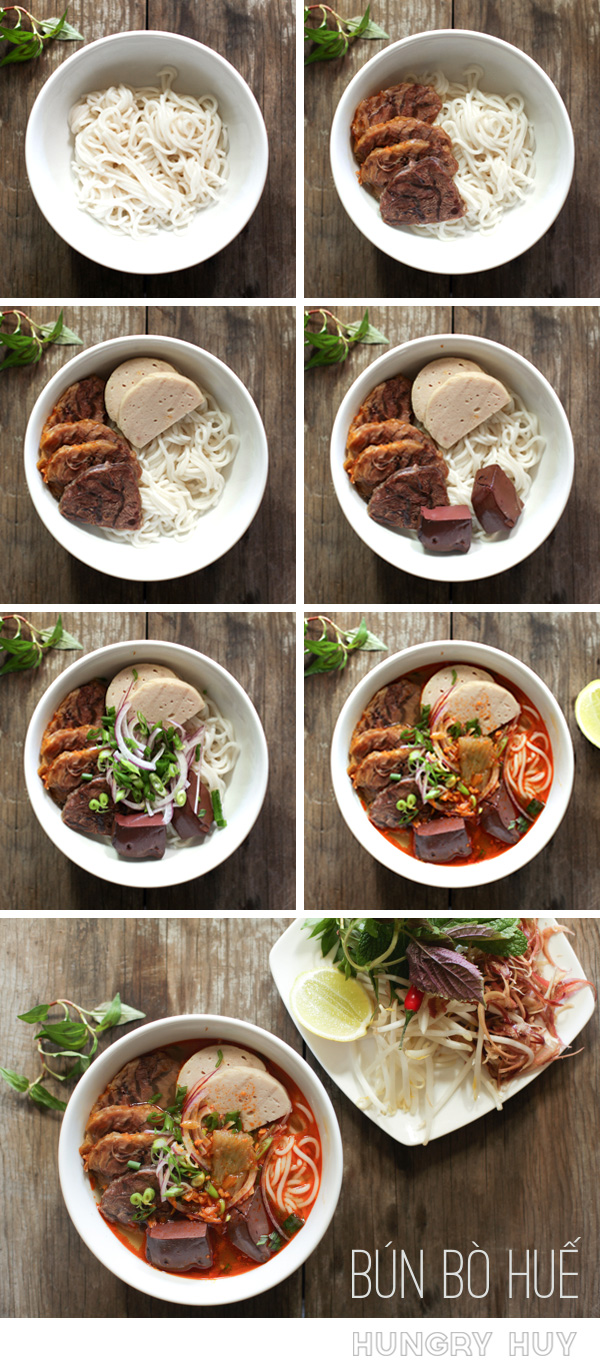
Story & history.
Bun bo Hue is the culinary soul of the ancient capital — a deep red broth of lemongrass, fermented shrimp paste, and chili slow-simmered with beef bones for hours, served steaming with sliced beef shank, pork knuckle, and crab paste cake arranged on thick round rice noodles. Unlike the refined clarity of Hanoi pho or the light sweetness of southern hu tieu, bun bo Hue delivers a bold, fiery, layered flavor that Hue people call 'dam vi' — not heat for its own sake but heat that warms and penetrates on the cool mornings beside the Perfume River. The dish traces its origins to villages around the Hue citadel, once a worker's breakfast before the imperial kitchens refined and elevated it during the Nguyen dynasty. Today bun bo Hue appears across Vietnam, but nowhere matches a bowl eaten in Hue itself at dawn when the broth has just completed an overnight simmer.
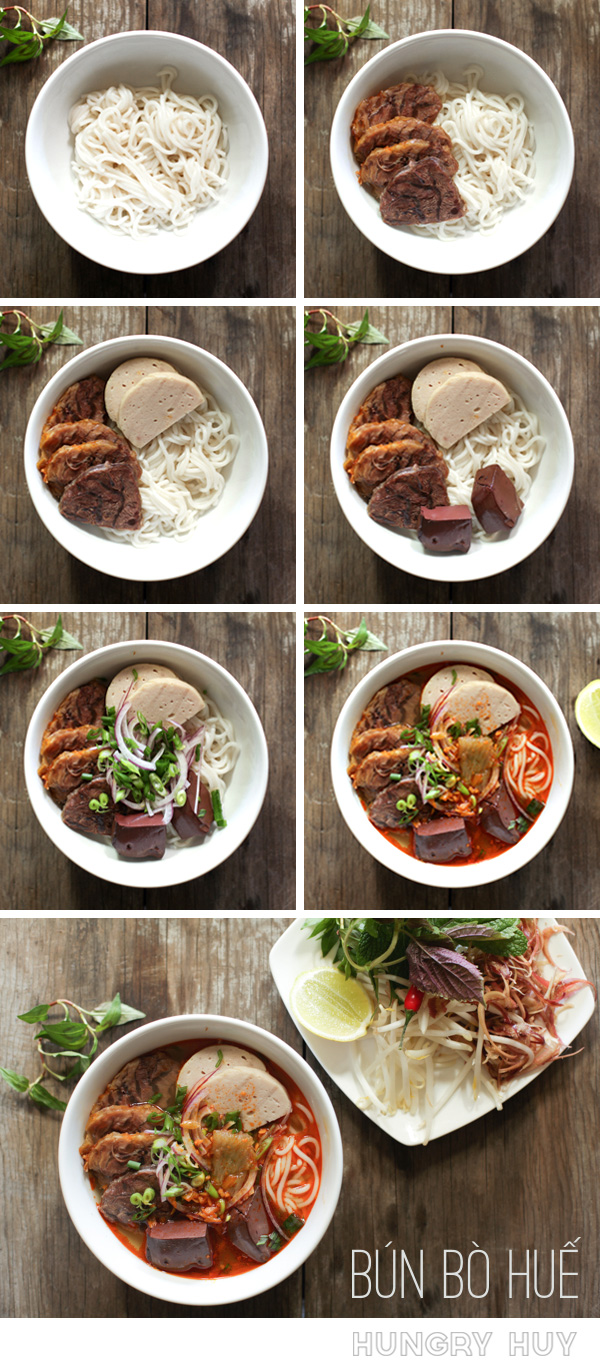
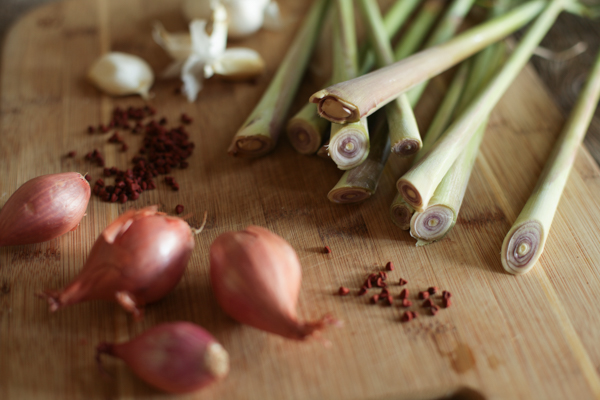
Bun bo Hue broth demands meticulous technique: beef bones are first blanched to remove impurities, then simmered 6 to 8 hours with bruised lemongrass stalks, Hue ruoc — a concentrated fermented shrimp paste more intense than standard versions — and chili powder for vivid red color. A skilled cook knows how to calibrate the ruoc so it perfumes without overwhelming, finishing with a touch of fish sauce to balance. The accompaniments are equally distinctive: thinly shaved banana blossom, bean sprouts, split water spinach, and especially sliced banana flower — crisp fresh vegetables that temper the broth's fieriness. Every bun bo Hue stall guards its own inherited recipe and locals typically stay loyal to a single shop across generations.
Bun bo Hue has crossed Vietnam's borders to become one of the world's best-known Vietnamese dishes, appearing on restaurant menus in Paris, Los Angeles, and Tokyo. The late chef Anthony Bourdain — the most influential voice in global street food culture — publicly declared bun bo Hue one of his favorite dishes and filmed multiple segments about it in Hue. In Hue itself, legendary stalls like Ba Tuyet on Nguyen Cong Tru street and small shops tucked into alleys near Gia Hoi Bridge have served generations of diners and become pilgrimage destinations for food lovers. A proper bowl of bun bo Hue — eaten piping hot, buried in fresh herbs, spiked with chili sa te paste and a squeeze of lime — is the quickest way to understand why Hue is called Vietnam's most distinctive culinary city.
"The shrimp-paste aroma hits straight to the brain; the spice draws tears — that is when you know you are eating the real thing."
— Writer Hoàng Phủ Ngọc Tường (paraphrased), on Hue cuisine
Ingredients — what makes the flavour.
A proper bún bò Huế shop usually serves only in the morning (6–9am) and sells out early — a sign the broth is made fresh daily. The noodles should be thicker than standard rice noodles, and the broth must be orange-red — if it is pale or golden, the recipe is off. Add shrimp paste gradually, not all at once.
How to enjoy it properly.
Ordering Like a Local When sitting down, specify your **spice level**: ít cay (mild), vừa (medium), or cay nhiều (fiery). Locals often add **giò heo** (pork trotter slices) or **huyết** (blood cake) to the standard order. Shrimp paste and chili oil are on the table — add small amounts and taste before committing.
The Eating Order Sip the **broth alone first** to appreciate the lemongrass-shrimp paste base. Then add fresh herbs, shaved banana blossom, and a squeeze of **lime** — the acidity unlocks a new flavour dimension in the broth. Only then add extra chili oil if you want heat. A proper bowl must be **piping hot** — eat quickly before it cools.
Editor-recommended eateries.
ⓘ Addresses and prices may change. Please verify before visiting.