Story & history.
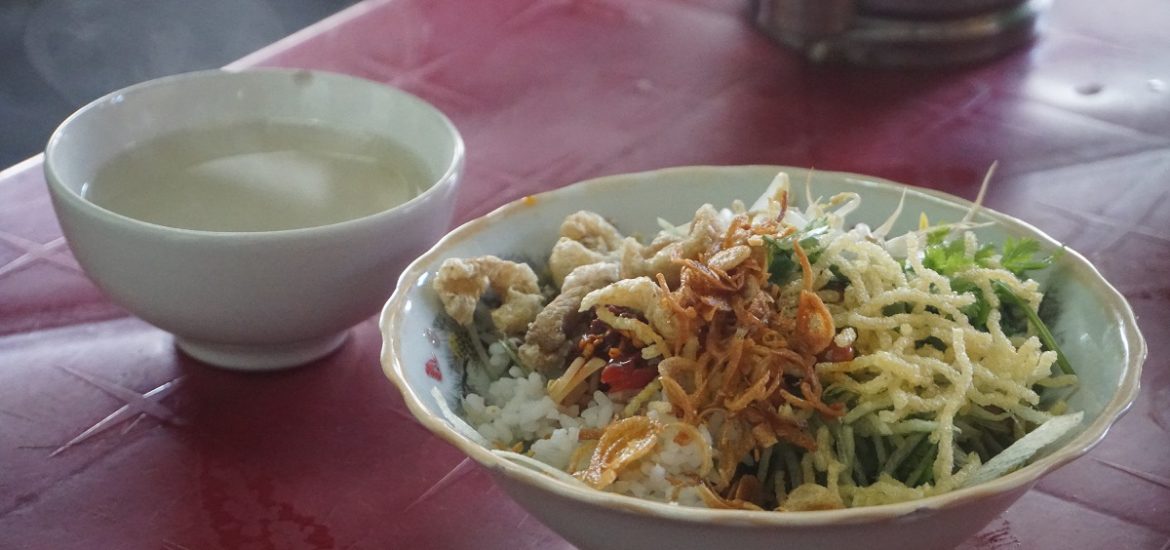
Com hen is the most humble and most distinctively Hue breakfast — cold rice tossed with spicy sautéed basket clams, a profusion of fresh herbs, fermented shrimp paste, fresh chili, and countless condiments creating a bowl that is simultaneously spicy, sweet, salty, crunchy, and chewy in a combination that defies simple classification. Hen are tiny freshwater clams living in the sandy bed of the Perfume River, found in greatest abundance near Con Hen — the small sandbar island in the middle of the Perfume River beside Hue city, long synonymous with clam harvesting and com hen cooking. Con Hen residents rise before dawn to harvest clams from the river, briefly boil them to collect their sweet broth, then sauté the clam meat with lemongrass, chili, and shrimp paste — the remaining clam broth is served as a side soup, its clean sweetness found in no other liquid. This is a poor person's dish of Hue elevated to culinary art by the abundance of its seasonings and the subtlety of its preparation.
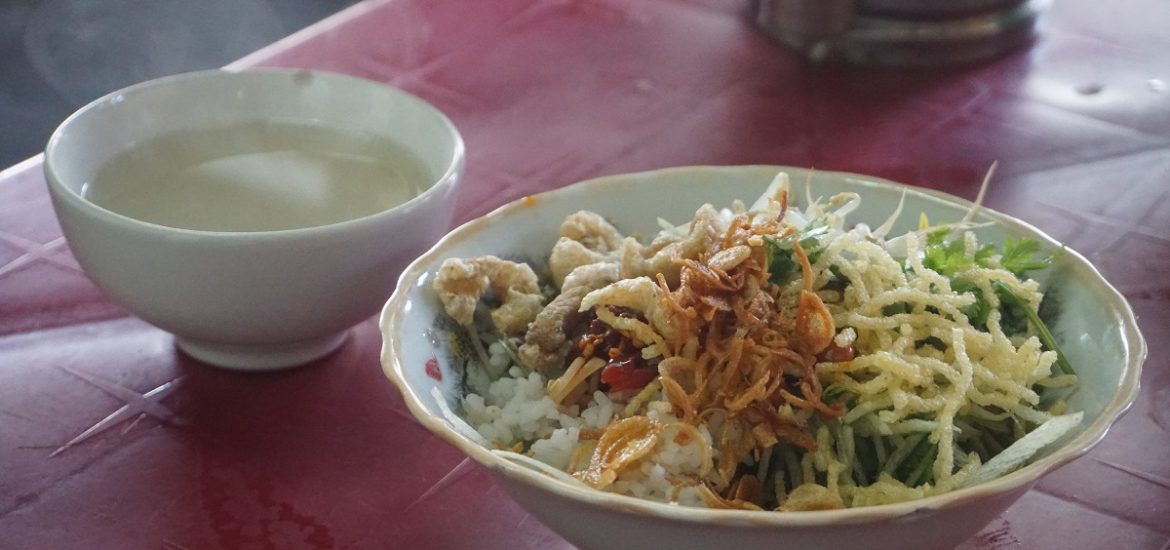
The fresh herbs served with com hen are a lesson in Hue's botanical richness: sliced sour starfruit, shaved green banana, banana blossom, split water spinach, bean sprouts, assorted aromatic herbs — all contributing crunch and bright acidity that contrasts with the fiery clam meat. Hue ruoc — the soul of com hen — is a specially fermented shrimp paste unique to this region, concentrated, dark-colored, and powerfully pungent in a way that can challenge newcomers but is the irreplaceable ingredient delivering the dish's unique umami depth. A complete bowl of com hen is eaten alongside a cup of hot clam broth sipped between mouthfuls — the temperature contrast between cold rice and hot broth is a distinctive sensory experience. The secret of excellent com hen lies in ratio and balance — every stall guards its own seasoning formula as a closely held family inheritance.

Com hen is so deeply intertwined with Hue cultural life that poets, writers, and food scholars have written about it as a metaphor for the Hue character — the combination of a humble, ordinary exterior with great depth and refinement within. The Hue writer Hoang Phu Ngoc Tuong once wrote: 'Com hen is poverty cooked with self-respect' — a phrase that has become the most widely cited literary definition of the dish. Con Hen island today remains the place people seek out for the most authentic com hen in Hue, sitting on low plastic stools looking out over the Perfume River in the early morning quiet that defines this city's particular atmosphere. It is a dining experience that no upscale Hue restaurant can replicate.
"Cơm hến cannot be cooked anywhere else — it only truly exists on the soil that gave it life."
— Hoàng Phủ Ngọc Tường, nhà văn xứ Huế
Ingredients — what makes the flavour.
Most cơm hến stalls at Hen Islet **sell out before 11am** — because fresh clams are scooped only once each morning. Order a bowl of **canh hến** (clam broth) on the side — the naturally sweet clam cooking liquid is Hue locals' favourite morning drink alongside their meal.
How to enjoy it properly.
Mix Before Eating Cơm hến must be **thoroughly mixed** before eating — do not eat the components separately. Use chopsticks or a spoon to combine rice, clams, herbs, and condiments until fully integrated. Add shrimp paste and chili oil gradually, tasting and adjusting.
The Heat Factor Traditional Hue cơm hến is **very spicy** — locals eat it with added fresh chili. Visitors should request **"ít ớt"** (less chili) when ordering if heat-sensitive. Add **a few spoonfuls of clam broth** (the cooking liquid) to keep the rice moist — a local trick for the perfect texture.
Editor-recommended eateries.
ⓘ Addresses and prices may change. Please verify before visiting.