Story & history.
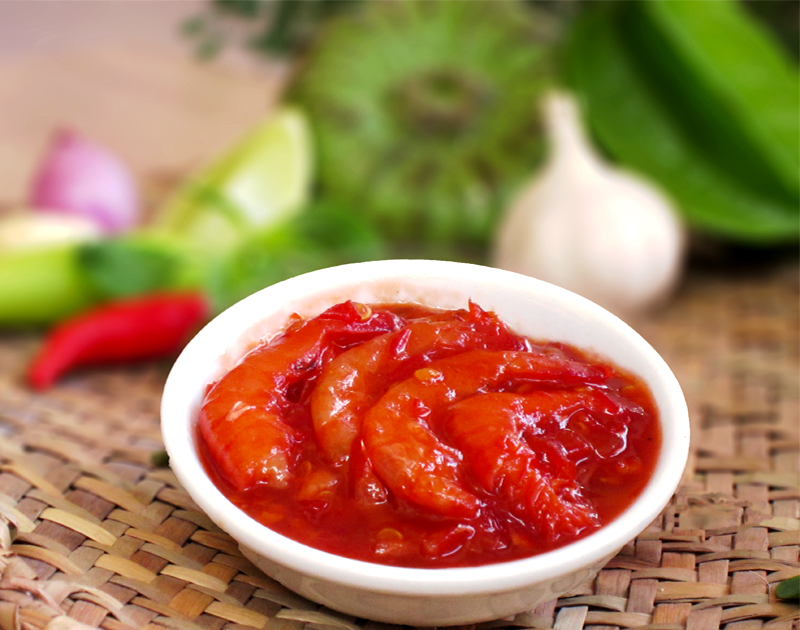
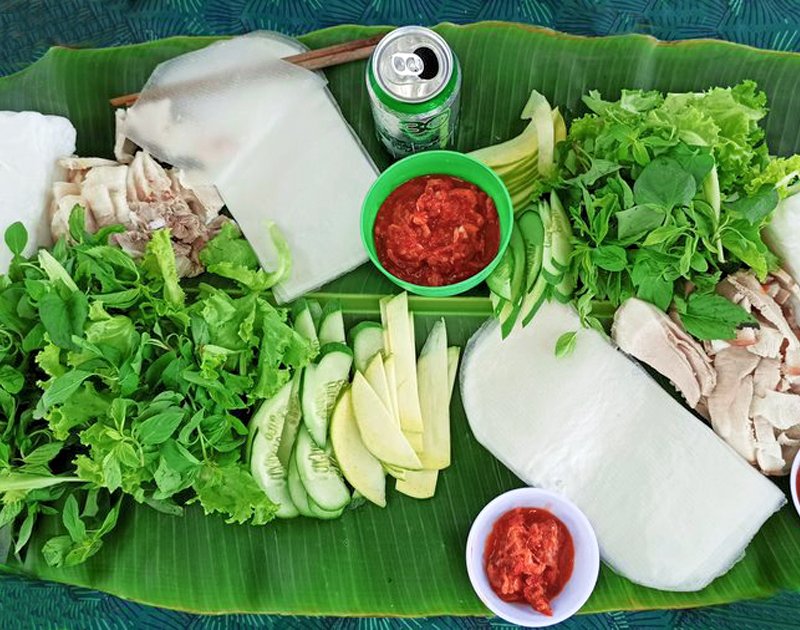
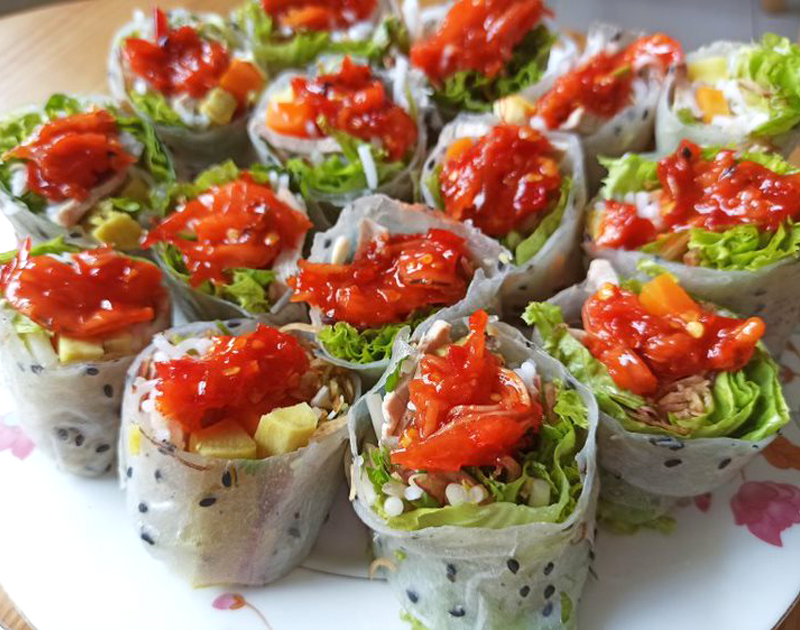
Hue tom chua is one of the most distinctive fermented heritage foods in Vietnamese cuisine — fresh river shrimp fermented in a clay jar with roasted rice powder, garlic, chili, galangal, and rice wine for 3 to 7 days until the shrimp turn rosy pink, gently sour, and develop a complex fermented aroma impossible to describe simply. The natural rosy pink color of tom chua comes not from food coloring but from fermentation transforming the shrimp's pigments — this is the marker of properly made traditional tom chua. Hue tom chua originated as a food preservation technique in Central Vietnam's hot, humid climate — before refrigeration, Hue people preserved fresh shrimp by fermenting them with salt and spices, transforming them into food that was not only longer-lasting but far more flavorful. The proper way to eat Hue tom chua is alongside thinly sliced boiled pork belly, fresh rice vermicelli, raw herbs, and sesame rice paper — rolled together into small bundles that balance sour, salty, sweet, spicy, and fatty in each bite.
Roasted rice powder — rice toasted golden and ground fine — is a little-known distinctive component of Hue tom chua: it not only absorbs moisture and aids preservation but serves as a growth medium for beneficial fermentation bacteria, generating the natural sourness and characteristic aroma. The shrimp used must be fresh medium-sized river shrimp — too small and the meat disappears after fermentation, too large and the spices cannot penetrate evenly. Hue horn chili — the region's characteristically sharp variety — is used to create the beautiful red color and the special clean heat of tom chua. Every Hue household guards its own tom chua recipe with different spice ratios and fermentation timing — considered as precious a family secret as recipes for fish sauce or shrimp paste.
Hue tom chua is today professionally packaged and distributed to provinces across Vietnam, but connoisseurs still order from traditional producers in Hue to guarantee quality — industrial tom chua typically uses food acid to create sourness quickly rather than natural fermentation, losing the complex flavor of the traditionally made product. Bach Dang street and Dong Ba market concentrate the most reputable tom chua vendors, available to purchase as gifts or eat on the spot. Tom chua is also used as a condiment in Hue: a few pieces added to a bowl of plain rice, vermicelli, or sticky rice is how Hue people create a simple meal with strong local character. This fermented food carries within it the history of food preservation and culinary wisdom of a people who have lived beside sea and river for many centuries.
Tom chua Hue is not a condiment — it is the soul of a meal. Without it, a Hue table loses something sacred.
— VnExpress, "Tôm chua Huế — đặc sản khó làm giả"
Ingredients — what makes the flavour.
The best tom chua comes **directly from the maker** — ask what day it was packed to confirm it has fermented the full 5–7 days. When buying at Dong Ba Market, seek sellers who **make their own** (not resellers) and taste a sample first. Purchased tom chua keeps for **3–5 days refrigerated** — left at room temperature it will continue fermenting and grow more sour over 1–2 days.
How to enjoy it properly.
The Classic Way — Fermented Shrimp with Pork
Place 2–3 shrimp onto a thin slice of blanched pork belly, add a sliver of sour starfruit and a sliced horn chili — roll into a small parcel. Eat in one bite — don't eat each component separately. Pair with hot steamed rice or crusty baguette.
Quality Check Before Eating
Good-quality tom chua should be plump and glossy — not slimy, without any unpleasant pungency. A vivid pink-red colour is a positive sign. Taste one shrimp: the sour note should register first, sweetness following, with no bitterness or faint off-odour.
Editor-recommended eateries.
ⓘ Addresses and prices may change. Please verify before visiting.