Story & history.
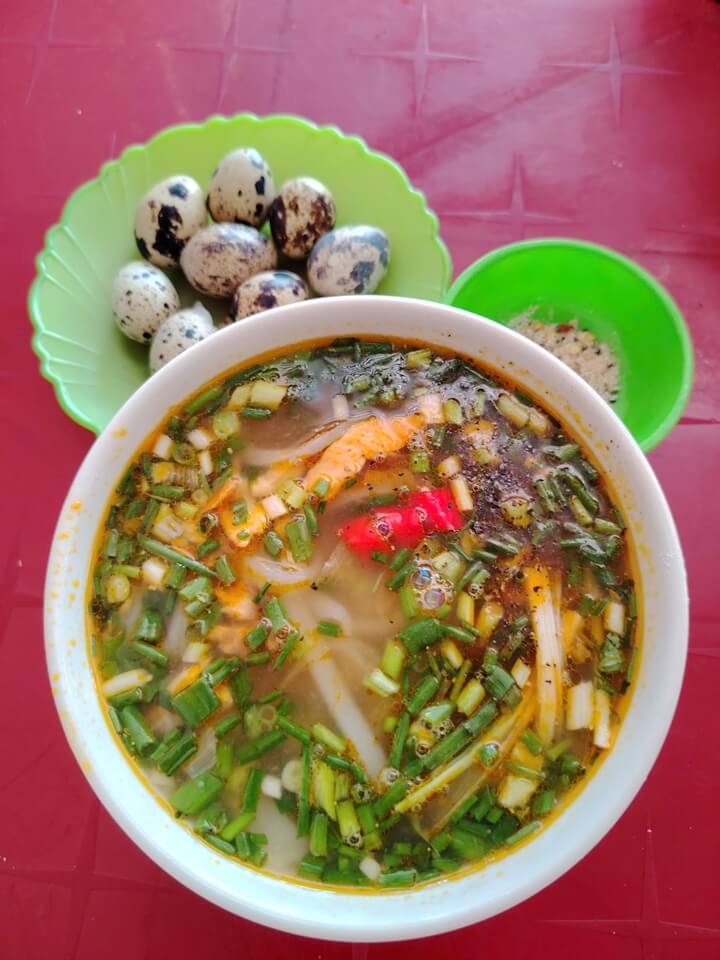
Hue banh canh ca loc is the local interpretation of a dish found across Vietnam, but with distinct characteristics: the rice flour noodles are coarser and thicker, the broth is crystal-clear and sweetly clean from pork bones and dried shrimp, and most distinctively the star ingredient is fresh ca loc — snakehead fish, a firm-fleshed freshwater species characteristic of Central Vietnamese lowland waterways. Ca loc — also called ca qua in the north — lives in ponds and rice paddies, its white firm meat free from the fishiness of sea fish and ideal for simmering in broth without clouding it. Hue people typically eat banh canh ca loc for breakfast or lunch, with a plate of fresh herbs including split water spinach, shaved banana blossom, and assorted aromatics alongside. Hue's banh canh ca loc broth is seasoned with a touch of ruoc shrimp paste — the region's signature fermented condiment — adding a umami depth absent from versions made elsewhere.
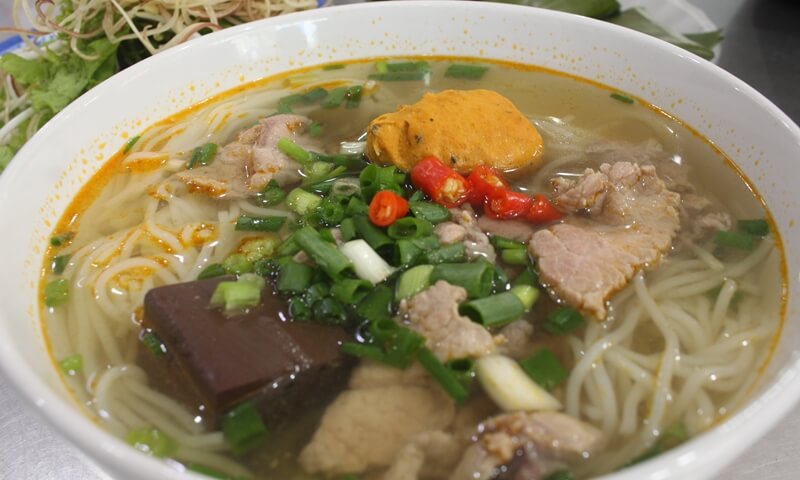
Ca loc used in Hue banh canh must be fresh fish, never frozen — vendors typically purchase live fish from village markets each morning and prepare them on-site throughout the day. Proper ca loc preparation involves descaling, gutting, washing with salt and vinegar to remove any fishiness, then either poaching whole and flaking the meat or cutting into sections to simmer directly in the broth. The rice flour noodles are hand-rolled or pressed through a mold into thick round strands — the coarse, rustic texture of these noodles is precisely what creates a different eating experience from bun or pho. Adding a spoonful of red chili sa te paste to a bowl of Hue banh canh ca loc before eating — the heat of the sa te combined with the clean sweetness of snakehead fish and broth is the perfect combination that defines Hue culinary sensibility.
Banh canh ca loc is deeply tied to Hue childhood memory — many people recall mornings when their grandmother or mother walked them to the market for a hot bowl before school. The dish is little known outside Hue and Central Vietnam, yet it is one of the foods Hue expatriates crave most when returning home. While pho and bun bo Hue have achieved international recognition, banh canh ca loc remains a 'local secret' — the kind of dish that can only truly be found and appreciated in Hue itself. Eating a bowl of banh canh ca loc at a small stall near Dong Ba market or on Kim Long street in the early morning is one of the most authentic ways to experience Hue as a local does.
The banh canh ca loc broth is clear as rainwater, sweet as a mountain spring — only Hue's wild-caught snakehead can deliver that.
— Tuổi Trẻ, "Bánh canh cá lóc Huế — món sáng đặc biệt"
Ingredients — what makes the flavour.
Wild snakehead has **firmer, whiter, sweeter flesh** than farmed — quality stalls always confirm their wild-caught source. Ask further: if the shop says fish comes from **Phu Vang or Quang Dien district**, that is a good sign — these two lowland areas produce the finest wild snakehead in Thua Thien Hue.
How to enjoy it properly.
Taste the Broth First
Always sip the plain broth first before adding anything — the crystal-clear snakehead fish broth is each stall's point of pride. Cloudy or fishy-smelling broth signals fish that isn't fresh or improperly prepared stock.
Working with the Toppings
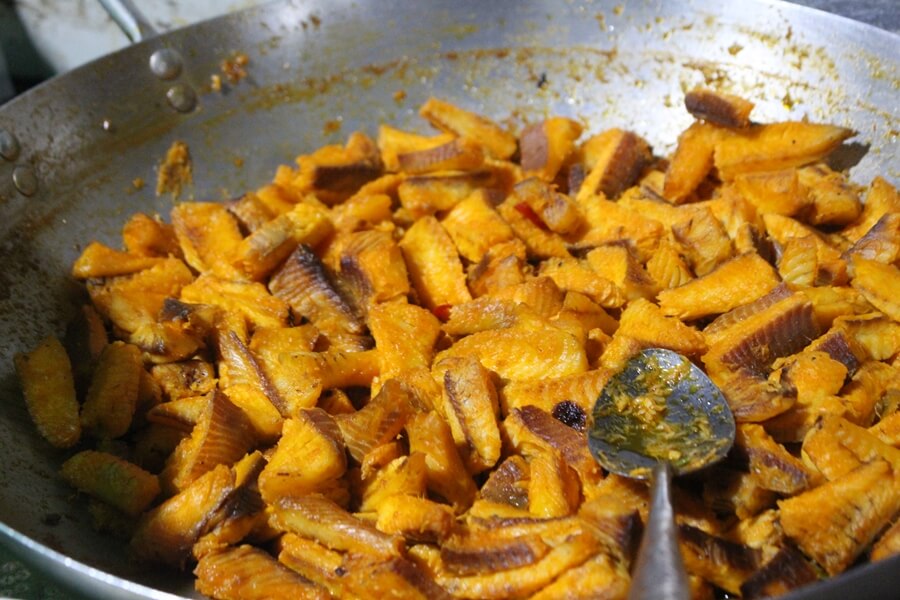
Eat the fried snakehead fish pieces separately with pure fish sauce mixed with chili and lime — don't dip them back into the bowl. Add freshly ground pepper over the bowl immediately before eating — freshly cracked pepper has far more fragrance than pre-ground. Locals often eat alongside a crusty baguette or crispy grilled rice paper.
Editor-recommended eateries.
ⓘ Addresses and prices may change. Please verify before visiting.