Story & history.
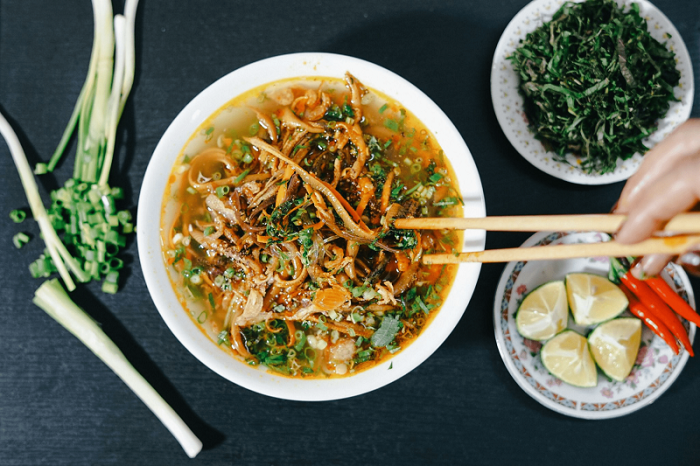
Chao luon Hue is one of the most beloved morning dishes in the ancient capital — smooth white rice porridge slow-cooked from premium rice grains, topped with eel sautéed in lemongrass and chili to golden fragrance, drizzled with crispy fried shallot oil, and finished with coarsely ground black pepper for a perfect breakfast bowl that is simultaneously light and deeply satisfying. Field eel — the variety living in paddy fields and ponds throughout the Thua Thien Hue lowlands — is the key ingredient, its sweet, chewy meat entirely different from sea eel, cleaned meticulously with salt and boiling water before being sautéed with lemongrass, turmeric, fresh chili, and fish sauce. Hue chao luon requires no special broth — the slow-cooked rice creates its own natural thickness and the eel's sweet richness permeates every grain, which is the source of its appeal. Starting the day with a steaming bowl of chao luon in the cool early morning air of Hue is the experience that Hue people living far from home miss most when they think of their hometown.
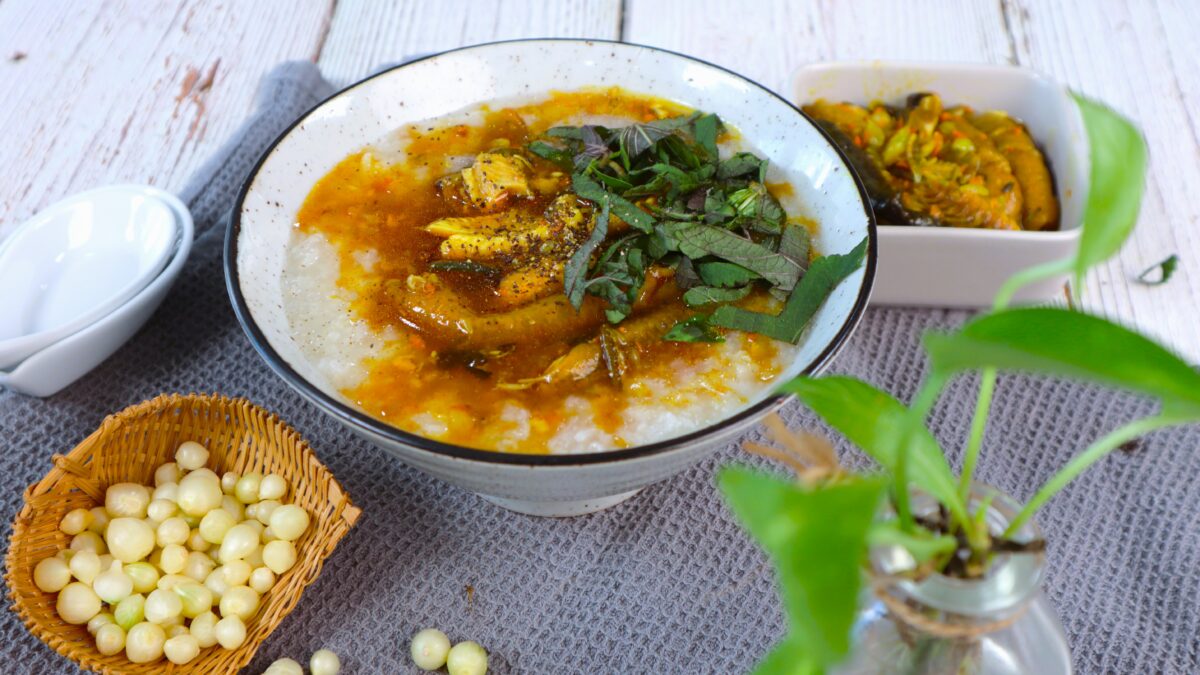
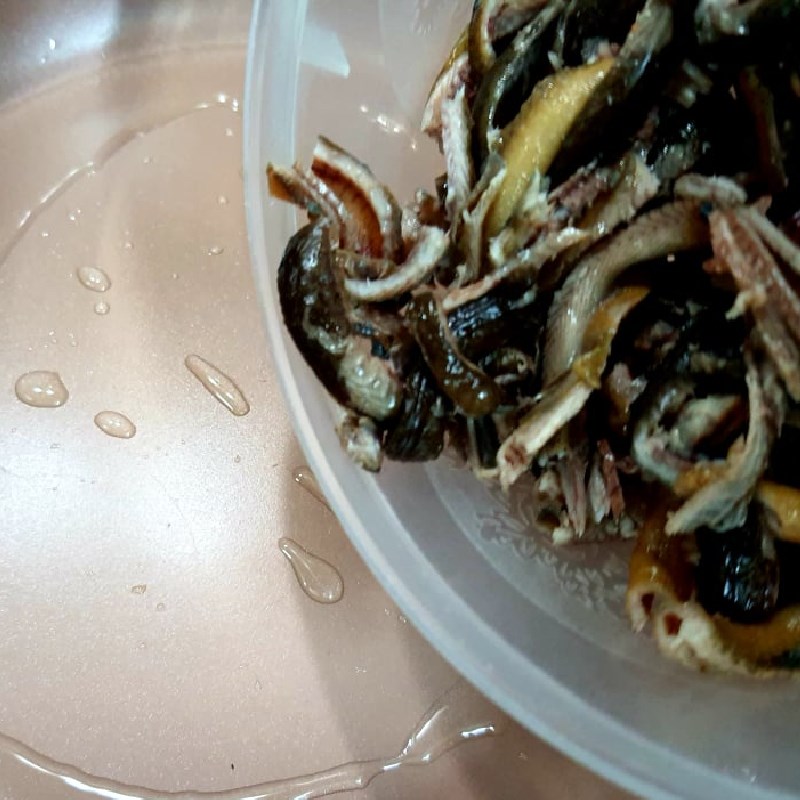
Cleaning the eel is the step that determines chao luon quality: live eels must be held in clean water overnight to purge mud, then scrubbed with coarse salt and doused with boiling water multiple times to completely eliminate any fishiness and sliminess — only properly cleaned eel delivers the sweet fragrance required when sautéed. The cleaned eel is then skillfully filleted or cut into bite-sized pieces and marinated with fresh turmeric, lemongrass, chili, and a touch of fish sauce before high-heat sautéing until evenly golden and aromatic. The rice porridge requires a water-to-rice ratio of 8 to 10 times and must be stirred continuously until the rice breaks down completely and the porridge reaches smooth consistency — at least 45 minutes of cooking. Chao luon must be eaten piping hot immediately after ladling — cooled porridge thickens and loses the characteristic fragrance of freshly sautéed eel and lemongrass.
Chao luon is not just an everyday breakfast but a dish Hue people use for recuperation — traditional medicine considers eel a tonic for qi, kidney function, and recovery for the recently ill, postpartum women, and the elderly. Famous Hue chao luon stalls typically open at 5 AM and sell out before 9 AM — this is the characteristic culinary rhythm of Hue that visitors must wake early to experience. Bach Dang street and the area surrounding Dong Ba market concentrate the most reputable chao luon stalls in Hue, serving hundreds of bowls each morning to locals and tourists alike. Eating a steaming bowl of Hue chao luon in the cool early morning air by the Perfume River — it is one of the simplest and most authentic ways to feel the pace of life and the spirit of this heritage city.
Eel congee is comfort food in its truest form — naturally sweet, warming to the stomach, needing few embellishments.
— Dân Trí, "Cháo lươn Huế — món quà sáng đặc biệt"
Ingredients — what makes the flavour.
Eel congee is at its best in **autumn and winter** (October–February) when field eels are fattest and Hue's cool weather makes a hot bowl perfect. In summer eels are leaner and milder. If visiting Hue during the cool season, this is the breakfast not to skip.
How to enjoy it properly.
Eat It Hot, Immediately
Eel congee must be eaten immediately while piping hot — as it cools the congee thickens and the eel loses its sweetness. Stir gently to integrate the eel and congee before the first spoonful. Add a pinch of ground pepper and a few slices of fresh chili to taste — Hue people typically eat it quite spicy.
Recognising Fresh Eel
Properly stir-fried eel should be golden brown, not green or grey. The ginger-lemongrass fragrance should be clear but not overwhelming the eel's natural sweetness. If the congee broth has a naturally clean sweetness without needing added salt — that signals fresh eel and correctly prepared stock.
Editor-recommended eateries.
ⓘ Addresses and prices may change. Please verify before visiting.