History & story.
Dong Ba Market is the most vibrant commercial and cultural center of Hue — a large traditional market on the bank of the Perfume River directly facing the Imperial Citadel, long serving as the place where people of the ancient capital shop, socialize, and maintain the distinctive commercial customs of Hue life. The market was rebuilt at its current location in 1899 to replace an older market inside the citadel, and has since remained the largest and busiest market in Thua Thien Hue with more than 2,000 vendors operating across three floors. Dong Ba's most characteristic products are 'hang Hue' — handicraft and food specialties impossible to find with the right quality and flavor anywhere else: me xuong candy, fermented shrimp, shrimp paste, all varieties of Hue cakes, Hue conical hats, Hue ao dai, embroidery, and hundreds of other items. Entering Dong Ba is entering the traditional commercial atmosphere of the ancient capital — the mixed fragrance of fish, fresh herbs, fruit, and spices creates a sensory experience no modern shopping center can replicate.
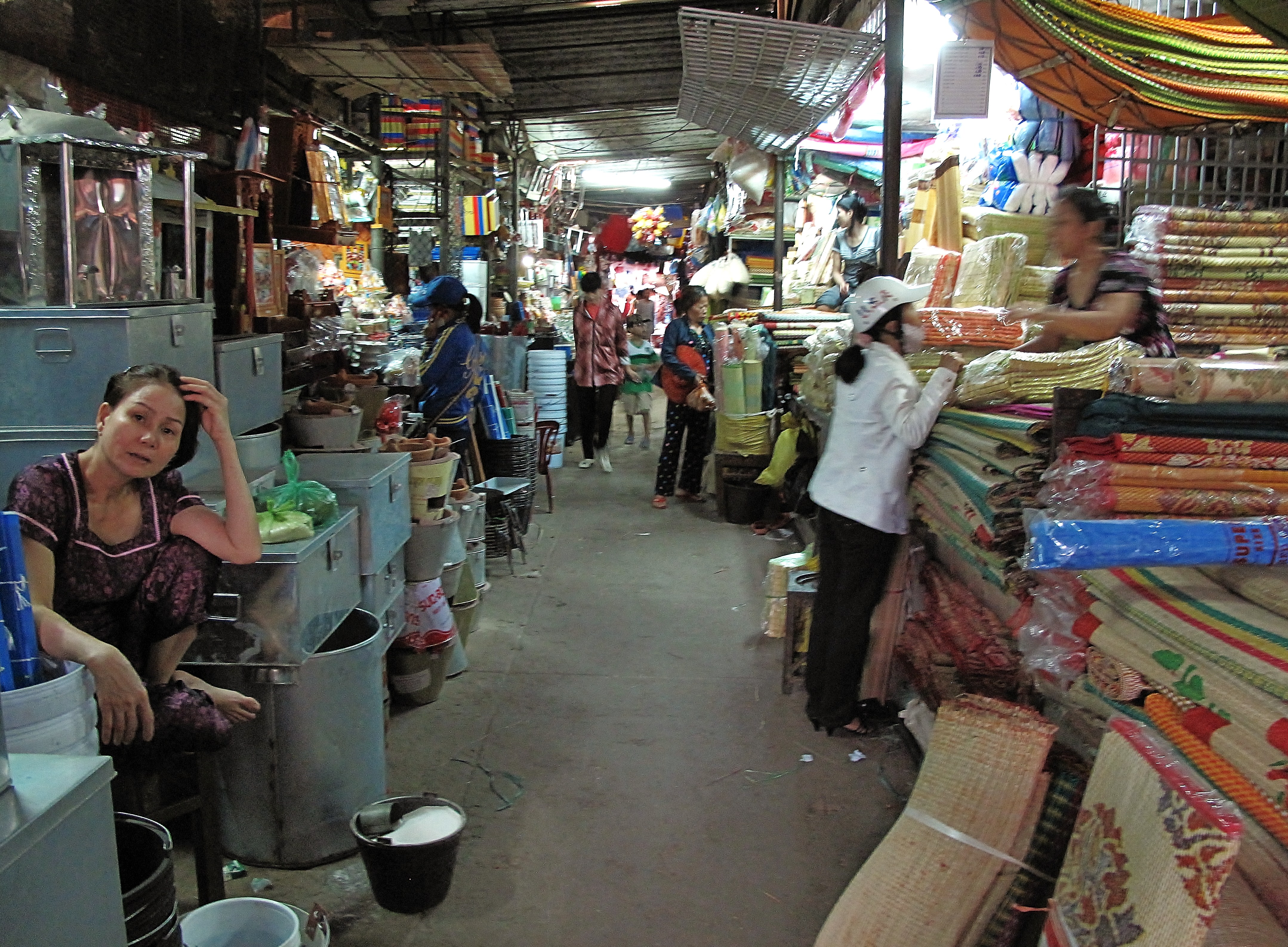
The food court inside Dong Ba Market is a paradise of Hue street food — small stalls serving bun bo Hue, com hen, banh beo, banh nam, and che Hue occupy cramped corridor spaces serving thousands of customers each morning at prices impossible to find at any restaurant. This is where Hue residents — not tourists — eat their actual breakfast, and that fact guarantees the quality and authenticity of every bowl of noodles and plate of cakes. The second floor concentrates fabric and clothing stalls — where Hue silk, embroidered organza, and ao dai are available ready-made or made-to-order at prices far more reasonable than shops on the main streets. The ground-floor section selling dried specialties — tom chua, ruoc fermented shrimp paste, mam nem, and assorted preserved condiments — is the unmissable gift-buying destination for any visitor to Hue. The second-floor conical hat corridor — with dozens of stalls specializing in non bai tho (poem hats), Hue's distinctive variety with hand-embroidered motifs visible through the fine leaf when held to light — is Vietnam's most unique traditional handicraft shopping destination.
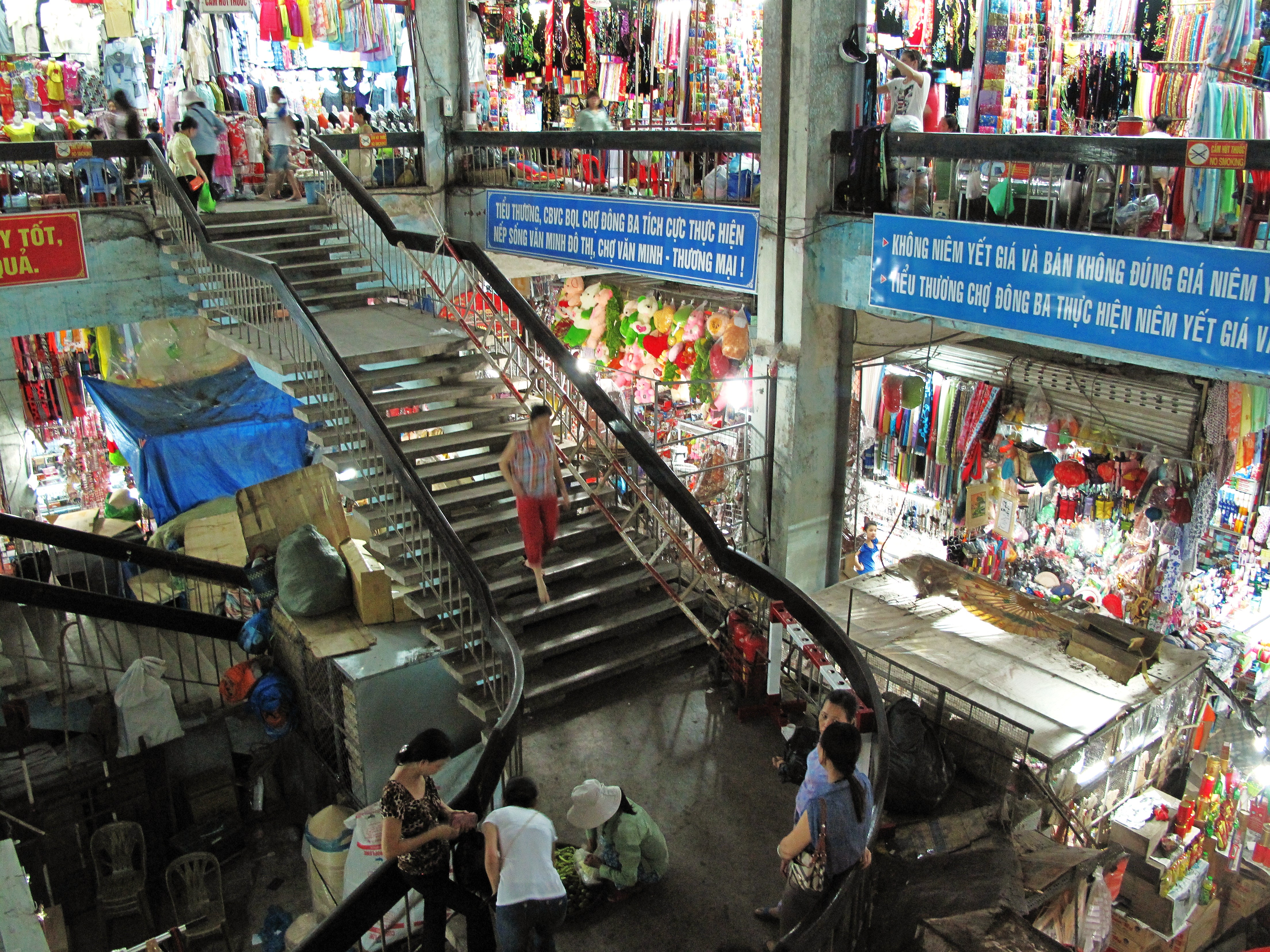
Dong Ba Market at its peak between 5 and 8 AM — hundreds of pushcarts, carrying poles, and three-wheeled vehicles laden with vegetables, fresh fish, and produce from surrounding village markets converge to supply vendors. This is the best moment to observe Hue's traditional commercial life — shrewd buyers negotiating every cent, decades-long buyer-seller relationships, and the deep product knowledge characteristic of Hue consumers. Dong Ba is not a tourist market — it is a market by Hue people for Hue people, and that fact makes a visit by an outsider or foreign traveler an authentic, unscripted cultural experience. The market's distinctive scent — a blend of fresh fish, Thai basil, tom chua, and the plant resin from the hat stalls — is irreproducible and the olfactory memory that anyone who has visited Dong Ba carries for life.
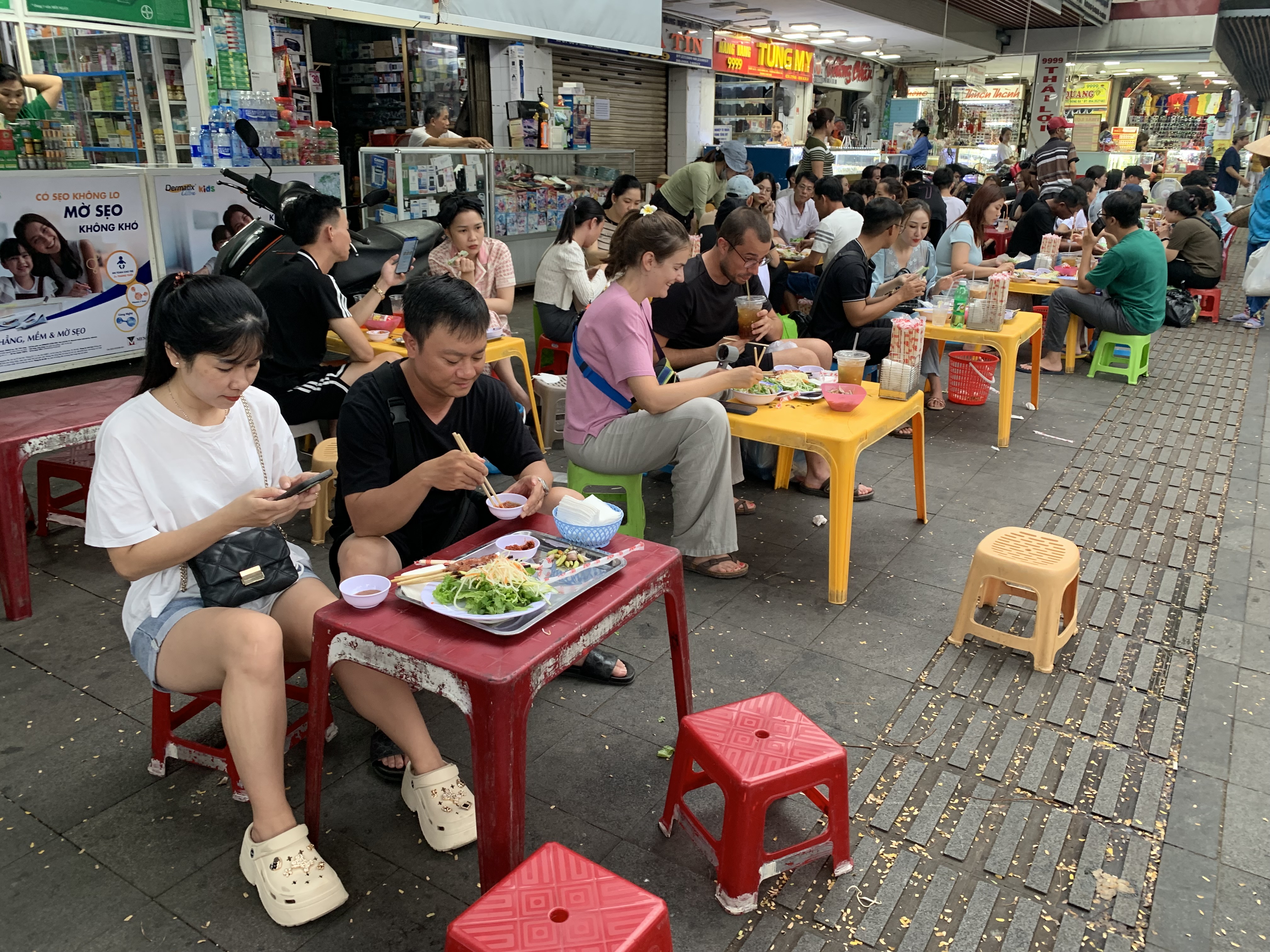
Leaving Hue without visiting Dong Ba Market means missing the most genuine pulse of the city — the place where all the things that make Hue distinctive are bought, sold, and passed between hands every single day. Dong Ba's continuous existence through wars, floods, and urbanisation — including the historic flood of 1999 that swept away nearly the entire market, and it was immediately rebuilt — is the strongest evidence that this is not merely an economic structure but an irreplaceable cultural institution. The space outside the market on evenings — when street food stalls open along the Perfume River bank, lanterns glimmer, and voices murmur — is one of the most authentically lively urban scenes in Vietnam, requiring no performance and no staging.
Not visiting Dong Ba Market means you have not truly been to Hue.
Câu nói quen thuộc của người Huế
Highlights not to miss.
The market's ground floor gathers dozens of stalls selling the full range of Hue's celebrated speciality cakes found nowhere else in such concentrated variety: banh beo, banh nam, banh loc, banh khoai, banh canh Nam Pho, and banh uot thit heo. Each type comes with its own specially prepared dipping sauce — spiced fish sauce, dried shrimp, fried shallots — following family recipes passed down through generations. The morning hours from 6 to 9 am are the best time: cakes come straight from the steamer, vendors are welcoming, and prices are lower than at any sit-down restaurant in the city.
The speciality food zone is a paradise for Hue cuisine enthusiasts, offering mam ruoc shrimp paste, tom chua fermented shrimp, Hue ginger jam, me xuong sesame candy, and a vast selection of candied fruits and preserved snacks made from local produce. Quality varies considerably between stalls — experienced shoppers always taste before buying and compare at least two or three vendors before committing. This is the ideal place to stock up on authentic Hue gifts, and friendly bargaining with vendors is an expected and enjoyable part of the process.
The upper level houses dozens of stalls specializing in Hue conical hats — especially the celebrated non bai tho (poem hat), Hue's distinctive variety with coloured thread motifs and scenes of Hue embedded between two layers of leaf, visible only when held to the light. A quality handmade poem hat costs VND 80,000–200,000 — worth buying from a vendor who can describe the materials and origin rather than from mass-produced import stock. Other handicrafts including ao dai garments, Hue silk fabrics, paper lanterns, and lacquerware are also well represented and generally priced more reasonably here than in street-front shops.
The wet market section on the ground floor is where Hue residents source their daily food from 5 am onward, and also the most compelling area for visitors to observe the ancient capital's daily rhythms. Freshly landed Perfume River fish — especially the ro field fish and ngach catfish distinctive to this stretch of water — alongside squid and shrimp from Thuan An coastal waters, aromatic herbs, and Hue-specific vegetables are piled on beds of fresh banana leaf. This is a space where colour, scent, and sound combine into a sensory experience no supermarket or tourist market can replicate.
Ask a banh beo vendor to show you the proper Hue way to eat it: spoon each small steamed cake into your bowl, add the accompanying fish sauce, and top with dried shrimp — Hue locals have always eaten banh beo this way and no other.
How to visit & get there.
Getting There and Best Times
Dong Ba Market stands on Tran Hung Dao Street, a few hundred metres northeast of Truong Tien Bridge — 10–15 minutes' walk from most central Hue hotels. Arrive before 8 am for the most rewarding experience: produce is freshest, the market is most lively, and vendors are most welcoming. Combine the visit with breakfast at the Hue cake stalls inside the market — a morning bowl of bun bo Hue or a plate of banh beo here is an irreplaceable local experience.
Shopping and Practical Tips
Friendly bargaining is expected at Dong Ba — vendors take no offence. Keep bags and wallets secure in the crowds, particularly in the wet-produce section on the ground floor. To buy food specialities as gifts, arrive at least one day before leaving Hue to compare prices and quality of tom chua, shrimp paste, and poem conical hats across different stalls — quality varies considerably and knowledgeable shoppers always taste before buying.
Sources
- 1.Chợ Đông Ba — Linh hồn ẩm thực Huế
VnExpress · 2025-03-18
- 2.Dong Ba Market — Hue Shopping and Culture Guide
Vietnam Tourism · 2025-03-14
- 3.Dong Ba Market — Lonely Planet Hue
Lonely Planet · 2025-03-15