History & story.
Tu Duc Mausoleum — regarded as the most beautiful and poetic of the seven Nguyen royal tombs — is in truth not merely a tomb but a magnificent palace where Emperor Tu Duc retreated to live and compose poetry for 16 years before his death, making it the witness of the richest inner life in Vietnamese imperial history. Built from 1864 to 1867 using the forced labor of thousands of conscripted workers in harsh conditions — the 'Chay Voi' workers' rebellion was one of the darkest episodes of the Nguyen period — Tu Duc's 12-hectare mausoleum is enclosed by pine forest and clear-watered ponds creating an atmosphere of refined serenity rarely found elsewhere. Luu Khiem Lake with its turquoise surface and Xung Khiem Pavilion — the small wooden house on an island where the emperor sat to read and write poetry — is the mausoleum's most iconic image and the embodiment of the Confucian gentleman's ideal of 'leisured wandering.' Tu Duc was the most celebrated poet-emperor of the Nguyen dynasty — he left more than 4,000 poems in Chinese and Nom script, and the inscription he personally composed on the Khiem Cung Bi stele is the longest autobiographical poem in Vietnamese imperial literary history.
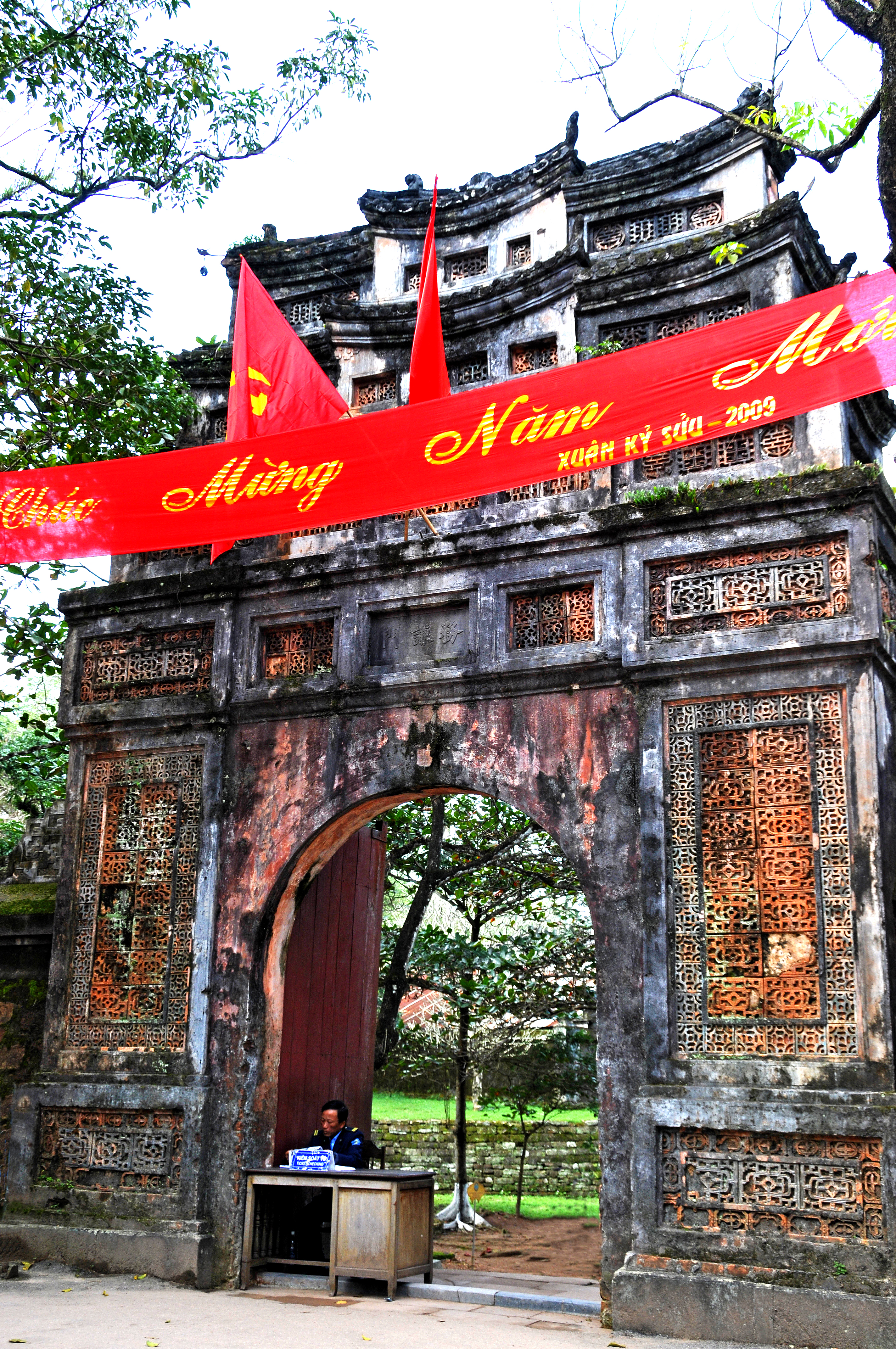
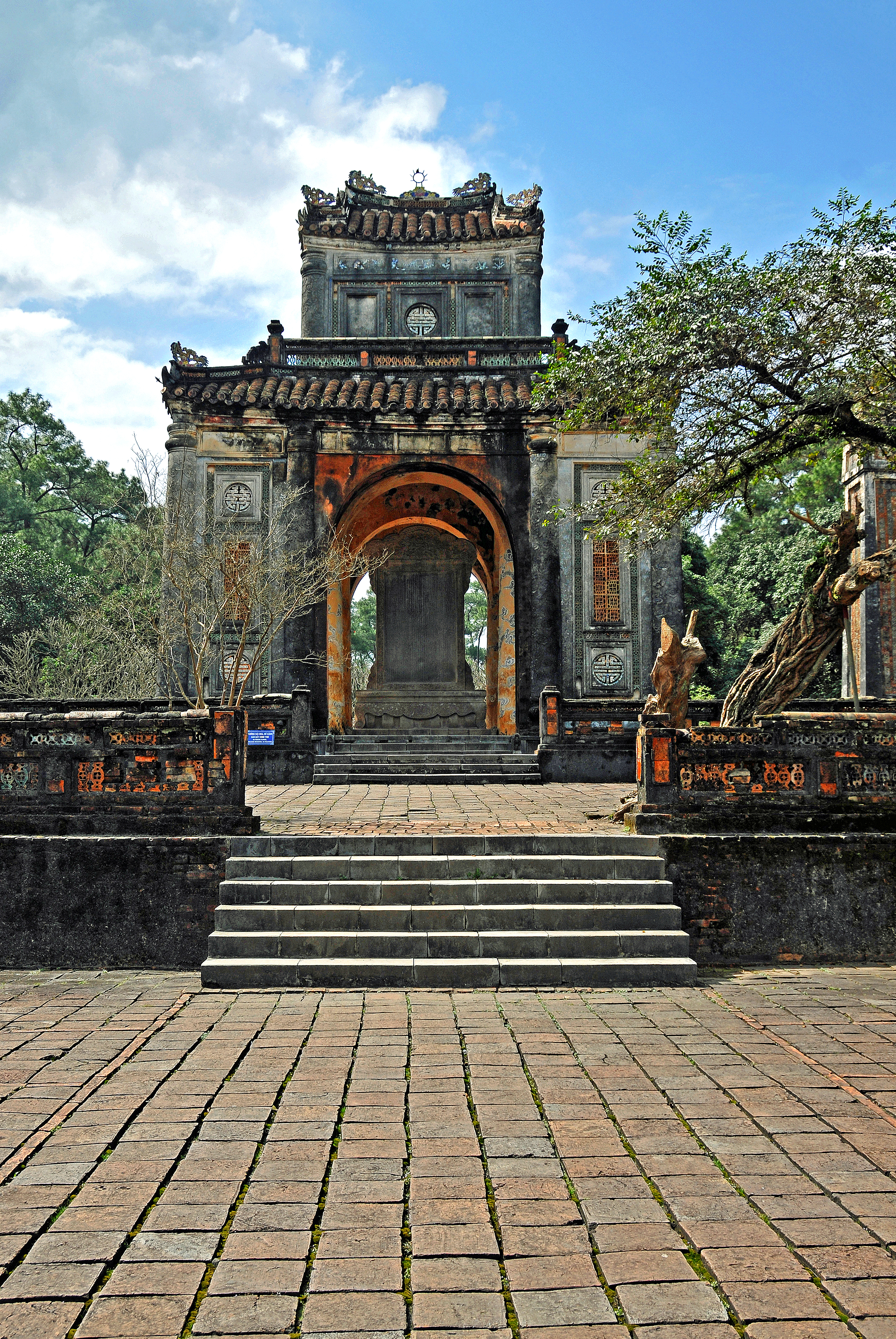
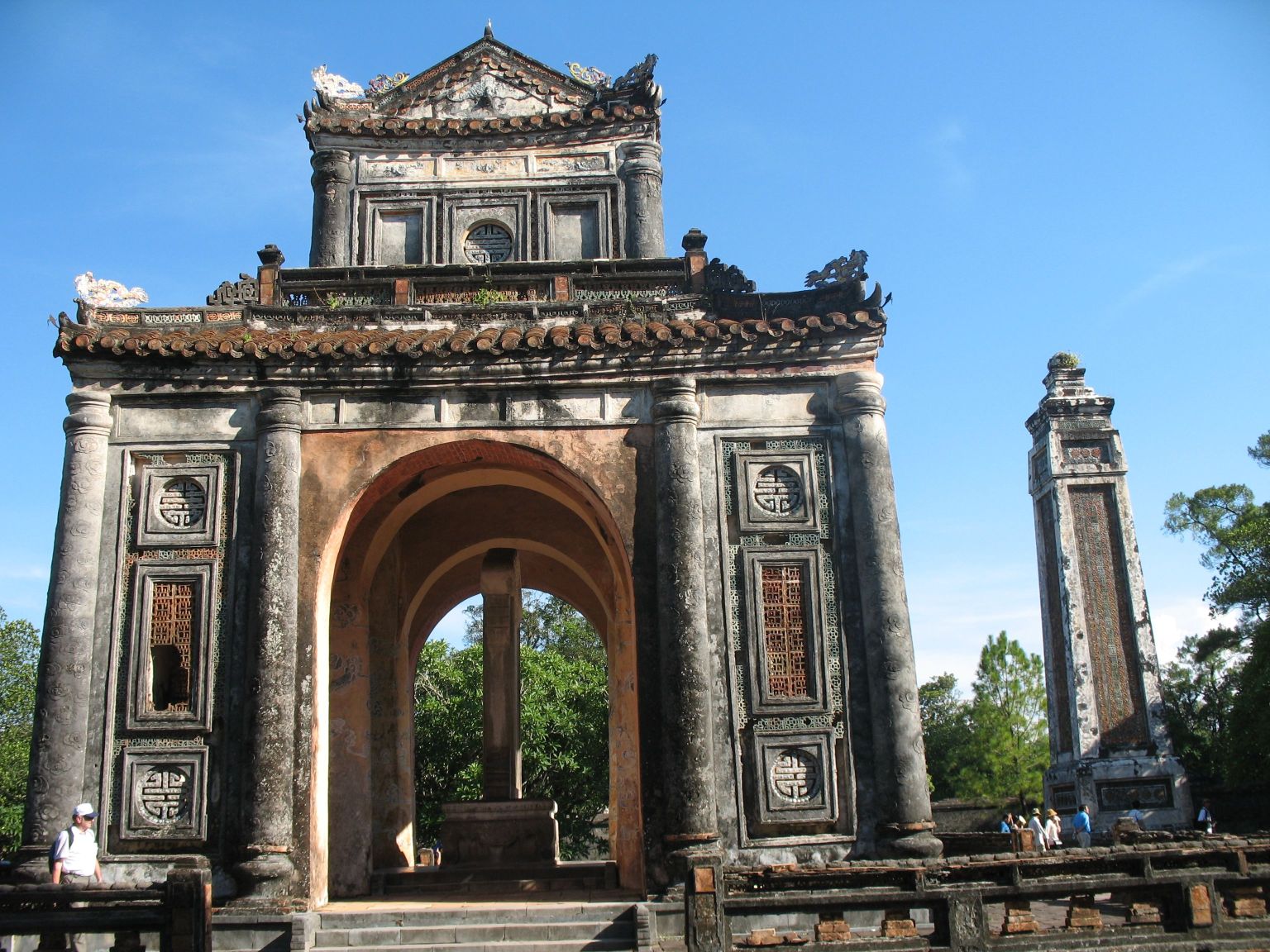
Tu Duc Mausoleum's architecture lacks the grandeur of Khai Dinh or the majesty of Minh Mang — instead offering an elegance and harmony with nature that only those versed in imperial architecture can fully appreciate. Twenty-one architectural structures within the mausoleum grounds — worship halls, ponds, gardens, triple-arched gates, water pavilions — are arranged according to feng shui principles creating favorable qi flow and beautiful sightlines from every point. Every structure within the mausoleum bears the character 'Khiem' in its name — Khiem Cung, Luu Khiem, Xung Khiem, Hoa Khiem — reflecting the humility that Emperor Tu Duc claimed as the most important virtue of his life. The 4,935-character inscription on the Khiem Cung Bi stele is a priceless historical document in which the emperor wrote about his failures in governance and his pain at dying without an heir — an honesty and self-criticism rare in Eastern monarchs. The Bi Dinh stele pavilion — its curved-roof four-sided structure open on all sides — was specifically designed so that natural light falls evenly across the 20-tonne stone and its learned inscriptions.
Tu Duc Mausoleum is the most beloved structure among scholars and artists in the Hue tomb system — many Vietnamese poets and painters have come here for inspiration, and numerous modern literary works use Tu Duc's mausoleum as setting or philosophical starting point. The particular silence of the mausoleum grounds — only the sound of pine trees and the gentle ripple of the lake — creates a meditative atmosphere entirely different from ordinary tourist sites. The actual location of Emperor Tu Duc's remains is still an unsolved mystery after nearly 150 years: all participants in the burial ceremony were put to death to ensure absolute secrecy, and all modern archaeological efforts have yet to identify the actual tomb chamber. This is not merely the eternal resting place of a king — it is the site where his poetic spirit still inhabits every leaf and every reflection on the water.
The 'Chay Voi' rebellion of 1866 — when thousands of mausoleum construction workers rose up against harsh working conditions and unpaid wages — was one of the largest uprisings in Nguyen dynasty history and reflects the painful paradox between imperial aesthetics and social reality. After suppressing the revolt, Emperor Tu Duc continued to live and write poetry at the mausoleum — a gesture that reveals both his deep attachment to the place and his deliberate blindness to his subjects' suffering. This contradiction — between extraordinary poetic talent and political impotence — makes Tu Duc the most debated and compelling of all Nguyen emperors, and his mausoleum a site powerful enough to sustain deep reflection on the nature of power and art.
Our dynasty has failed its people / Our failures before heaven, we alone know them.
Vua Tự Đức — Khiêm Cung Ký
Highlights not to miss.
Luu Khiem Lake forms the scenic heart of the mausoleum complex, with Tinh Khiem Island and two water pavilions mirrored in its turquoise surface amid ancient pine trees. Xung Khiem Pavilion — the small wooden lakeside pavilion where Tu Duc sat to read, write poetry, and fish — is the most beautiful and literary structure in the entire complex, a place where tranquility is physically tangible. The early morning scene, when light mist still hangs over the lake and pine trees murmur overhead, is a rare aesthetic experience — ten minutes of stillness here is enough to understand why Tu Duc refused to leave.
The Bi Dinh stele pavilion houses a 20-tonne stone stele considered the largest in Vietnam, inscribed with the 4,935-character 'Khiem Cung Ki' composed by Tu Duc — a candid personal account of his life, his failures in governance, and the grief of dying without an heir that is remarkable for its honesty in a feudal monarch. The stele was heavy enough to require 200 men to manoeuvre into position, and the pavilion itself was specifically designed open on all four sides so that natural light falls evenly across every carved character. It stands as one of the most remarkably self-critical autobiographical documents in East Asian imperial literary history.
The actual tomb enclosure is surrounded by high walls with locked gates — visitors can only peer from a distance into the mysterious walled courtyard within. The precise location of the emperor's remains is still unsolved after nearly 150 years: all participants in the burial ceremony were executed to guarantee absolute secrecy, and modern archaeological surveys have yet to locate the actual burial vault beneath. This mystery was not accidental — it was the deliberate precaution of a king who understood that his tomb might be violated after the dynasty fell.
Unlike other Nguyen royal tombs sited on open hillsides, Tu Duc Mausoleum is set within a dense grove of ancient pine trees that provide deep shade and a romantically melancholy atmosphere found nowhere else in the Hue mausoleum system. Light filtered through pine canopies, wind murmuring through needles, and the subtle scent of pine resin create a meditative quality that distinguishes this site from every other imperial monument. The centuries-old pines were planted deliberately on Tu Duc's orders and have since seeded and spread to cover the entire 12-hectare grounds as a near-natural forest.
Sit quietly at Xung Khiem Pavilion looking out over the lake for 10–15 minutes without taking photographs — this is the surest way to understand why Tu Duc chose this place as his retreat for poetry and contemplation for 16 years.
How to visit & get there.
Getting There
Tu Duc Mausoleum lies 8 km southwest of central Hue, close to Khai Dinh Mausoleum and easily combined into one day. Travel via Le Ngo Cat Street by motorbike, electric bicycle, or taxi. Many Hue cycling tours follow a mausoleum circuit — the total round trip from town covering both Tu Duc and Khai Dinh mausoleums is about 20 km, well suited to an electric bicycle.
What to See and How Long to Stay
Allow at least 1.5–2 hours — the grounds are extensive and the meditative atmosphere rewards slow wandering. Early morning, when light mist hangs over Luu Khiem Lake, is the most beautiful time for photography. Do not skip the lake and Xung Khiem Pavilion area — the most beautiful part of the complex, often bypassed by visitors who remain near the entrance. Sit quietly for 10 minutes at the pavilion, without taking photos, to understand why Tu Duc chose this place as his retreat for writing and contemplation.
Sources
- 1.Lăng Tự Đức — Di sản Cố đô Huế
Trung tâm Bảo tồn Di tích Cố đô Huế · 2025-03-10
- 2.Complex of Hue Monuments — UNESCO World Heritage
UNESCO · 2025-03-10
- 3.Tu Duc Mausoleum — Hue Attractions
Lonely Planet · 2025-03-15